
Treadmill Desk vs Standing Desk: Honest Pick
You have read that sitting all day is bad for you, and now you are staring at two ways to fix it: a desk you can raise to stand at, or one bolted over a slow walking treadmill. The marketing for both promises a healthier working day, and both are genuinely better than sitting still for eight hours. The honest answer to treadmill desk vs standing desk is that the treadmill adds real movement but trades away typing accuracy, money and floor space, while a sit-stand desk gives most people the bigger share of the benefit for far less friction.
This is a buying framework, not a sales pitch, and we will name our bias up front. We sell an adjustable standing desk, so we have an obvious reason to steer you toward sit-stand and away from a treadmill we do not make. We have tried to keep this honest anyway: where the evidence is thin we say so, we judge our own desk against the same criteria as everything else, and we tell you plainly who the treadmill actually suits and when neither desk is what you need.
One scope note before we start. A desk, of either kind, is a comfort and movement aid, not a medical device or a fitness programme. If you have back pain that followed a fall, or any of the warning signs we list near the end, that is a question for a clinician, not a furniture decision. And the single most useful thing either desk does is break up long stretches of sitting, which matters more than which one you buy.
Treadmill desk vs standing desk at a glance
Here is the short version before we get into the detail. Both beat all-day sitting; they differ mainly in how much movement they add and how much they cost you in money, space, noise and the quality of your work.
None of this makes the treadmill a bad product. It makes it a specialised one. The rest of this guide explains why that distinction matters for the choice you are making.
Movement and the evidence
For most people a sit-stand desk is the pragmatic pick because it adds useful variety with almost no downside, while a treadmill desk adds more movement but costs you typing accuracy, money and space. Both clearly beat all-day sitting; the treadmill simply asks for more in return for its extra movement, which suits some jobs and not others.
It helps to be precise about how much each one actually moves you, because the gap between them is the whole point. Standing instead of sitting changes your posture and shifts your weight, but it is not, by itself, a workout. A systematic review and meta-analysis by Saeidifard and colleagues found that standing uses only modestly more energy than sitting; the difference is real but small. So if you bought a standing desk expecting it to burn meaningful calories, that is not where its value lies. Its value is in letting you change position often and break up sitting, which the public-health guidance treats as the thing that matters.
Walking is a different story. A treadmill desk has you genuinely active, and active walking uses clearly more energy than either sitting or standing. That is its honest advantage, and we will not talk you out of it: more movement through the day is a real benefit, and the NHS is blunt that we should sit less. The Cochrane review of workplace interventions for reducing sitting found that sit-stand workstations do reduce sitting time at work, though it rated the certainty of the evidence as low to moderate and the long-term health effects as still unclear. The honest reading is that both desks help you sit less; the treadmill adds the most movement, but the proof that this translates into specific long-term health outcomes is still limited.
The catch is what that walking does to your work. Typing accuracy and precise pointing tasks tend to drop while you are walking, even slowly, because your hands and eyes are dealing with a moving body. For reading, calls and thinking, that is usually fine. For careful writing, detailed spreadsheets, design work or anything where small errors are expensive, it is a real cost. A standing desk does not impose that trade-off: once it is set up properly, standing has little to no effect on the quality of your work. That difference, more than calories, is what decides which desk fits your day.
Cost, space and noise
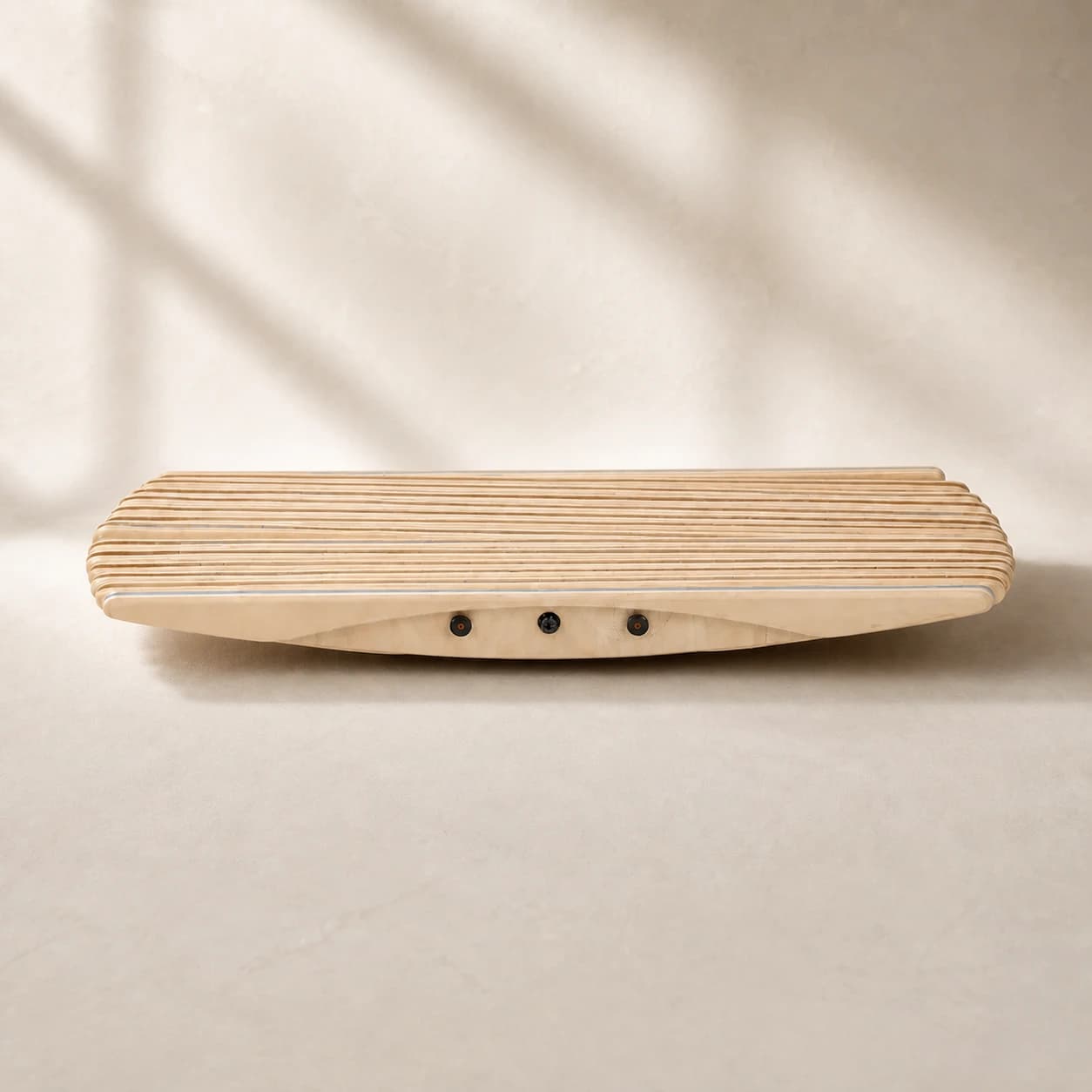
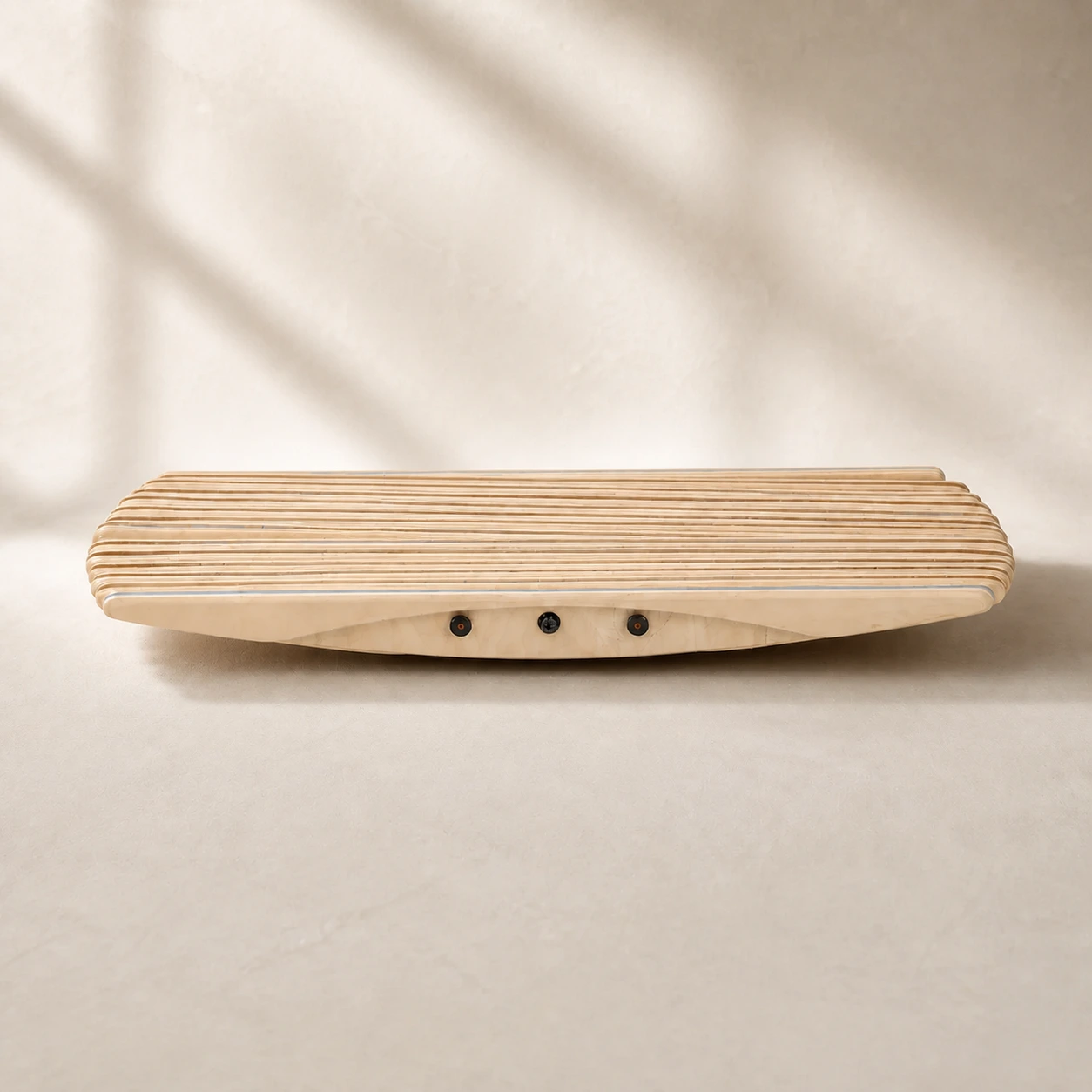 Product mentioned in this guideErgoSway Balance BoardCurved wooden balance board for controlled side-to-side movement at a standing desk. The firm, ribbed deck needs no setup and can be moved aside when you…Free US shipping on every order60-Day Home Trial · we pay return shippingSee current price
Beyond movement, three practical factors separate these desks, and they tend to settle the decision for most rooms and budgets.
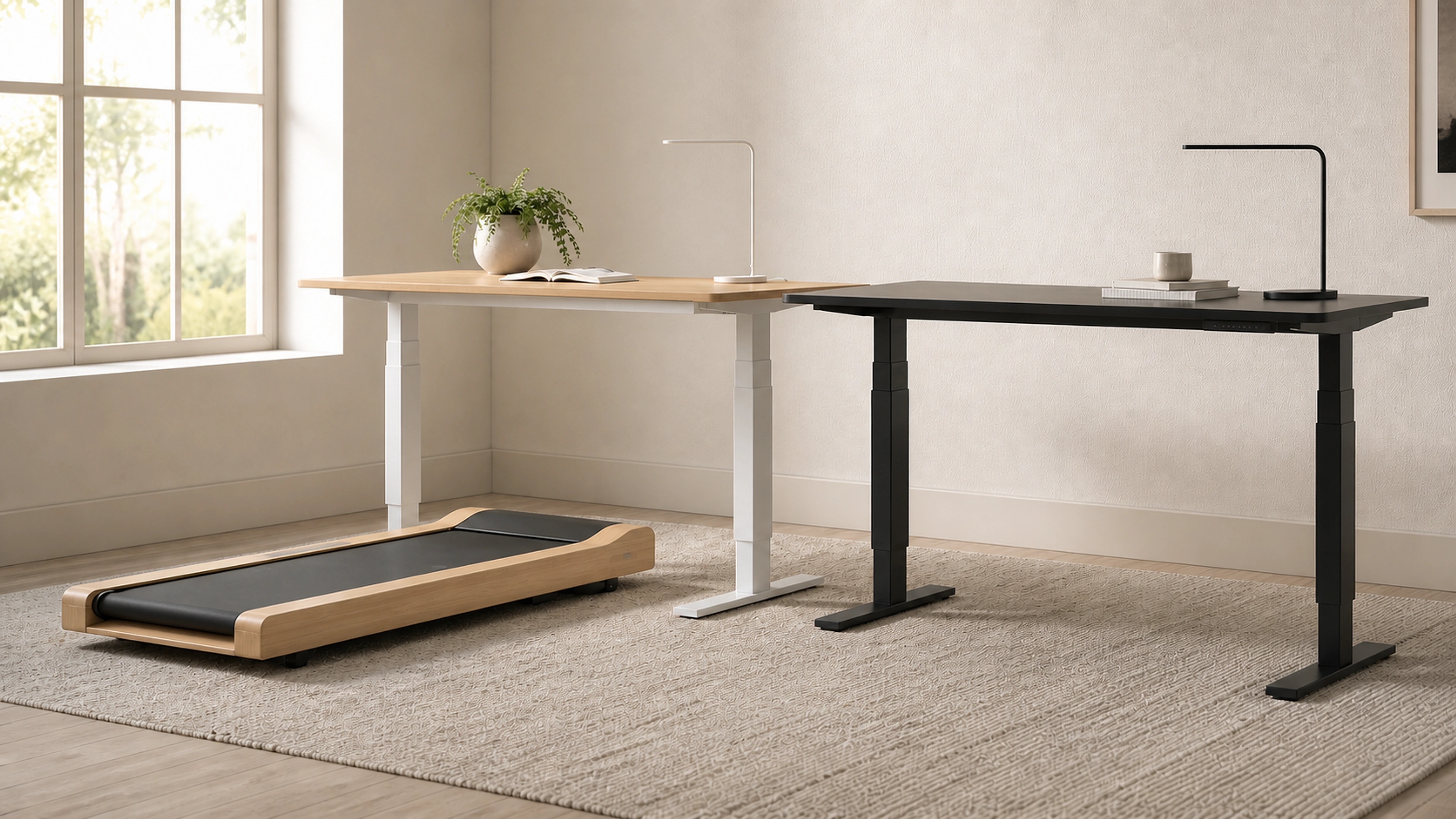
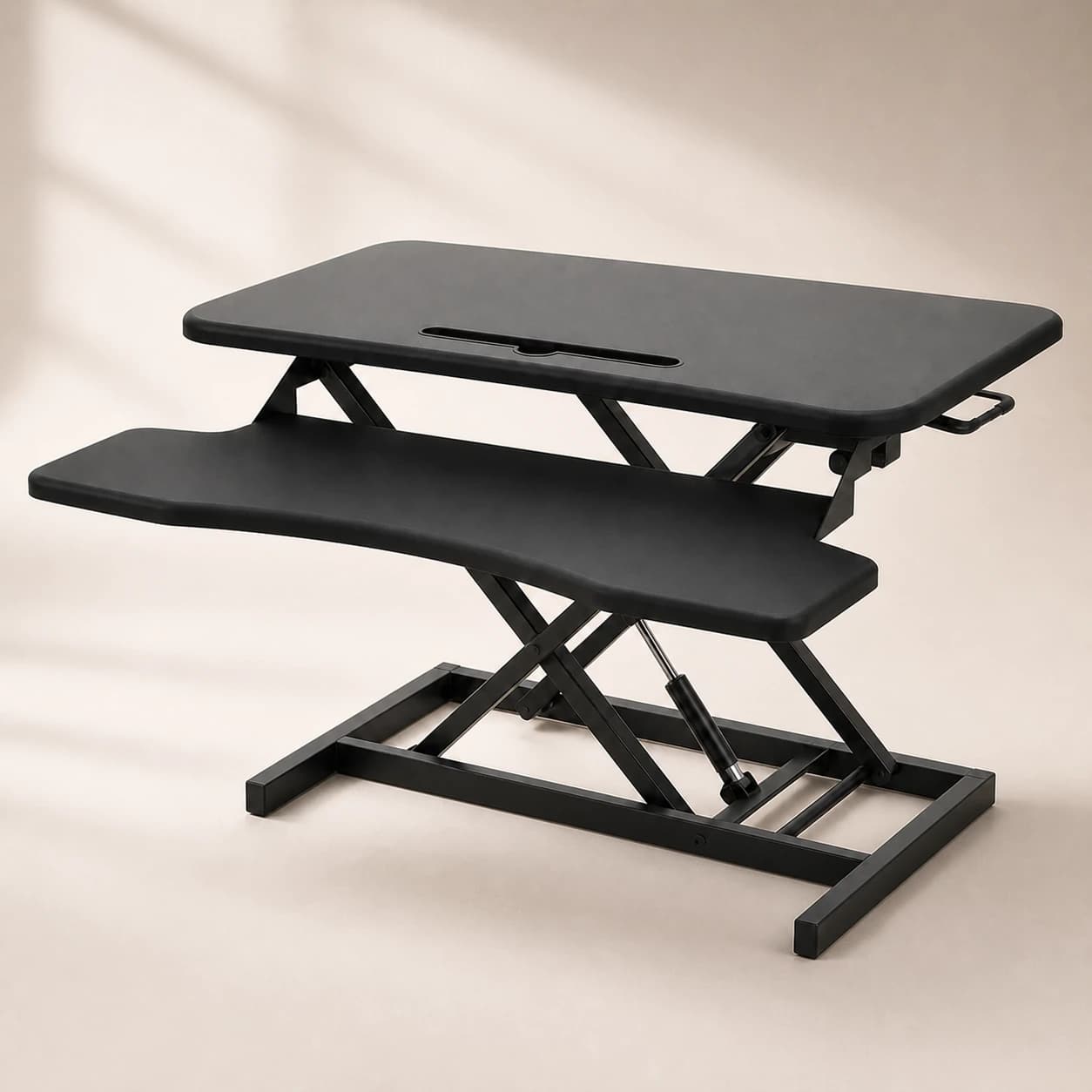
- Cost. A sit-stand desk is the cheaper path: a height-adjustable frame with a top, or a converter that sits on an existing desk. A treadmill desk means buying that desk and a walking treadmill base, so it is usually the more expensive option, sometimes by a wide margin.
- Floor space. A standing desk takes only its own footprint, and you slide your normal chair under it. A treadmill desk needs that footprint plus a treadmill belt you stand and walk on, which is a meaningful amount of floor in a home office or a shared room.
- Noise. A standing desk is silent. A treadmill has a motor and the sound of your own footfall, which is a genuine consideration on video calls, in open-plan offices and in any room where someone else is trying to concentrate.
- Switching back to sitting. With a sit-stand desk you lower it and sit; the change takes seconds and encourages frequent swaps. With a treadmill you step off and still need a chair somewhere, so alternating is a little more effort.
These are not exotic objections; they are the everyday realities of fitting a desk into a real room and a real budget. For a lot of people, the treadmill loses here not because it is bad, but because the room, the money or the calls make it impractical. The sit-stand desk asks for much less and still delivers the core benefit: more standing, more movement, less uninterrupted sitting.
Who suits which
Neither desk is universally right, so it is worth matching the tool to the day. Here is the honest split.
- A treadmill desk suits you if your work is mostly reading, calls, listening and thinking rather than precise typing, you have the floor space and budget, noise is not a problem, and getting deliberate walking into your day is a priority you would otherwise struggle to meet.
- A sit-stand desk suits you if you do a mix of careful typing and lighter tasks, you want to vary your posture without sacrificing accuracy, you are working with a normal room and budget, or you share the space and need it quiet.
- Either is wrong for you if your real goal is fitness; neither desk replaces deliberate exercise. The U.S. CDC activity guidance frames health benefits around regular aerobic and strength activity done on purpose, and a desk, of either kind, is not that. It helps you sit less, not get fit.
The thread here is that the treadmill is a specialist tool for a particular kind of work and a particular room, while the sit-stand desk is the generalist that fits most people most of the time. If you genuinely do call-heavy, read-heavy work and have the space, the treadmill can be a good buy. For the rest of us, the standing desk does more of the job with fewer compromises. If you want to think about how long you should actually stand once you have a desk, our guide on how long to stand at a standing desk covers the sensible ratios.
Why a sit-stand desk is the pragmatic pick for most
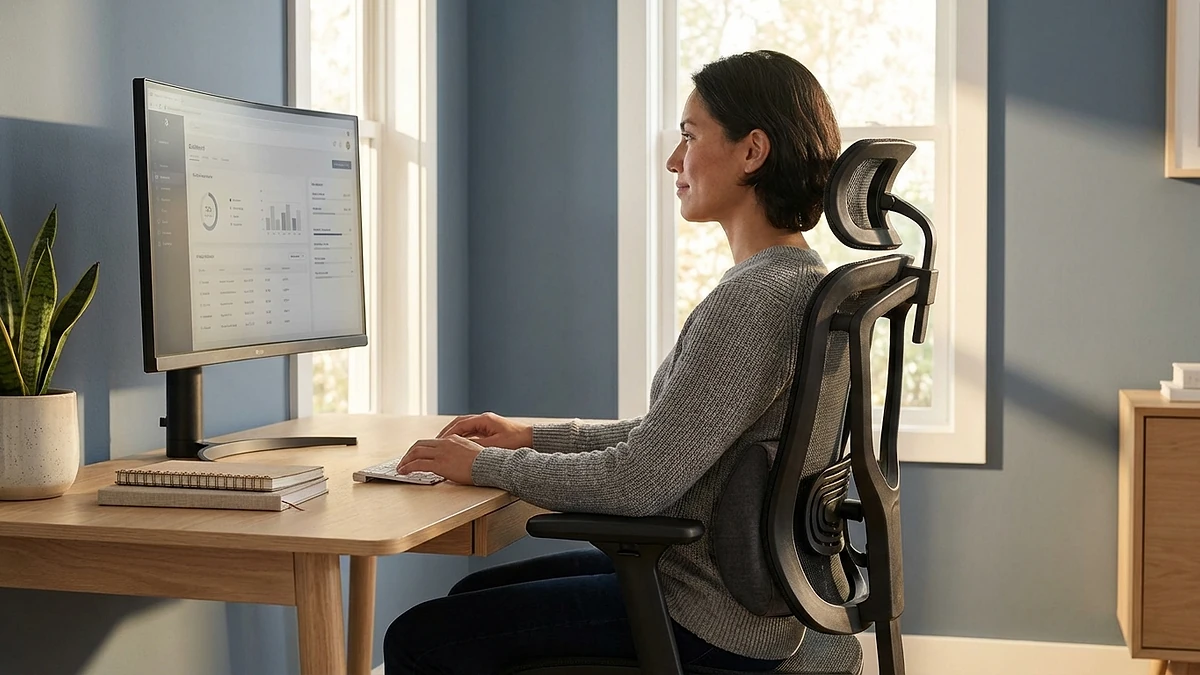
For most desk workers, the sit-stand desk wins not because it does the most, but because it does enough with the least friction. The point of changing how you work is to actually keep doing it, and the desk you keep using beats the impressive one you abandon.
A sit-stand desk lets you alternate sitting and standing throughout the day, which is exactly the position-changing the ergonomics and public-health guidance points toward. It costs less, takes less space, makes no noise and does not touch the quality of your work, so there is little reason to stop using it. The Cochrane review's finding that sit-stand workstations reduce sitting time is encouraging on that front, even if the long-term health proof is still developing. The treadmill can add more movement, but every extra requirement it carries, the money, the space, the noise, the accuracy cost, is one more reason it ends up unused in a corner. Understanding the wider picture of what sitting all day does to your body is the real motivation; the desk is just the tool that makes sitting less the easy default.
Whichever you choose, the cheap and powerful move costs nothing: stand up, stretch and walk for a couple of minutes regularly, regardless of what your desk does. A desk that makes standing easy nudges you toward that habit; a desk that sits unused does not.
Our desk, honestly
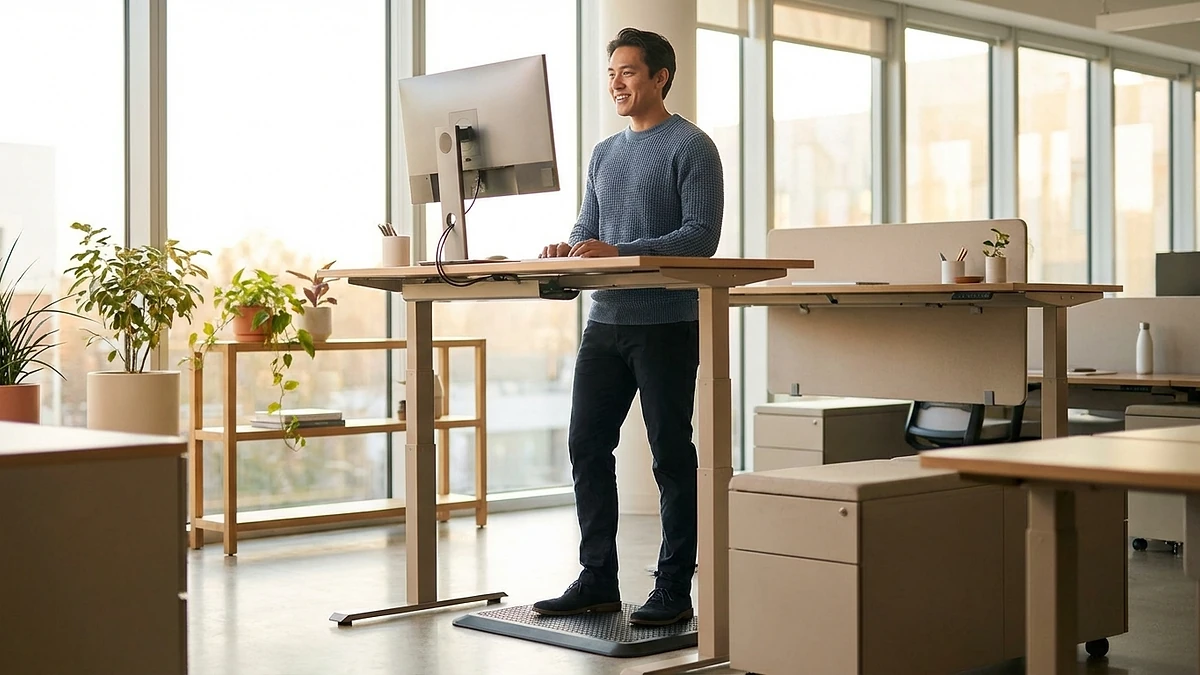
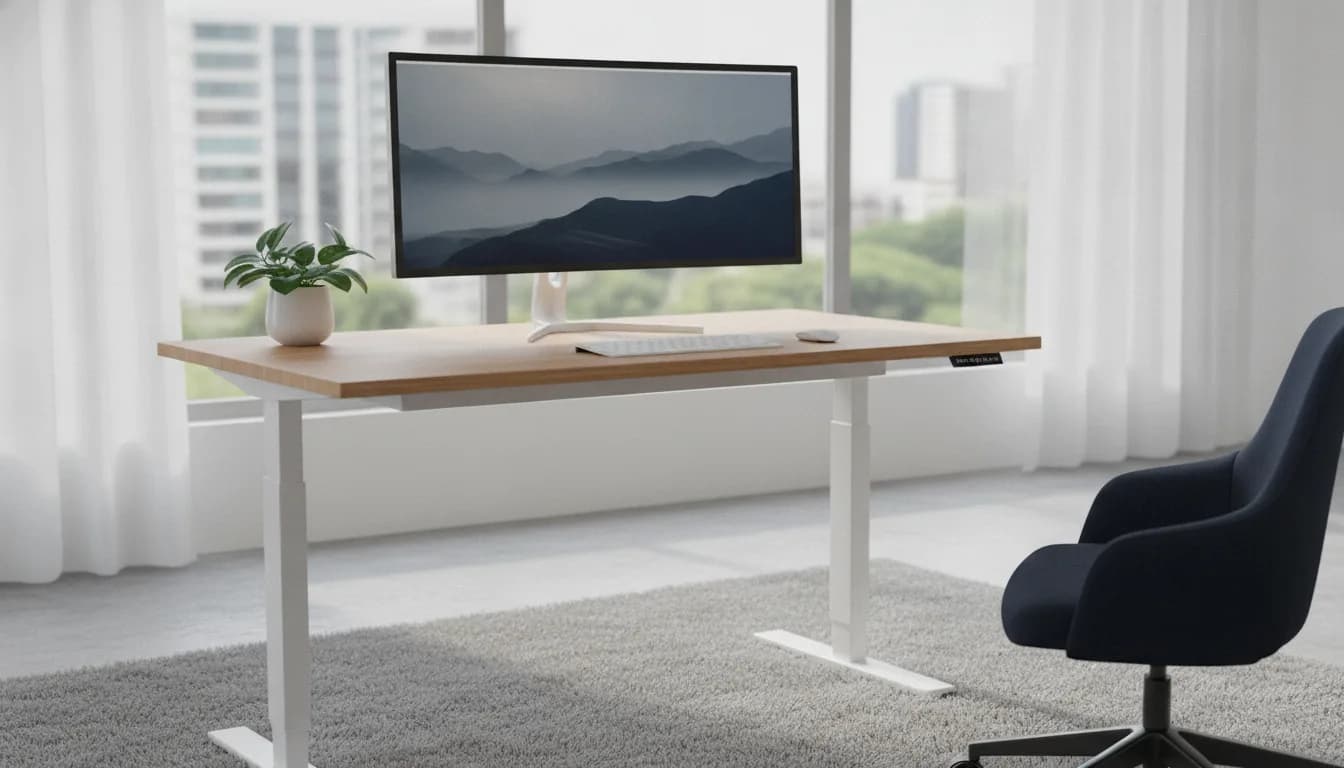
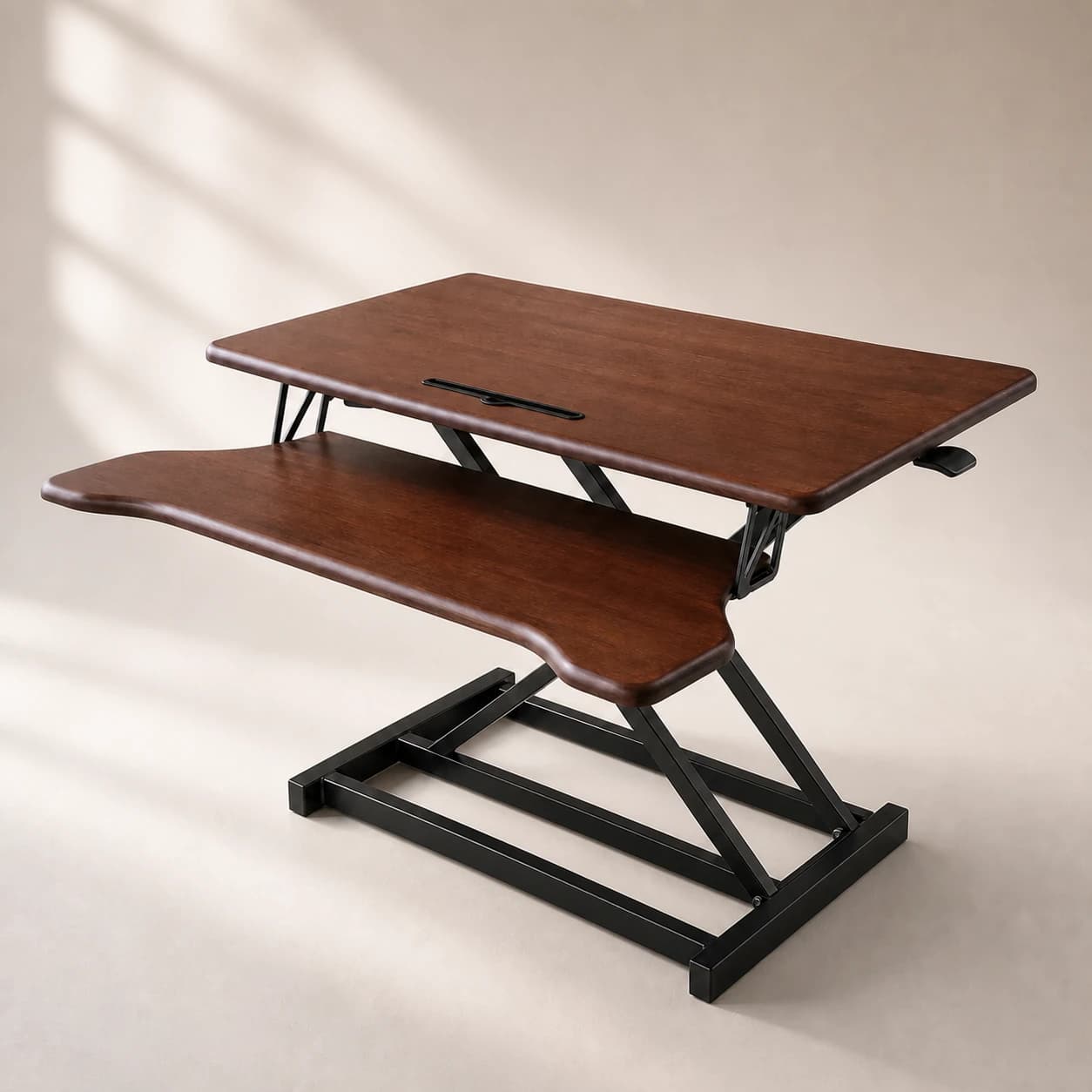
If you decide a sit-stand desk is the right answer, our adjustable standing desk is the option we would put forward. It is built around the thing this comparison keeps returning to: making it easy to change position. You can raise and lower it to set both a comfortable standing height and a comfortable sitting height, so swapping between the two takes seconds and you are far more likely to keep doing it through the day. It is quiet, it takes only its own footprint, and it does not ask you to trade away typing accuracy to get movement.
We will be just as plain about who it is not for. If your work is genuinely call-heavy and read-heavy, you have the floor space and budget, and your priority is getting real walking into your day, a treadmill desk may suit you better than ours, and we would rather you bought the thing that fits your work. If your real goal is fitness, neither our desk nor any desk is the answer; you want deliberate exercise, in line with the CDC guidance. And if money is tight, a standing-desk converter on your existing desk, or simply standing up to walk every half hour, gets you much of the benefit for little or nothing. We would rather you spend on the thing that actually solves your problem. If you want to weigh full standing setups side by side first, browse the standing desks collection and choose for how you really work.
When to see a professional
A standing or treadmill desk is a comfort and movement aid, not a medical device, and choosing one is not a substitute for medical advice. Most desk-related aches ease with a setup that fits, regular position changes and movement away from the desk. Some symptoms need a clinician, not new equipment. See a doctor or physiotherapist if your back or neck pain follows a fall or other trauma, if you have progressive weakness or numbness or tingling spreading down a leg or arm, if you lose feeling in the saddle area between your legs, if you lose control of your bladder or bowels, or if pain comes with unexplained weight loss, fever or feeling generally unwell. The NHS back-pain guidance is clear that these warrant prompt assessment, because they can signal something no desk will fix.
The bottom line
The treadmill-versus-standing question has a clear honest answer for most people: both beat all-day sitting, the treadmill adds the most movement, but it costs you money, floor space, quiet and typing accuracy that a sit-stand desk does not. Unless your work is call-heavy and read-heavy and you have the room and budget for a treadmill, the sit-stand desk gives you the larger share of the benefit with far less friction, which is why most people will actually keep using it. If you want that desk, our adjustable standing desk is the option we would recommend, judged against the same criteria as everything else, and we have told you plainly when a treadmill, a cheaper converter or simply more walking is the better call instead. If you would rather compare standing setups first, start with the standing desks collection and choose once, for how you really work.