
What Sitting All Day Does to Your Body
You sit down at nine, look up at six, and your lower back is stiff, your hips feel tight, and your neck aches from leaning toward the screen. If you have wondered what sitting all day does to your body, you are asking a reasonable question, and the honest answer is more measured than the scare headlines suggest. Long sitting is linked to real effects, but the size of the risk, and how much you can blunt it, depends heavily on what else you do with your day.
This guide sticks to what the evidence supports and says so plainly where the certainty is limited. The reassuring through-line is that the fix is movement, not fear. We sell comfort and posture aids, not medical devices, so treat everything here as a framework rather than a sales pitch, and judge any product, ours included, against the same plain criteria. Where movement alone solves it, we will say so, because for most people it largely does.
What the research says about sitting all day
Sitting all day is associated with stiffness, muscle fatigue, and a higher long-term health risk, but the size of that risk depends on how active you are otherwise. A large analysis by Ekelund and colleagues found that enough daily physical activity substantially attenuated the link between sitting time and earlier death. Sitting is not harmless, but it is not a fixed sentence either.
That nuance matters, because the scariest version of this story, where every hour seated is treated as straightforwardly toxic, is not what the strongest evidence says. The Ekelund analysis pooled data across many studies and reported that people who were both very sedentary and very inactive carried the highest risk, while a meaningful amount of daily movement blunted the association considerably. The practical reading is not that sitting does not matter, but that what you do around your sitting matters at least as much.
The NHS frames it the same way: it advises sitting less and moving more, treating long unbroken sitting as something to break up rather than a single catastrophic exposure. Throughout this guide we will avoid quoting precise percentages we cannot stand behind, and instead describe the direction of the findings, because the direction is the part the evidence agrees on. Sitting all day pulls in the wrong direction; regular movement pulls back.
Musculoskeletal effects: back, neck, and hips
The most immediate, day-to-day effects of long sitting are musculoskeletal, and these are the ones you actually feel. They are usually about position held too long, not damage, which is why they tend to ease when your setup and habits improve.
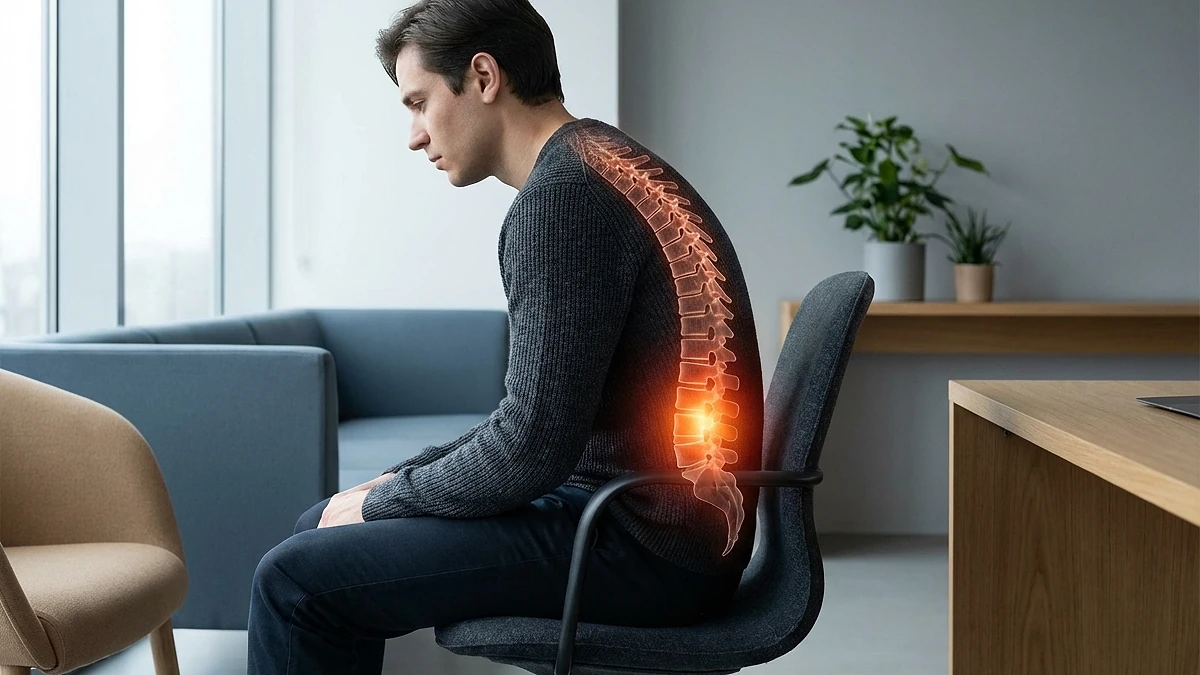
- Lower back. A seated day leaves the muscles around your spine working to hold you upright, and a slumped or unsupported posture rounds the lower back out of its natural curve. The NHS notes that back pain is very common and usually not caused by anything serious, with prolonged sitting and posture among the everyday contributors.
- Neck and shoulders. When a screen sits too low, your head drifts forward to read it, and that forward lean loads the neck and upper back for hours at a time. The NHS describes most neck pain as posture-related and self-limiting rather than a sign of serious injury.
- Hips and the front of the body. Sitting holds the hip flexors in a shortened position and the glutes switched off for long stretches, which can leave the hips feeling tight and the lower back doing more than its share when you finally stand.
The CCOHS overview of sitting at work makes the underlying point clearly: no single position is good for a long time, even a textbook-correct one. A supported, neutral posture lowers the cost of sitting, but it is the staying still that does the damage, not any one position you happen to hold.
Circulation and metabolic signals
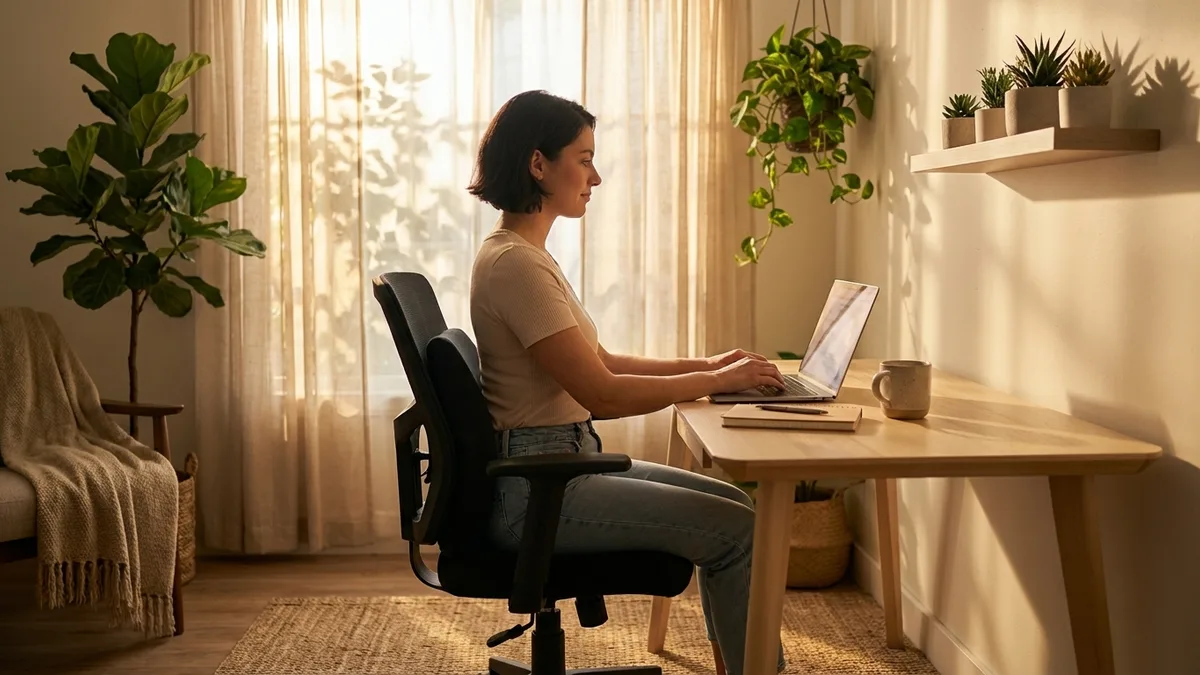
Beyond the aches, long sitting sends some less visible signals through your circulation and metabolism. These are easy to overstate, so it is worth being precise about what is well supported and what is more tentative.
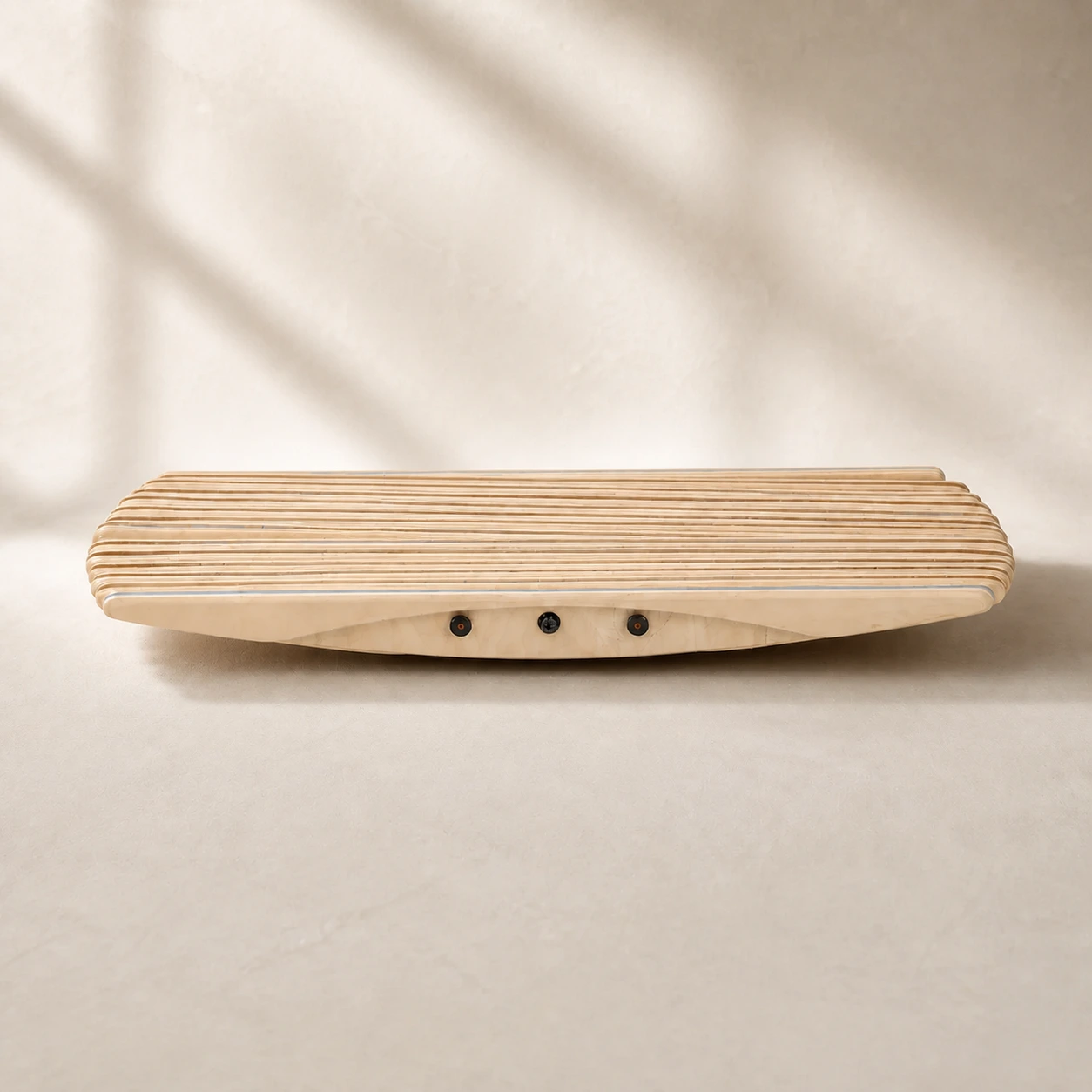 Product mentioned in this guideErgoSway Balance BoardCurved wooden balance board for controlled side-to-side movement at a standing desk. The firm, ribbed deck needs no setup and can be moved aside when you…Free US shipping on every order60-Day Home Trial · we pay return shippingSee current price
When you sit for hours, your large leg muscles are barely active, and that lack of muscle contraction is part of why the NHS advises against long unbroken sitting. Standing and light movement raise energy expenditure modestly compared with sitting, which a systematic review by Saeidifard and colleagues quantified; the difference per hour is small, but it accumulates across a working day and a working life. The honest caveat is that swapping some sitting for standing is a nudge, not a workout, and it does not replace deliberate activity.
There are also signals around how the body handles blood sugar. A study by Buckley and colleagues found that breaking up seated office work with standing reduced the post-meal rise in blood glucose compared with sitting through the afternoon. That is a single workplace study rather than the last word, so we treat it as suggestive of a direction rather than a guarantee of an outcome. Taken together, the metabolic case is real but modest, and it points to the same conclusion as everything else here: interrupt the sitting.
The real antidote: move more, sit less
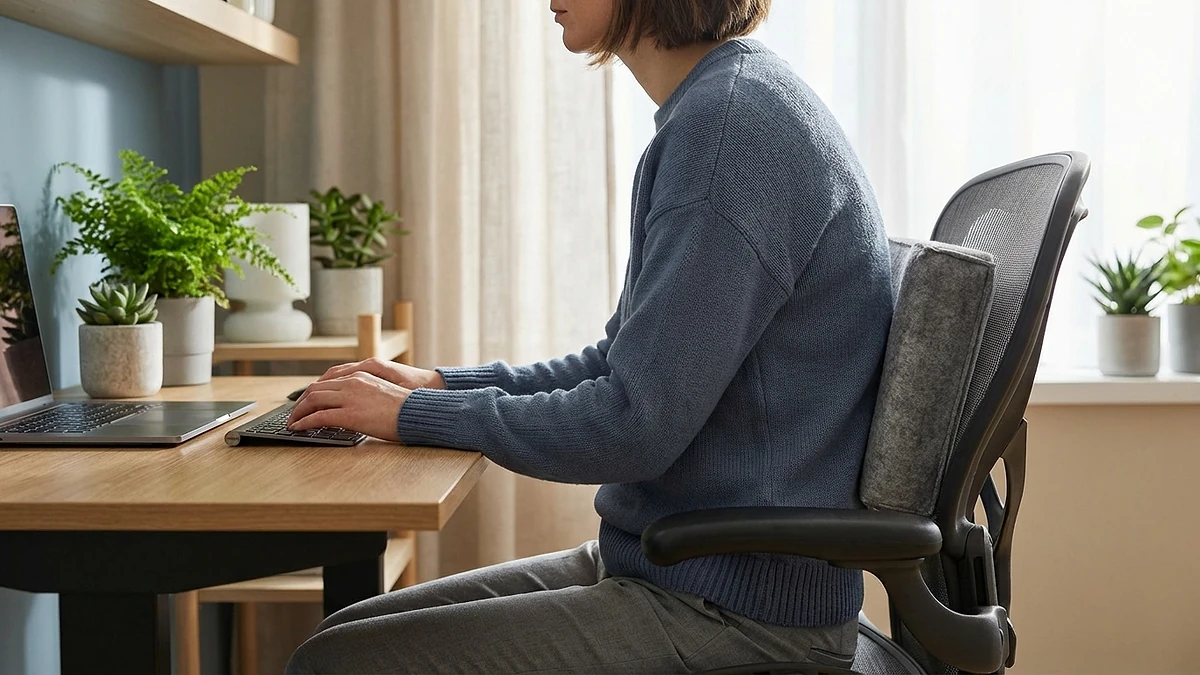
If there is one thing to take from the evidence, it is that the antidote to sitting all day is not a perfect chair or a special gadget; it is movement. This is the most reassuring part of the research and the cheapest, because the highest-value change costs nothing.
The Ekelund analysis is the anchor here: enough daily activity substantially weakened the link between long sitting and earlier death. That reframes the whole question. Rather than fearing every hour at your desk, the goal is to make sure your day contains real movement and that your sitting is broken up rather than held in one long block. General physical-activity guidance points to a regular weekly amount of moderate activity plus some muscle-strengthening, and a desk job does not have to get in the way of meeting it.
So the order of priority is clear. Move regularly across the week, break up sitting through the day, and only then worry about the finer details of your setup. The gear is the smaller half of the answer, and any honest framework has to put it second to the free, evidence-backed thing: getting up and moving.
Practical changes that actually help
None of this requires overhauling your life. A handful of small, repeatable habits do most of the work, and you can layer in equipment only where it removes friction from those habits.
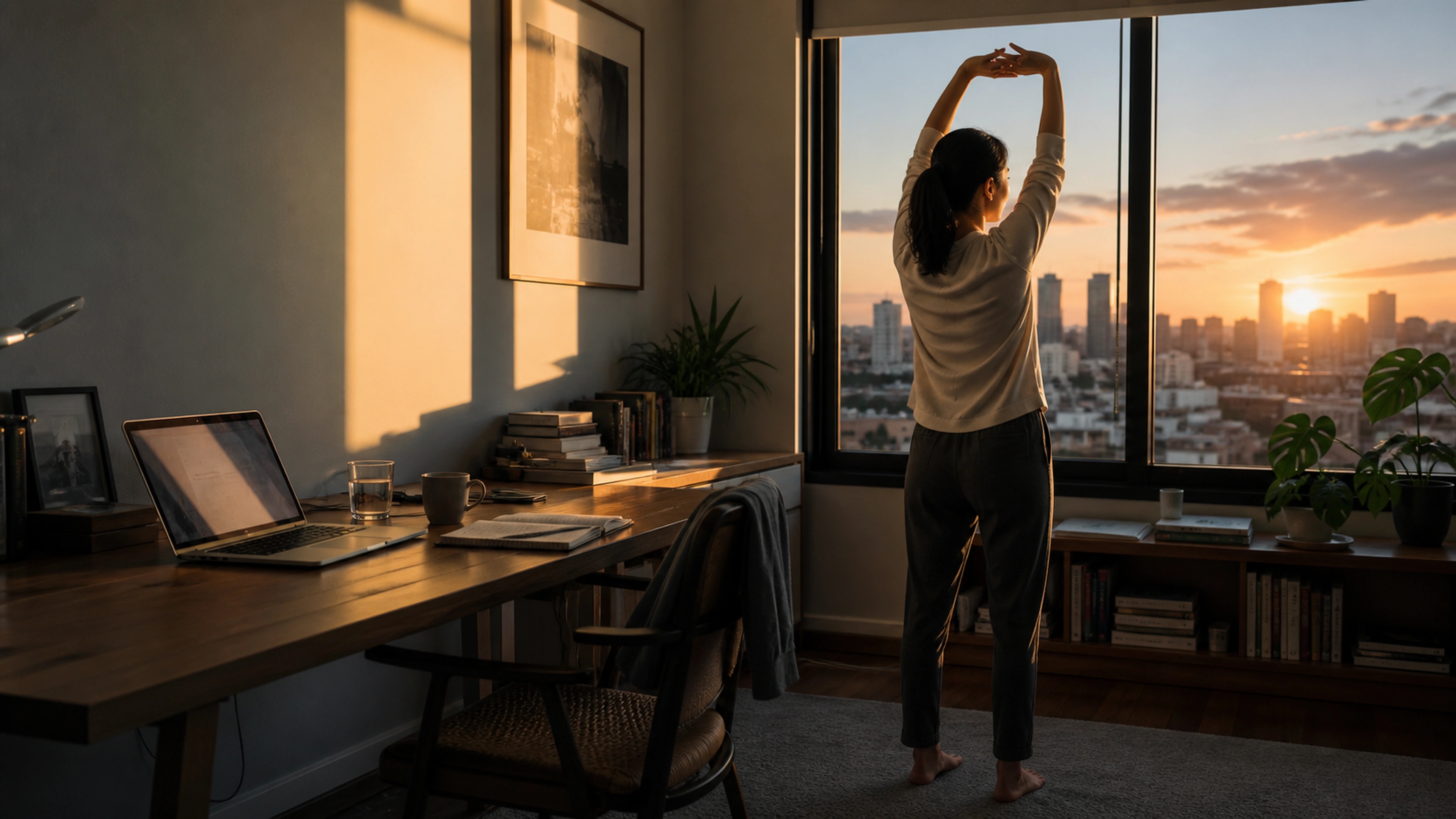
- Break up sitting every 30 to 60 minutes. Stand, stretch, or walk for a minute or two at least once an hour. This is the single most evidence-aligned change on the page, and it is free.
- Vary your posture, not just your position. Lean back, sit forward, stand for a call. CCOHS is explicit that changing posture beats holding any single one, even a correct one.
- Alternate sitting and standing. A sit-stand setup makes it easy to switch between postures through the day, which is the behaviour the evidence rewards. A Cochrane review of sit-stand interventions found they can reduce sitting time at work, while noting the certainty of the evidence is limited, so see it as a useful tool, not a cure.
- Add deliberate movement to your day. A brisk walk at lunch or a short routine between tasks counts toward the weekly activity that the research shows matters most.
- Get the basics of your seated posture right. Support your lower back, keep your screen near eye level, and rest your feet flat, so the hours you do sit cost your body less.
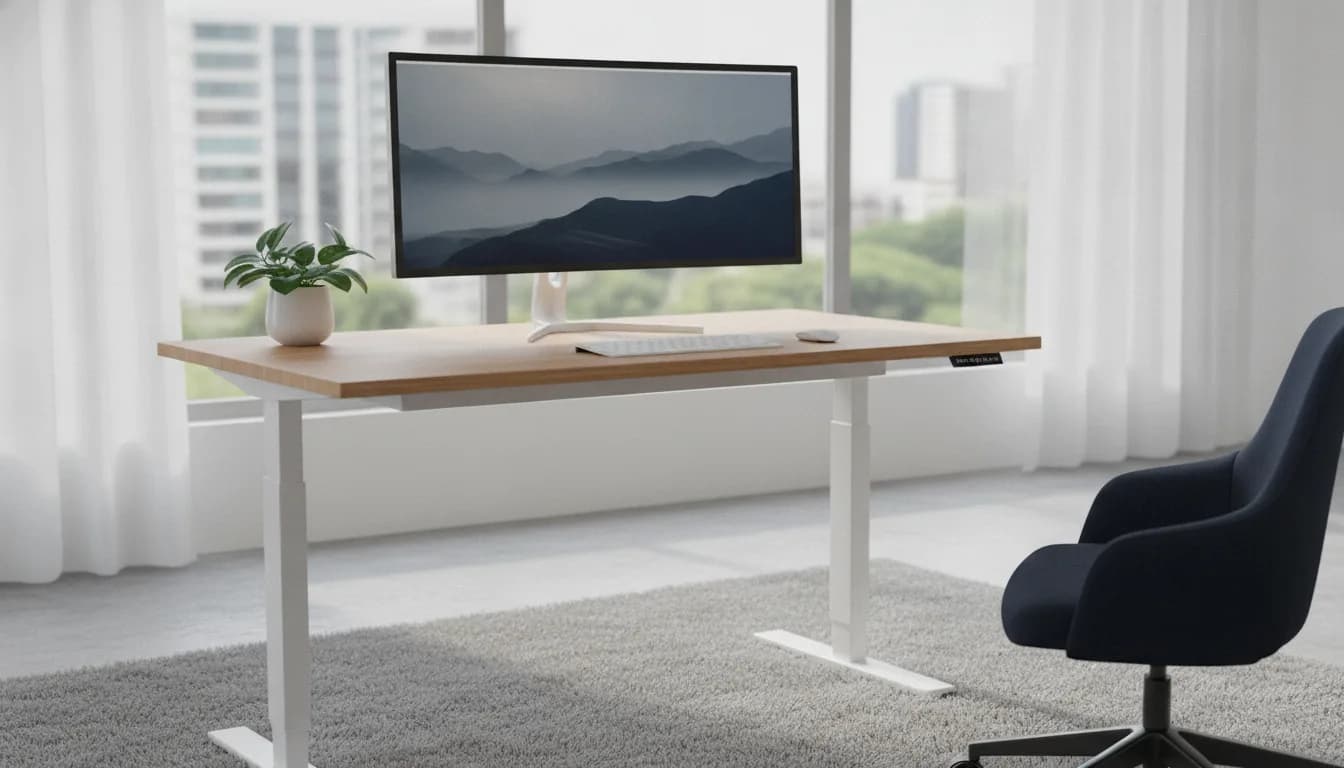
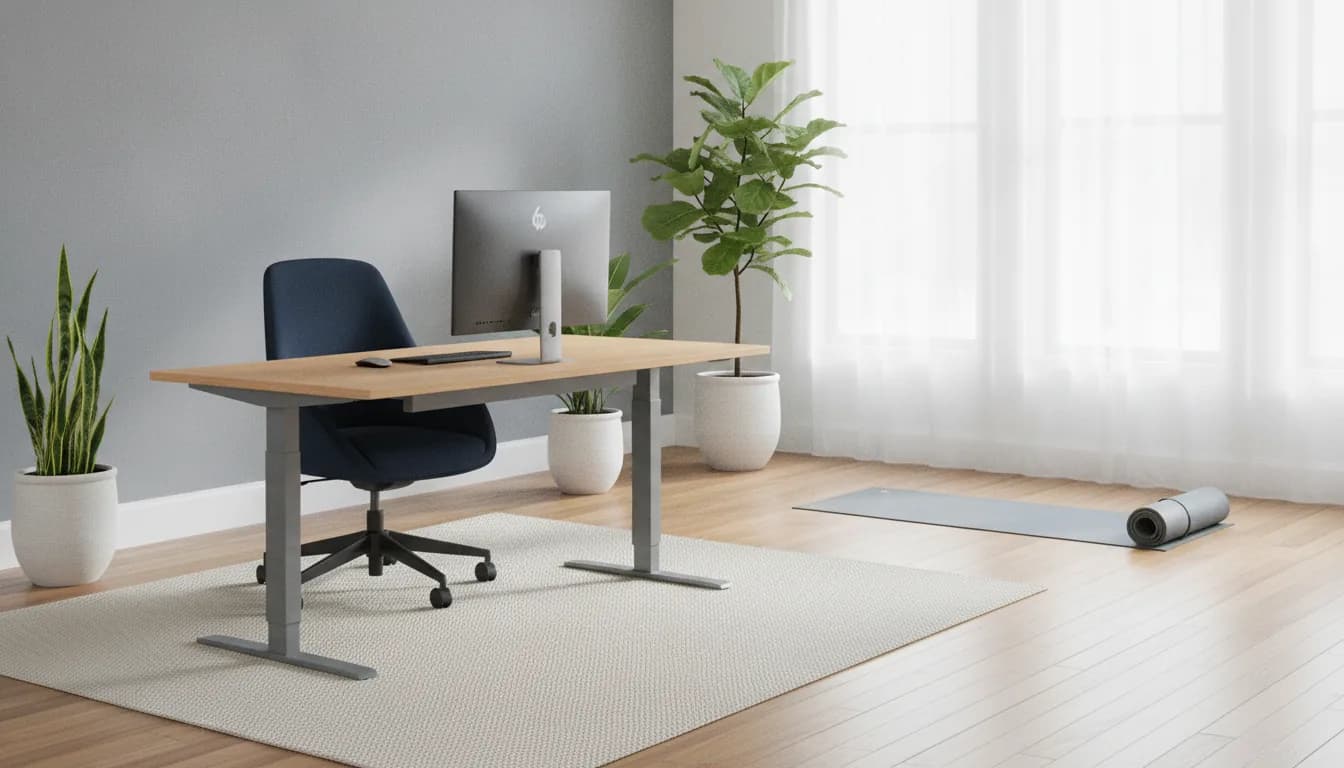
If alternating sitting and standing appeals, an adjustable standing desk lowers the friction of switching postures, which is the behaviour the evidence actually rewards. Judge it on that basis: does it make you change position more often, or does it just become a second chair you never raise. The honest caveat is who should not rush to buy one. If you struggle to break up sitting even with the desk you have, a standing desk will not fix the habit on its own, and the free approach of hourly movement breaks should come first. Standing all day in place is not the goal either; long static standing has its own strain, so the win is the switching. For how to balance the two without overdoing standing, see how long you should stand at a standing desk in our standing-time guide, and if you want a structure for the breaks themselves, the micro-break routine guide gives you one. A short set of desk stretches fills the in-between moments.
When to see a professional
Everything above is for the ordinary stiffness and aches that come with sitting too long and that ease when you move more and improve your setup. It is not medical advice, and our products are comfort and posture aids, not medical devices. See a GP, physiotherapist, or other healthcare professional if pain does not improve after a few weeks of better movement and posture, or sooner if any of the following apply.
- Pain after a fall, accident, or other trauma. A specific injury needs assessing rather than a posture tweak.
- Numbness, tingling, or weakness spreading down a leg or into a foot. This can signal a pressured or trapped nerve and warrants review.
- Numbness around the saddle area, or any loss of bladder or bowel control. Seek urgent medical help, as this can indicate a serious problem.
- Unexplained weight loss, a fever, or pain that is worse at night and does not ease with rest. These deserve prompt medical attention.
- Pain that is severe, steadily worsening, or simply not settling. Persistent or progressive pain is worth a professional opinion rather than more guessing at home.
Moving more and adjusting your setup is the right response to everyday stiffness. It is the wrong response if your body is signalling something that needs a clinician, and relying on a desk or cushion to fix those warning signs only delays the help you need.
The bottom line
What sitting all day does to your body is real but not a fixed sentence: it stiffens the back, neck, and hips, nudges your circulation and metabolism in the wrong direction, and over years raises long-term risk, yet the research consistently shows that regular activity substantially blunts that risk. The antidote is movement first, gear second. Break up your sitting every hour, vary your posture, and build real activity into your week, then add equipment only where it makes those habits easier. If alternating sitting and standing is the friction point for you, an adjustable standing desk can make switching postures easy, and you can compare options across the wider standing desks collection. The desk is a tool for moving more, not a substitute for it.