
How Long Should You Stand at a Standing Desk?
You bought (or are thinking about) a standing desk, and now you are stuck on the question nobody answers clearly: how long should you stand at a standing desk before you sit back down? The popular advice swings between "stand as much as you can" and "stand for an hour, then sit" - and most of it is guesswork dressed up as a rule.
This guide is honest about two things. First, the evidence behind standing desks is real but modest, and we will not inflate it. Second, we sell adjustable standing desks, so treat this as a buying-and-usage framework judged against stated criteria, including ours. The short version: the win is not standing more, it is sitting less and changing position often. Standing rigidly for hours has its own well-documented downsides.
A quick scope note. A standing desk is a comfort and posture aid, not a medical device, and not a fitness machine. If you have persistent or severe pain, what follows helps you set up sensibly, but it does not replace a clinician.
How long should you stand? A direct answer
Alternate rather than commit to one posture. A practical starting rhythm is roughly 20 minutes sitting, 8 minutes standing, and 2 minutes moving each half-hour, then repeat. The exact ratio matters less than the switching. The goal is to break up long unbroken sitting, not to stand for as long as you can tolerate.
That ~20/8/2 split is a starting point, not a prescription. Some people feel better at 30 minutes sitting to 10 standing; others prefer shorter, more frequent swaps. Adjust to your body and your work. The principle that holds across every credible source is the same: change posture before either one starts to ache, and add small bouts of actual movement, because standing still is not the same as being active.
What the evidence actually supports
Here is where honesty matters most, because the marketing around standing desks runs well ahead of the science. The benefit is genuine but narrow, and the certainty is limited.
A Cochrane review of workplace interventions for reducing sitting found that sit-stand desks do reduce total sitting time at work, at least in the short term, but rated the certainty of that evidence as low. In plain terms: a sit-stand desk is a reasonable tool for sitting less, but the long-term health payoff has not been firmly established. That is not a reason to skip a standing desk; it is a reason to buy one for the right purpose.
The calorie story is smaller still. A systematic review and meta-analysis comparing energy expenditure while sitting versus standing found only a small difference per minute. Standing is not a weight-loss strategy, and any claim that a standing desk burns meaningful calories should be treated with scepticism.
There are some encouraging specifics. One workplace study found that standing after meals attenuated the post-meal rise in blood sugar compared with sitting through the afternoon. And broader public-health guidance from the NHS is consistent: long, unbroken sitting is associated with poorer health outcomes, and breaking it up is sensible. The throughline across all of it: the active ingredient is less sitting and more movement, not the standing itself.
Why standing all day is also bad for you
If you take "sit less" and turn it into "stand for eight hours," you trade one problem for another. This is the part standing-desk marketing tends to leave out.
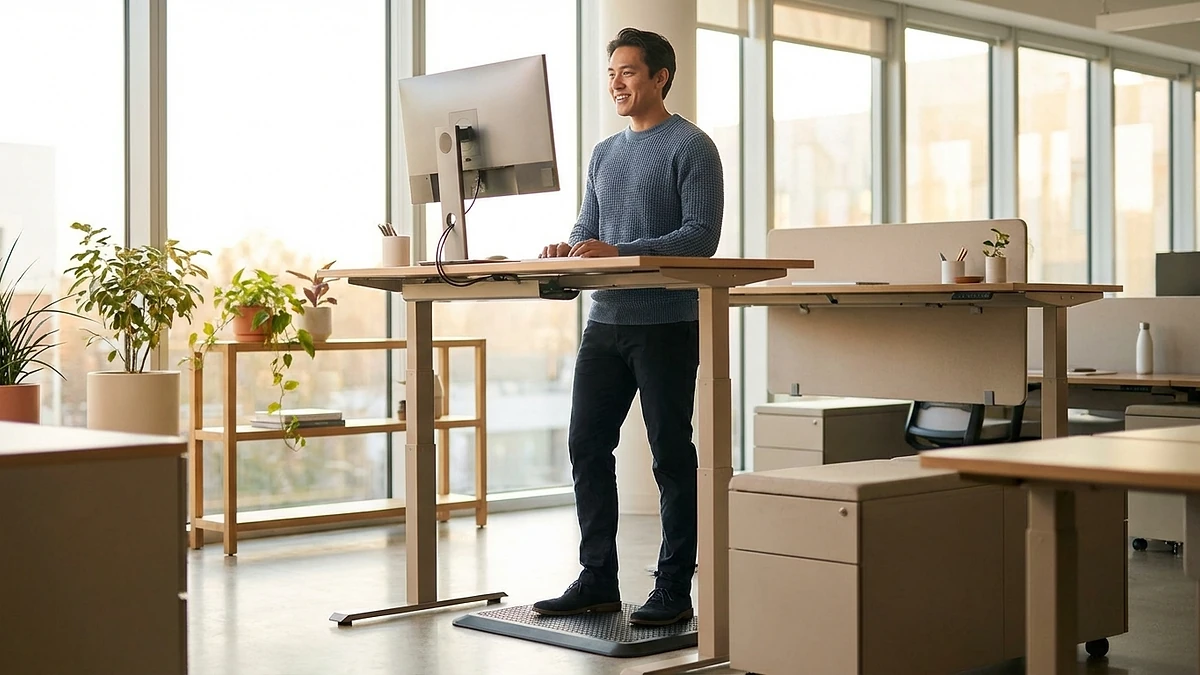
Guidance from the Canadian Centre for Occupational Health and Safety is direct: prolonged standing at work is itself a recognised hazard. Standing for long stretches without moving is associated with foot, leg, and lower-back discomfort, swelling in the legs, and fatigue, because static standing loads your joints and circulation without the relief that changing position provides.
- Lower-back and leg fatigue. Static standing keeps the same muscles loaded continuously, which tires them and can ache by mid-afternoon.
- Circulation and swelling. Standing still for long periods can let fluid pool in the legs and feet.
- Sore feet and joints. Hard floors and unbroken standing stress the feet, knees, and hips over a full day.
The takeaway is not "standing is bad." It is that the body wants variety. The healthiest posture is the next one. That is exactly why a schedule built on alternating beats any rule that pushes you to maximise time in either chair or stand.
Building a sit-stand schedule you will actually keep
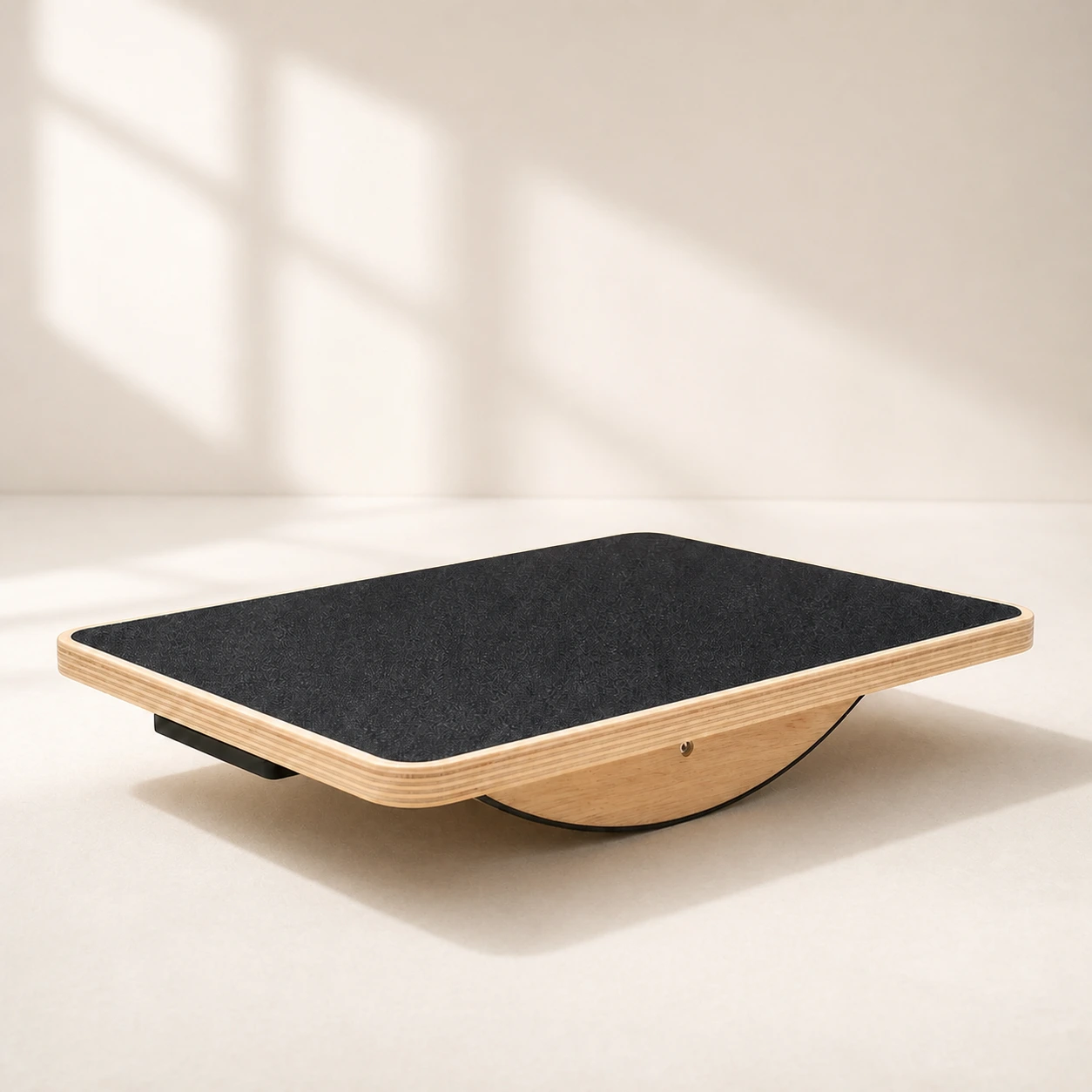 Product mentioned in this guidePivotArc Balance BoardRectangular balance board with a broad black top/contact surface, light-toned wooden perimeter, and fixed centred rocker for user-controlled standing…Free US shipping on every order60-Day Home Trial · we pay return shippingSee current price
A schedule only helps if you follow it, so keep it simple and forgiving. Start from the ~20/8/2 rhythm and shape it around your real workday.
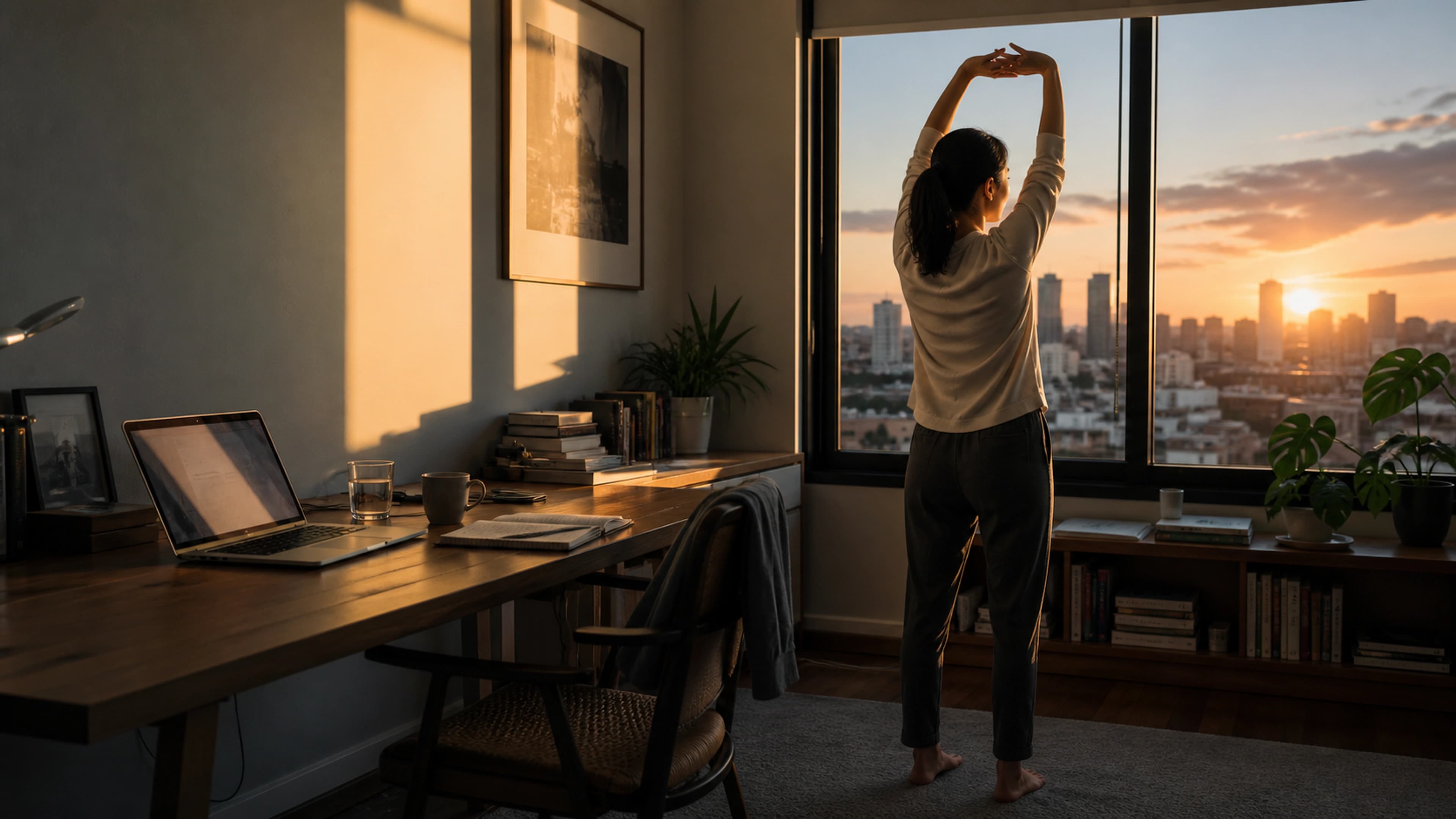
- Anchor to the half-hour. Sit for roughly 20 minutes, stand for about 8, and spend the last 2 moving - a short walk, refilling water, or a few stretches.
- Stand for the easy tasks. Calls, reading, and email are low-precision and easy to do standing. Save heads-down detailed work for sitting if standing feels distracting at first.
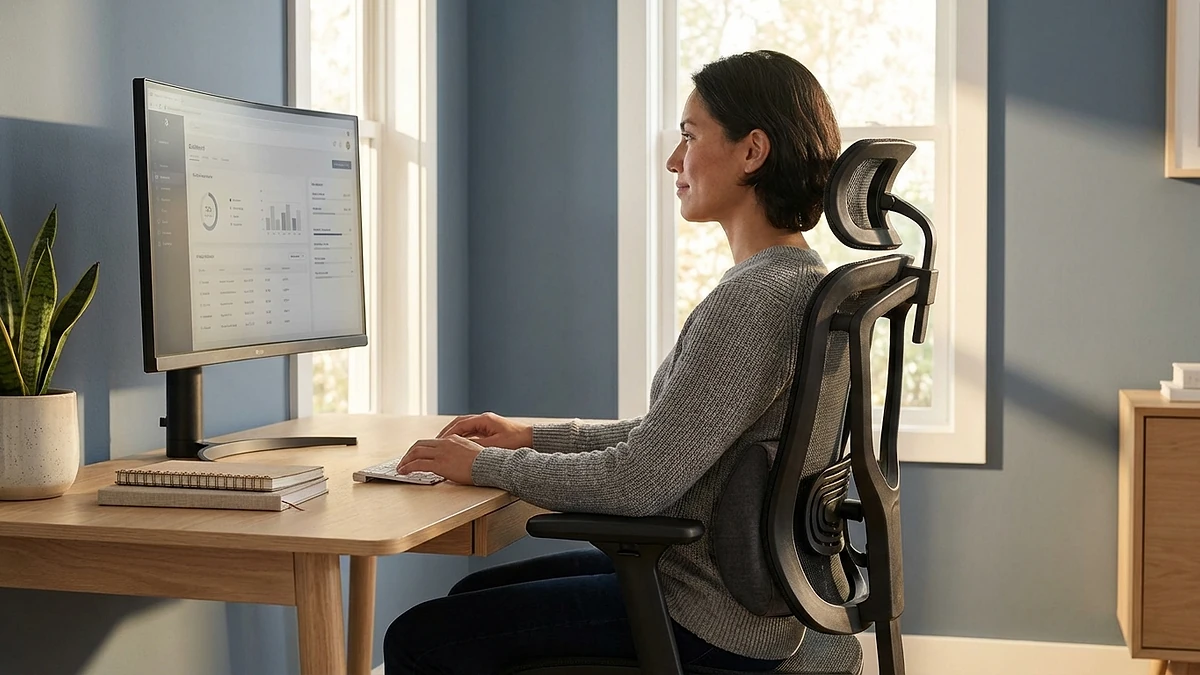
- Sit with proper support. The sitting half of your day still needs a chair that keeps your lower back's natural curve. Standing more does not cancel out a bad sitting setup.
- Switch before it aches. Do not wait until your feet or back complain. Change position on the timer, not on the pain.
- Count movement separately. Standing is not movement. The two-minute walking break is doing different, useful work, so keep it in.
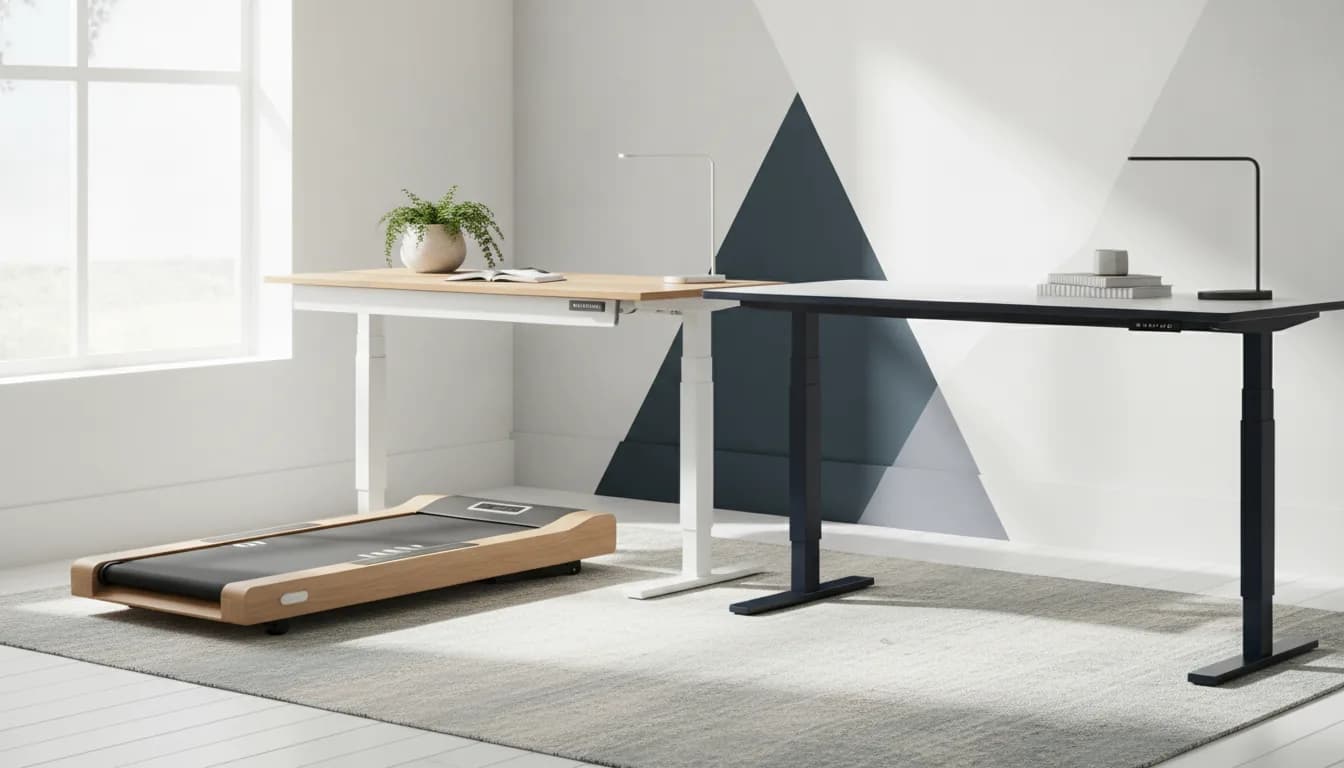
If you want a structured way to weave in those movement breaks, our micro-break routine guide lays out a repeatable pattern. And if you are still deciding whether to sit-stand or keep walking, the treadmill desk versus standing desk comparison walks through the trade-offs honestly.
Easing in: the most common mistake
The single biggest reason people abandon a standing desk is doing too much, too soon. They stand for hours on day one, their legs and lower back protest, and they conclude standing desks are not for them. The desk was fine; the dose was wrong.
Treat standing like any new physical habit and ramp it up gradually. In the first week, stand for short stretches - a few minutes at a time, a handful of times a day - and let your legs and feet adapt. Add a few minutes each week. A supportive shoe or an anti-fatigue mat helps a lot, because hard floors are a common reason standing feels worse than it should. If a posture starts to hurt, that is your signal to switch, not to push through it. Most people find a comfortable, sustainable balance within two to three weeks of easing in.
Desk presets, reminders, and removing friction
The honest reason most sit-stand plans fail is friction. If changing position is a hassle, you stop doing it, and the desk drifts to one fixed height for good. So the practical job is to make switching easy.
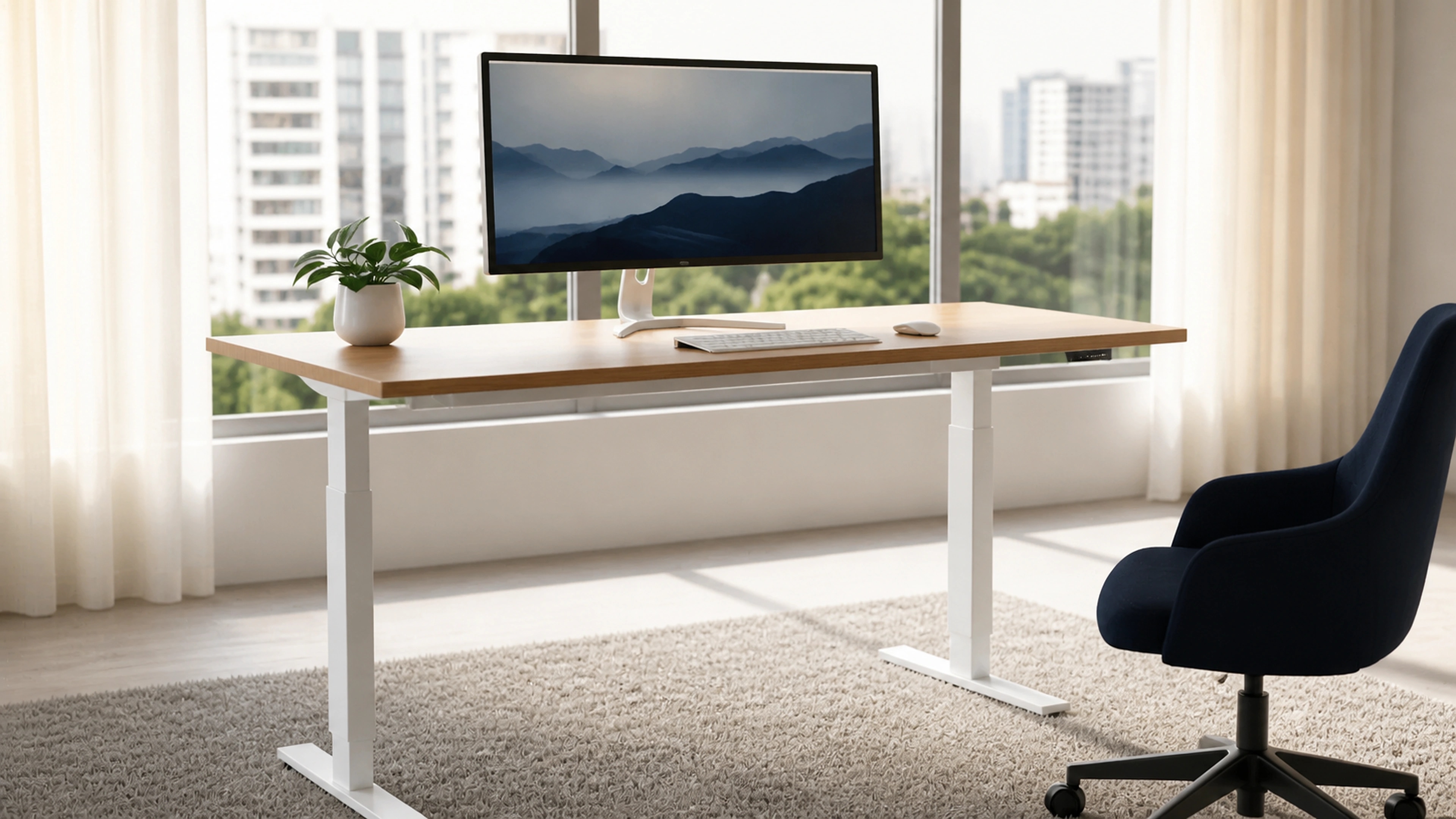
An electric adjustable standing desk with memory presets matters here for a specific, unglamorous reason: when your sitting and standing heights are saved to a button, the cost of switching drops to a few seconds, and you actually do it. A hand-crank desk works too, but the extra effort is exactly the kind of friction that quietly kills the habit. Pair the desk with a reminder - a timer, a calendar nudge, or your phone - for the first few weeks until the rhythm becomes automatic.
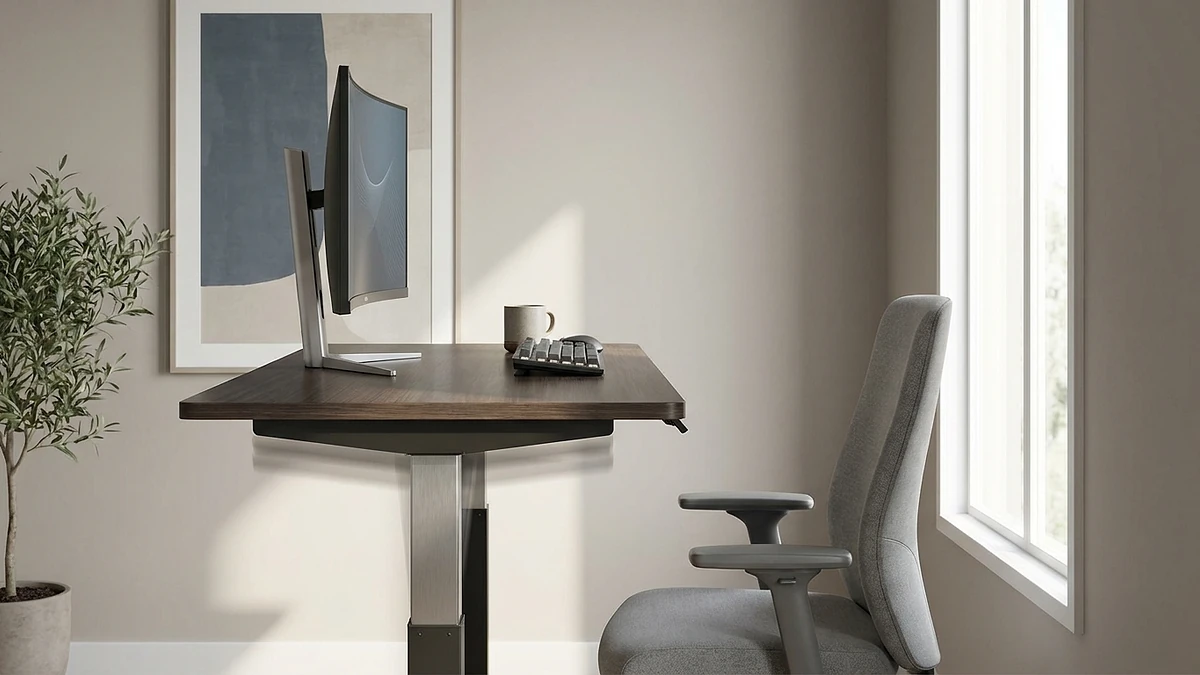
A few setup points apply in both positions. When standing, raise the surface so your elbows sit at roughly 90 degrees and your forearms are parallel to the floor, with the monitor's top edge at or just below eye level. When sitting, the same elbow and eye-line rules apply from the chair. Getting these right is what makes alternating comfortable instead of something you avoid.
Who should not bother - or needs less than this
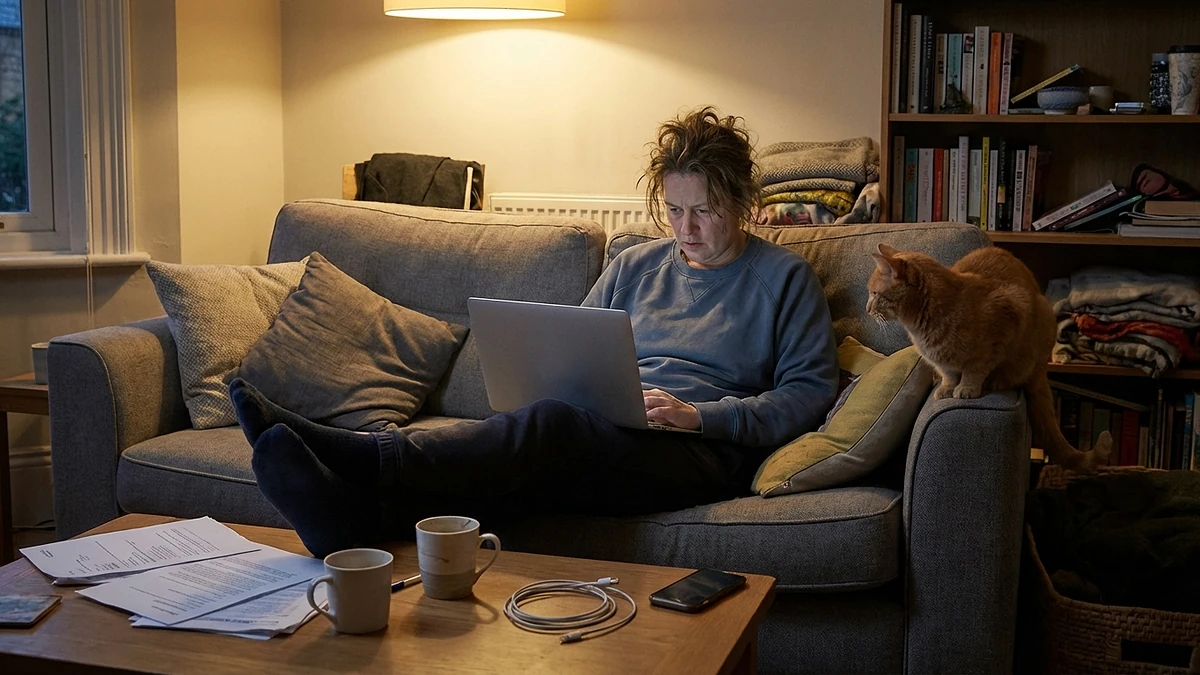
We would rather you not overbuy. A full electric standing desk is more than some people need.
- You already move a lot during the day. If your work keeps you on your feet or you take frequent breaks, a standing desk solves a problem you may not have.
- You only need to stand occasionally. A desktop converter on your existing desk, or simply standing during calls, may be enough.
- Your bigger issue is your chair. If your pain comes from sitting badly, fixing your seating and lumbar support often does more than adding standing.
- You have a condition that standing aggravates. Some circulatory, joint, or pregnancy-related issues make prolonged standing unwise. Check with a clinician first.
For more on what long, unbroken sitting actually does - and why the fix is movement rather than any single posture - see what sitting all day does to your body.
When to see a professional
A standing desk addresses posture and inactivity. It does not treat a medical problem, and some symptoms need a clinician rather than a furniture change. See a doctor or physiotherapist promptly if you have any of the following:
- Pain after trauma. Back, leg, or joint pain that follows a fall, accident, or injury.
- Progressive weakness. Worsening weakness or loss of control in a leg or foot.
- Numbness in the saddle area. Numbness around the groin, buttocks, or inner thighs.
- Loss of bladder or bowel control. This needs urgent, same-day medical attention.
- Unexplained weight loss or fever. Pain alongside these warrants prompt assessment.
- Pain that does not settle. Pain that is severe, steadily worsening, or persists for several weeks despite a sensible setup.
Severe leg swelling, persistent calf pain, or significant new circulation problems also warrant medical advice rather than a fix at the desk.
The bottom line
How long should you stand at a standing desk? Long enough to break up your sitting, short enough that you never lock into one posture - a rough 20-minute-sit, 8-minute-stand, 2-minute-move rhythm is a sensible place to start. The evidence says the value is in sitting less and moving more, not in standing for its own sake, and standing all day brings its own fatigue and discomfort. Ease in gradually, sit with real support, and make switching easy.
If a height-adjustable desk fits your situation, an adjustable standing desk with memory presets removes the friction that quietly kills most sit-stand habits. If you want to compare options first, browse our standing desks collection and choose by the size and height range that suit your space - not by the loudest health claim.