
Best Under-Desk Footrest (2026): Fix Dangling Feet and Leg Strain
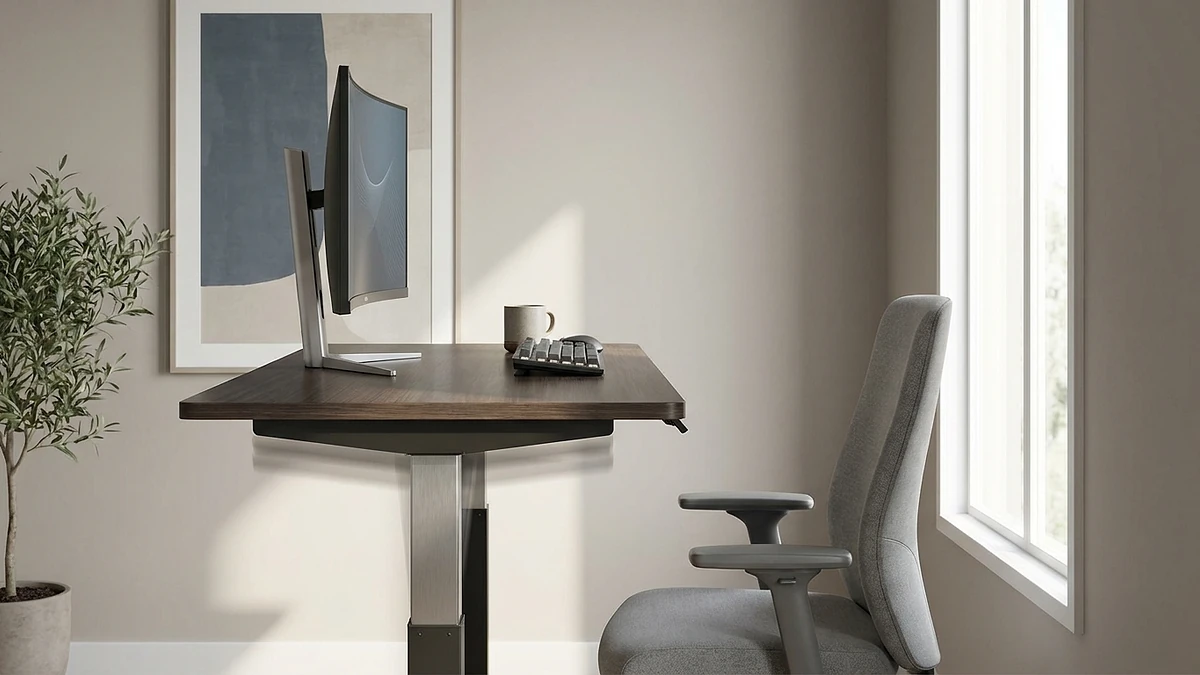
If you raised your office chair so your forearms sit level with your desk and suddenly your feet were dangling or only your toes reached the floor, you have run into the single most common reason people go looking for the best under desk footrest. It is not a comfort luxury for most of them. It is a fix for a setup conflict that an adjustable chair creates and cannot solve on its own.
This guide is straightforward about who needs a footrest and who does not, explains the difference between a fixed footrest and a rocker, and lays out the height, tilt, and grip criteria that actually matter when you choose. We sell one footrest, so treat this as an honest buying framework rather than a roundup of products we have not tested.
Who actually needs a footrest
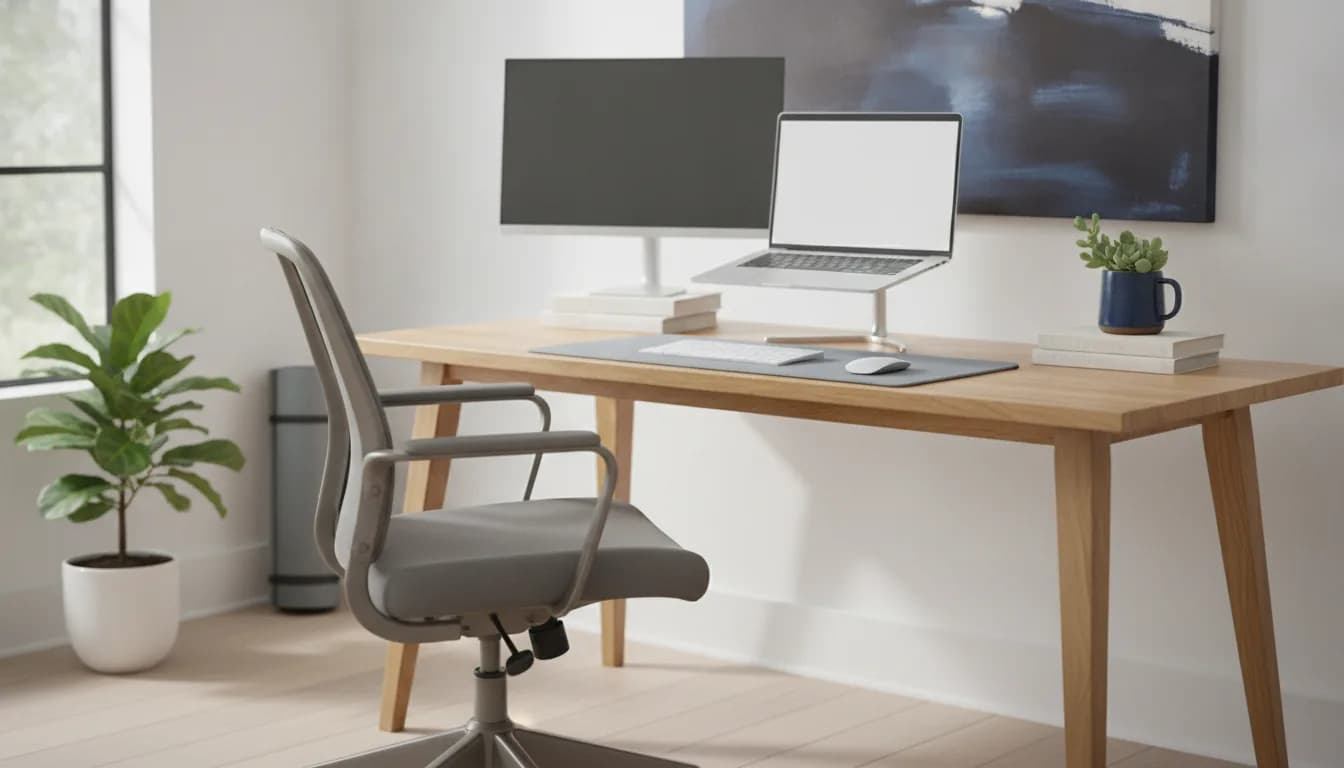
Start with the test, because plenty of people do not need a footrest at all. Set your chair to the right height first: raise or lower the seat until your forearms rest roughly level with your desk or keyboard, with your elbows at about a right angle. That arm position is what protects your shoulders and wrists, so it comes first.
Now look down. If your feet rest flat on the floor with your knees at roughly a right angle, you are set and you do not need a footrest. If your feet hang, or only your toes touch while your heels float, you have the classic problem: the desk height that suits your arms is too tall for your legs.
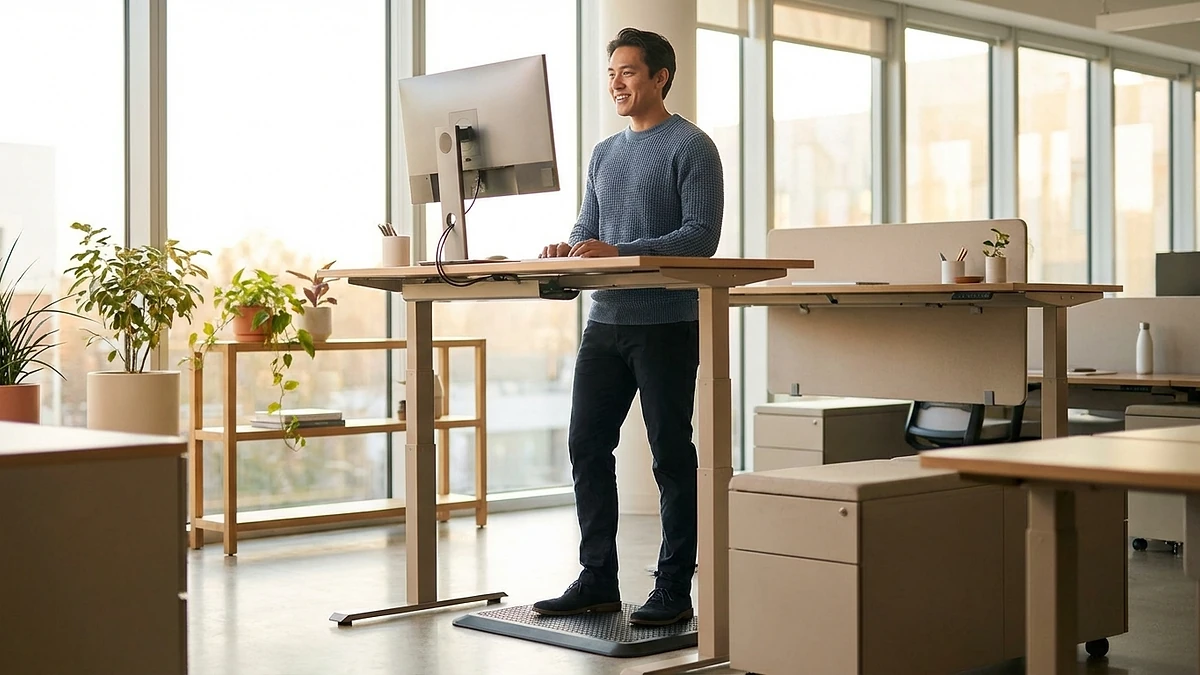
This hits shorter people hardest, because a desk built around an average-height user forces them to choose between supported arms and supported feet. You should never have to pick. A footrest raises the floor to meet your feet so you keep the correct arm height and a flat, supported foot position at the same time. The NHS guidance on sitting at a desk makes the same point: if your feet are not flat on the floor when the chair is set correctly, use a footrest.
The signs you would benefit from one
- Dangling feet. At the correct chair height for your arms, your heels do not reach the floor.
- Pressure under the thighs. The front edge of the seat presses into the backs of your legs, which happens when your feet have nowhere to bear weight.
- You drop the chair to reach the floor. Lowering the seat so your feet touch leaves your forearms below the desk and forces you to hunch up to the keyboard.
- Stiff, restless legs. Your legs feel locked and heavy after a long sitting, and you find yourself constantly shifting them.
If none of those apply, save your money. A footrest solves a specific geometry problem, and forcing one under feet that already rest flat just raises your knees too high.
What a footrest does for your posture
When your feet are supported and flat, the load of your lower body is shared properly. Your thighs rest along the seat instead of the seat edge digging into them, your knees and hips settle near a right angle, and your pelvis is freer to sit upright, which in turn supports your lower back. OSHA and Cornell's ergonomics guidance both treat feet flat on the floor or a footrest as a baseline of a neutral seated posture, not an optional extra.
The opposite is the cost of doing nothing. Dangling feet load the backs of the thighs and let blood pool in the lower legs, which is the tired, heavy feeling many people get by mid-afternoon. A footrest will not transform your spine, but it removes one of the avoidable strains in a seated day, and it lets the rest of your setup do its job.
Rocker vs fixed: which kind should you buy
Footrests come in two broad shapes, and the choice comes down to one question: is your problem the dangling feet, or is it the stillness?
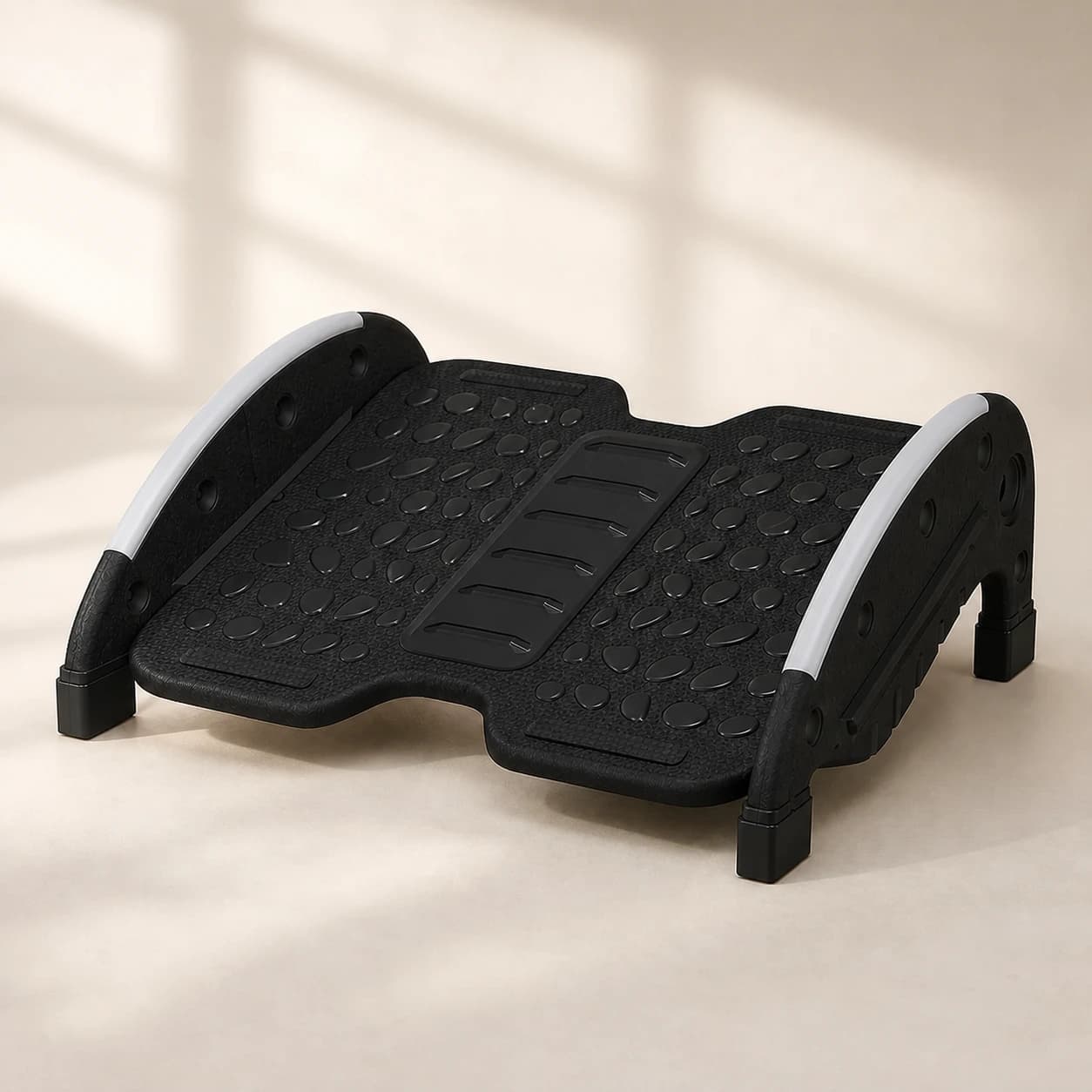
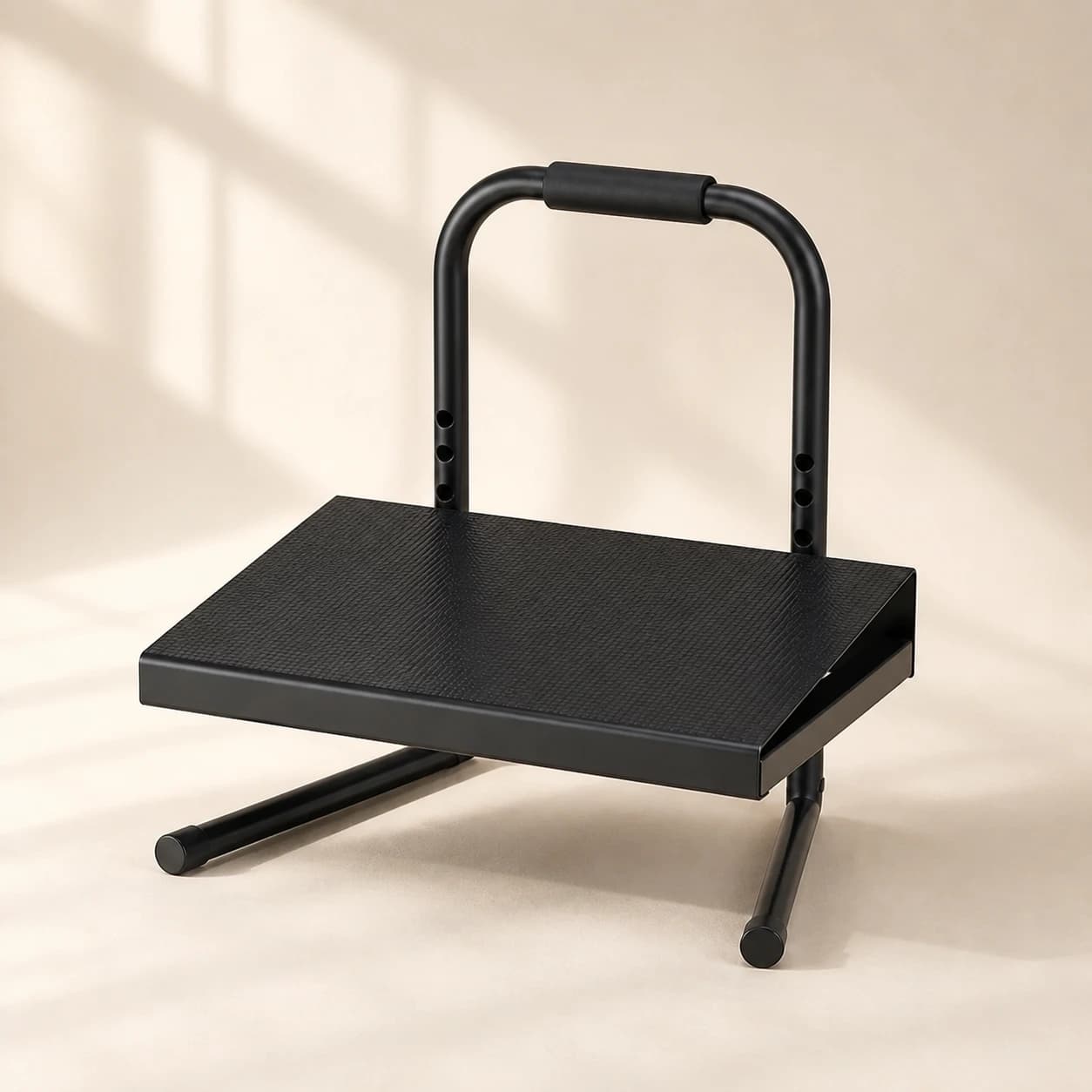
A fixed footrest
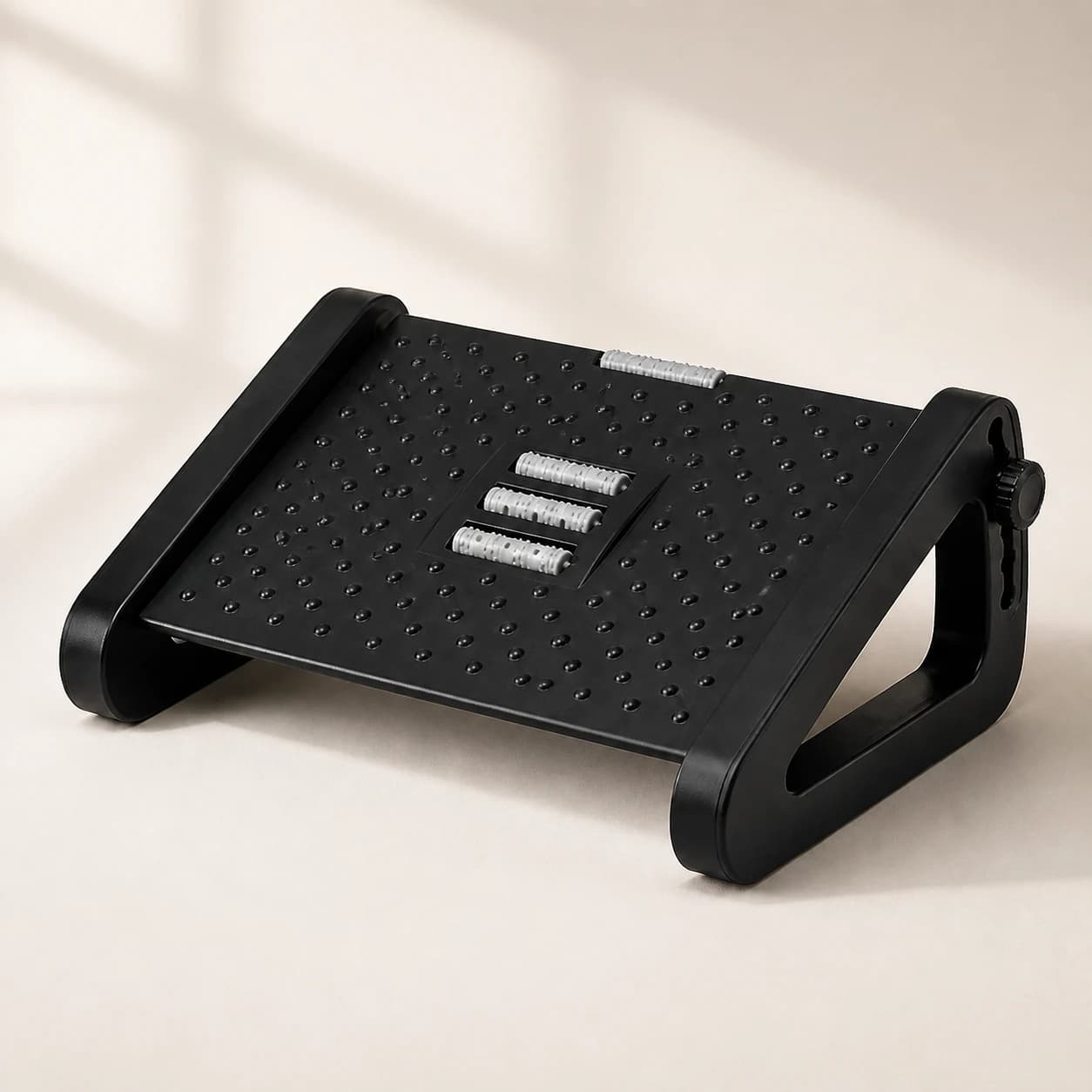
A fixed footrest is a stable platform. You set it to a height and angle and your feet rest on it, supported, all day. It is the right pick if your only issue is that your feet do not reach the floor and you want a steady, predictable surface. It is simple and it does the core job.
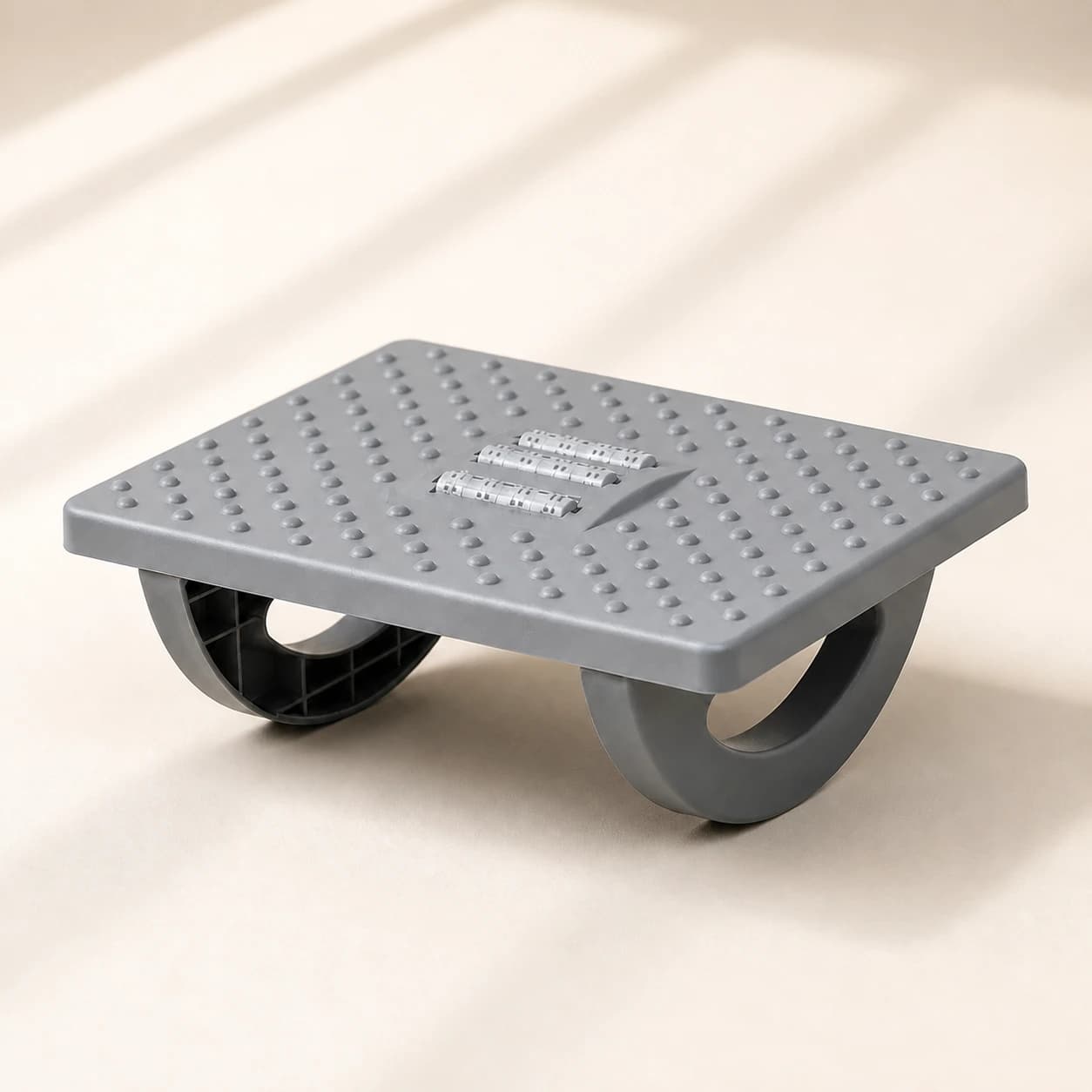
A foot rocker
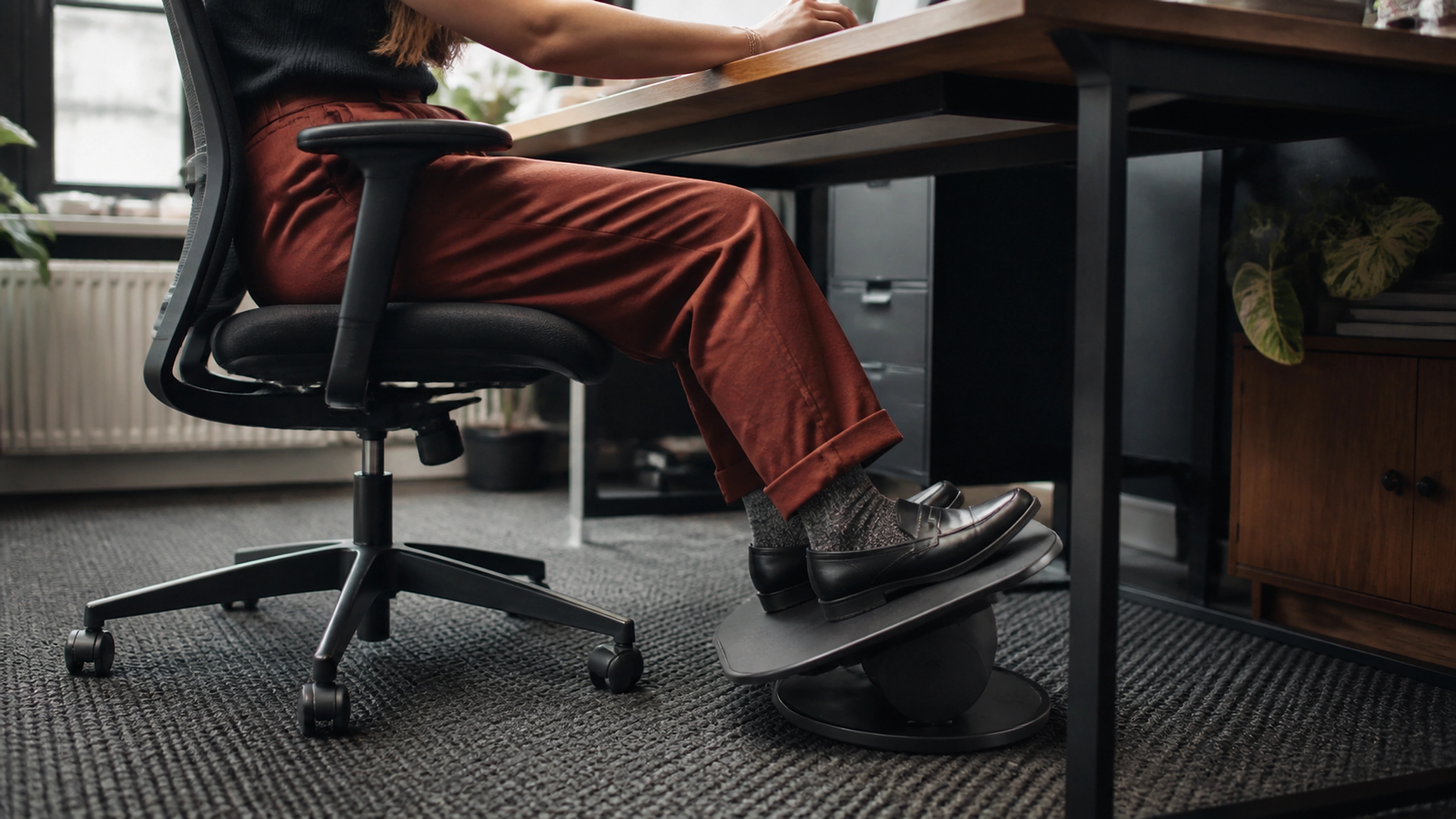
A foot rocker is a footrest that pivots, so your feet can tilt gently back and forth while you sit. That motion keeps your ankles and calves working through a long sitting instead of staying locked in one position. If your legs go stiff and restless from sitting still, the rocking is the feature you want, because it turns a static rest into a low-key source of movement without you having to think about it.
Neither type replaces real movement breaks. Standing and walking every 30 to 60 minutes does more for your circulation and your back than any footrest, fixed or rocking. The rocker simply fills the long stretches between breaks with a little motion rather than none.
The criteria that actually matter
The brand on the box tells you little. These four features decide whether a footrest fits your body and stays useful, so judge any footrest against them, including ours.
Adjustable height

Your ideal footrest height depends on your leg length and your desk, so a single fixed height will fit some people and fail others. A footrest with adjustable height lets you set your feet so your knees and hips land near a right angle. If you share a desk or your shoes vary, adjustability matters even more.
Adjustable tilt
A flat platform forces your ankles into one angle. A footrest that tilts lets you set a slight forward slope, often somewhere around 10 to 20 degrees, so your ankles sit in a comfortable neutral rather than flexed up or pointed down. Tilt is also what makes a rocker feel natural through its range of motion.
A textured, non-slip surface
A footrest your feet slide off is a footrest you stop trusting. A textured top keeps your feet planted, which matters most on a rocker, where a smooth surface would let your feet skate as the platform moves. Grip is a small detail that decides whether you actually keep your feet on it.
A footprint that fits under your desk
The best footrest is one you forget is there. Check the width and depth against the space under your desk so it tucks away cleanly and slides where you want it. A footrest that crowds your legs or catches the chair base ends up pushed aside.
Our pick: the ERGOLA Ergonomic Foot Rocker
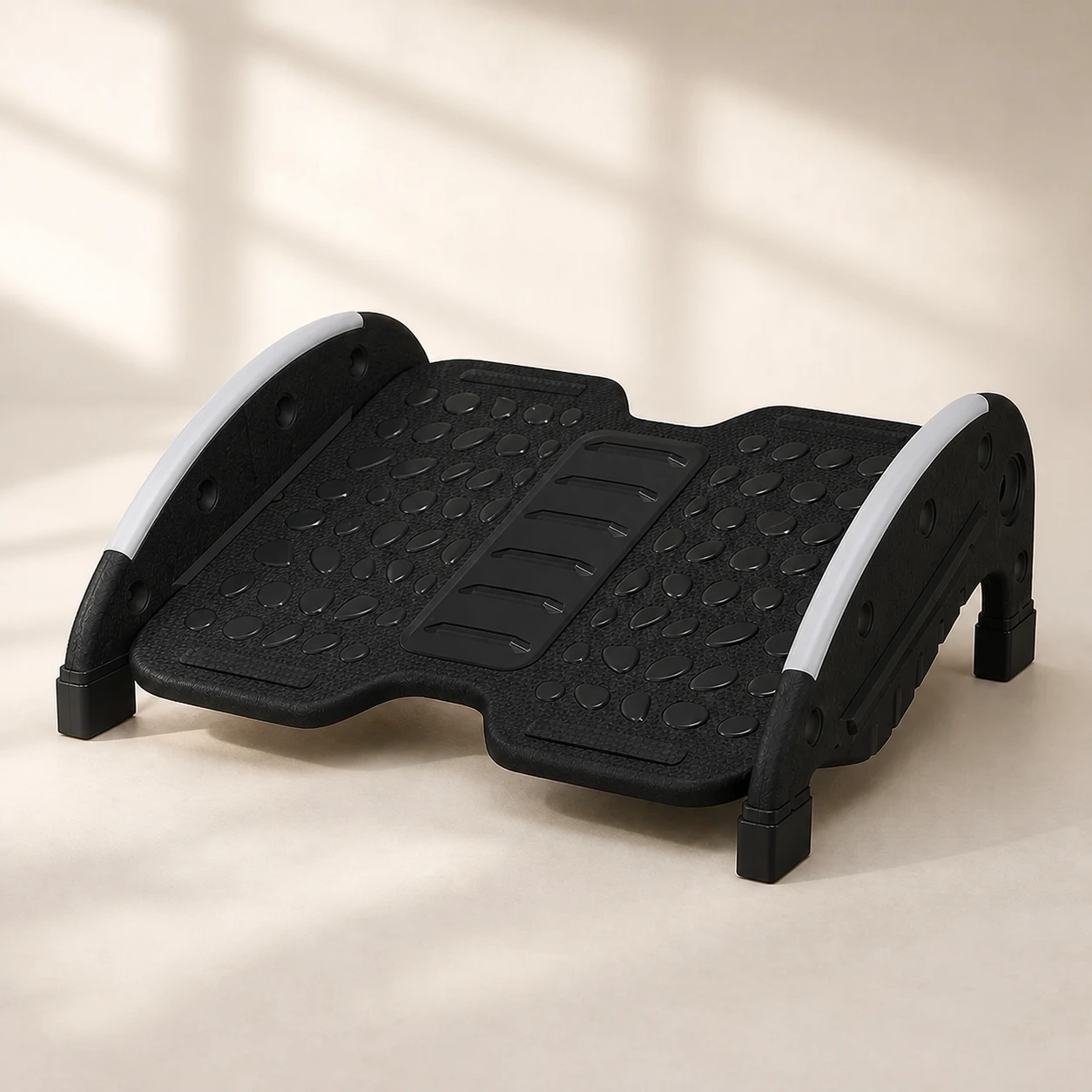 Product mentioned in this guideFlexRock DuoTwo-mode under-desk footrest with a user-controlled rocking option, fixed 15° support, and a reversible 40 × 30 cm textured platform.Free US shipping on every order60-Day Home Trial · we pay return shippingSee current price
Held against the criteria above, the footrest we make and recommend is the ERGOLA Ergonomic Foot Rocker. We built it as a rocker on purpose, because the people who go looking for a footrest tend to also be the people whose legs stiffen up from sitting still, and the gentle rocking gives their ankles and calves something to do.
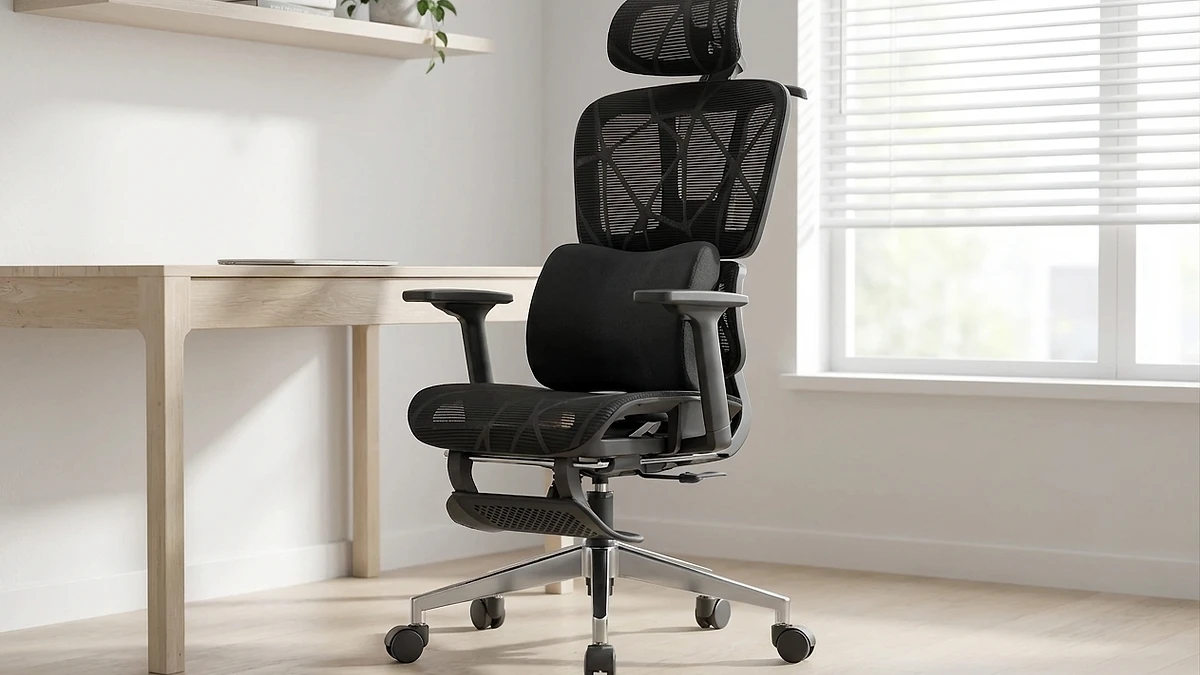
It covers the four things that matter: adjustable height (roughly 4 to 6 inches) and adjustable tilt (0 to 30 degrees) so you can set your feet to your body and desk, a textured non-slip surface so your feet stay planted while it moves, and a compact footprint that slides under any desk. It weighs about 2.6 lb, so it is easy to nudge into position or move between desks.
We are not going to pretend it is the only good footrest in the world. If you do not want the rocking motion and just need a steady platform, a fixed footrest does the core job and our rocker is more than you need. But if dangling feet and stiff legs are both on your list, a rocker solves both at once, and this is the one we stand behind.
You can compare it against the rest of the range on our footrests collection page.
How to set it up
- Fix your chair height first. Set the seat so your forearms rest level with your desk and your elbows are at roughly a right angle. Do not compromise this to reach the floor.
- Slide the footrest in and set the height. Raise it until your feet rest flat with your knees and hips near a right angle and your thighs supported along the seat, not pressing into its front edge.
- Set the tilt. A slight forward slope keeps your ankles in a comfortable neutral. If you have a rocker, check that the full range feels natural and your feet stay put.
- Plant your feet and use the motion. Keep your feet on the textured surface. With a rocker, let your ankles drift through the motion now and then rather than holding them rigid.
- Still take breaks. Stand and walk every 30 to 60 minutes. The footrest improves the time you spend seated; it does not replace getting up.
When to see a professional
A footrest is a comfort and posture aid, not a medical device. Most tired, achy legs from desk work respond well to a supported foot position, a chair that fits, and regular movement. Some symptoms call for a clinician instead. See a healthcare professional if you have persistent leg pain, numbness or tingling, noticeable swelling in one leg, or pain that worsens despite changes to your setup. A footrest cannot diagnose or treat those, and waiting on a cushion to fix them only delays the help you need.
The bottom line
The best under-desk footrest for 2026 is not the one with the loudest marketing. It is the one that fits the problem you actually have. If raising your chair to elbow height leaves your feet hanging, a footrest fills the gap and lets you keep both a correct arm position and flat, supported feet. Choose a fixed footrest for a steady rest, or a rocker if your legs go stiff from sitting still. Then judge it on adjustable height, adjustable tilt, a non-slip surface, and a footprint that fits your desk. Our Ergonomic Foot Rocker is built to those criteria, and the rest of the lineup is on our footrests collection.