30-day money back guarantee | Spring sale — 40% off + free shipping

How-To Guides

How to Create a Micro-Break Routine

Learn how to build a sustainable micro-break routine that reduces lower-back stiffness, complements lumbar support, and keeps you comfortable through long desk sessions. Step-by-step exercises, timing strategies, and tracking tips included.

How to Create a Micro-Break Routine

Key takeaways

Micro-breaks every 30-60 minutes reduce spinal compression and muscle fatigue.
A simple, repeatable cadence works better than complex routines you won't stick to.
Pairing breaks with lumbar support and posture reset cues maximizes all-day comfort.
Why micro-breaks matter for back health

Why micro-breaks matter for back health

When you sit for extended periods, the muscles that support your spine gradually fatigue. Your hip flexors shorten, your glutes disengage, and the small stabilizer muscles around your lumbar spine lose their ability to hold proper alignment. Research from the European Spine Journal shows that prolonged static sitting increases intradiscal pressure by up to 40 percent compared to standing, accelerating disc degeneration over time.

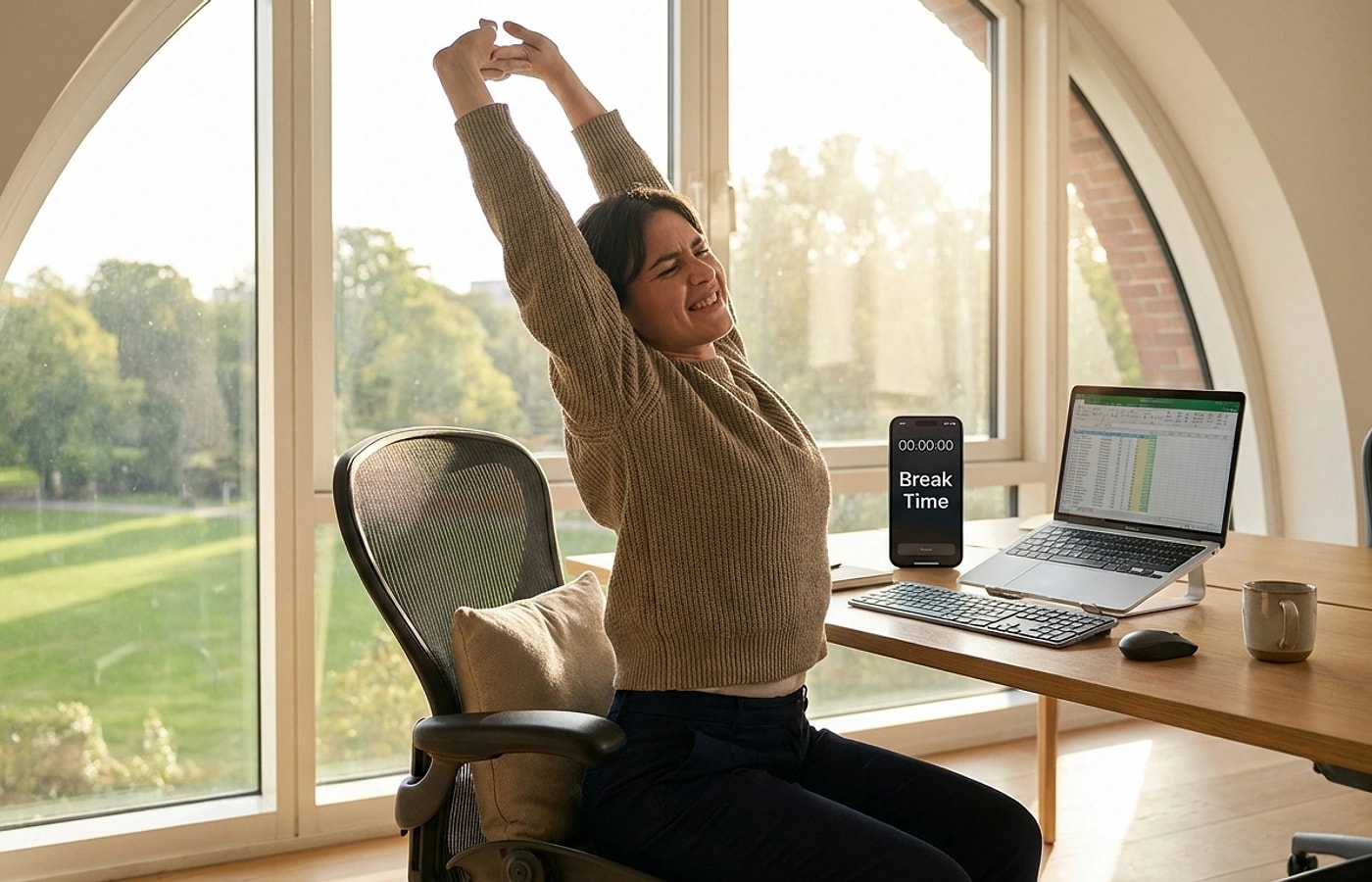
Micro-breaks interrupt this cycle before damage accumulates. Even a 60-second movement break every 30 to 45 minutes is enough to restore blood flow to fatigued muscles, rehydrate spinal discs through gentle loading and unloading, and reset your nervous system's awareness of posture. Think of them as a soft reboot for your body.

The benefits compound when you pair micro-breaks with proper lumbar support. A contoured pillow maintains your spinal curve while seated, but no support device can prevent the stiffness that comes from holding any single position too long. The combination of passive support and active movement is what keeps your back comfortable across an eight-hour workday.

  • Reduces spinal compression that builds during static sitting
  • Restores blood flow to lower-back muscles and spinal discs
  • Prevents hip flexor tightening and glute disengagement
  • Resets posture awareness so you sit better after each break
  • Complements lumbar support for all-day comfort

Building your micro-break routine

Building your micro-break routine

The most effective micro-break routine is one you will actually follow. Start with a simple cadence: set a timer for every 45 minutes and commit to standing up for 60 to 90 seconds. This is the minimum effective dose. As the habit solidifies over the first week or two, you can extend breaks to two or three minutes and add specific movements.

Your break should follow a three-step pattern: stand, move, reset. First, stand up fully and let your spine decompress. Second, perform one or two gentle movements — a standing cat-cow, shoulder rolls, or a hip flexor stretch. Third, sit back down and consciously reset your lumbar support position, making sure the pillow contacts your lower back curve before you resume work.

Timing matters more than intensity. A 90-second break done consistently every 45 minutes will produce better results than a five-minute stretching session done once in the afternoon. Your body responds to frequency of position changes, not to the depth of any single stretch. Build the cadence first, then layer in more targeted movements over time.

Anchor your breaks to natural work transitions when possible. Finishing an email, completing a code review, or ending a meeting are all natural pause points. Habit stacking — attaching the new behavior to an existing trigger — dramatically increases your consistency rate compared to relying on timer alerts alone.

  • Start with 60-90 second standing breaks every 45 minutes
  • Follow the stand-move-reset pattern for each break
  • Anchor breaks to natural task transitions for better consistency
  • Prioritize frequency over duration — short and often beats long and rare
  • Reset your lumbar support position every time you sit back down
Best stretches and movements for desk workers

Best stretches and movements for desk workers

You do not need a yoga mat or gym equipment to take effective micro-breaks. The best desk-worker stretches can be performed in business clothes, in a small space, and in under two minutes. Focus on the muscle groups that tighten most during prolonged sitting: hip flexors, chest and shoulders, hamstrings, and the muscles along your thoracic spine.

The standing cat-cow is one of the most effective single movements for desk workers. Stand with your feet hip-width apart, place your hands on your knees, and alternate between arching your back (looking up) and rounding it (tucking your chin). Perform eight to ten slow repetitions. This movement restores mobility to the entire spinal column and counteracts the forward-flexed position of desk work.

Seated spinal twists are ideal for breaks where you prefer not to stand. Sit upright, place your right hand on your left knee, and gently rotate your torso to the left. Hold for 15 to 20 seconds, then switch sides. This stretch targets the thoracic spine and obliques, areas that stiffen quickly when you're focused on a screen. Pair it with three deep breaths on each side to amplify the relaxation effect.

For hip flexors — which shorten significantly during sitting — try the standing lunge stretch. Step one foot forward into a shallow lunge, tuck your pelvis slightly under, and hold for 20 seconds per side. You should feel a gentle pull at the front of the hip on your back leg. Tight hip flexors pull your pelvis forward and increase lower-back strain, so this stretch directly supports your lumbar comfort.

  • Standing cat-cow: 8-10 reps, restores full spinal mobility
  • Seated spinal twist: 15-20 seconds each side, loosens thoracic spine
  • Standing hip flexor lunge: 20 seconds each side, counteracts sitting tightness
  • Shoulder rolls: 10 forward, 10 backward, releases upper-back tension
  • Chest doorway stretch: 20 seconds, opens rounded desk posture
  • Neck side tilts: 15 seconds each side, relieves screen-related tension
Setting up reminders and tracking progress

Setting up reminders and tracking progress

The biggest challenge with micro-breaks is not knowing what to do — it is remembering to do it. When you are deep in focused work, hours can pass without a single position change. External reminders are essential until the habit becomes automatic, which typically takes three to four weeks of consistent practice.

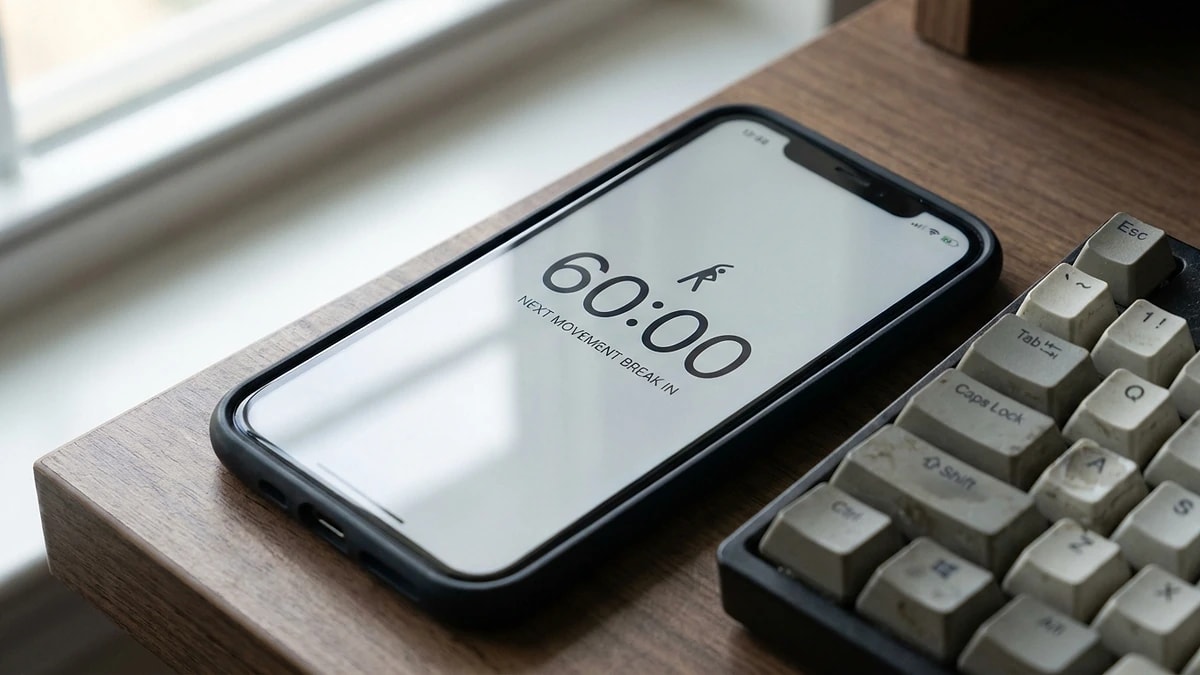
Your phone's built-in timer or clock app is the simplest starting point. Set a recurring 45-minute alarm with a gentle tone. Dedicated break-reminder apps like Stretchly, Time Out, or BreakTimer offer more sophistication: they can dim your screen, display specific stretch suggestions, and track your compliance rate over time. Choose the tool that creates the least friction for your workflow.

Track two metrics weekly to gauge whether your routine is working. First, track your consistency rate — what percentage of scheduled breaks did you actually take? Aim for 80 percent or higher. Second, note your end-of-day discomfort level on a simple 1-to-10 scale. Over two to three weeks, you should see the discomfort number trend downward as your body adapts to regular movement.

Review your tracking data every Sunday. If your consistency rate drops below 70 percent, simplify your routine — shorter breaks, fewer movements, or a different reminder method. If discomfort is not improving despite good consistency, consider adjusting your lumbar support setup or adding more targeted stretches for the specific area that feels stiff.

  • Use a recurring 45-minute timer or a dedicated break app like Stretchly
  • Track break consistency rate weekly — aim for 80 percent or higher
  • Rate end-of-day discomfort on a 1-10 scale to measure improvement
  • Review metrics weekly and simplify if consistency drops below 70 percent
  • Habit stacking with task transitions boosts compliance more than alarms alone
Common mistakes to avoid

Common mistakes to avoid

The most common mistake is skipping breaks during busy periods. It feels productive to power through, but the stiffness and fatigue that accumulate during a four-hour unbroken sitting session take much longer to recover from than the 90 seconds you saved by skipping. Treat micro-breaks as non-negotiable — they protect your productivity by preventing the late-afternoon crash that comes from sustained physical tension.

Another frequent error is doing too much too fast. Jumping into aggressive stretching routines with deep backbends or intense hip openers can cause more discomfort than it relieves, especially if your muscles have been deconditioned by months of sedentary work. Start with the gentlest movements and increase intensity gradually over weeks. Your body needs time to adapt to regular movement again.

Ignoring pain signals is a serious mistake. Micro-breaks should relieve discomfort, not cause it. If any stretch produces sharp pain, numbness, or tingling, stop immediately. Dull aching that persists for more than a few minutes after a break is also a signal to scale back. Persistent or worsening pain should be evaluated by a healthcare professional — it may indicate an issue that movement alone cannot address.

  • Skipping breaks when busy — the stiffness cost exceeds the time saved
  • Doing aggressive stretches before building a base of gentle movement
  • Ignoring sharp pain, numbness, or tingling during any stretch
  • Relying only on timer alerts instead of building habit-stacked triggers
  • Expecting results in days — give the routine at least two to three weeks

Frequently asked questions

How long should each micro-break be?

Even 60 to 90 seconds is effective when done consistently. The minimum effective dose is standing up and performing one gentle movement every 45 minutes. As the habit develops, you can extend breaks to two or three minutes and add more targeted stretches. Research shows that frequency matters more than duration — five 90-second breaks outperform one 10-minute session.

Can I skip breaks if my lumbar support feels comfortable?

No — even the best lumbar support cannot prevent the muscle fatigue and disc compression that accumulate during static sitting. Support devices maintain your spinal curve, but your body still needs active movement to restore blood flow, rehydrate discs, and reset muscle engagement patterns. Think of support and movement as complementary, not interchangeable.

What if my schedule is packed with meetings?

Use task transitions as natural break triggers instead of relying on fixed timers. The two minutes between meetings, the moment you send an email, or the pause after finishing a document are all opportunities. Even standing up during a video call counts. If meetings are truly back-to-back, shift in your seat, do seated spinal twists, and reset your lumbar support position between agenda items.

How soon will I notice a difference in my back comfort?

Most people notice reduced end-of-day stiffness within the first week of consistent micro-breaks. More significant improvements in chronic lower-back discomfort typically appear after two to three weeks of maintaining an 80 percent or higher consistency rate. Track your daily discomfort on a 1-10 scale to spot the trend objectively rather than relying on memory.

Do I still need micro-breaks if I use a standing desk?

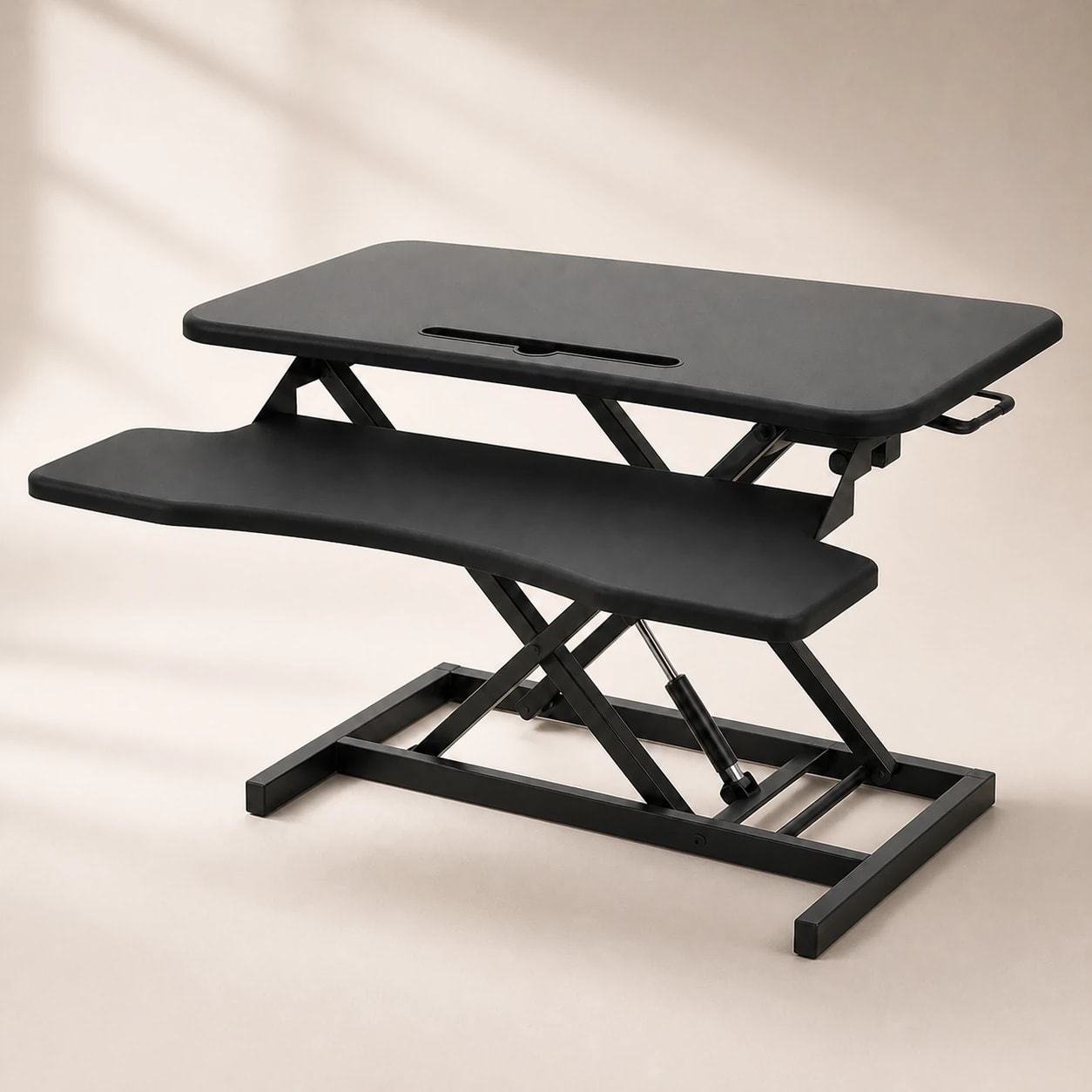
Yes. Standing desks reduce some of the problems associated with prolonged sitting, but static standing creates its own issues — lower-limb fatigue, increased spinal load in the lumbar region, and reduced circulation in the feet and calves. The ideal approach alternates between sitting with lumbar support, standing, and brief movement breaks throughout the day.

Related guides

Explore these guides to learn more and find the right solution for your needs.