
Desk Stretches for Office Workers: A Simple Routine
If your back tightens by mid-morning, your shoulders creep up toward your ears, and your hips feel stiff the moment you stand, you already know the cost of sitting still for hours. Most people reach for desk stretches for office workers to undo that, and a short routine genuinely helps. But we want to be honest from the first line: the single most useful change is not which stretch you do, it is how often you break up sitting at all.
This guide gives you a clear set of six to eight stretches you can do without leaving your desk, then a simple hourly routine to slot them into. It also names the bigger lever plainly. The evidence that frequent movement matters is stronger than the evidence for any one stretch, so the stretches below are best treated as a nudge to move, not a fix you do once and forget. We sell movement aids, including a foot rocker, and we will tell you exactly where one earns its place and where it does not.
One scope note before we start. These are comfort and posture aids and general wellbeing habits, not medical treatment. If you have a diagnosed condition or pain that worries you, read the "When to see a professional" section first and check with a clinician before adding a routine.
Why movement frequency beats any single stretch
The honest headline is this: breaking up sitting often, even with small movements, matters more than the exact stretch you choose. A perfect stretch done once at lunch does far less than getting up briefly every half hour, because the problem with desk work is the staying-still, not the absence of a particular movement.
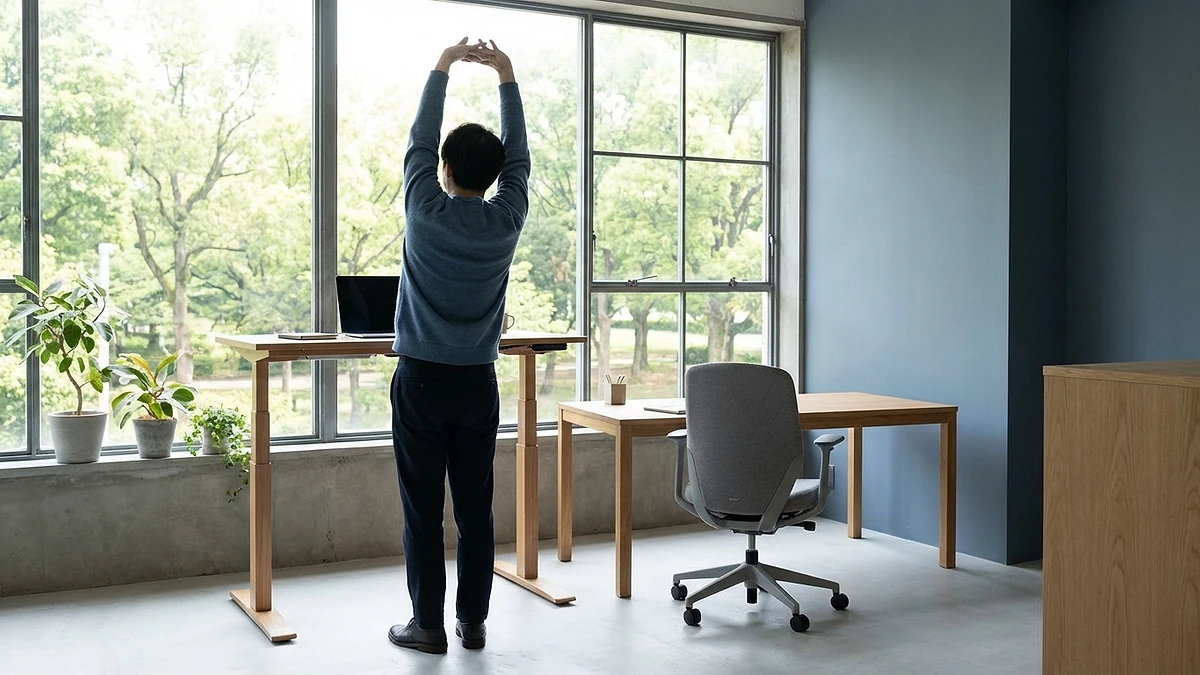
The NHS is direct that long unbroken periods of sitting are worth reducing, and that regularly breaking up sitting time is part of the advice, separate from whatever formal exercise you do. The research points the same way. A large analysis led by Ekelund found that high amounts of sitting time were associated with worse outcomes, and that being more physically active blunted that association, which is a strong argument for moving more across the day rather than relying on one block of stretching.
National activity guidance reinforces it. The CDC's adult activity overview frames movement as something to accumulate throughout the week and pairs moving more with sitting less, again treating frequency and total movement as the lever rather than any single exercise. So as you read the stretches below, keep the order of importance straight: the stretches help, but they help most as a reason to stand up and break the pattern every half hour or so.
Six to eight desk stretches as a simple list
Here is a compact set covering the areas that tighten most during a desk day: neck, shoulders, upper back, hips, wrists, and legs. None of these need equipment, none should hurt, and you should stop short of any sharp or shooting sensation. Move gently, breathe normally, and hold each easy stretch for roughly 15 to 30 seconds rather than forcing it.
- Neck side tilt. Sitting tall, gently tip one ear toward the same shoulder until you feel a mild stretch along the opposite side of your neck, then ease off and switch sides.
- Shoulder rolls. Roll both shoulders slowly backward in a smooth circle several times, then forward, to release the tension that builds from reaching for a keyboard and mouse.
- Upper-back reach. Clasp your hands in front of you, round your upper back gently, and push your hands away to open the space between your shoulder blades that rounds forward over a screen.
- Seated chest opener. Bring your hands behind you or hold the sides of your chair, draw your shoulder blades down and back, and open the front of your chest to counter a slumped position.
- Seated hip stretch. Cross one ankle over the opposite knee, sit tall, and lean forward gently from the hips until you feel an easy stretch through the hip and glute, then switch sides.
- Standing hip flexor stretch. Stand, step one foot back, and gently tuck your hips under until you feel a mild stretch at the front of the back hip, the area that shortens from hours of sitting.
- Wrist and forearm stretch. Extend one arm with the fingers pointing down, and use the other hand to draw the fingers gently toward you, then point the fingers up and repeat, easing tension from typing.
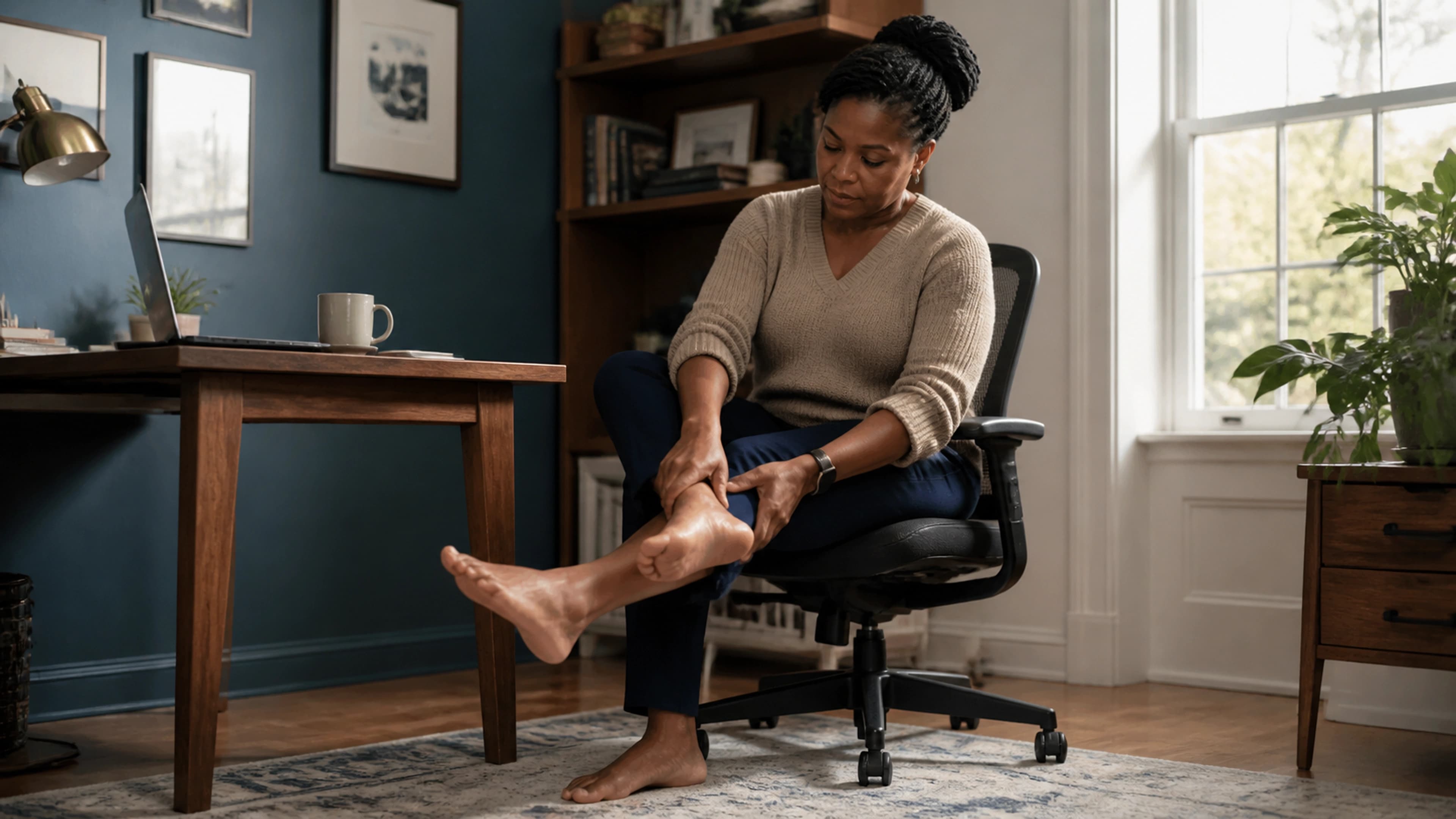
- Calf and ankle pumps. Stand or sit and slowly raise and lower your heels, or pump your ankles, to move the lower legs and encourage circulation after long stillness.
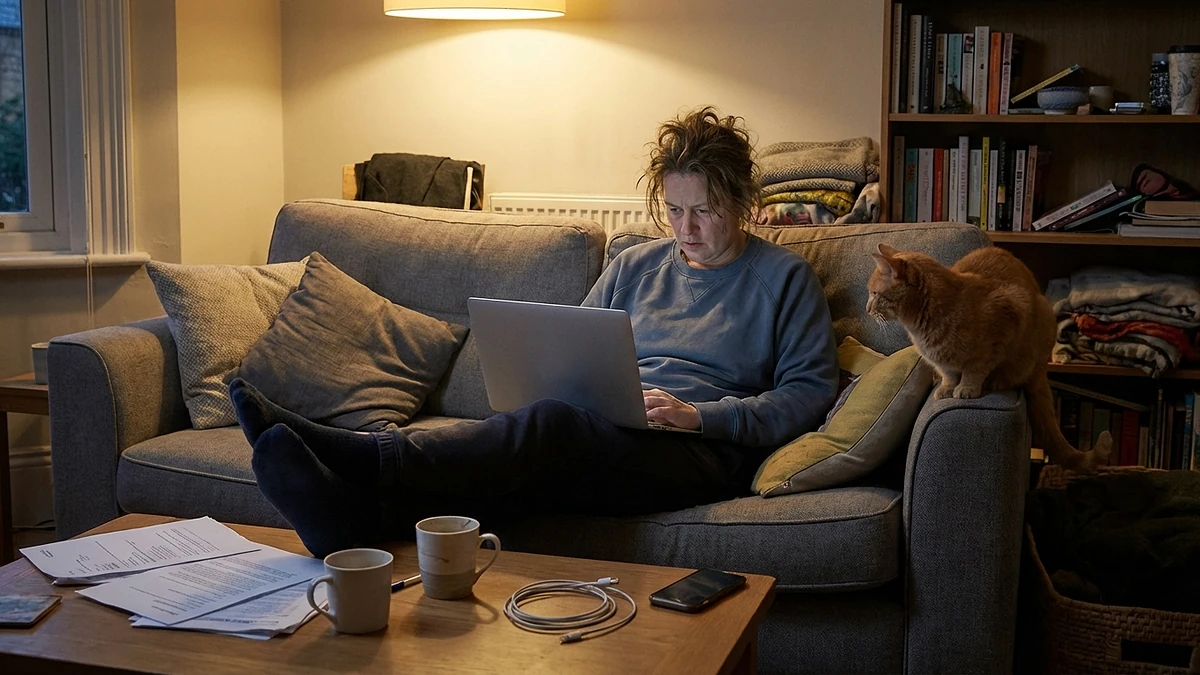
Be honest about what this list is. These are sensible, gentle mobility moves that ease the stiffness of sitting; they are not a cure for a specific injury, and the certainty for any single one relieving pain is limited. Their real value is that they get you out of a frozen posture and moving, which is the part that counts.
Building a micro-break habit
A stretch you forget to do is worth nothing, so the practical question is not which stretch but how to make breaking up sitting automatic. The aim is to interrupt long stretches of stillness with short, frequent movement, not to schedule a long session you will skip when you are busy.
A workable target is to stand up or move for a moment every 30 minutes or so, and to take a longer break, a walk to refill water or a few stretches, every hour. Anchoring breaks to things you already do, such as the end of a meeting, a finished task, or the kettle boiling, makes them stick better than relying on willpower. If your legs tend to go numb or your feet feel heavy from sitting, our piece on why legs go numb when sitting explains why frequent position changes help, and our step-by-step on building a micro-break routine turns this into a habit you will actually keep.
The point of all this is consistency over intensity. Six small movement breaks across a morning do more for a desk-bound body than one ambitious stretch session, because they keep undoing the stillness before it sets in.
Tools that nudge you to move
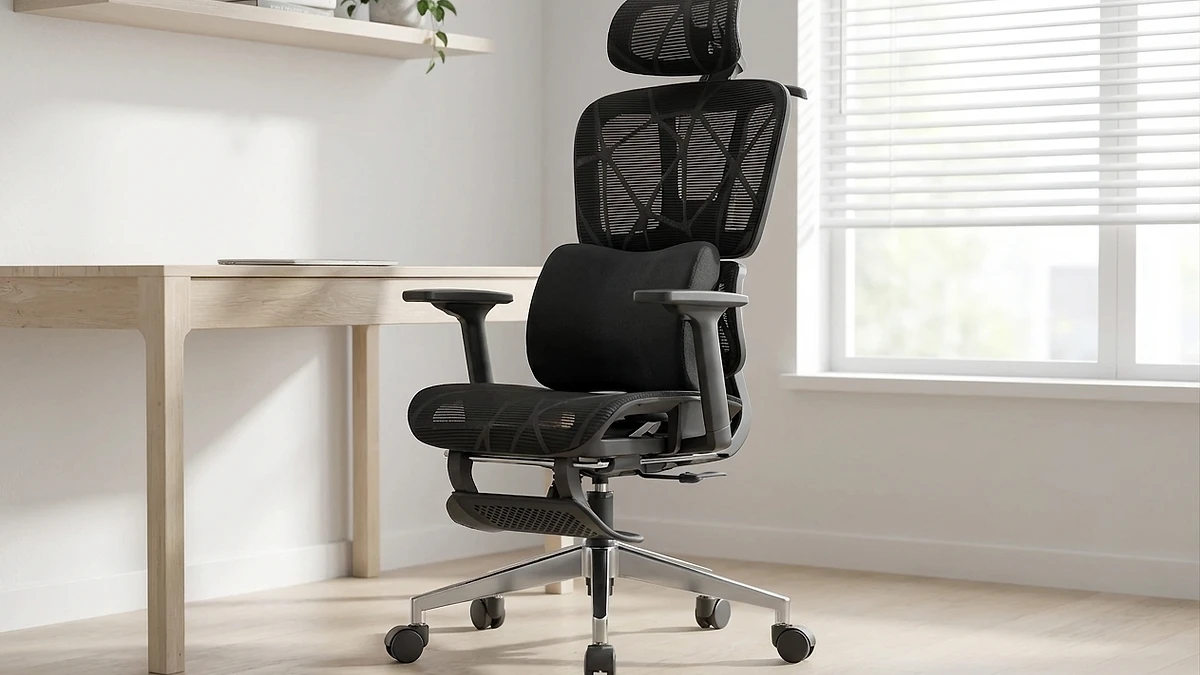
Habits are easier when something in your setup quietly prompts movement. This is where a tool can help, and where we will be straight about what it does and does not do. No piece of equipment replaces standing up and walking; at best, it adds small, frequent movement to the time you are seated and reminds you that sitting still is the thing to break.
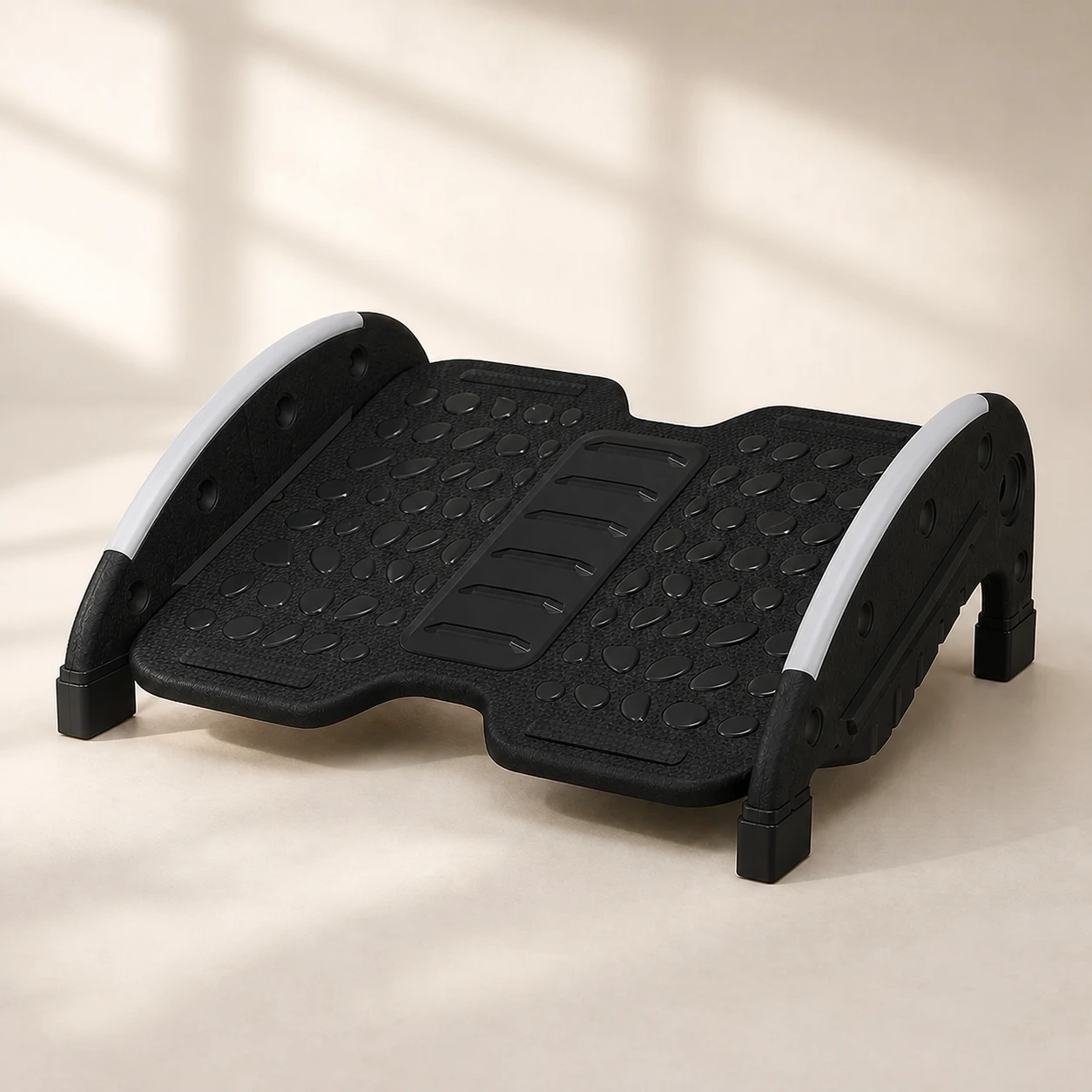 Product mentioned in this guideFlexRock DuoTwo-mode under-desk footrest with a user-controlled rocking option, fixed 15° support, and a reversible 40 × 30 cm textured platform.Free US shipping on every order60-Day Home Trial · we pay return shippingSee current price
An ergonomic foot rocker sits under your desk and lets you rock your feet and ankles while you work, keeping the lower legs gently active during the stretches of seated time between breaks. It will not undo a sedentary day on its own, and we would not claim it does. What it does is make small movement the path of least resistance, so the muscle pumping in your lower legs is happening passively while you focus, and it can ease the restless, heavy-legged feeling that long stillness brings. Judge it on that honest claim: a nudge toward more movement, not a substitute for getting up.
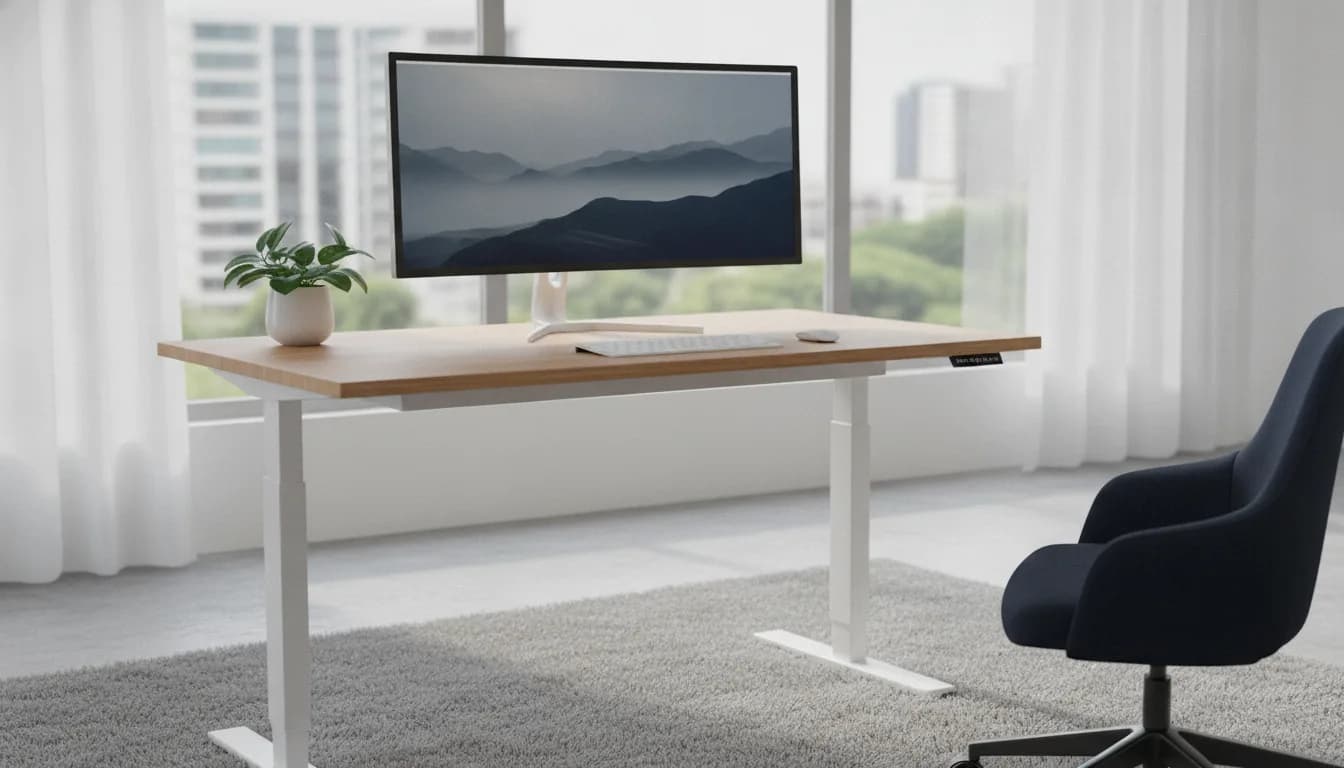
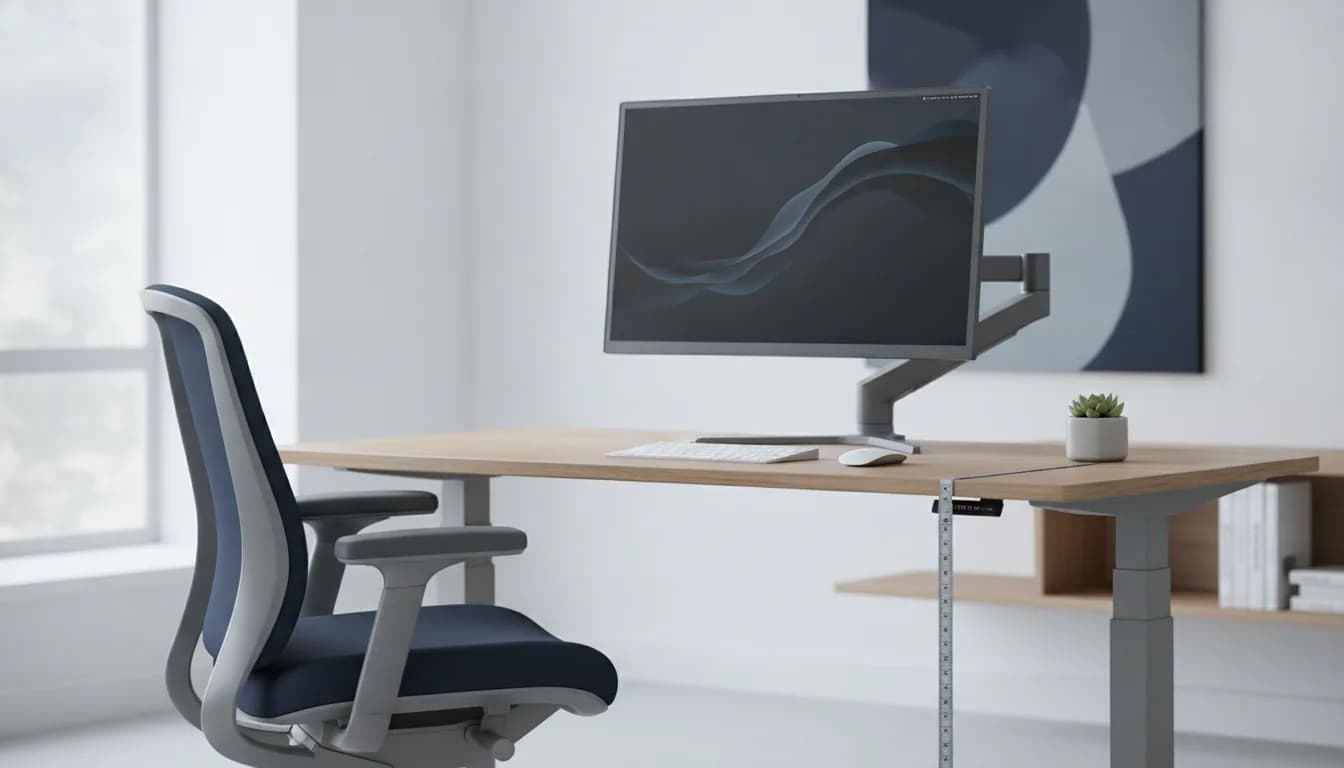
Standing for part of the day works on the same principle of varying your position rather than holding one. A height-adjustable surface lets you alternate between sitting and standing, which is another way to break up uninterrupted sitting; if that interests you, our adjustable standing desk covers it. A fair caveat: standing all day is not the goal either, and swapping a sitting problem for a standing one helps no one. The benefit is the switching, whichever surface you choose.
A simple hourly routine
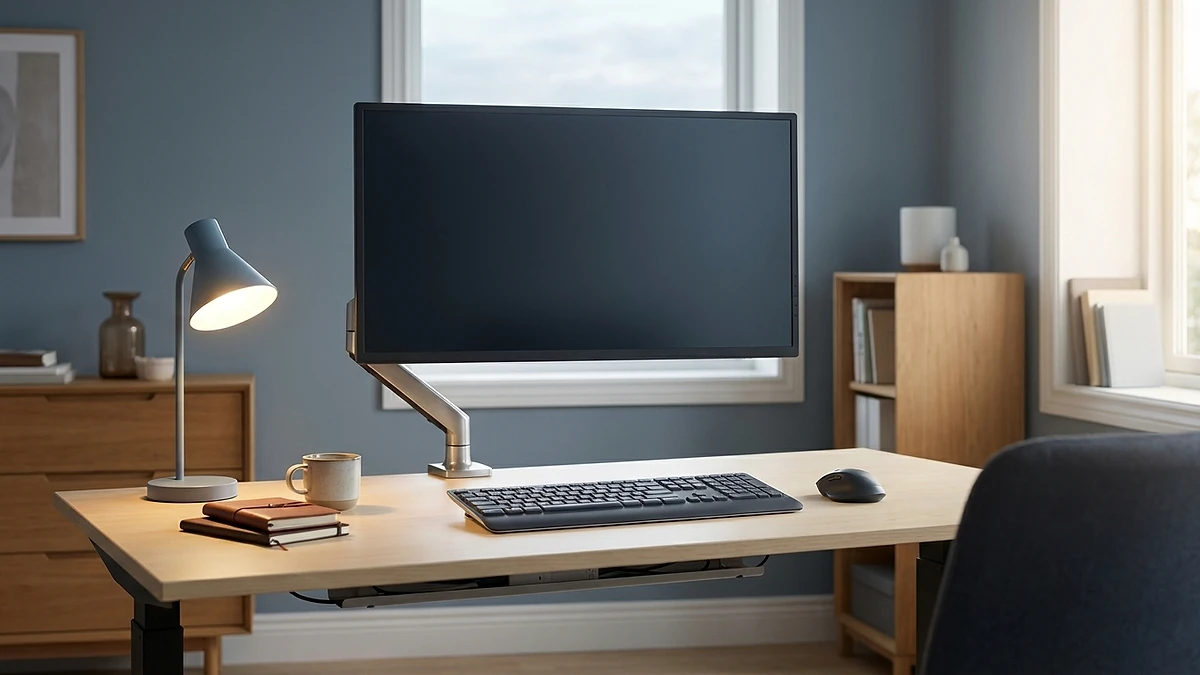
To pull this together, here is a light routine you can run each hour without it taking over your day. It pairs a couple of stretches with a short movement break, so the stretches do their real job of getting you up and moving rather than standing in for it.
- At the top of the hour, stand up. Simply getting out of the chair is the most valuable second of the routine, so do this first and do it every time.
- Do two upper-body stretches. Pick from shoulder rolls, the upper-back reach, the seated chest opener, or a neck side tilt, holding each gently for 15 to 30 seconds.
- Do one lower-body stretch. A standing hip flexor stretch or a few calf raises wakes up the areas that tighten and slow most during sitting.
- Take a short walk. Refill your water, fetch something, or just pace for a minute or two so your whole body moves, not only the part you stretched.
- Between hours, keep moving small. Rock your feet, change how you sit, and stand for short stretches so you are never frozen in one position for a full 30 minutes.
This is deliberately modest. It takes a couple of minutes, it scales down on busy days to just standing and one stretch, and it keeps the emphasis where the evidence puts it: on moving often, not on perfecting any single stretch.
When to see a professional
Most desk-day stiffness is ordinary and eases as you move more across the day. Some symptoms are not ordinary, and stretching is the wrong response to them. See a doctor or other qualified healthcare professional, rather than working through it with a routine, if any of the following apply.
- Pain after trauma. Back, neck, or limb pain that follows a fall, a car accident, or any direct blow needs prompt assessment rather than stretching.
- Progressive weakness. Weakness in a leg or arm that keeps getting worse, rather than easing, should be checked by a professional.
- Numbness in the saddle area. Numbness or pins and needles around the groin, buttocks, or inner thighs, the area that would contact a saddle, needs urgent medical attention.
- Loss of bladder or bowel control. New problems controlling your bladder or bowels alongside back pain are an emergency and need immediate care.
- Unexplained weight loss or fever. Back or neck pain with unexplained weight loss, fever, or feeling generally unwell warrants a professional opinion.
To be plain about it: our products are comfort and posture aids, not medical devices, and nothing here diagnoses or treats a condition. If any of these red flags apply to you, get assessed first and treat stretching and movement habits as a supporting measure once a professional has ruled out anything serious.
The bottom line
Desk stretches for office workers are worth doing, but keep the order of importance honest: the six to eight stretches above help most as a reason to stand up and break the pattern, because moving often is the lever the evidence actually supports. Run a light routine each hour, anchor your breaks to things you already do, and let a tool make movement easier rather than expecting it to do the work for you. An ergonomic foot rocker earns its place by adding small, passive movement to your seated time; it is a nudge, not a cure, and it is more than you need if you already get up and move regularly. If you want to keep moving while you sit, browse our footrests collection and judge each option against the honest criteria above.