
Hip Pain From Sitting Too Long: Causes and Fixes
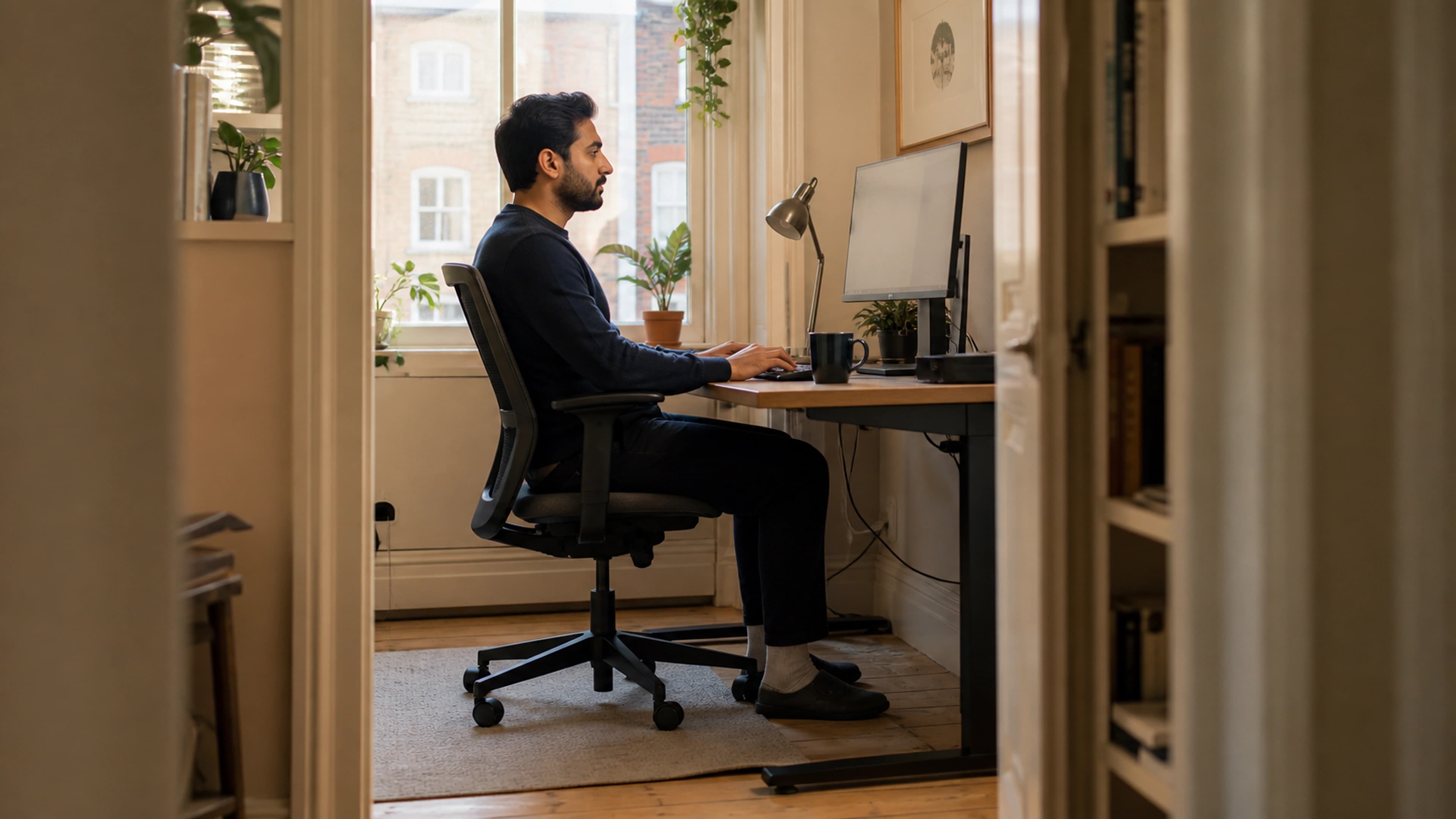
If your hips feel stiff and sore by mid-afternoon, with a deep ache around the sit bones or a tight pulling sensation at the front of the hip when you finally stand, you are feeling something a lot of desk workers know well. Hip pain from sitting too long tends to follow a clear pattern: it builds over hours of stillness, eases once you get up and move, and returns the next time you settle back into the same chair on the same surface.
This guide is honest about what is happening and what genuinely helps. We sell seat cushions, so treat what follows as a buying framework judged against stated criteria, including our own product. A cushion addresses one part of the picture, movement and chair setup address the rest, and a good amount of what helps costs nothing. We will be equally clear about who does not need a cushion at all, and the red flags that mean you should see a professional rather than reach for an accessory.
Why sitting too long causes hip pain
Hip pain from sitting too long usually has two causes working together: sustained pressure under the sit bones on a hard or flat seat, and tightness in the hip flexors from holding the hips folded at roughly 90 degrees for hours. The first irritates the tissue you sit on; the second leaves the muscles at the front of the hip short and stiff, so standing up feels tight.
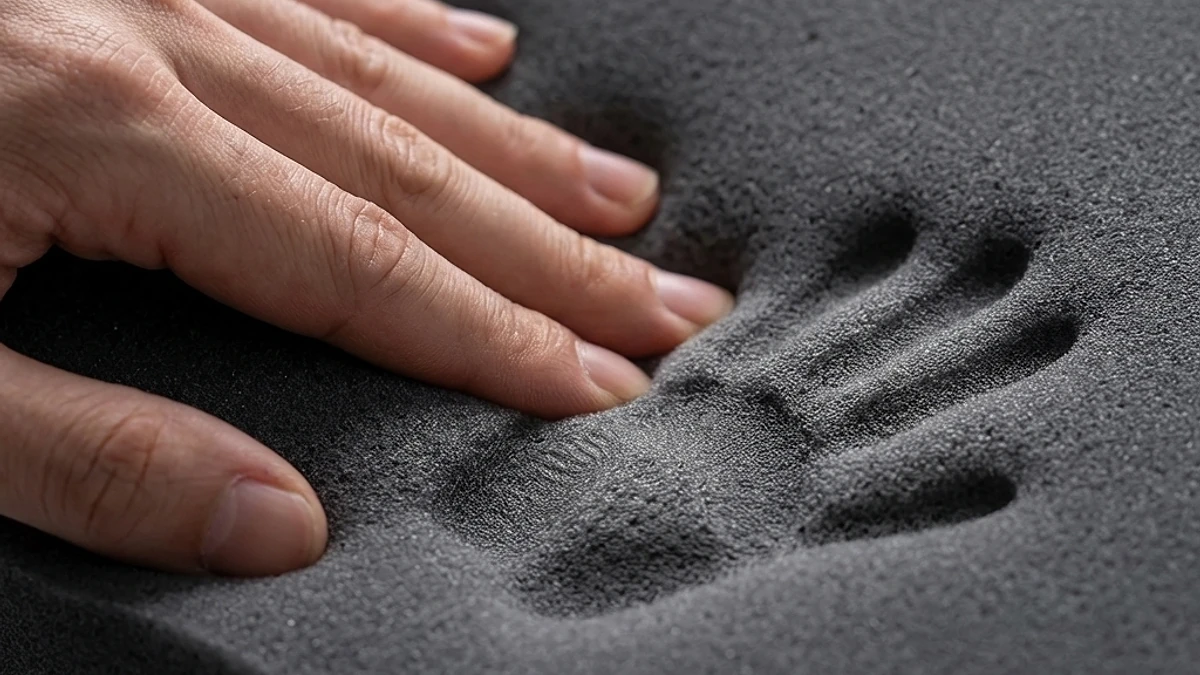
It helps to separate the two. The pressure side is mechanical: when you sit, most of your weight passes through the two sit bones at the base of your pelvis, and on a hard, flat or worn seat that load concentrates on a small bony area for the whole working day, leaving it sore. The hip-flexor side is about position, not pressure: sitting keeps the hip joint bent and the muscles across the front of the hip in a shortened position, and muscles held still in one length for hours tend to feel tight and resist when you finally lengthen them by standing. The Canadian Centre for Occupational Health and Safety frames prolonged sitting itself as a strain on the body, with the practical answer being a seat you can adjust to your shape plus regular changes of position, rather than one perfect posture held all day.
The certainty around a single cause is limited, and worth stating plainly. Hip discomfort overlaps with lower-back and buttock pain, and posture is only one input. Hip pain can also come from joint problems, referred pain from the back, or causes that have nothing to do with how you sit at a desk. That matters for what comes next: pressure relief and more movement help the everyday desk-driven version, but they are not a diagnosis and will not fix a cause that needs a clinician. If your pain started with a specific injury, or it travels down your leg, skip ahead to the red-flags section first.
Sit-bone pressure and how a gel cushion redistributes it
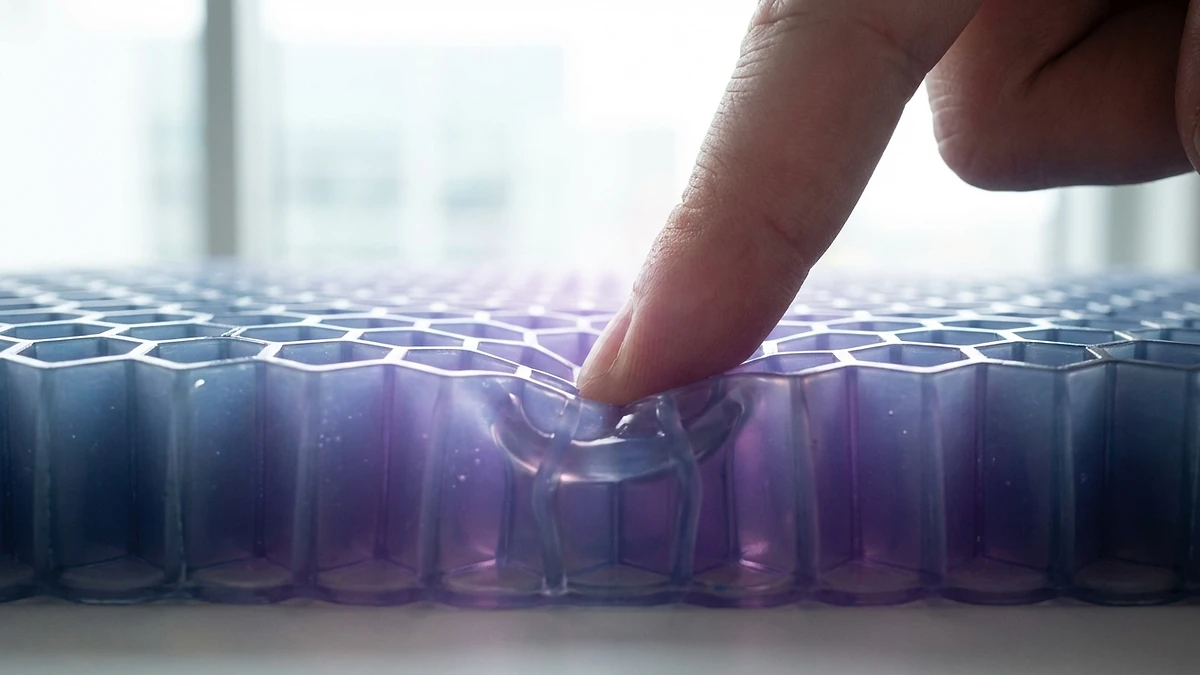
A gel seat cushion helps the pressure half of hip pain by spreading your weight more evenly. A gel-over-foam cushion lets the gel layer flow and deform around your sit bones so the load is shared across a wider contact area and your thighs, rather than stacking on two small bony points. The aim is lower, more even pressure under the sit bones across a long day, not a cure for whatever made the hip sore.
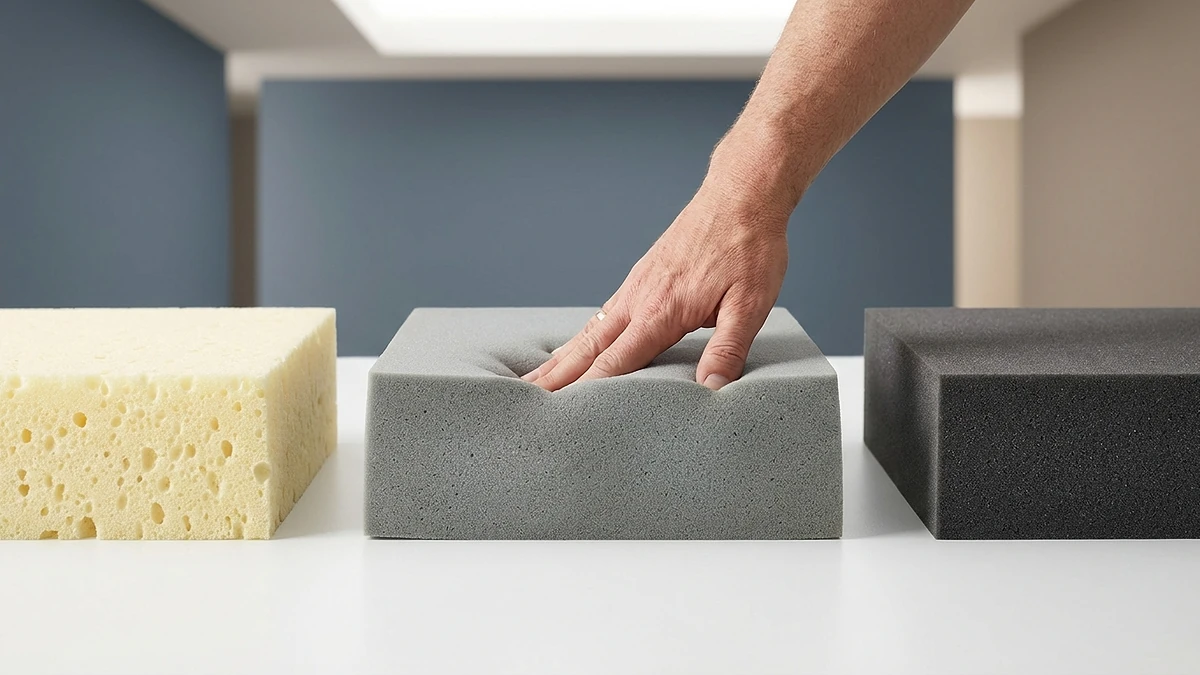
The mechanism is redistribution. A firm foam base supports your weight while a gel layer on top moulds to your shape and channels pressure away from the bony high points and out across the surrounding area, which is why this style suits people whose hips ache from hours on a hard or flat seat. Gel tends to feel cooler and firmer under long continuous load than memory foam, which moulds closely but can feel warmer and softer over time. Neither is universally better; they suit different preferences. If you are weighing materials, our memory foam versus gel cushion guide lays out where each one fits.
Be honest about whether you need one. If your chair already has a well-padded, supportive seat and your hips are comfortable through a normal day, a cushion is more than the problem calls for. The cushion earns its place when the seat is hard, flat or worn, when you feel pressure and soreness building under the sit bones, or when long unbroken stretches on the same surface make the hip ache. It does nothing for the tightness at the front of your hip, which is a movement problem rather than a pressure one. If a hard seat is not your issue, keep your money and put the effort into the standing breaks and stretches below.
Hip-flexor tightness and standing breaks
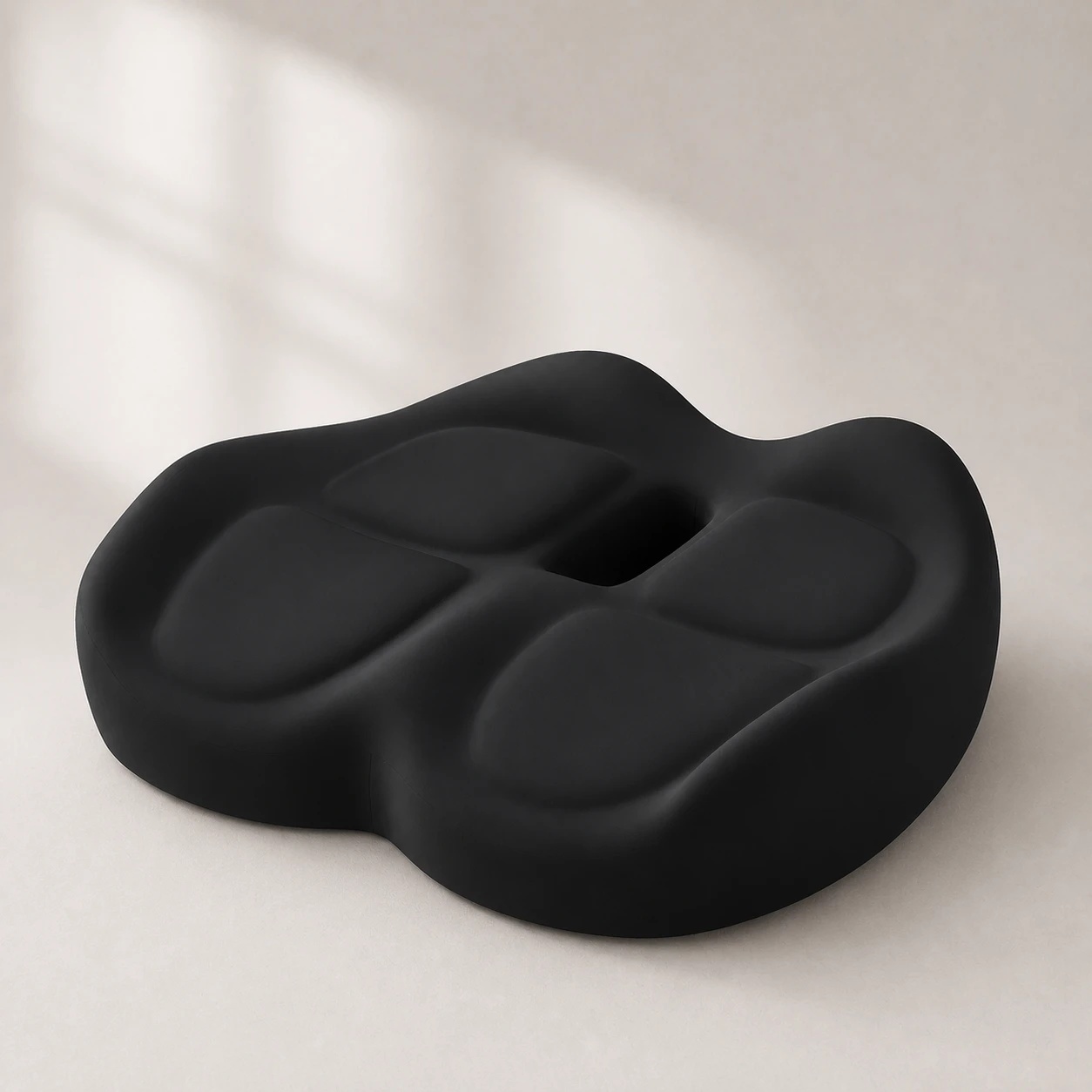 Product mentioned in this guideContourX Seat CushionBlack single-seat cushion with a deep fixed contour, broad raised zones, and one central opening.Free US shipping on every order60-Day Home Trial · we pay return shippingSee current price
No cushion changes the fact that sitting holds your hips folded, and the longer they stay folded the tighter the front of the hip tends to feel. Standing and moving is the one lever a cushion cannot provide, and for the hip-flexor half of the problem it is the most reliable thing you have.
You do not need a rigid schedule, just a dependable trigger. Standing and walking for a minute or two every 30 to 60 minutes opens the hip joint, lengthens the muscles that have been held short, lets blood move through tissue that has been compressed, and breaks up the static posture before it has time to stiffen. The NHS advice on sitting less is to break up long sitting through the day with regular movement, rather than to offset hours of stillness with a single workout. The same direction shows up in general health guidance: the U.S. CDC's adult physical activity guidance encourages moving more and sitting less across the day, and for desk workers frequent short breaks are easier to sustain than one long session, and they tend to be what people actually keep doing.
If you want help making the habit stick, a deliberate micro-break routine gives you a cue and a cadence without turning the day into an exercise plan. A footrest with a rocker can also keep your legs and ankles gently moving while you sit, which is a small thing but adds up over a long day, though it is an optional extra rather than something the hip problem requires.
Chair setup: seat height and depth
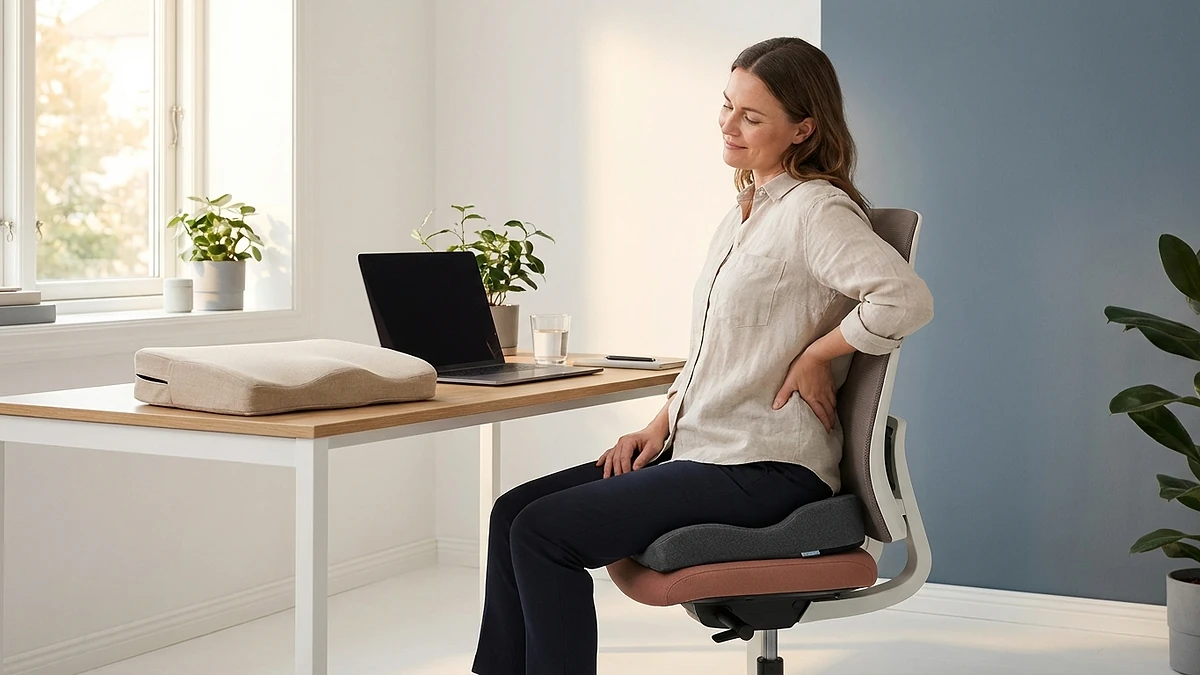
A cushion sits on top of your chair setup; it does not replace it. Two settings matter most for the hips, because they decide how your weight lands on the sit bones and how sharply the hip stays folded.
- Seat height. Set the seat so your feet rest flat on the floor with hips and knees at roughly right angles. If your feet dangle, your weight drags forward and presses harder on the front of the seat and your thighs; if your knees ride above your hips, the pelvis tips back and loads the rear of the seat awkwardly. A footrest brings the floor up to meet your feet if the seat must stay high to suit your desk.
- Seat depth. Aim for a small gap, about two to three finger widths, between the front edge of the seat and the back of your knees. Too deep and the edge digs into the back of your thighs and nudges you into a slump; too shallow and your thighs are unsupported, throwing more load onto the sit bones. Many chairs let you slide the seat pan to set this.
- Keep the pelvis upright. Sit back so your hips reach the back of the seat, and use the backrest and any lumbar support to stop the pelvis rolling into a slouch. An upright pelvis keeps weight balanced on the sit bones rather than letting it migrate onto soft tissue or the tailbone.
- Vary the angle. A slightly more open hip angle, with the seat tilted forward a touch or the knees a little lower than the hips, can ease the folded-hip-flexor feeling for some people. Use it as a change of position, not a fixed posture to hold all day.
U.S. OSHA's guidance on good working positions describes the same foundation: a chair adjusted so your feet are supported and your posture is neutral and well supported, rather than held rigidly in one fixed shape. Get this right first, because a good setup does more for hip comfort than any cushion bought to compensate for a poor one. If you want a step-by-step, our guide to adjusting your office chair walks through the same settings in order.
A few useful stretches
Stretching is not a substitute for moving regularly, but it can help the tight, folded feeling at the front of the hip that sitting creates. Keep it gentle, stop short of pain, and treat it as one more way to change position rather than a cure.
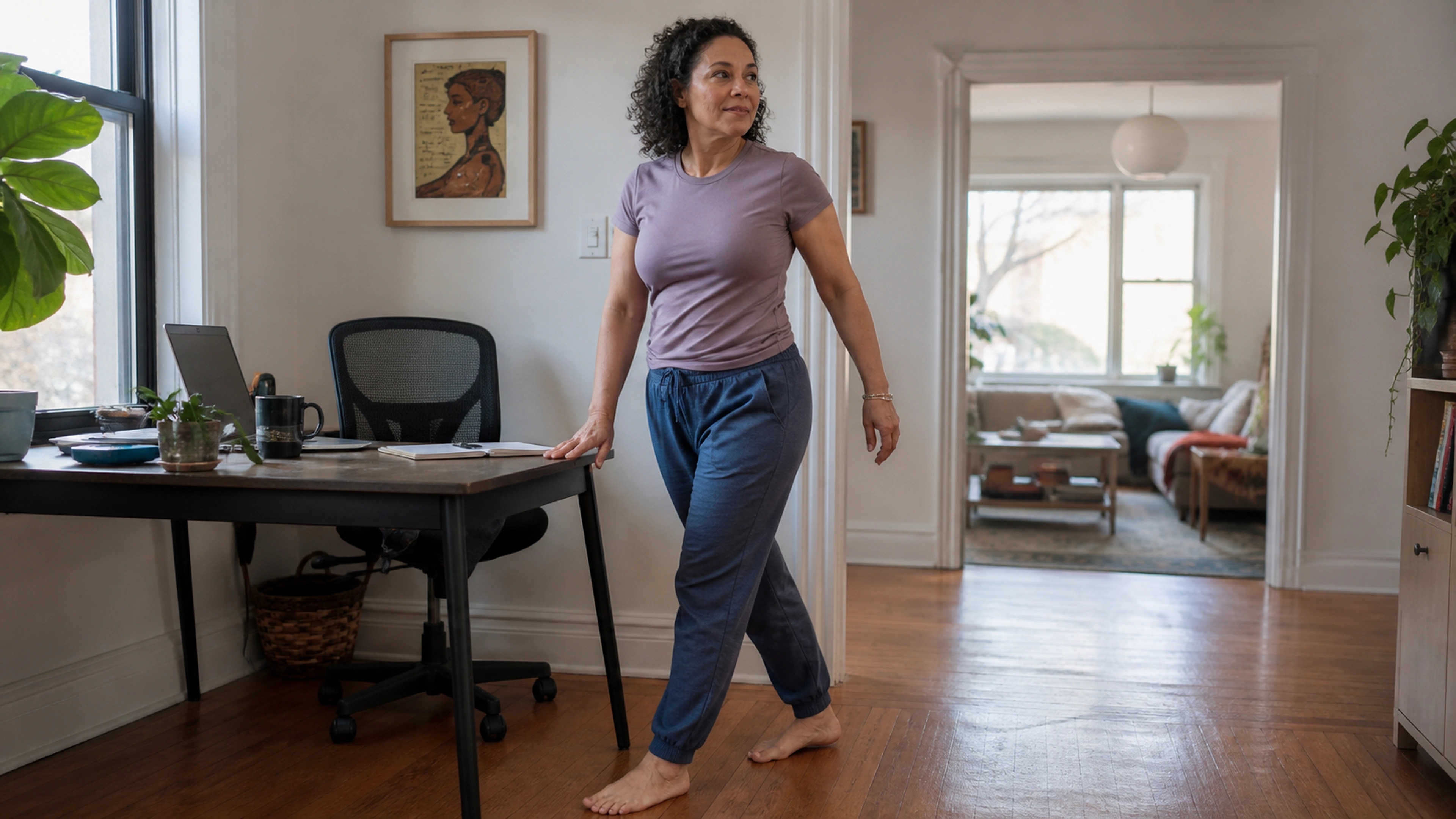
- Standing hip-flexor reach. Stand and step one foot back, keeping it roughly in line under your hip, then gently tuck your pelvis and feel a mild stretch across the front of the rear hip. Hold easily for a slow count, then swap sides. This directly targets the muscles sitting keeps short.
- Seated figure-four. Sitting upright, rest one ankle across the opposite knee and lean forward a little from the hips until you feel a gentle stretch in the buttock and outer hip. Ease off if anything pinches, and keep both sit bones on the seat.
- Stand-and-walk reset. The simplest one: stand fully upright, take a short walk to the kitchen or window, and let the hips open through the stride. Often this does more than any held stretch because it combines movement with lengthening.
None of these needs equipment or a mat, and you can fit them into the breaks you are already taking. If you want a fuller set you can run at your desk, a short library of standing and seated moves is easy to keep beside your monitor. Stretches help the tightness; the cushion helps the pressure; the two address different halves of the problem.
When to see a professional
Our products are comfort and posture aids, not medical devices. Most desk-driven hip discomfort that eases when you stand responds well to a supportive cushion, regular movement and a sensible chair setup. Some symptoms point to a problem that needs a clinician rather than an accessory, and waiting for a cushion to fix them only delays the care you need. See a doctor or qualified professional if any of the following apply:
- Pain after a fall, blow or accident. Hip pain that follows a direct injury should be assessed promptly rather than self-treated, especially if it is severe or you cannot bear weight on the leg.
- Numbness in the saddle area, or loss of bladder or bowel control. This combination is a medical emergency and needs urgent care, not a cushion.
- Numbness, tingling or progressive weakness in the leg or foot, particularly if it travels down the leg or is getting worse, which can point to a nerve cause rather than simple seat pressure.
- Unexplained weight loss, fever, or constant night pain that wakes you. Pain that is unrelenting, worsening and not linked to your posture deserves a professional opinion.
- Pain that does not improve, or keeps getting worse, despite redistributing the pressure, fixing your chair setup and moving regularly over a few weeks.
None of these is something a seat cushion can diagnose or treat. If anything on this list applies to you, set the shopping aside and book an appointment.
The bottom line
Hip pain from sitting too long is usually two problems at once: pressure under the sit bones and tightness from hips held folded for hours, and the honest answer is that it takes more than one fix. Break up long sitting with a short walk every 30 to 60 minutes to open the hip and ease the tightness, set your chair so your feet are supported and your seat depth leaves room behind the knees, and add a couple of gentle hip-flexor stretches to the breaks you already take. If a hard or worn seat is loading your sit bones through long unbroken stretches, a gel seat cushion spreads that weight across a wider area and takes the edge off the pressure half of the problem. It is one lever among several, not a cure, and it does nothing for hip-flexor tightness, so if a hard seat is not your issue it is more than you need. Compare options across our seat cushion collection, and if any of the symptoms above apply, see a professional first. Our pick for the pressure half of the problem remains the gel seat cushion, judged on how evenly it redistributes load under the sit bones over a long day.