
Legs Going Numb When Sitting: Causes and Fixes
You shift in your chair, stand up after a long stretch at the desk, and one or both legs feel dead, prickly, or pins-and-needles. If you keep getting legs going numb when sitting, the usual cause is mechanical and ordinary: the front edge of your seat is pressing on the nerves and blood vessels behind your thighs and knees, and your legs have been held in one position for too long. It is uncomfortable and distracting, but in most cases it is not a sign of anything sinister.
This post explains what is actually happening when your legs fall asleep at a desk, the practical setup changes that fix most cases (seat depth, foot support, and movement), and the smaller number of numbness patterns that are red flags worth a clinician's attention. We sell comfort and posture aids, including a foot rocker, so treat what follows as a buying framework judged against stated criteria, not a sales pitch. We will be clear about when a fix you already own does the job and when our product is more than you need.
Why legs go numb when sitting
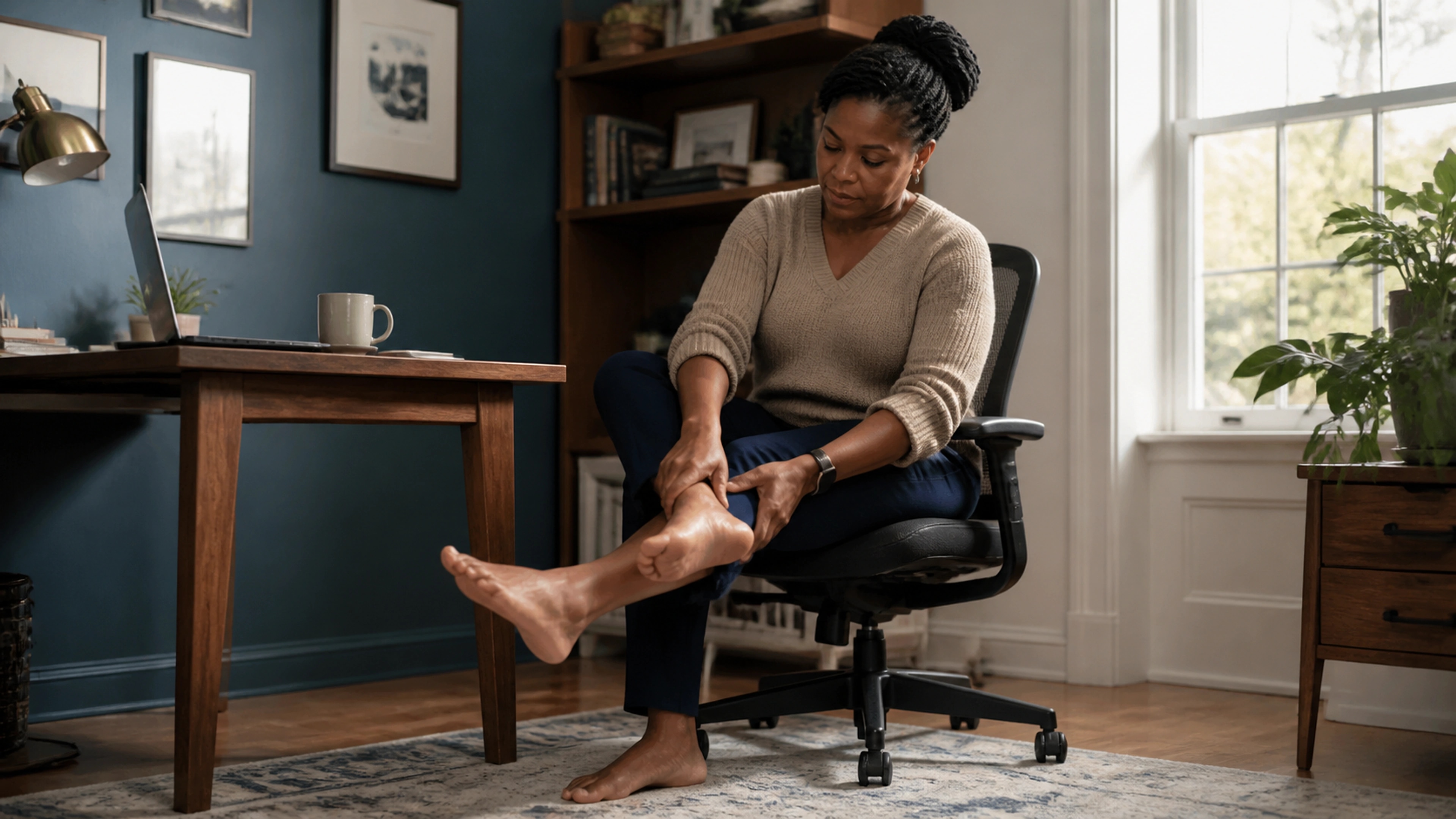
Legs go numb when sitting because the front edge of the seat presses on nerves and blood vessels behind your thighs and knees while your legs stay still, slowing circulation and irritating the nerve. The pins-and-needles feeling flags that pressure, not damage, and usually clears within a minute or two of moving.
Two things drive this. The first is edge pressure. If your feet do not rest flat, or the seat is too deep, your body weight loads onto a narrow band of soft tissue at the front of the seat pan instead of being spread across your thighs. That concentrated pressure squeezes the blood vessels and nerves that pass through the back of the thigh and behind the knee. The second is stillness. Muscles act as a pump that helps move blood back up your legs; when you sit motionless, that pump stops, and blood and fluid pool in your lower legs. Guidance from the Canadian Centre for Occupational Health and Safety on working in a sitting position makes the same point: prolonged static sitting reduces circulation in the legs and the answer is to change posture and move, not to sit harder.
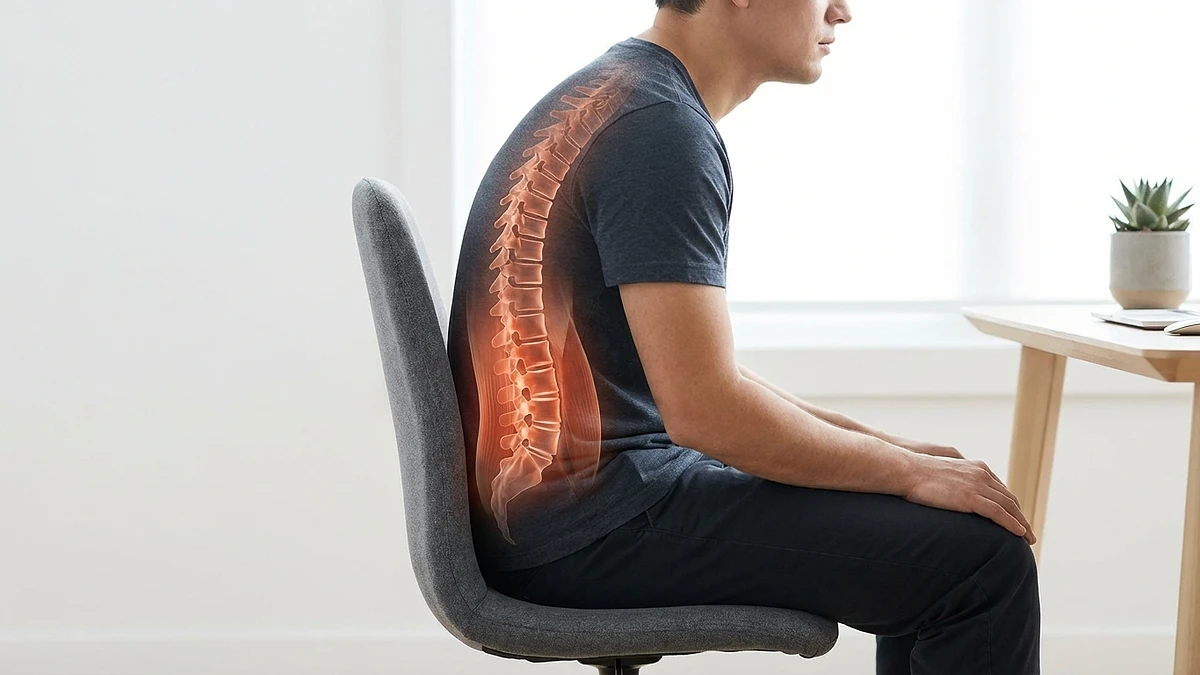
Most desk-related leg numbness is this simple combination of pressure plus stillness, and most of it responds to the setup fixes below. A smaller share traces to a pinched nerve higher up, in the lower back or buttock, which we cover in the red-flag section because the fix is different.
Fixing seat depth and front-edge pressure
Start with the seat itself, because front-edge pressure is the most common single cause. The goal is to spread your weight across your thighs and clear the gap behind your knees so nothing presses on the vessels and nerves there.
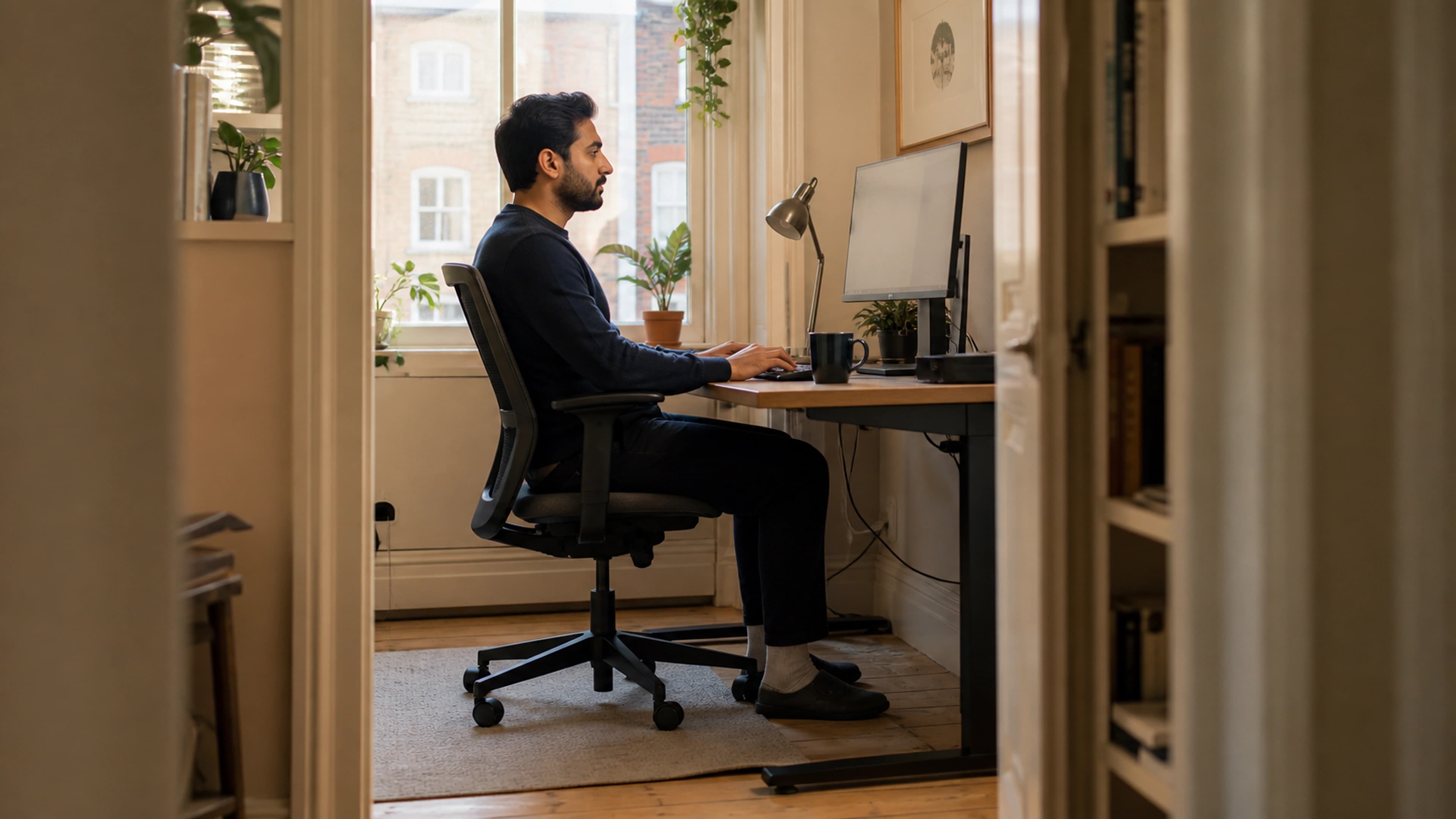
Check your seat depth first. When you sit fully back against the backrest, you want roughly two to three finger-widths (about 3-5 cm / 1-2 in) of gap between the front edge of the seat and the back of your knees. If the seat pan is so deep that its edge digs into the back of your knees, that edge is sitting right on top of the structures that carry blood and sensation to your lower leg, which is a direct route to numbness.
- Slide the seat pan. If your chair has a sliding seat depth adjustment, shorten it until you have that finger-width gap behind the knees.
- Add a back cushion. If the pan cannot be shortened, a lumbar or back cushion that moves you forward effectively reduces the depth, so the front edge no longer reaches your knees.
- Soften a hard edge. A contoured seat cushion can spread weight across a wider area and take some load off the front edge, which helps if a firm seat is concentrating pressure on one band of tissue.
- Avoid crossing your legs. Crossing at the knee compresses the nerve on the outside of the upper leg and is a frequent cause of one leg going numb. If only one leg falls asleep, check this first.
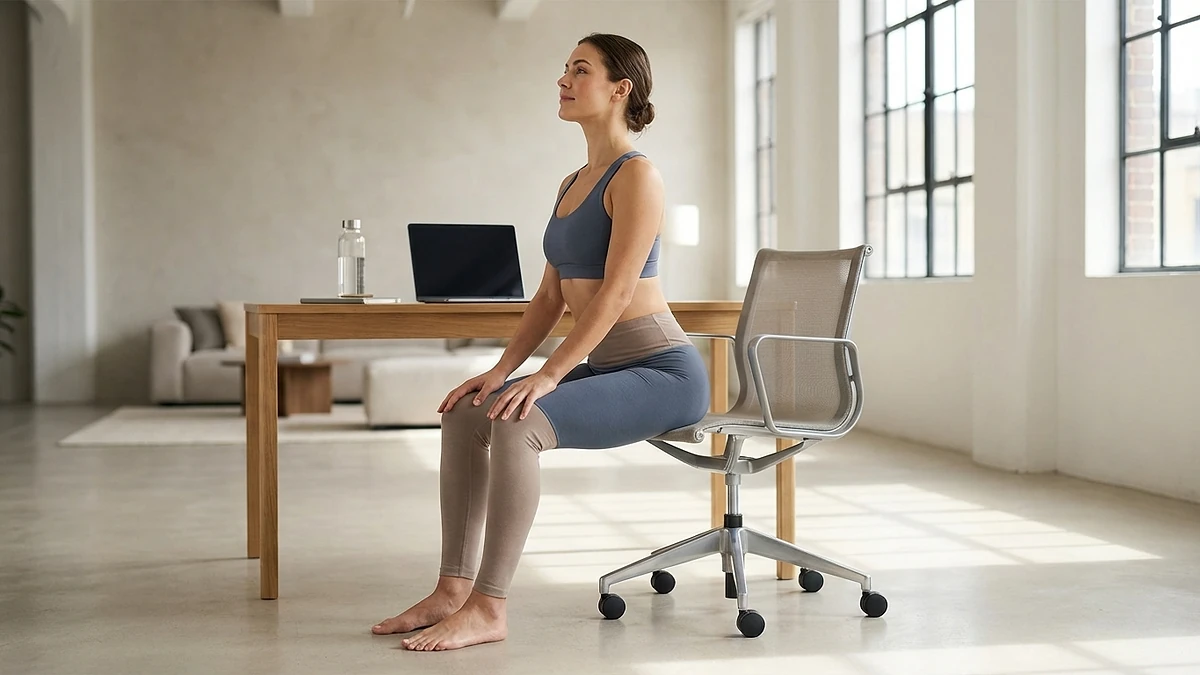
A note on honesty here: if your numbness only shows up when you cross your legs and disappears the moment you uncross them, you do not need to buy anything. Stop crossing your legs and the problem is solved.
Supporting the feet and keeping them moving
Once the seat edge is sorted, the next factor is your feet. If your feet dangle or only your toes touch the floor, your thighs carry weight they should not, and the front of the seat presses harder. This is common for shorter people and for anyone whose desk forces the chair up so high that the feet leave the floor. The fix is to bring the floor up to your feet so they rest flat, with knees and hips near a right angle. The U.S. OSHA computer-workstations guidance and the NHS both treat flat-supported feet as a baseline of a neutral seated posture, not an optional extra.
Supporting the feet is half the job. The other half is keeping them moving, because stillness is the second driver of numbness. This is where a foot rocker differs from a flat footrest. A flat footrest holds your feet supported at one fixed angle. A foot rocker is pivoted, so your feet can gently rock forward and back while you sit, which keeps your ankles and calves working instead of locked in place. That small, ongoing movement keeps the calf-muscle pump active and helps stop blood pooling in your lower legs during long stretches at the desk.
When a foot rocker helps and when it does not
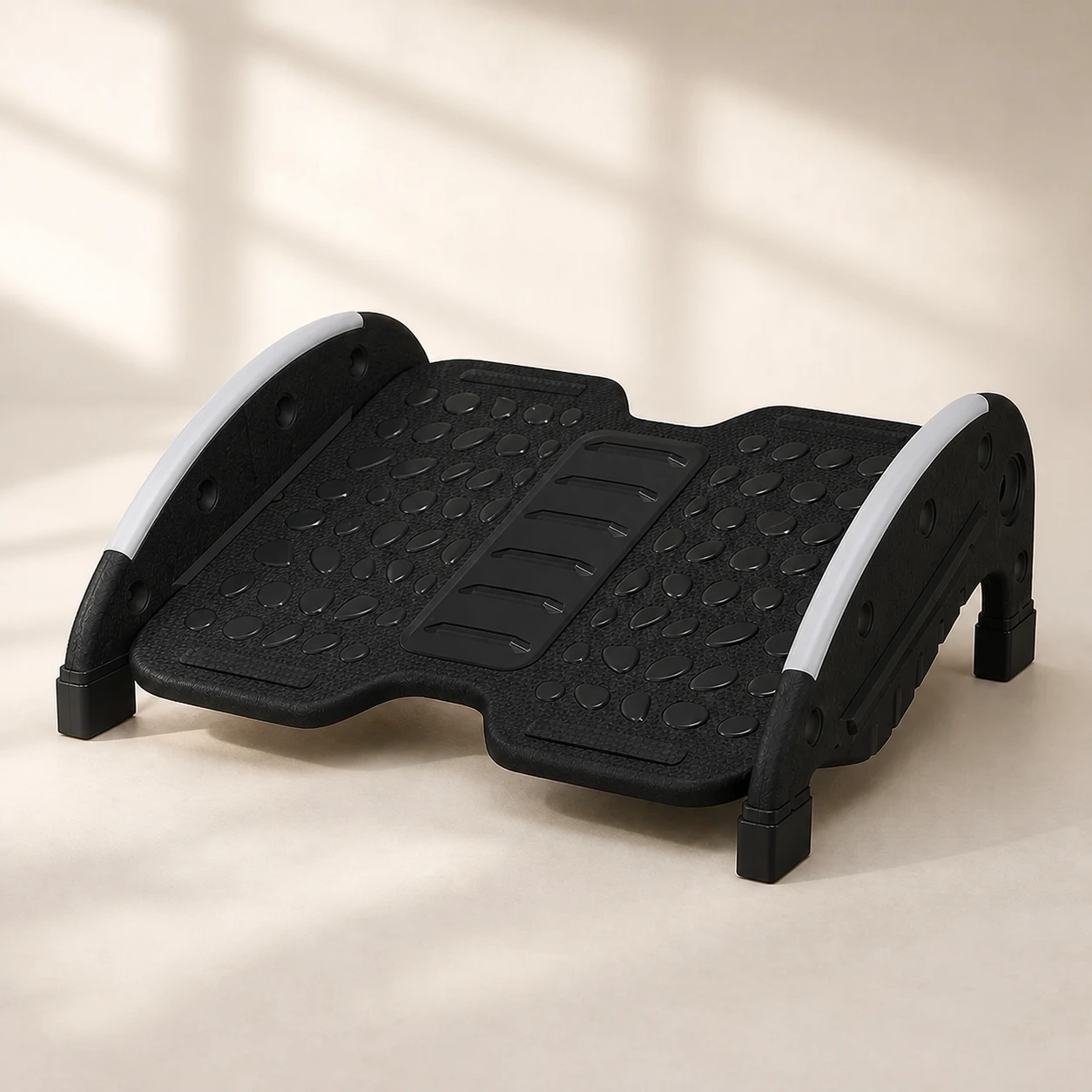 Product mentioned in this guideFlexRock DuoTwo-mode under-desk footrest with a user-controlled rocking option, fixed 15° support, and a reversible 40 × 30 cm textured platform.Free US shipping on every order60-Day Home Trial · we pay return shippingSee current price
An ergonomic foot rocker earns its place if two things are true: your feet do not comfortably reach the floor at the right chair height, and your legs go stiff or numb from staying still. It solves both at once. Judge any foot rocker, ours included, on a few honest criteria.
- Adjustable height. The right height depends on your leg length and desk, so a single fixed height fits some people and fails others. Adjustable height lets you set your feet flat with knees and hips near a right angle.
- Adjustable tilt. A slight forward slope keeps the ankles in a comfortable, neutral position rather than cocked up or pointed down.
- Non-slip surface. If feet slide off, especially on a rocking platform, you stop using it. A textured top keeps feet in place through the movement.
- It fits under your desk. Check width and depth against your foot space so it tucks away and does not crowd the chair base.
Who should not buy one: if your feet already rest flat on the floor at the correct chair height, a foot rocker raises your knees too high and a footrest of any kind is more than you need. And if your numbness is caused by leg-crossing or a too-deep seat, fix those first; a rocker will not undo edge pressure you have not addressed. You can compare it against the rest of the range on our footrests collection page.
Posture and regular breaks
No cushion or rocker beats movement. The single most effective thing for desk-related leg numbness is to stop sitting still for hours at a time. The NHS guidance on sitting less is blunt about this: long uninterrupted sitting is the problem, and breaking it up is the lever. A foot rocker fills the long gaps between breaks with a little ankle movement, but it does not replace standing up.
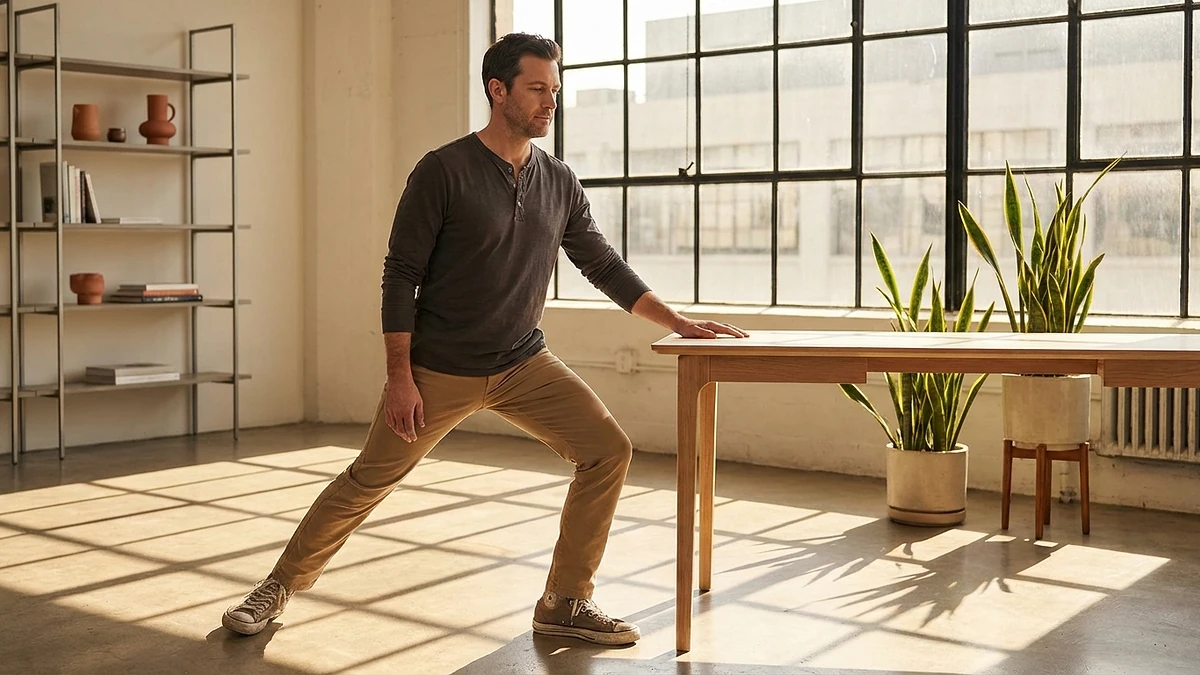
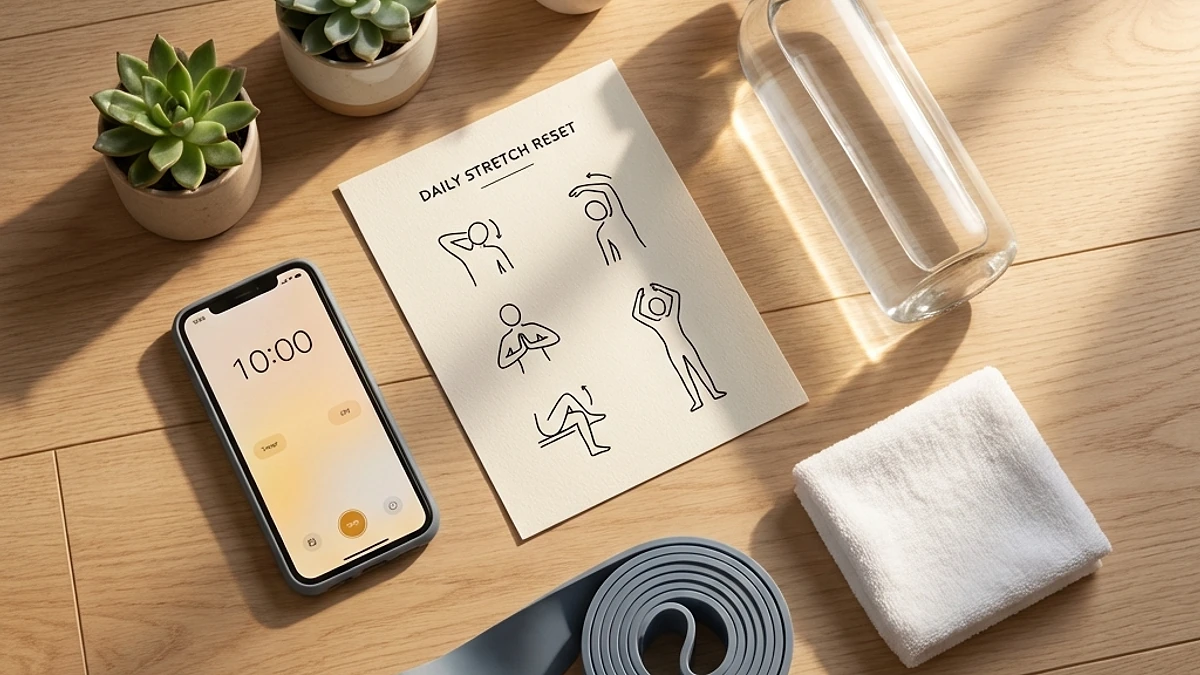
A workable rhythm is to stand and move for a minute or two every 30 to 60 minutes. You do not need a formal routine; a trip to refill water, a few steps, or a short stretch is enough to restart the calf-muscle pump and reset the pressure on your seat. If you want a structured version, our guide to building a micro-break routine lays out a simple, repeatable pattern.
Alongside breaks, keep your seated posture neutral so weight is spread, not concentrated. Sit back against the backrest so your lower back is supported, keep your feet flat (on the floor or on a footrest), and keep knees and hips near a right angle. The same edge-pressure and stillness problems that numb your legs often go hand in hand with stiffness and ache higher up; if that is you, our companion post on hip pain from sitting too long covers the related setup fixes.
When numbness is serious: red flags
Most leg numbness from sitting is positional, clears within a minute or two of moving, and is nothing to worry about. But numbness can also be the visible sign of a nerve being compressed higher up, in the lower back or buttock, and a few patterns mean you should stop self-treating and see a professional. Our products are comfort and posture aids, not medical devices, and they cannot diagnose or treat any of the following.
See a GP, physiotherapist, or other clinician, and seek urgent care for the emergency signs, if you have:
- Numbness after trauma. Leg numbness that follows a fall, accident, or other injury needs assessment rather than a cushion.
- Numbness that does not clear. Pins-and-needles that persists after you stand and move, or numbness that lingers for hours, is different from the positional kind.
- One-sided numbness with leg or back pain. Numbness down one leg, especially with pain that travels from the lower back or buttock into the leg, can point to a trapped nerve. The NHS describes this sciatica pattern, and a slipped disc can be behind it.
- Weakness or foot drop. If a leg or foot is getting weaker, gives way, or you cannot lift the front of your foot, that is a sign of nerve involvement that needs prompt attention.
- Progressive or spreading numbness. Numbness that is getting worse, spreading, or affecting both legs warrants assessment.
- Numbness in the saddle area, or loss of bladder or bowel control. Numbness around the groin, buttocks, or inner thighs, or any loss of bladder or bowel control, is a medical emergency. Seek urgent care the same day.
- Fever, unexplained weight loss, or feeling generally unwell with the numbness. These alongside back or leg symptoms should be checked promptly.
None of this is meant to alarm you out of an ordinary dead leg. It is meant to draw a clear line: setup fixes are for positional numbness that comes and goes with how you sit, and the signs above are for a clinician.
The bottom line
Legs going numb when sitting is usually a mechanical problem you can fix yourself: the front edge of the seat is pressing on nerves and vessels behind your thighs and knees, and your legs have been still too long. Clear the gap behind your knees by sorting seat depth, keep your feet flat and ideally moving, and break up long sitting with a short walk every half hour or so. If your feet dangle and your legs stiffen from stillness, an ergonomic foot rocker supports the feet and keeps the ankles moving, which addresses both causes at once; if your feet already reach the floor, you do not need one. And if your numbness is one-sided, persistent, comes with weakness, or involves the saddle area or bladder and bowel control, skip the shopping and see a clinician.