
Do Posture Correctors Work? An Honest Look at the Evidence
You have seen the straps that pull your shoulders back, and after a day hunched over a laptop the promise is tempting: wear it, sit up straight, fix your posture. The honest question is whether posture correctors work, and the honest answer is that the evidence is limited. A brace can remind you to straighten up while you are wearing it, but there is little good evidence that it retrains your posture once it comes off.
We sell comfort and posture aids, including a lumbar pillow, so treat this as a buying framework rather than a sales pitch. We will tell you plainly what the research does and does not show, what actually moves posture over weeks and months, where a gentle support fits, and who should not bother with a corrector at all. Our products are comfort and posture aids, not medical devices.
Do posture correctors work?
Posture correctors work as a short-term cue, not a cure. A strap or brace can pull your shoulders back and remind you to stop slouching while you wear it. The evidence that they retrain posture or relieve pain long term is limited, so treat any brace as a temporary prompt, not a fix.
The mechanism is simple, and so is its limit. When the strap tugs, you notice and you correct. The moment you take it off, the cue is gone, and nothing has been added to the strength, mobility or habits that hold your posture up on their own. That is why a corrector can feel useful in the first hour and do nothing measurable by the second week. It is a reminder you wear, not a change you keep.
What the evidence does and does not show
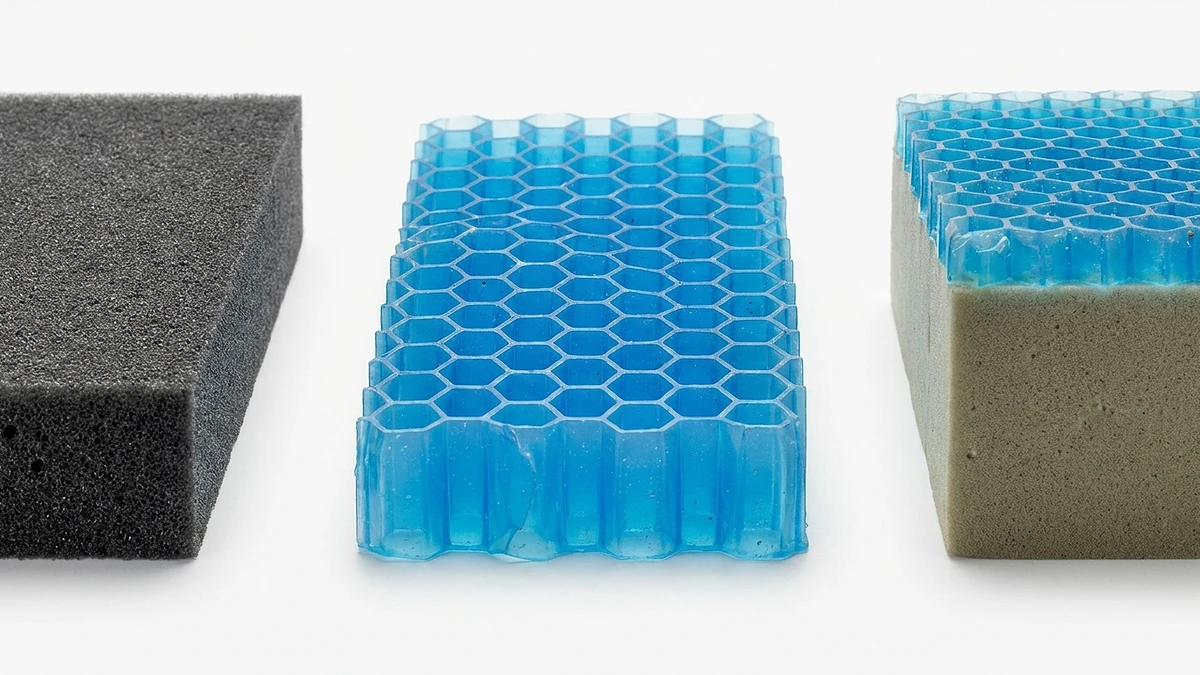
Be wary of confident claims in either direction. There is no large, consistent body of high-quality research showing that off-the-shelf posture correctors produce lasting improvements in posture or reduce back pain over time. The certainty here is limited, and anyone promising a fixed percentage improvement is going beyond what the evidence supports.
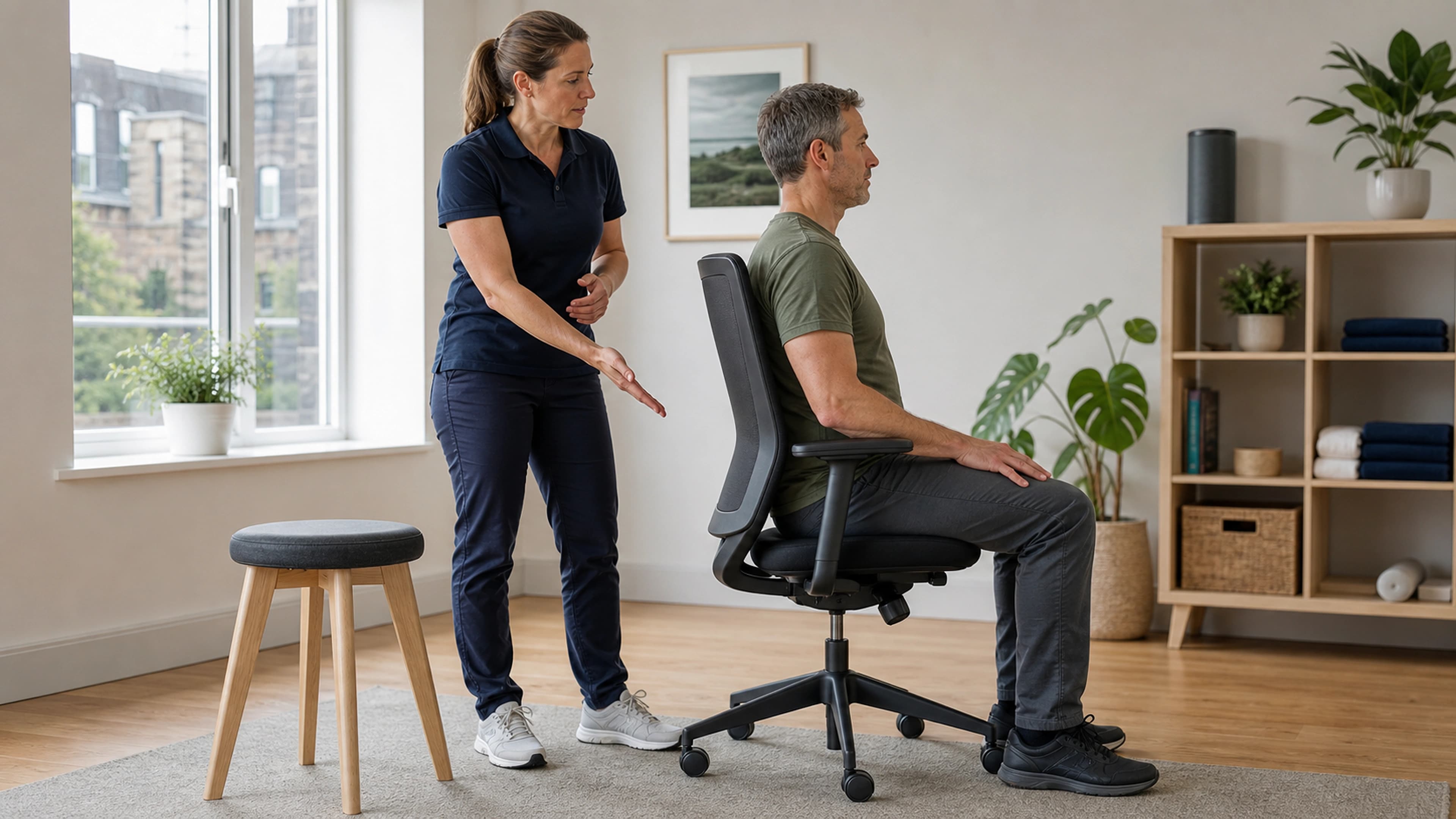
What is better established is the other side of the story: posture is not a single fault you snap into place with a strap. The NHS guidance on back pain is clear that back pain is common, usually not caused by anything serious, and most often improves with staying active and gentle movement rather than with bracing or rest. That framing matters, because it shifts the goal from forcing one posture to building a back that moves comfortably and is not stuck in any position for hours.
There is also a sensible worry, even if it is not a settled fact: a brace that does the work of holding you upright may let the muscles that should do that job switch off. We will not overstate this as proven harm, but it is a reasonable reason not to rely on a corrector as a long-term fix. The direction of the evidence points toward active strategies, not passive straps.
It is also worth being honest about why bold claims are easy to make and hard to back up. Posture is genuinely difficult to measure, it varies from person to person, and how a back feels does not always track how it looks. A strap can change a photograph for an hour without changing anything that matters over a month. When you read a product page promising a precise improvement or a fixed timeline to a perfect spine, treat that as marketing rather than evidence, and judge any corrector, including the idea of one, against what it can actually do: remind you, briefly, to stop slouching.
What actually improves posture
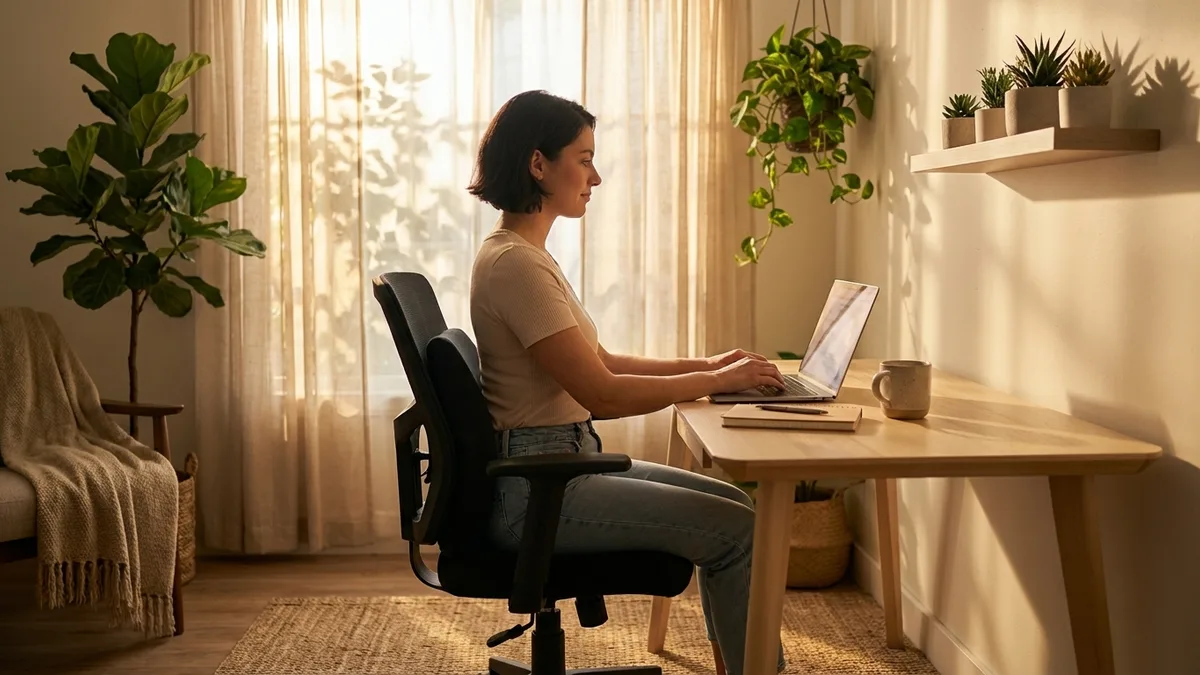
If a strap is not the answer, what is? The honest version is less marketable but more durable: your posture is shaped by your environment, how often you move, and the strength you build over time. None of those arrive in a box you wear, and all of them outlast anything a corrector does.
Set up the environment first
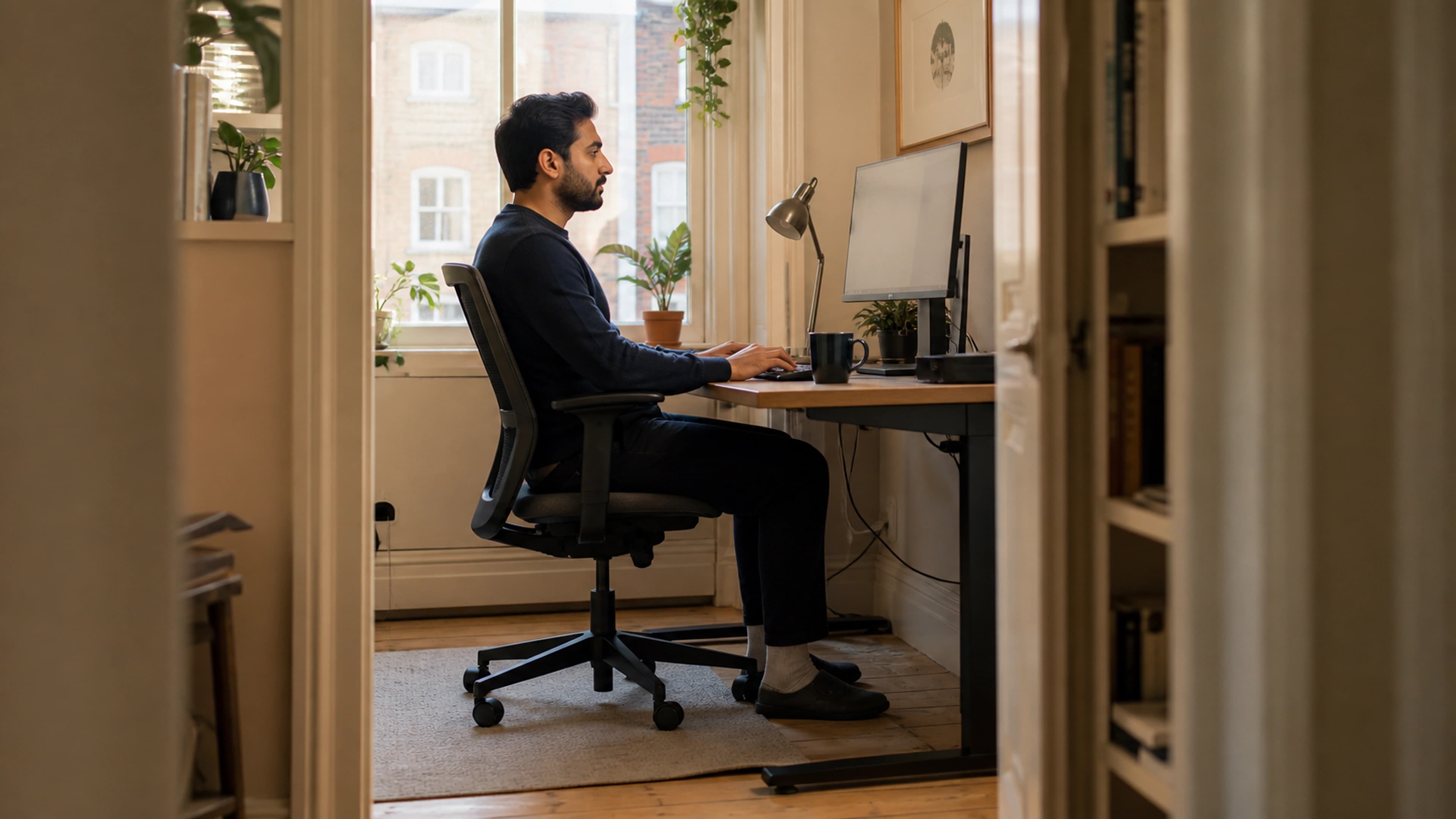
Most slouching is your body adapting to a workstation that fights good posture. Established ergonomics guidance from OSHA and Cornell University describes a neutral seated position: feet flat on the floor, knees and hips near a right angle, forearms roughly level with the desk, and the top of the screen near eye level so you are not craning your neck down. Get the chair height, desk height and monitor height right and your spine has far less reason to collapse forward in the first place. Our guide to proper sitting posture at a desk walks through each adjustment.
Move more often
No single posture is the right one for hours on end. The body is built to change position, and the most reliable thing you can do is interrupt long stretches of sitting. Standing up, walking for a minute, and shifting how you sit every half hour or so does more for how your back feels than holding any pose. Posture is dynamic, not a statue you hold.
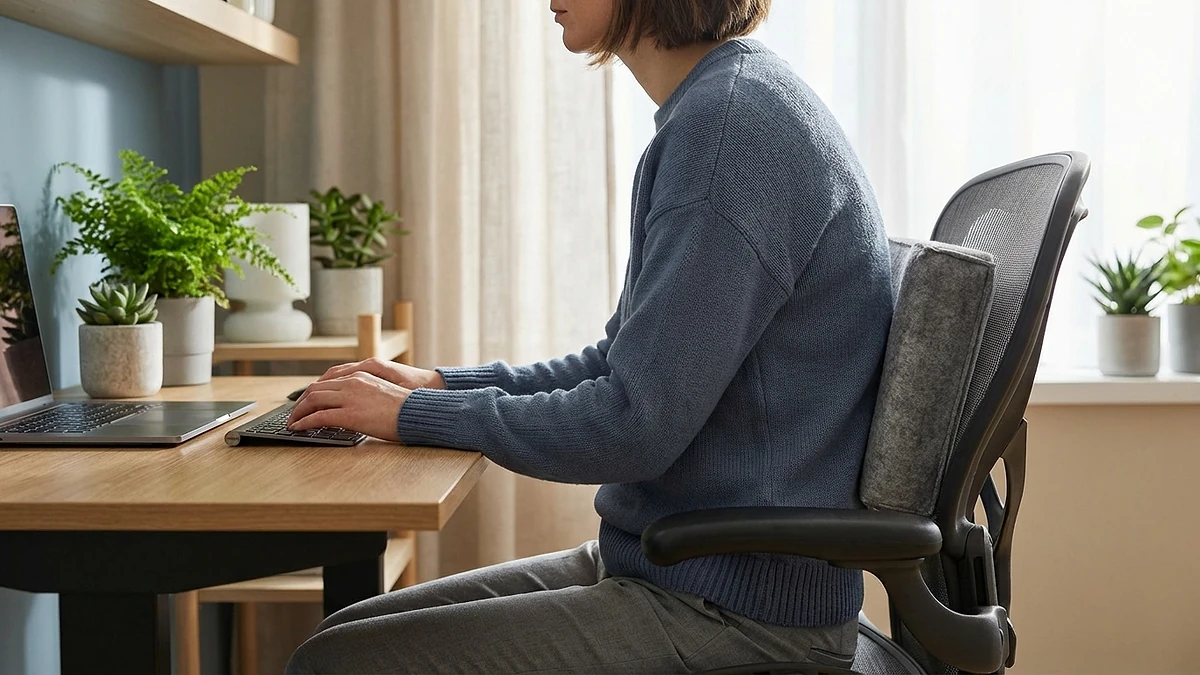
This is also where a corrector quietly works against you. Wearing a strap to hold one position is the opposite of the variety your back wants, and it can make you feel you have done the right thing by staying still when staying still is part of the problem. A cheap recurring reminder to stand and move beats an expensive reminder to freeze. If you want a structure for it, our micro-break routine guide turns this into a simple habit of moving on a regular interval rather than relying on a strap.
Build strength over time
The muscles around your spine, hips and shoulders are what hold posture up without conscious effort. They get stronger through regular movement and gentle exercise, not through being held in place by a strap. This is the slow lever, and it is the one that lasts. A corrector tries to short-cut it and cannot.
Where passive lumbar support fits
Given all that, where does a product like ours honestly fit? Not as a corrector, and not as a fix. A lumbar pillow is a gentle cue at the chair. It fills the gap between the curve of your lower back and a flat backrest, which encourages your pelvis to sit more upright and makes an upright posture the easy default rather than a constant act of will.
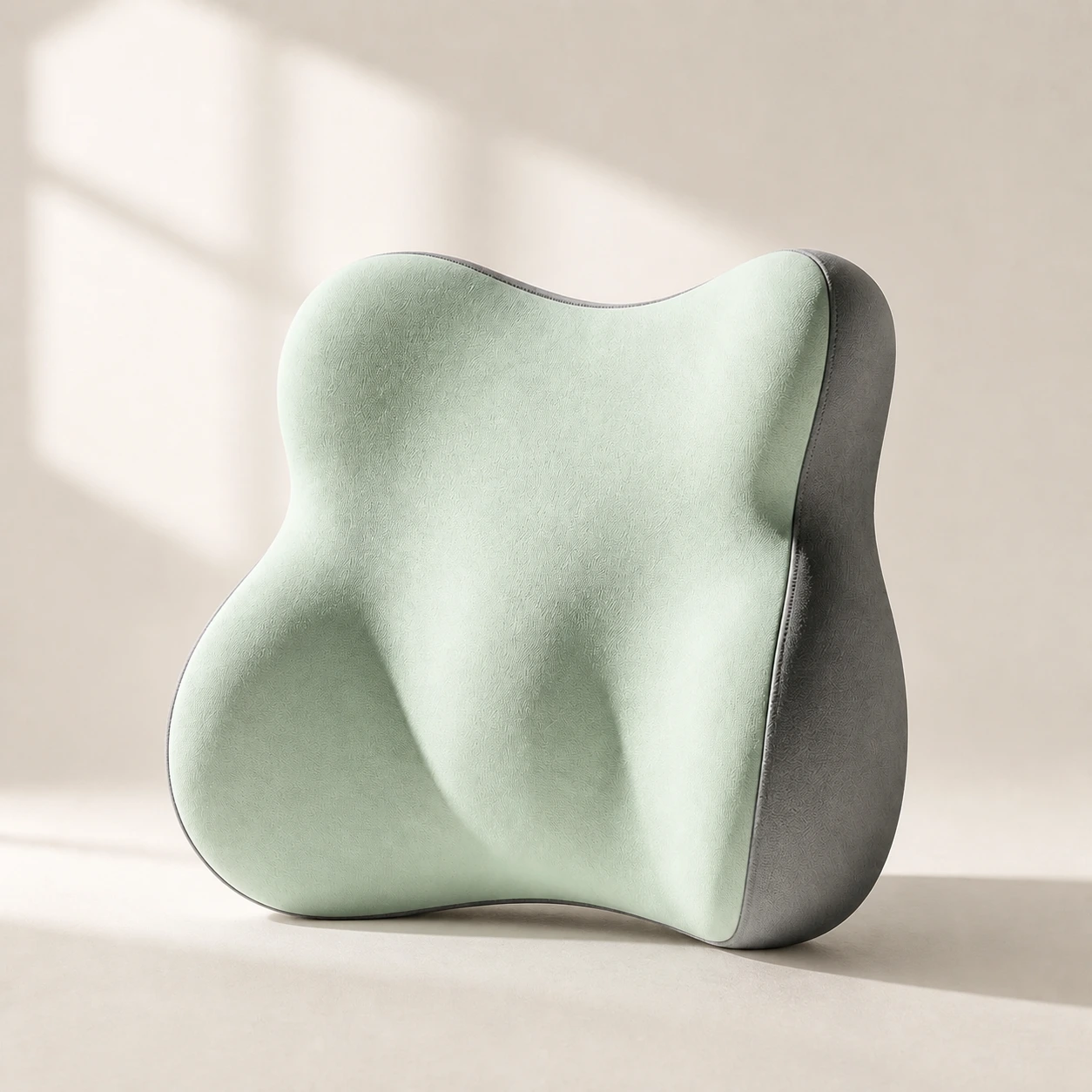 Product mentioned in this guideLumaWing Lumbar Cushion39 × 34 × 14 cm lumbar cushion available in four colours with a slow-rebound memory-foam core, fixed central ridge, recessed side channels, and broad outer…Free US shipping on every order60-Day Home Trial · we pay return shippingSee current price
That is a smaller, more honest claim than a brace makes. A lumbar support pillow does not pull your shoulders back or force a position. It supports the spot where most office slouching begins, so that staying neutral takes less effort across a long day. It works with the strengthening and movement above, not instead of them. If you want to compare the gentle-cue approach with other options and see where placement matters, our guide to lower back support while sitting lays them out.
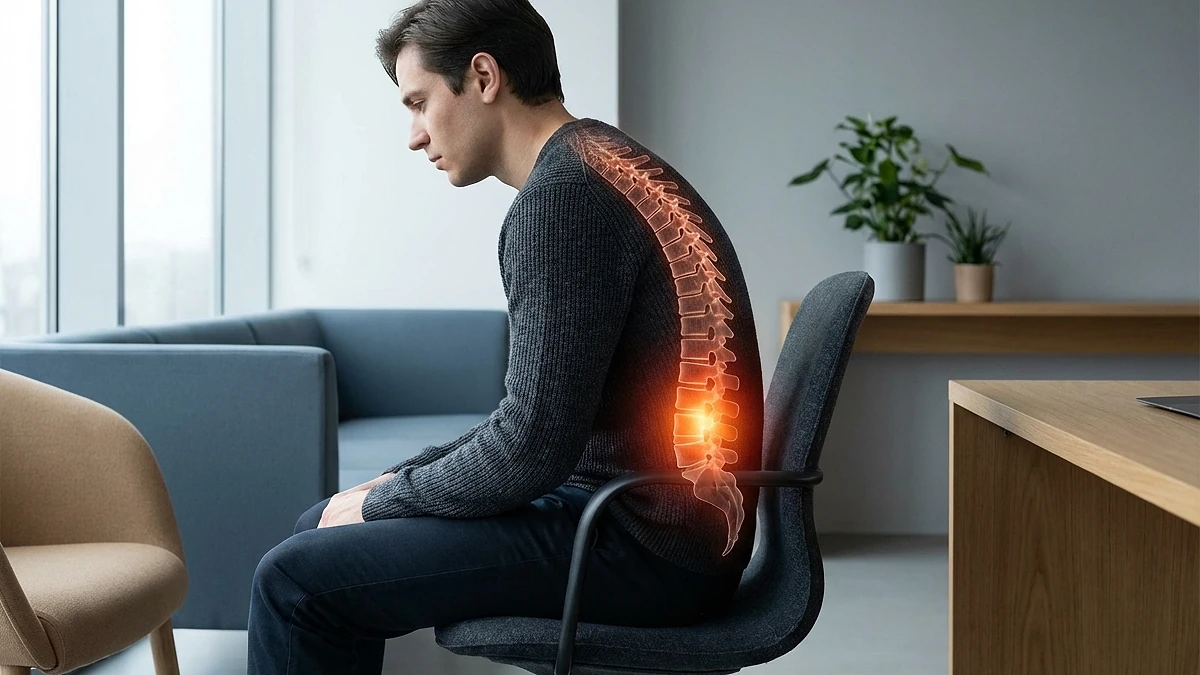
We will be plain about the limits. A pillow is a comfort and posture aid, not a treatment, and it will not strengthen anything on its own. If your chair already has good adjustable lumbar support and you sit well in it, a separate pillow may be more than you need. It earns its place only when your backrest is flat or unsupportive and you want an easier default than constant self-correction.
Who might reasonably try a corrector
None of this means a posture corrector is useless for everyone. As a short-term, deliberate cue it has a narrow, honest role. Used with clear expectations, some people find a brief reminder genuinely helpful.
- You want a temporary nudge. If you understand a corrector is a reminder to straighten up for a session, not a long-term fix, and you take it off regularly, it can prompt awareness while you build better habits.
- You are pairing it with the real work. A brace alongside a fixed workstation, regular movement and strengthening is reasonable; a brace instead of those is not.
- A professional recommended it. If a physiotherapist or doctor has suggested a specific brace for a specific reason, follow their guidance over any general advice here.
Who should skip it: anyone hoping a strap alone will retrain their posture, anyone using it to power through pain instead of addressing the cause, and anyone wearing one all day in the belief that more hours means more correction. That is the use case the evidence least supports.
When to see a professional
Posture aids and correctors are for comfort and habit, not for diagnosing or treating a problem. Most everyday slouch and stiffness improves with a better setup, more movement and time. Some symptoms need a professional rather than a strap or a pillow. See a doctor or physiotherapist if your pain follows a fall, accident or other trauma; if you have progressive weakness, numbness or tingling in a leg or arm; if you notice numbness around the saddle area between your legs; if you lose control of your bladder or bowels; or if back pain comes with unexplained weight loss, fever, or pain that is severe, steadily worsening, or wakes you at night. These can signal something that needs assessment, and a corrector will only delay the care you need.
The bottom line
Do posture correctors work? As a short-term cue, sometimes; as a way to retrain posture or relieve pain over time, the evidence is limited and we will not pretend otherwise. What actually moves the needle is less glamorous: a workstation set up for a neutral position, moving often instead of holding one pose, and building strength over weeks and months. A passive support has a small, honest role in that picture. Our lumbar support pillow is a gentle cue at the chair, not a corrector, and it earns its place only when your backrest leaves your lower back unsupported. If you would rather start with the setup that does the heavy lifting, our collection of lumbar pillows and the posture guide above are the better first stop.