

Back Pain From Driving: Why It Happens and How to Fix It
You set off feeling fine, and an hour into the drive there is a dull, tightening ache low in your back that you keep shifting in the seat to escape. That pattern is the most recognisable form of back pain from driving, and it is common among commuters, delivery and long-haul drivers, and anyone who spends real time behind the wheel. The same drive that leaves your legs fine can leave your lower back stiff for the rest of the day.
This post explains why driving loads the back the way it does, how to set the seat up properly before you spend money, where added lumbar support genuinely fits, and when an ache is a signal to get checked rather than cushioned. We sell a car lumbar pillow, so treat what follows as a buying framework judged against stated criteria, ours included, not a sales pitch. Our products are comfort and posture aids, not medical devices, and for many drives the free fixes matter more than anything you can buy.
Why driving causes back pain
Driving causes back pain mainly because it combines three things a normal chair does not: a fixed posture you cannot easily break, whole-body vibration from the road, and a seat whose lumbar curve rarely matches yours. Held for an hour or more, that static, vibrating load fatigues the muscles supporting your lower spine and the ache builds.
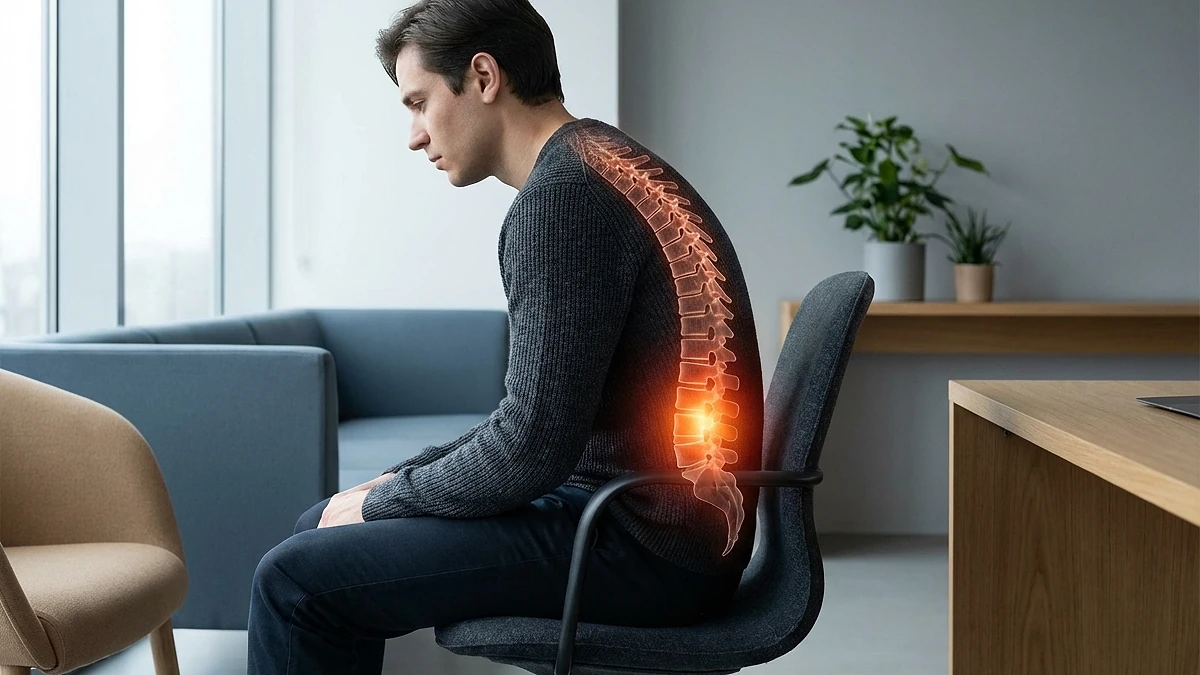
Start with the posture. The Canadian Centre for Occupational Health and Safety notes that a static sitting position held for a long time loads the back even though sitting feels restful, because the supporting muscles fatigue and the discs and soft tissues take a sustained, uneven load. Driving makes this worse than office sitting in two ways. You cannot get up when you want to, and your feet and hands are committed to the controls, so even the small fidgets that relieve a desk chair are limited. Your right leg works the pedals, which can subtly twist the pelvis, and many people end up reaching forward for the wheel, which pulls the lower back out of its supported curve.
Then add vibration. A moving vehicle transmits constant low-frequency vibration up through the seat into your spine, and that steady jostling is tiring for the tissues in a way a still chair is not. Finally, car seats are shaped for crash safety and a wide range of body sizes, not for the precise curve of your particular lower back. Many leave a gap behind the small of your back, so you either slump back into the seat or hold yourself off it with muscle effort you will not sustain for a long drive.
Setting up the car seat first
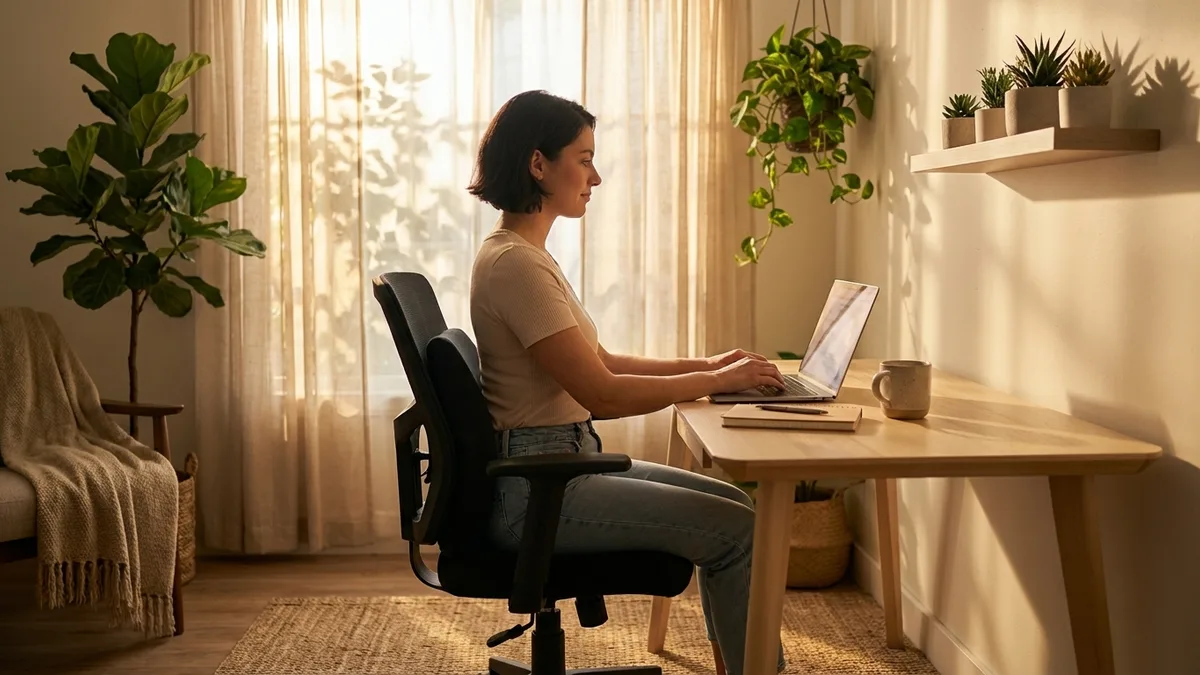
Before you buy anything, get the seat itself right, because adjustments you already have often do more than an accessory. The Cornell University Ergonomics Web and general seated-posture guidance both point in the same direction: you want the natural curve of your lower back supported, your reach to the controls relaxed, and your head protected.
- Set distance first. Move the seat so your knees stay slightly bent when the pedal is fully pressed and you are not stretching. You should reach the wheel with your shoulders still against the seat back, elbows comfortably bent, not locked straight.
- Tune the recline. A roughly upright back, reclined only slightly (around 100 to 110 degrees), keeps your lower back supported. Reclining far back forces you to crane your head and neck forward to see, which drags on the spine below.
- Raise the seat sensibly. If your car allows, set the height so your hips are roughly level with your knees and you can see the road clearly without perching or hunching.
- Use the built-in lumbar control. If the seat has an adjustable lumbar dial, set it so it gently fills the small of your back without pushing you forward. Many drivers never touch it.
- Set the headrest. The top of the headrest should sit around the top of your head, close to the back of it. This is primarily a crash-safety measure, but a correctly placed headrest also discourages the forward head posture that loads the neck and upper back.
If you want a step-by-step for the support side of this, our how-to on setting up lumbar support in a car walks through placement for different seat shapes.
Adding lumbar support that holds position
Once the seat itself is adjusted, the common remaining problem is the gap behind your lower back that no car seat dial can fully close. This is where a car lumbar pillow earns its place. Its one job is to fill that gap so the seat holds your natural lumbar curve for you, instead of you holding it with muscle effort or collapsing into a slump. When the support sits in the small of your back at belt height, the pelvis is encouraged to stay more upright and the forward reach to the wheel pulls less on your spine.
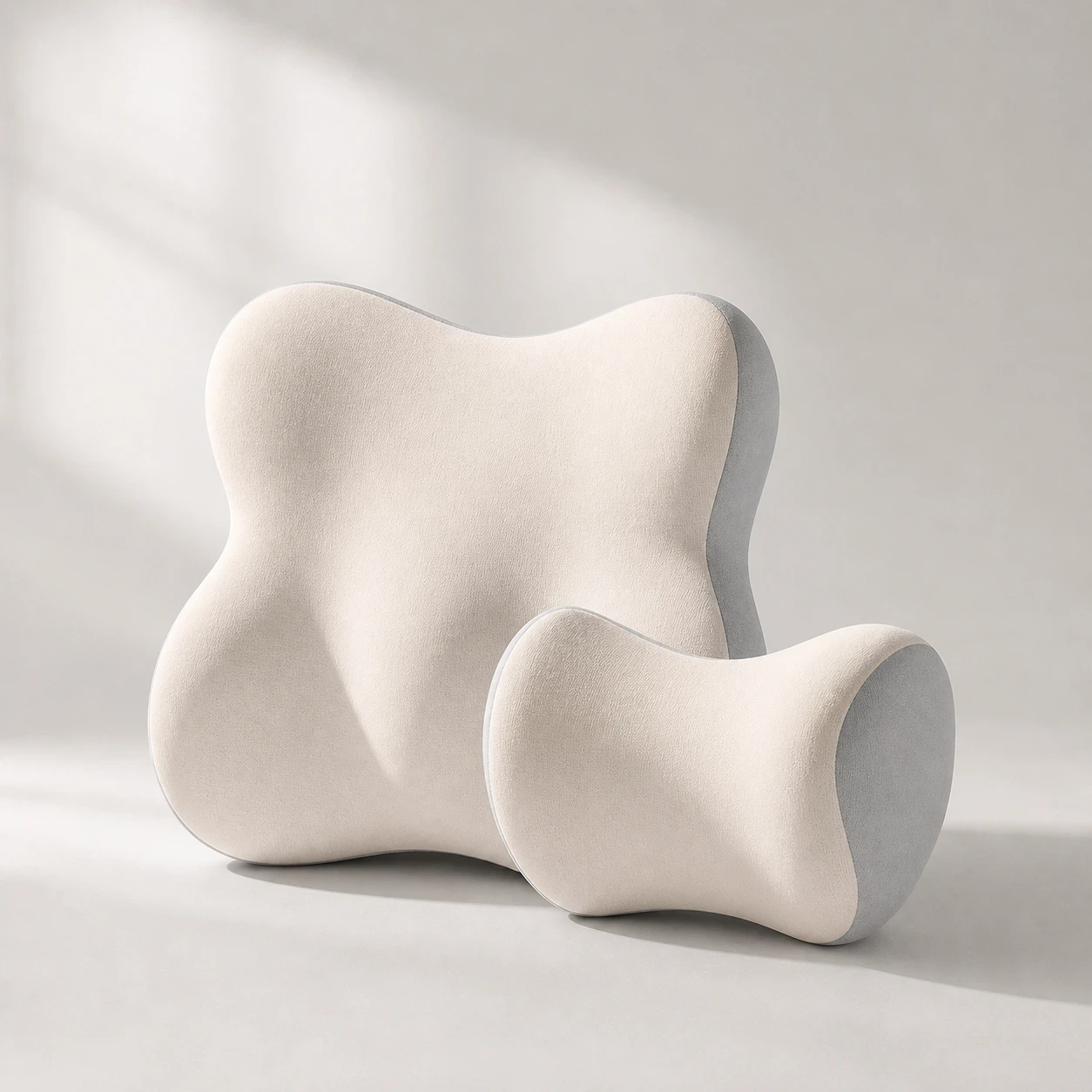 Product mentioned in this guideDriveNest DuoCar headrest and lumbar-cushion set available in four colours with 60D slow-rebound memory foam and two distinct contoured shapes.Free US shipping on every order60-Day Home Trial · we pay return shippingSee current price
The detail that matters most in a car is whether the support stays put. Road vibration and getting in and out of the seat repeatedly will slide a loose cushion down behind you within minutes, at which point it does nothing. A car lumbar pillow needs a strap that anchors to the seat or headrest so it holds its height through a whole drive. The ERGOLA car lumbar pillow is built around that: a contoured shape sized for the lower-back curve, firm enough not to flatten on a long drive, with an adjustable strap so it does not migrate.
Be clear about what it does not do. A lumbar pillow does not treat a back condition, it does not cancel out road vibration, and it does not replace stopping to move. Set too high it does little; set behind your shoulder blades it does nothing for the lower back. It removes one avoidable source of strain on the drive. It is one input, not a cure.
Breaks and micro-movements on long drives

If you take one thing from this post, make it this: the single most effective thing for back pain from driving is to break up the drive. A static posture, however well supported, still fatigues the tissues over time, and the only real fix for that is movement. On a long journey, stop roughly every couple of hours, get out, walk for a few minutes, and do a gentle stretch before getting back in. The break does more for your back and circulation than any cushion can.
Between stops, small movements help too. Where it is safe and does not distract from driving, you can shift your weight, roll your shoulders at a red light, or briefly change your hand position on the wheel. None of that replaces a real stop, but it interrupts the static load a little. Think of the lumbar support as making the seated portions more comfortable and the stops as the part that actually protects your back. NHS guidance on back pain is consistent here: staying active and avoiding long static stretches helps more than rest.
What to look for in a car lumbar pillow
If you decide a car lumbar pillow is worth trying, here are the criteria we would judge any of them against, including ours.
If you are weighing a lumbar pillow against a seat cushion, the choice depends on where your ache sits: lower-back tightness points to lumbar support, while pressure under the seat or tailbone points to a cushion. Our comparison of a car lumbar pillow versus a car seat cushion walks through which problem each one actually solves.
Who should not buy it. If your car seat already has effective built-in lumbar support that holds your curve, a separate pillow can be redundant or push you too far forward; adjust the dial first. If your drives are short and you only ache occasionally, the support is more than you need, and the seat setup above will likely do. And if your pain has any of the warning signs in the next section, an accessory is the wrong first step entirely. Drivers who spend whole days behind the wheel can read our use-case guide for long-commute drivers to see how support and breaks fit a working day.
When to see a professional
Most back pain from driving is mechanical, settles within a few weeks, and responds to setup, support, and movement. Some symptoms are different and need assessment rather than a cushion. See a GP, physiotherapist, or other clinician promptly if your back pain follows a crash, fall, or other significant injury, if it comes with a fever or unexplained weight loss, if you have numbness or tingling around your buttocks, genitals, or inner thighs (the saddle area) or any loss of bladder or bowel control, if you have progressive weakness, numbness, or pins and needles spreading down a leg, or if the pain is severe, steadily worsening, or not improving after a few weeks of staying active. These are red flags, not reasons to panic, but they are signals to get checked rather than self-treat. A car lumbar pillow is a comfort aid; it does not diagnose or treat anything.
The bottom line
Back pain from driving comes from a fixed posture, road vibration, and a seat that rarely fits your lower back, and the most effective response is a properly adjusted seat plus stopping to move on long drives, both of which cost nothing. Within that picture, a car lumbar pillow earns its place by filling the gap behind your lower back and holding that curve through the drive, no more and no less. If that is the gap you are trying to close, the ERGOLA car lumbar pillow is built to the criteria above, and our lumbar support for the car page shows how it fits different seats so you can decide whether it suits yours.