
Office Chair Size Guide: Match a Chair to Your Body
If a chair leaves the backs of your knees pressed against the seat edge, your feet dangling, or your shoulders hunched to reach armrests that sit too high, the chair does not fit you. A great deal of office-chair discomfort is not a quality problem or a posture-willpower problem; it is a sizing problem. This office chair size guide is about matching the chair's dimensions to your body, because a mid-priced chair that fits you will out-comfort an expensive chair that does not.
We sell office chairs, so treat this as a buying framework rather than a sales pitch. The criteria below are the ones we would want a reader to judge our own chairs against, including the cases where our chair is the wrong size for you. You will get a measurement-range table, a two-minute method to measure yourself, fit notes for people at the edges of the size range, and an honest account of where our chairs fit and where they do not.
One scope note before the numbers. The ranges below are general guidance drawn from workstation ergonomics, not exact prescriptions, and they assume a chair used at a desk for seated computer work. Your build, the depth of your thighs, the width of your hips, and even the thickness of your usual clothing shift the right answer by a few centimetres. Use the table to narrow the field, then confirm fit against how your body feels in the first week.
Why chair fit matters more than the brand on it
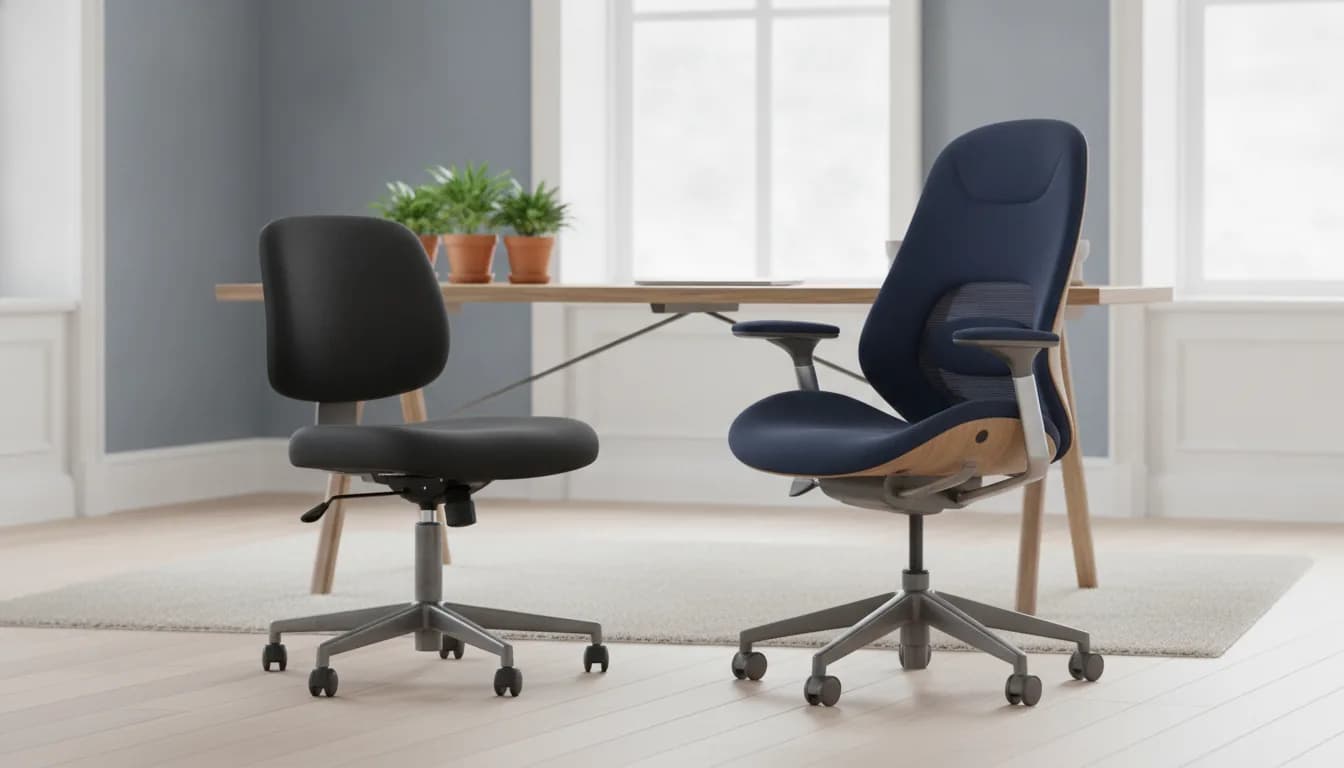
Fit decides whether a chair supports you or fights you, and no brand badge overrides a seat that is the wrong size for your legs. A chair that fits lets your feet rest flat, your thighs sit level, your lower back meet the lumbar curve, and your shoulders relax with your forearms supported. When any one of those is off, your body compensates: you perch forward off an over-deep seat, cross your legs to relieve pressure under your thighs, or round your shoulders to reach a high desk through a chair that will not rise.
The U.S. OSHA Computer Workstations guidance frames good seated working positions around exactly these relationships: feet supported, thighs roughly parallel to the floor, lower back supported by the chair, and forearms supported with relaxed shoulders. Cornell University's ergonomics work and Canada's CCOHS overview of sitting make the same point, that a chair has to be adjustable to the individual because no single fixed shape suits every body. None of that is about the manufacturer; it is about whether the chair's dimensions land inside your body's range.
This is also why reviews can mislead. A chair rated five stars by a 1.85 m (6'1") reviewer can be genuinely uncomfortable for someone 1.60 m (5'3"), and both reviews are honest. Star ratings average across bodies; your fit does not.
The key measurements, with typical ranges
The five dimensions that decide fit are seat height, seat depth, seat width, backrest height, and armrest height. The table gives the typical adjustment range you want each to cover for general adult use, plus the quick test for whether it fits you. Treat these as starting ranges, not rules; a chair does not need to hit every number to suit you, but it should let you land inside each row's test.

Two things to read out of this table. First, seat height is the dimension with the widest spread, because it has to suit both short and tall users; a chair whose range does not reach low enough will leave a shorter person's feet dangling, and one that does not rise enough will force a taller person to splay their legs. Second, seat depth is the most commonly overlooked, and a seat that is too deep is one of the most frequent hidden causes of poor lower-back support, because it pushes you forward off the backrest to avoid pressure behind your knees.
How to measure yourself
To size a chair to your body, take four measurements in your normal work clothes and shoes: popliteal height (floor to the back of your knee) for seat height, buttock-to-knee length for seat depth, hip width for seat width, and seated elbow height (seat to the underside of your bent elbow) for armrests. These tell you which ranges in the table above you should be shopping inside.
That short version is the whole method, and it takes about two minutes against a wall with a tape measure.
- Seat height. Sit on a firm surface with your feet flat and knees at about 90 degrees, then measure from the floor to the back of your knee. Your ideal seat height is close to this, so your feet rest flat without your thighs pressing down at the front.
- Seat depth. Sitting back fully against a wall, measure from the wall to the back of your knee, then subtract two to three centimetres for clearance. A seat at or just under that figure lets you use the backrest without the edge digging into your legs.
- Seat width. Measure across the widest part of your hips while seated. You want a seat a few centimetres wider than that, so your hips are supported without pressure on the edges.
- Armrest height. Sit upright with your upper arms relaxed at your sides and elbows bent to about 90 degrees, then measure from the seat to the underside of your elbow. Armrests that reach this height support your forearms without lifting or pinching your shoulders.
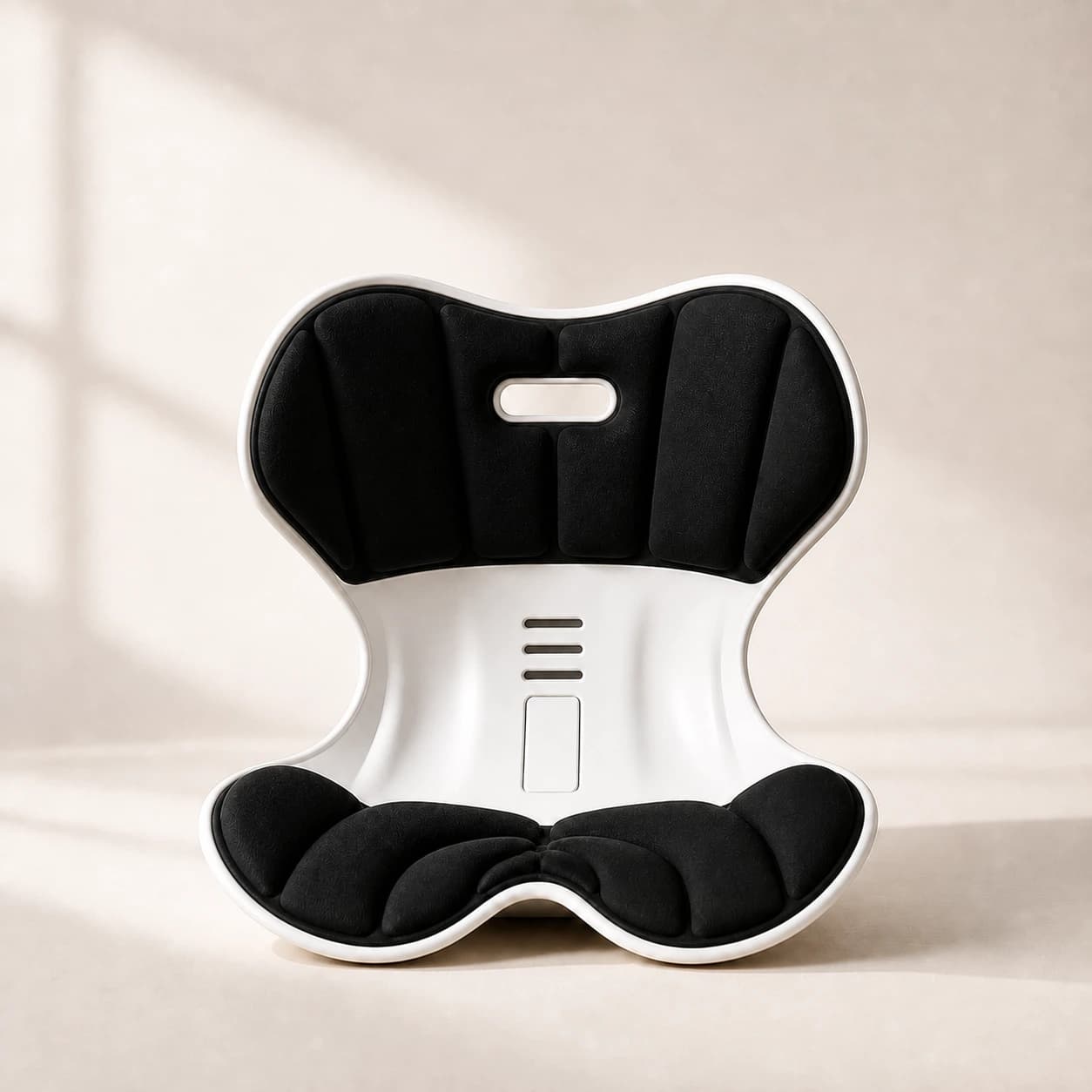
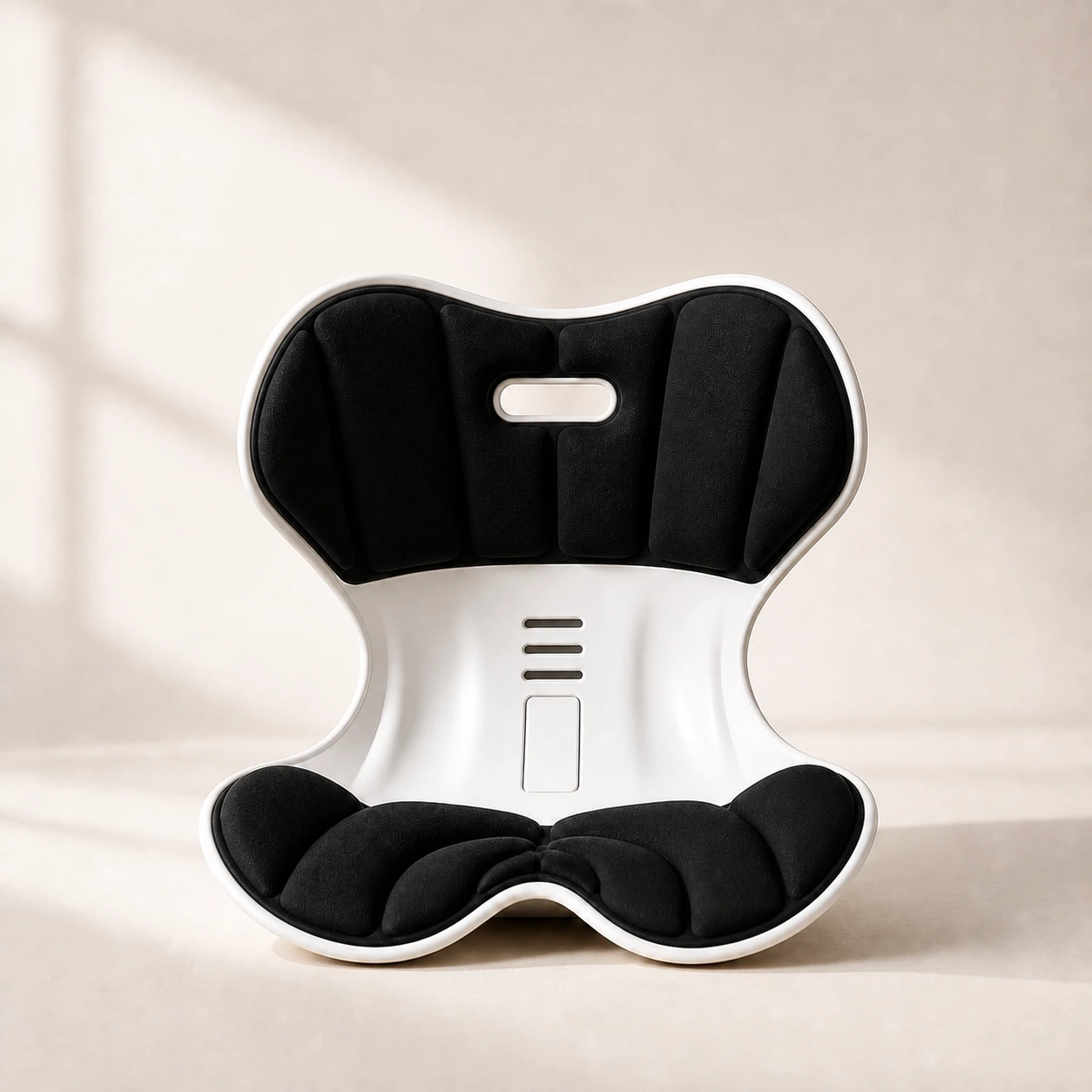 Product mentioned in this guidePostureShell Support SeatBlack contact zones within a white outer silhouette, combining a winged upper back, open-sided waist, and sculpted seat contours; published dimensions and…Free US shipping on every order60-Day Home Trial · we pay return shippingSee current price
If a chair's published seat height starts above your popliteal measurement, your feet will not reach the floor at its lowest setting; a footrest can rescue this, but it is better caught before you buy. The same logic applies in reverse for taller users and a chair that will not rise far enough.
Fit notes for taller, shorter, and broader users

Most chairs are designed around the middle of the adult size range, so the people most often let down by a poor fit are those at the edges. If you are at one of those edges, the dimensions below matter more than any feature list.
Taller users
The two figures to check are maximum seat height and seat depth, because a tall person's longer thighs need both a higher and a deeper seat. A seat that does not rise far enough forces your knees up above your hips, and one that is too shallow leaves your thighs unsupported at the front. Backrest height matters too: a short backrest that stops at mid-back leaves a tall person's upper back and shoulders unsupported. Look for a tall backrest, a deep or adjustable-depth seat, and a generous height range.
Shorter users
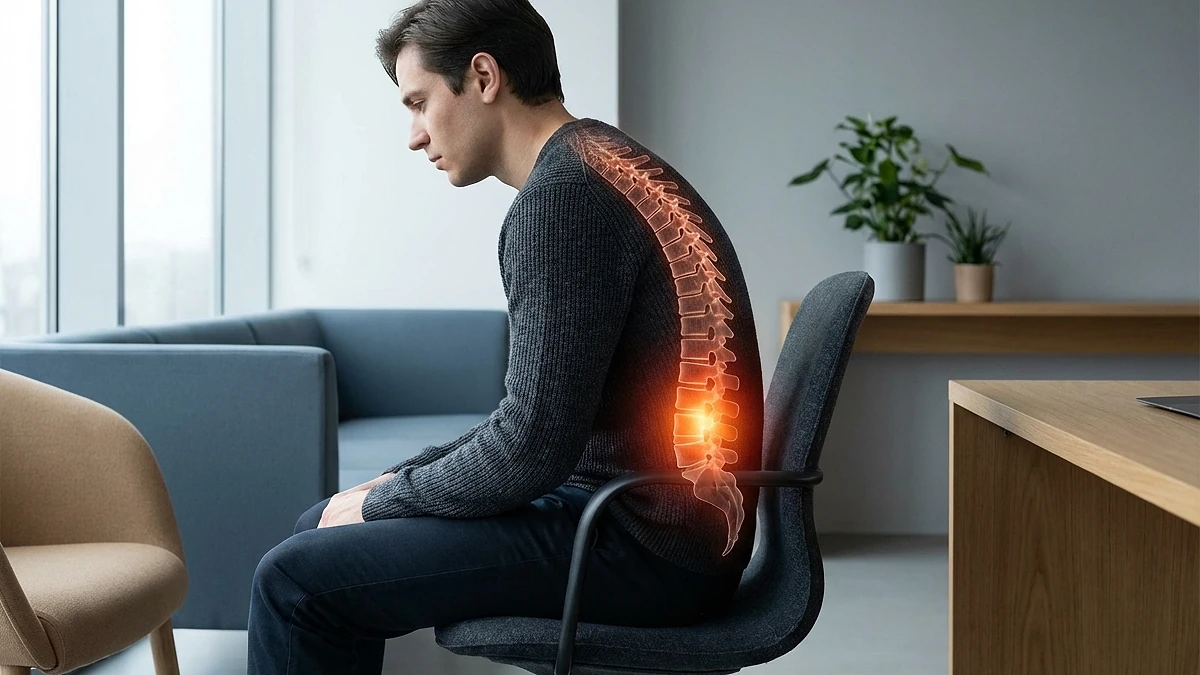
The critical figure is minimum seat height, and many standard chairs simply do not go low enough. If the lowest seat setting still leaves your feet dangling, you carry your weight on the underside of your thighs, which restricts circulation and drags your posture forward. A shorter person should prioritise a low minimum seat height and a shallow or adjustable seat depth, and a footrest is a legitimate fix where the chair itself cannot drop far enough so your feet rest flat rather than dangling.
Broader users
Seat width and the position of the armrests matter most. Fixed armrests set narrow can press into the hips of a broader user, and a seat that is too narrow puts pressure on the edges. Look for a wide seat, a stated weight capacity that comfortably exceeds your own, and either width-adjustable or removable armrests. A broader, higher-capacity chair is not a compromise; it is simply the correct size, the same way a deeper seat is correct for a taller person.
An adjustability checklist before you buy
The more of these a chair adjusts, the more bodies it fits and the more likely it fits yours. You do not need every item, but each fixed dimension is one you have to match by luck rather than by setting. Run this list against any chair you are considering, ours included.
- Seat height range. Does the stated range cover your popliteal measurement, with room below it rather than only above?
- Seat depth adjustment. Can the seat slide forward and back, or is its fixed depth within a few centimetres of your buttock-to-knee measurement?
- Lumbar support. Is the lumbar curve adjustable in height and ideally depth, so it meets the inward curve of your own lower back rather than a generic one?
- Armrest adjustment. Do the armrests move up and down at least, and preferably in and out, so your forearms rest with relaxed shoulders?
- Recline and tilt. Can you recline and lock or tension the backrest, so you can shift posture through the day rather than holding one position?
- Weight capacity and seat width. Does the stated capacity exceed your weight with margin, and is the seat wide enough for your hips with a little room each side?
If you are deciding between fixing your current chair and buying a new one, our guide on a new office chair versus fixing your current chair walks through which adjustments you can add to a chair you already own. Sometimes a lumbar pillow and a seat cushion close most of the gap; sometimes the frame is simply the wrong size and no add-on fixes it.
Our chair fit range, honestly
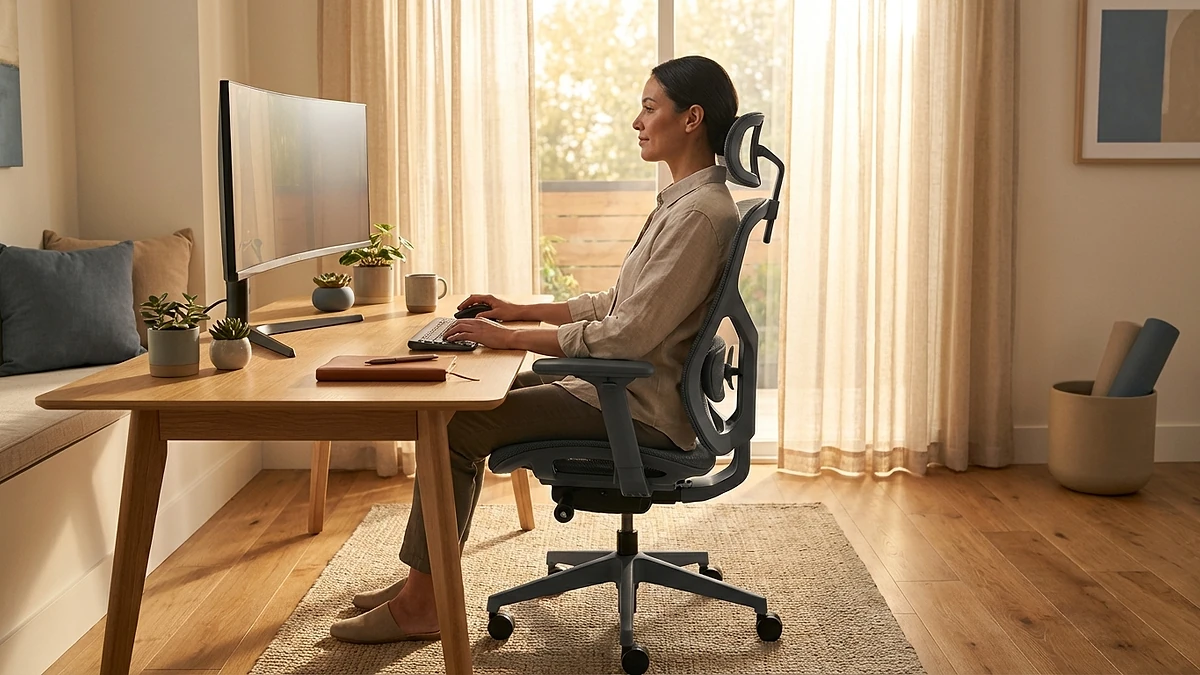
Our executive mesh chair is designed around the middle of the adult size range, with an adjustable seat height, adjustable lumbar support, height-adjustable armrests, and a recline. That makes it a good fit for a broad band of users in roughly the 1.60 to 1.90 m (5'3" to 6'3") range, and the mesh back suits people who run warm or sit for long stretches, though a cushioned back is the warmer, softer choice if you prefer that feel.
Here is where it is honestly not the right chair. If you are well above or below that height band, you may be better served by a chair with a wider seat-height range or a deeper, adjustable-depth seat than ours offers, so check the stated seat height against your popliteal measurement first. If you need a higher weight capacity or a notably wider seat than ours, a chair built for broader users is the correct choice. And if your main complaint is a specific support gap rather than the whole chair, a LumaSpine Pro ergonomic chair with deeper lumbar adjustment, or simply a lumbar pillow on your current chair, may solve it for less than a full replacement. Whatever you choose, set it up on arrival; our guide on how to adjust an office chair for lower back support walks through the order of adjustments.
When to see a professional
A correctly sized chair addresses the mechanical fit between your body and your seat over a long working day. It is a comfort and posture aid, not a medical device, and it does not treat an underlying condition. See a doctor or physiotherapist promptly rather than relying on a chair if you have any of the following.
- Pain after trauma. Back, neck, or leg pain that began after a fall, collision, or other injury.
- Progressive weakness or numbness. Weakness, pins and needles, or numbness in a leg or arm, especially if it is spreading or worsening.
- Saddle numbness or loss of control. Numbness around the groin, buttocks, or inner thighs, or any loss of bladder or bowel control, which needs urgent medical care.
- Systemic warning signs. Unexplained weight loss, fever, or night pain that wakes you, alongside the discomfort.
- Pain that will not settle. Severe pain, or pain that does not improve over a few weeks despite a well-fitted chair and gentle movement.
The bottom line
The right office chair is the one whose dimensions land inside your body's measurements, not the one with the best-known name or the highest star rating. Take your four measurements, shop inside the ranges in the table, and favour adjustability so the chair can be tuned to you rather than matched by luck. If you sit in the middle of the size band and want a breathable, adjustable chair, our executive mesh chair is a sound choice, and we have said plainly where it is the wrong size for you. If it is not your fit, browse the full office chairs collection and judge each one against the same measurements. The chair that fits your body is the one worth buying.