
Tailbone Pain When Sitting: Causes and Real Fixes
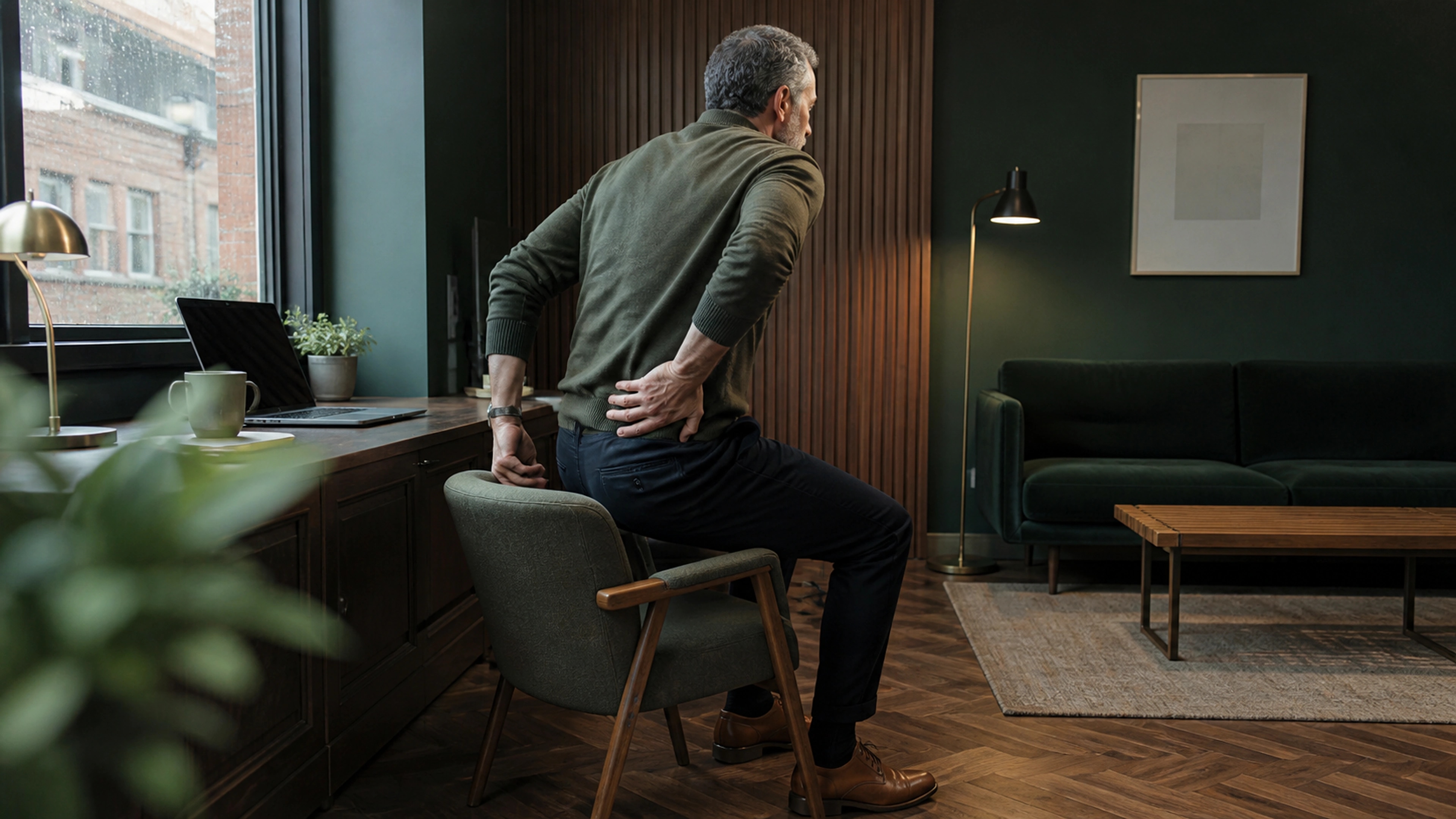
If sitting at your desk brings a deep, bruised ache right at the base of your spine, worse on hard chairs and worst when you lean back into a slouch, you know the spot before you can name it. Tailbone pain when sitting is one of the more specific complaints of long seated work, and it tends to follow a clear pattern: the discomfort builds over the working day, eases when you stand, and flares again the moment you sit back down on the same surface.
This guide is honest about what is going on and what actually helps. We sell seat cushions, so treat what follows as a buying framework judged against stated criteria, including our own product. A cushion addresses one part of the picture, posture and movement address the rest, and some of what helps costs nothing. We will be equally clear about who does not need a cushion at all, and the red flags that mean you should see a professional rather than reach for an accessory.
What causes tailbone pain when sitting
Tailbone pain when sitting is usually a pressure-and-posture problem: when you sit, especially when you slump or lean back, weight shifts off the sit bones and onto the coccyx, the small bone at the very base of your spine. On a hard or flat seat that load concentrates on a tiny, bony area, and the surrounding tissue gets sore.
To picture it, think about where your weight goes. Sitting upright on a supportive seat, most of your weight passes through the two sit bones, the bony points at the base of your pelvis that are built to bear it. When you slide forward, slump, or recline so the pelvis rolls backward, the contact point migrates rearward and downward onto the tailbone, which is not designed to carry that load for hours. The Canadian Centre for Occupational Health and Safety frames sustained sitting itself as a strain on the body, with the practical answer being a seat you can adjust to your shape plus regular changes of position, rather than one perfect posture held all day.
The certainty around a single cause is limited, and worth stating plainly. Tailbone pain overlaps with seat and lower-back discomfort, and posture is only one input. A tailbone can also be tender after a fall, after childbirth, or with prolonged pressure that has nothing to do with how you sit at a desk. That matters for what comes next: pressure relief and better posture help the everyday desk-driven version, but they are not a diagnosis, and they will not fix a cause that needs a clinician. If your pain started with a specific injury, skip ahead to the red-flags section first.
How a seat cushion offloads the coccyx
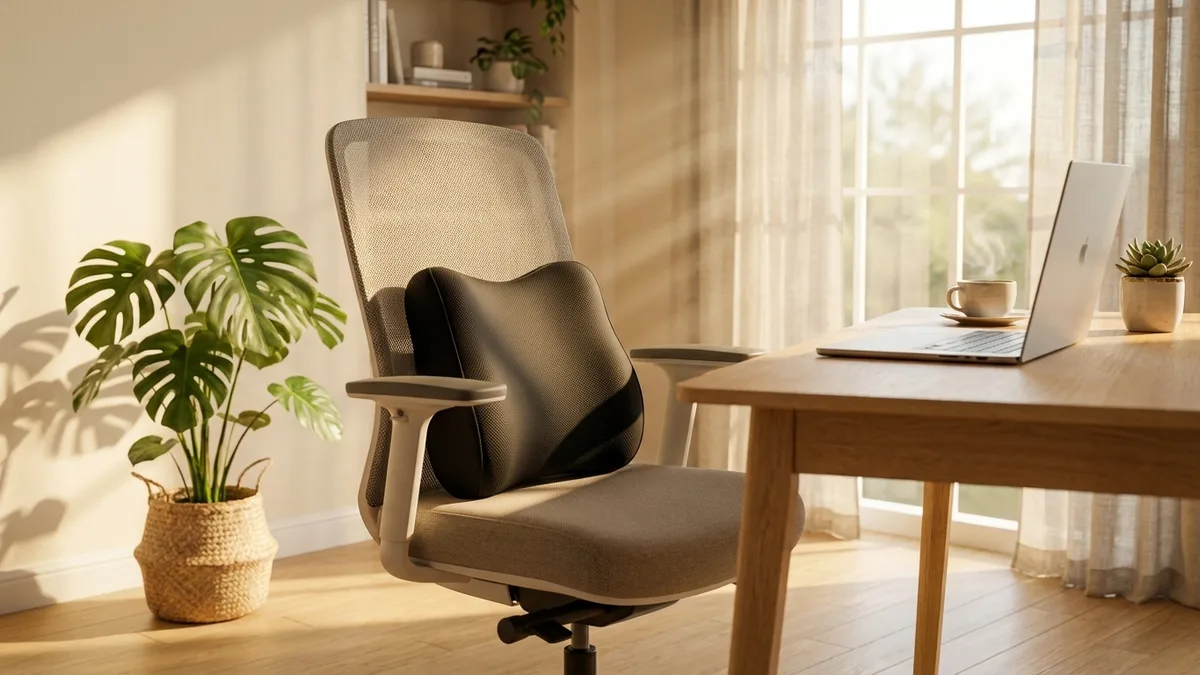
A coccyx cushion helps tailbone pain by changing where your weight lands. A wedge or contoured memory-foam cushion spreads load across the sit bones and thighs, and a U-shaped or cutout design removes material directly under the tailbone so it sits over a gap rather than pressing into the seat. The aim is lower, more even pressure under the coccyx, not a cure for whatever made it sore.
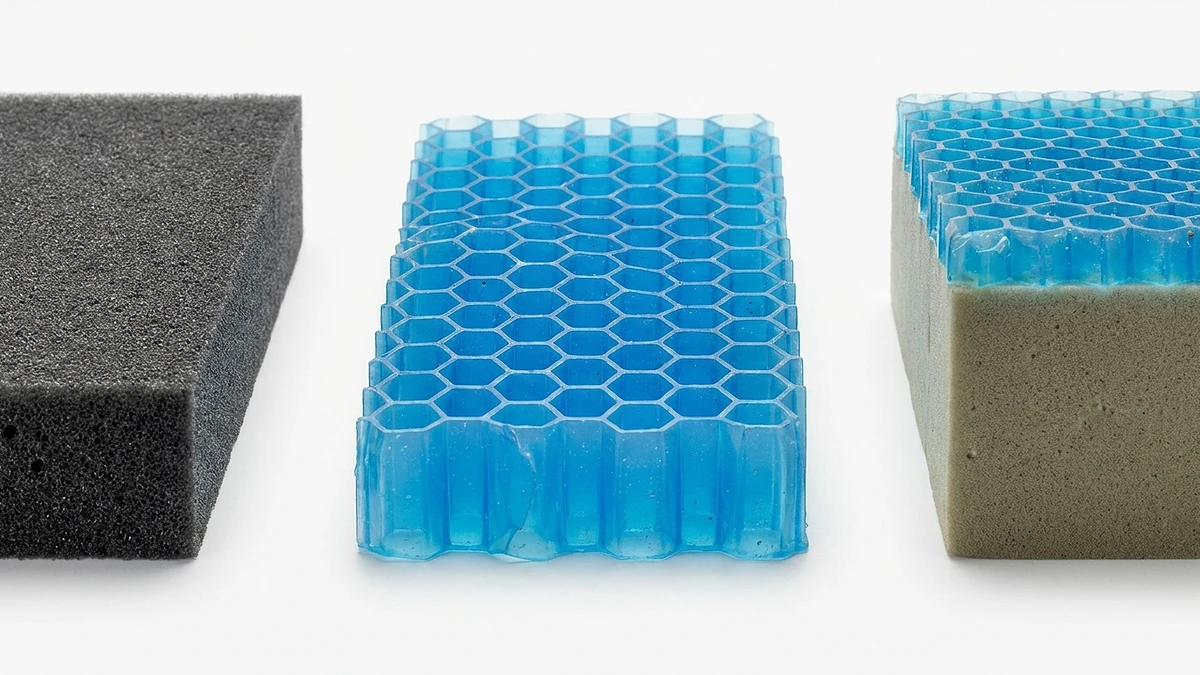
There are two mechanisms working together, and it helps to separate them. The first is redistribution: a firm, contouring foam deforms around your sit bones and thighs so your weight is shared across a larger area instead of stacking on one tender spot. The second is relief by removal: a rear cutout or U-shaped channel means there is simply no material under the coccyx to push back against it, which is why this style is the usual recommendation for tailbone-specific pain. Memory foam suits this job because it moulds to your shape and holds that contour, though it can feel warmer and softer than gel under long, continuous load. If you are weighing materials, our memory foam versus gel cushion guide lays out where each one fits.
Be honest about whether you need one. If your chair already has a well-padded, supportive seat and your tailbone is comfortable through a normal day, a cushion is more than the problem calls for. The cushion earns its place when the seat is hard, flat or worn, when you feel pressure and soreness directly on the tailbone, or when long unbroken stretches on the same surface make it ache. If that is not you, keep your money and put the effort into posture and movement instead.
Posture and chair-setup fixes
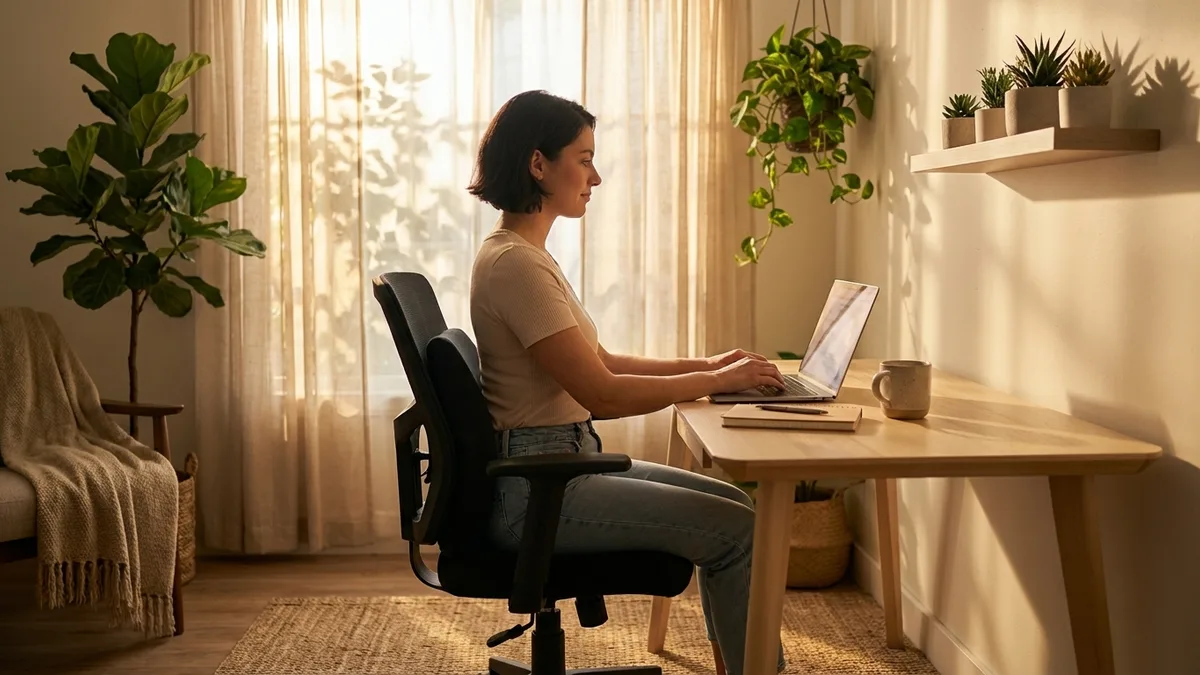
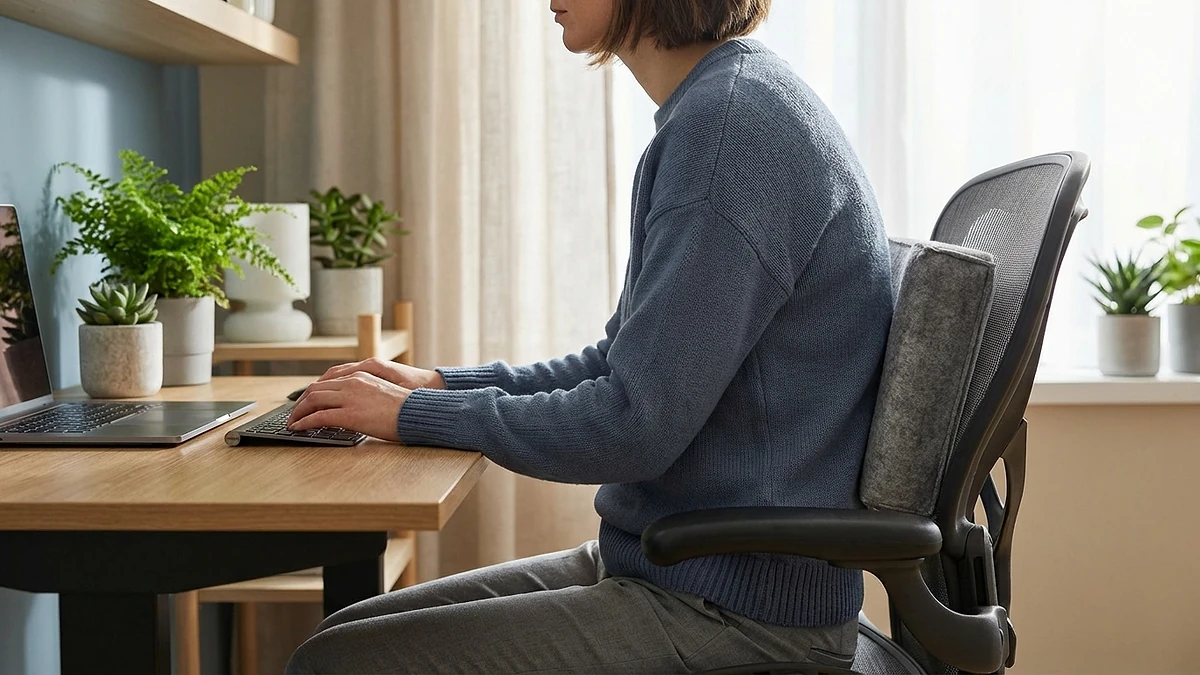
A cushion sits on top of your posture; it does not replace it. Because tailbone pressure rises when the pelvis rolls backward, the single most useful free change is keeping the pelvis upright. A few chair settings make that far easier to hold.
- Keep the pelvis upright. Sit back so your hips reach the back of the seat, and use the backrest and any lumbar support to stop the pelvis rolling back into a slouch. When you slump, weight migrates onto the tailbone; an upright pelvis keeps it on the sit bones, where it belongs.
- Seat height. Set the seat so your feet rest flat on the floor with hips and knees at roughly right angles. If your feet dangle, your weight drags forward and downward; if your knees ride above your hips, the pelvis tends to tip back. A footrest brings the floor up to meet your feet if the seat must stay high to suit your desk.
- Seat depth. Aim for a small gap, about two to three finger widths, between the front edge of the seat and the back of your knees. Too deep and the edge nudges you into a slump; too shallow and your thighs are unsupported. Many chairs let you slide the seat pan to set this.
- Avoid the long recline-and-slide. Reclining is fine in moderation, but sliding your hips forward so you are perched on your tailbone for long stretches is exactly the load pattern that hurts. Reset your position rather than settling into it.
U.S. OSHA's guidance on good working positions describes the same foundation: a chair adjusted so your feet are supported and your posture is neutral and well supported, rather than held rigidly in one fixed shape. Get this right first. A good setup does more for tailbone pressure than any cushion bought to compensate for a poor one. If you want a step-by-step, our guide to adjusting your office chair for lower-back support walks through the same settings in order.
Movement and breaks
No surface you sit on, and no setting on your chair, removes the simplest fact: pressure under the tailbone accumulates the longer you stay still. Changing position is the one thing a cushion cannot do for you, and it is the most reliable lever you have.
You do not need a rigid schedule, just a dependable trigger. Standing and walking for a minute or two every 30 to 60 minutes lifts the load off the tailbone entirely, lets blood move through tissue that has been compressed, and breaks up the static posture before it has time to ache. The NHS notes that the goal is to break up long sitting through the day with regular movement, rather than to offset hours of stillness with a single workout. For desk workers, frequent short breaks are easier to sustain than one long session, and they tend to be what people actually keep doing.
If you want help making the habit stick, a deliberate micro-break routine gives you a cue and a cadence without turning the day into an exercise plan. The aim is modest: less continuous time loading the same spot, more time moving off it.
What to look for in a cushion
If you decide a cushion is worth it, judge candidates against criteria rather than marketing. These are the ones that actually predict whether it will help tailbone pain, and they apply to ours as much as to anyone else's.
- A genuine cutout or U-shape. For tailbone-specific pain, the rear channel that removes material under the coccyx is the feature that matters most. A flat pad spreads load but still presses on the tailbone; a cutout removes the contact entirely.
- Firm, supportive foam that does not bottom out. A cushion that compresses flat under your weight stops redistributing load. You want foam that holds its contour through a long day rather than collapsing within an hour.
- The right thickness and size for your chair. Too thick and it raises you so your feet no longer reach the floor, undoing your seat-height setup; too small and it does not span your sit bones. Match it to your seat and your height.
- A removable, washable cover. A practical point that gets ignored. A cover you can clean keeps the cushion usable over months of daily desk use.
- Honest fit to your problem. If your discomfort is mostly lower-back rather than tailbone, a lumbar approach or a different cushion may suit you better. Buy for the problem you actually have.
Judge designs against these criteria rather than the claims on the box. Cornell University's ergonomics resources are a useful neutral reference if you want to read more on seated load and contact pressure before you decide.
When to see a professional
Our products are comfort and posture aids, not medical devices. Most desk-driven tailbone discomfort that eases when you stand responds well to a cutout cushion, an upright pelvis and regular breaks. Some symptoms point to a problem that needs a clinician rather than an accessory, and waiting for a cushion to fix them only delays the care you need. See a doctor or qualified professional if any of the following apply:
- Pain after a fall, blow or accident. Tailbone pain that follows a direct injury should be assessed promptly rather than self-treated, especially if it is severe or you cannot bear to sit at all.
- Numbness in the saddle area, or loss of bladder or bowel control. This combination is a medical emergency and needs urgent care, not a cushion.
- Numbness, tingling or progressive weakness in the legs or feet, particularly if it travels down a leg or is getting worse.
- Unexplained weight loss, fever, or constant night pain that wakes you. Pain that is unrelenting, worsening and not linked to your posture deserves a professional opinion.
- Pain that does not improve, or keeps getting worse, despite offloading the tailbone, fixing your chair setup and moving regularly over a few weeks.
None of these is something a seat cushion can diagnose or treat. If anything on this list applies to you, set the shopping aside and book an appointment.
The bottom line
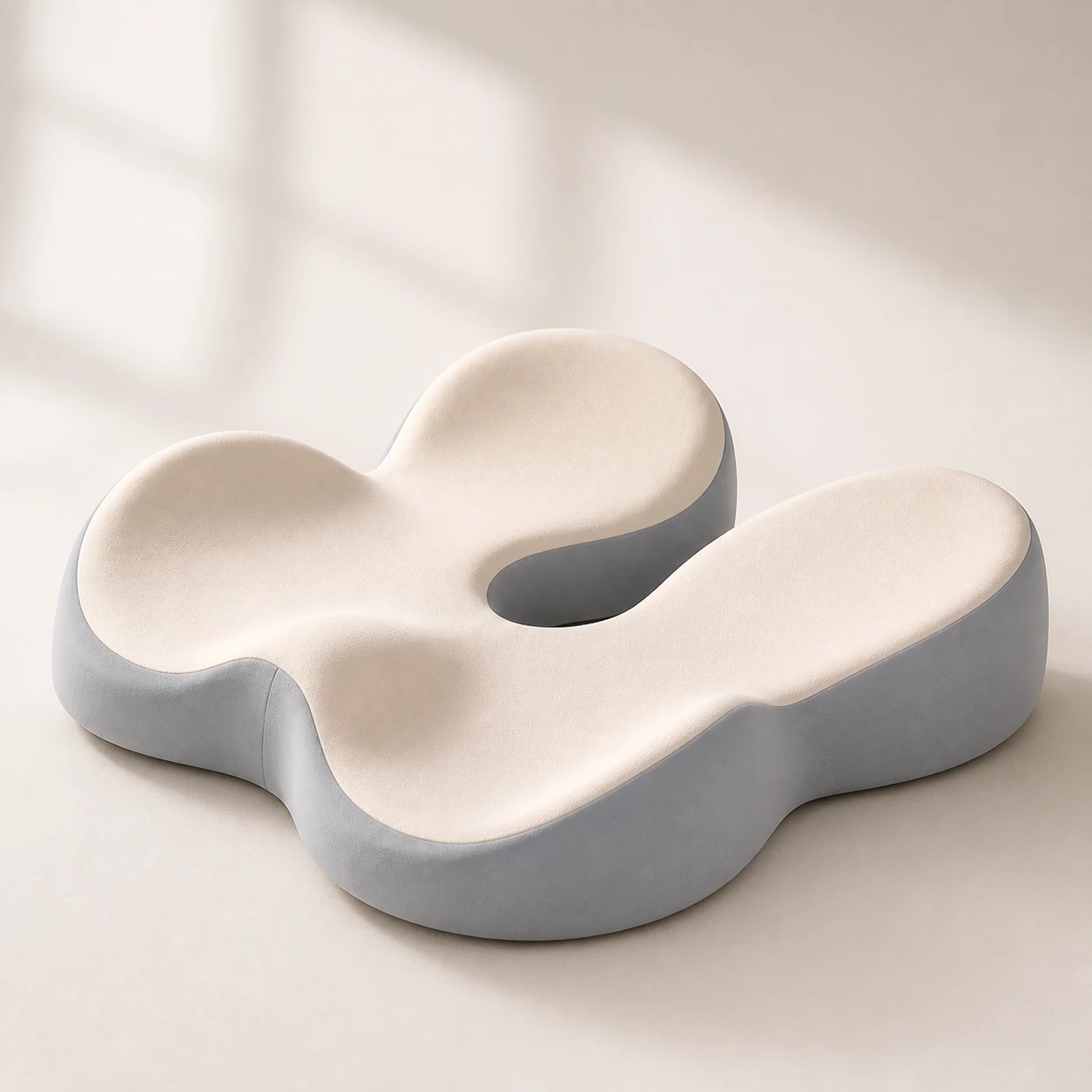 Product mentioned in this guideMemory Foam Seat CushionA sculpted seat cushion with a deep, open U-shaped rear channel designed to reduce direct contact beneath the coccyx and tailbone area. Raised rear…Free US shipping on every order60-Day Home Trial · we pay return shippingSee current price
Tailbone pain when sitting is usually pressure plus posture, and the honest answer is that it takes more than one fix. Keep your pelvis upright so weight stays on the sit bones, set your chair so your feet are supported and you are not sliding into a slump, and break up long sitting with a short walk every 30 to 60 minutes. If a hard or worn seat is loading your coccyx through long unbroken stretches, a contoured memory foam seat cushion with a rear cutout spreads the load and lifts it off the tailbone, which makes the hours more tolerable. It is one lever among several, not a cure, and if your pain followed an injury or your discomfort is mostly lower-back rather than tailbone, it is more or less than you need. Compare options across our seat cushion collection, and if the symptoms above apply, see a professional first. Our pick for the pressure half of the problem remains the memory foam seat cushion, judged on how well its cutout offloads the coccyx over a long day.