
Best Electric Standing Desk (2026): How to Choose by Price & Motor
Picking the best electric standing desk is less about finding one perfect product and more about matching a handful of specs to how you actually work. The desk that suits a person who switches between sitting and standing six times a day, with two monitors and a heavy dock, is not the same desk that suits someone who raises it once after lunch with a single laptop on top. This 2026 guide walks through the criteria that genuinely change the experience - motor configuration, height range, load capacity, standing-height stability, memory presets, and warranty - and is honest about which ones matter for you and which you can ignore.
We sell one standing desk, the ERGOLA adjustable standing desk, so this is not a roundup of competitors with invented ratings. It is the buying framework we use ourselves, applied so you can judge any desk - ours or anyone else's - on its merits.
Start with height range, not the motor
The single most common reason people are unhappy with a standing desk has nothing to do with the motor: the desk does not fit their body at one end of its travel. Before anything else, work out two numbers.
- Your seated height. Sit with your feet flat, elbows bent at roughly 90 degrees and forearms parallel to the floor. The distance from the floor to the underside of your forearms is your seated desk height.
- Your standing height. Stand with the same elbow position. Measure floor to forearm again. That is your standing desk height.
A desk that fits you covers both numbers with a little room to spare at each end. This is where body size genuinely matters. Many desks top out around the standing height of an average-height adult, so if you are tall, check the maximum height carefully - a desk that cannot rise far enough leaves you hunching. If you are shorter, the minimum height is the trap: a desk that will not drop low enough forces you to perch your shoulders up all day while seated. The OSHA Computer Workstations guidance is blunt that there is no single correct posture for everyone, which is exactly why a desk's range, rather than a fixed height, is the thing to check.
Single vs dual motor: who actually needs two
This is the spec most buying guides obsess over, and it does matter - but not for everyone. Here is the honest breakdown.
What a dual motor buys you
A dual-motor desk drives each leg with its own motor. In practice that means faster travel, smoother and quieter movement, more even lifting (so the top stays level instead of racking slightly), and a higher real-world load capacity. If you raise and lower the desk several times a day, the seconds saved and the lack of judder add up to a desk you keep using rather than one you avoid.
When a single motor is genuinely fine
A single-motor desk uses one motor, often with a linkage to drive both legs. It costs less and is slower and a touch less smooth, but for a light setup adjusted occasionally, the difference is academic. If you mostly leave the desk at one height and switch a couple of times a day with a laptop and a single monitor, a single motor will not hold you back.
The rule of thumb: buy the dual motor if you will switch positions often, run a heavy multi-monitor setup, or simply want the smoothest daily experience. Otherwise, do not pay for it. The motor count is far less important than whether the height range fits you and whether the desk is steady when raised - which brings us to the spec people overlook.
Stability at standing height is the spec nobody checks
Headline weight ratings sell desks. Stability keeps you using them. As any electric desk rises, its legs extend and any small amount of play in the joints turns into side-to-side sway when you type, write, or lean on the surface. A desk can be rated to hold plenty of weight and still wobble unpleasantly at full standing height.
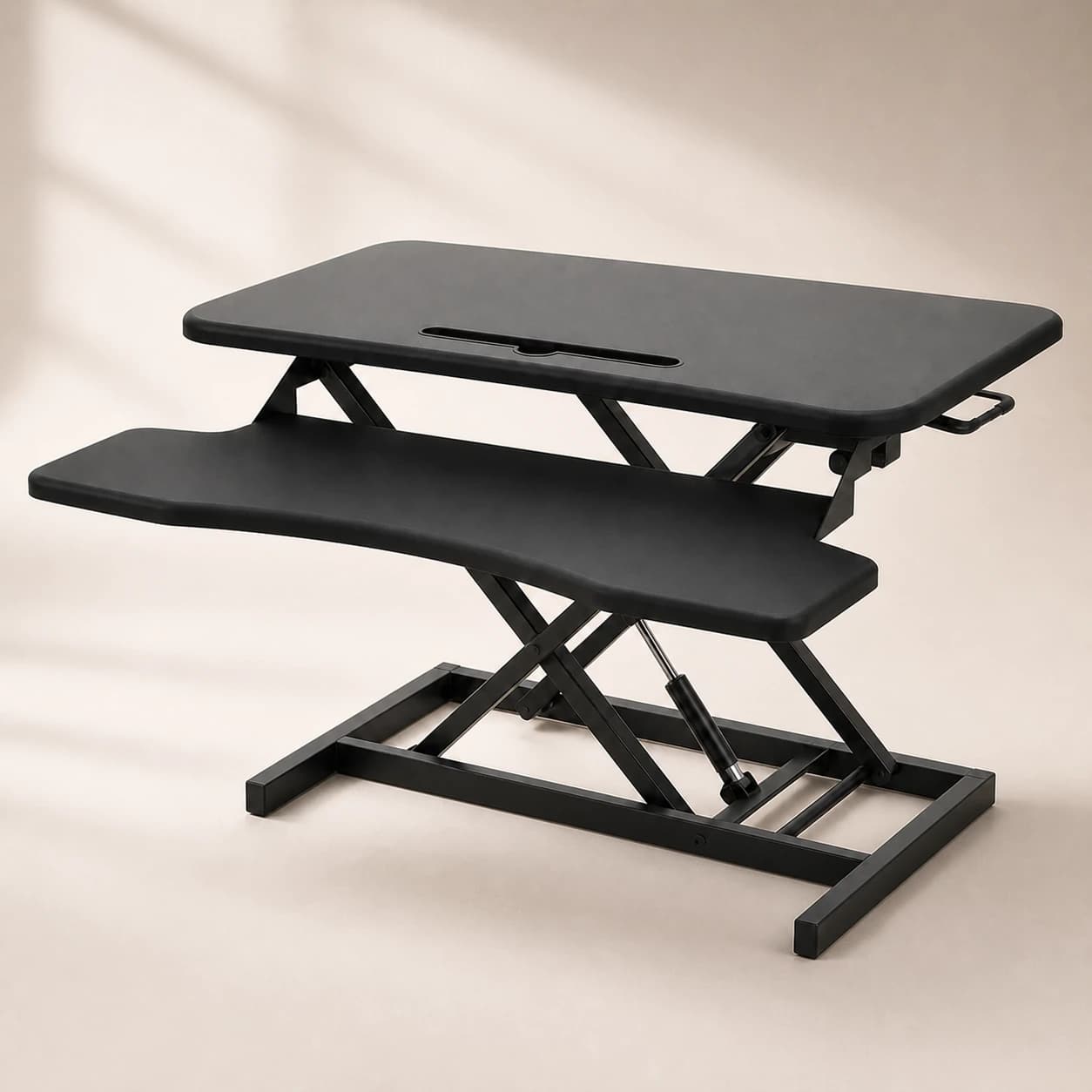
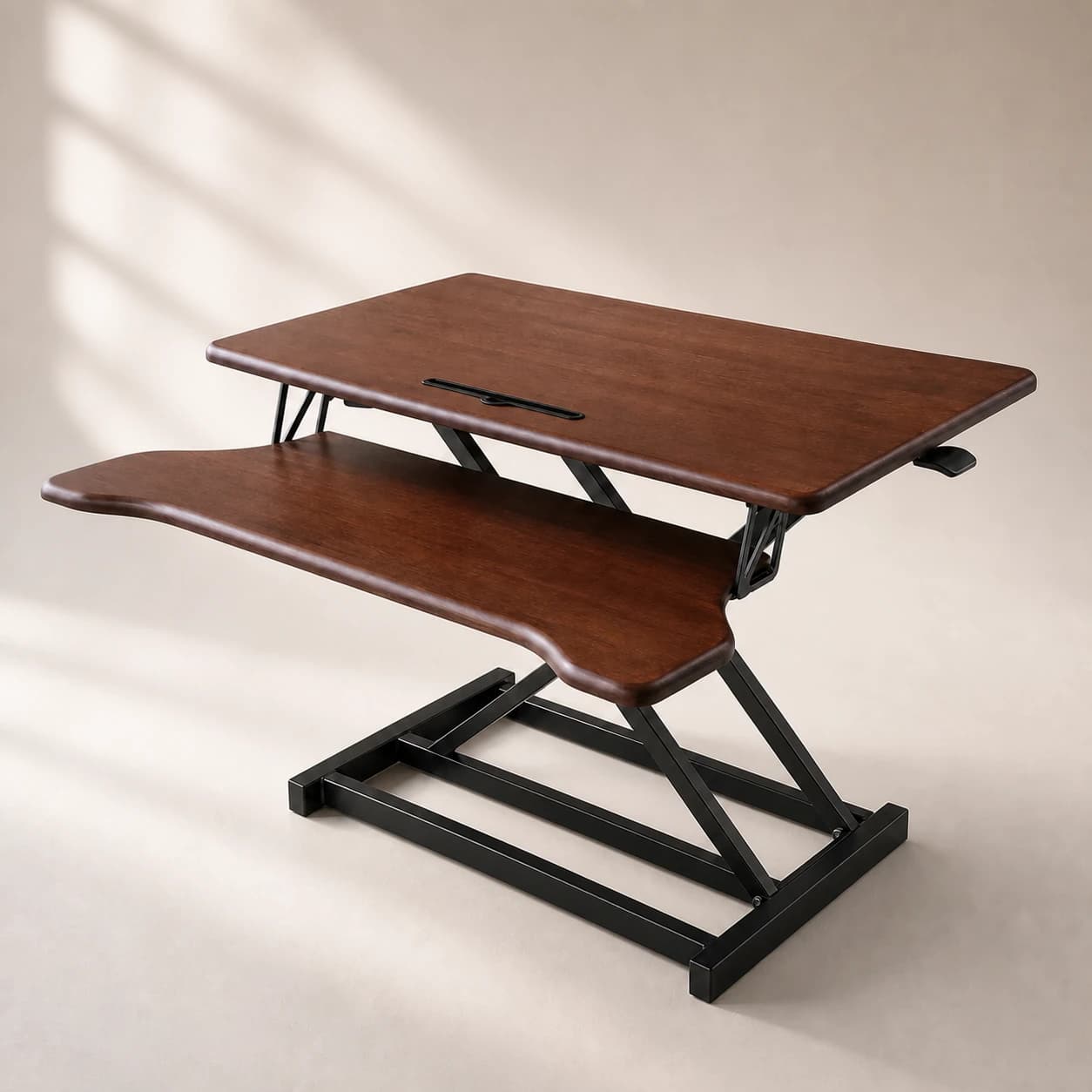
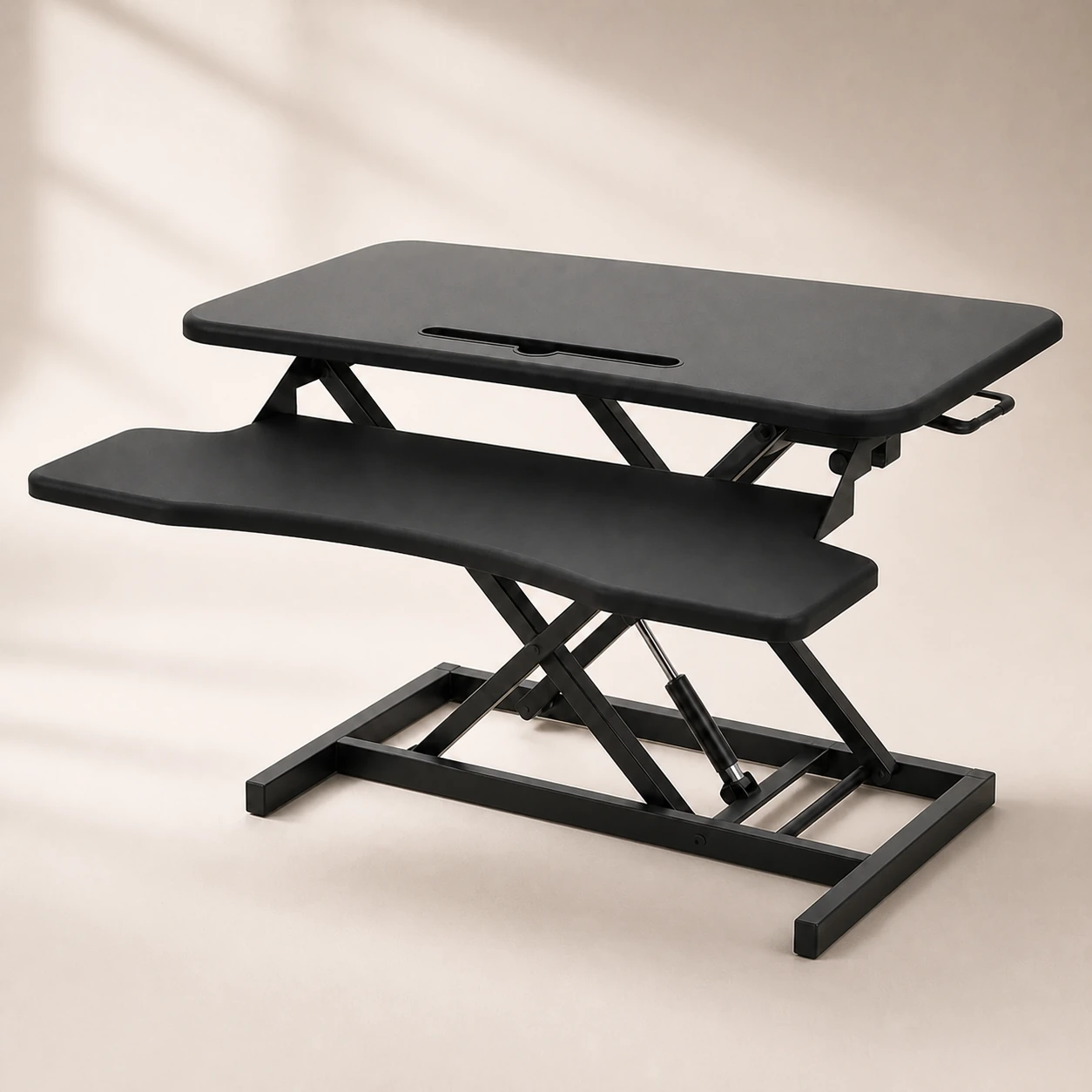 Product mentioned in this guideSwiftLift Desk RiserBlack two-tier desktop riser with an 80 × 40 cm upper platform, 80 × 30 cm keyboard tray, crossed lift frame, and listed 13–51 cm height range.Free US shipping on every order60-Day Home Trial · we pay return shippingSee current price
This matters more than it sounds, because the failure mode is behavioural. A desk that feels unsteady standing up gets quietly parked at sitting height and never raised again - at which point it is an expensive normal desk and you get none of the benefit. When judging stability, the questions to ask are: how does it feel at maximum height, not just seated; does the frame use a sturdy crossbar or wide feet; and does it stay steady under your real load rather than empty. Prioritise a solid frame over a high number on the spec sheet.
Load capacity: add it up, then stop worrying
Weight capacity is easy to overthink. Add up the realistic weight of everything that lives on the desk - monitors, a monitor arm, laptop, dock, speakers, and the force of you leaning on it - and leave a sensible margin. For a typical single-person office setup, you will usually land well under common ratings, so capacity is rarely the deciding factor.
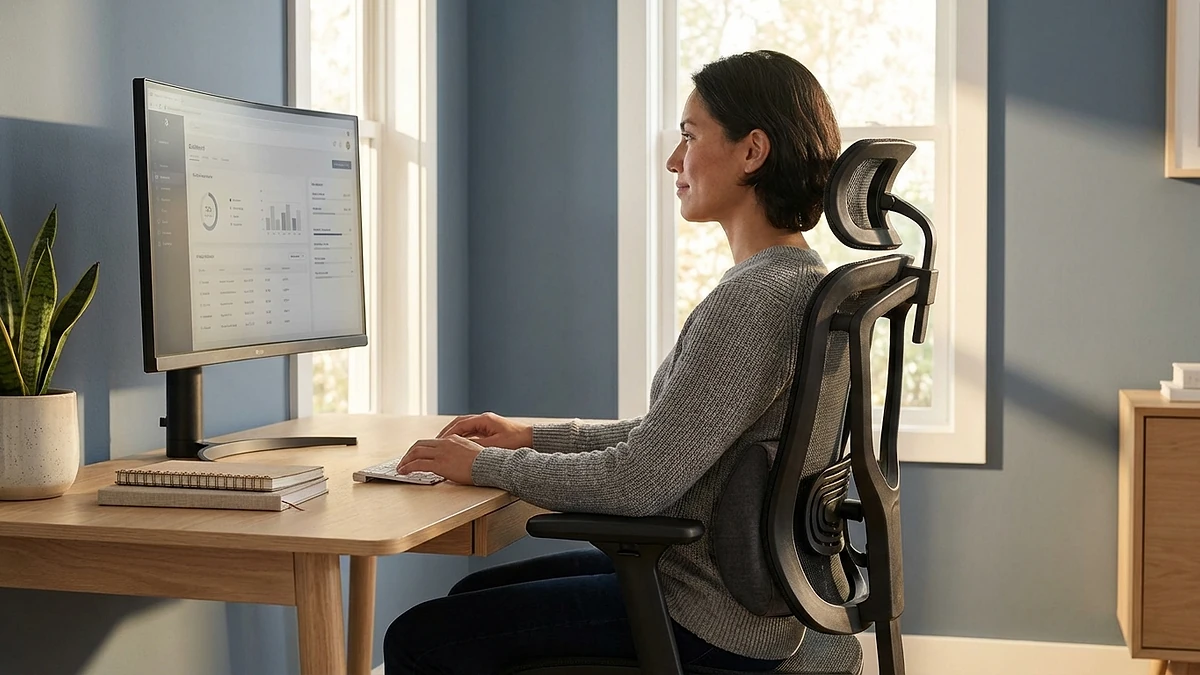
Where it earns attention is heavier configurations: three monitors, a large curved display on an arm, or anything workshop-like. Even then, the more useful question is the stability one above. A motor that can lift the load is necessary but not sufficient; the desk also needs to stay still while carrying it.
Memory presets: a small feature with outsized impact
Memory presets store your exact heights - usually your sitting and standing positions - so you move between them with a single touch instead of holding a button and guessing. On a spec sheet this looks like a minor convenience. In daily use it is one of the most important features on the desk, and the reason is the whole point of owning one.
Every credible source on standing desks agrees the benefit comes from alternating positions and moving more, not from standing as a fixed posture. The 2018 Cochrane review found sit-stand desks reduced workplace sitting time, though it rated the certainty of the evidence as low. A 2016 randomised trial by Ognibene and colleagues found office workers with chronic lower back pain reported less pain when given a sit-stand workstation. In both cases the active ingredient is changing position. Anything that removes friction from switching makes you more likely to keep switching - and one-touch presets remove almost all of it. If you can stretch to a desk with presets, do.
Warranty and what it signals
The frame and motors are the parts that fail on an electric desk, and the warranty on those components is a reasonable proxy for how confident the maker is in them. Read which parts are covered and for how long, rather than fixating on a single headline figure. A longer warranty on the motor and frame is genuinely reassuring on a product you will operate thousands of times; thin coverage on the moving parts is a quiet warning.
Mapping the criteria to the ERGOLA standing desk
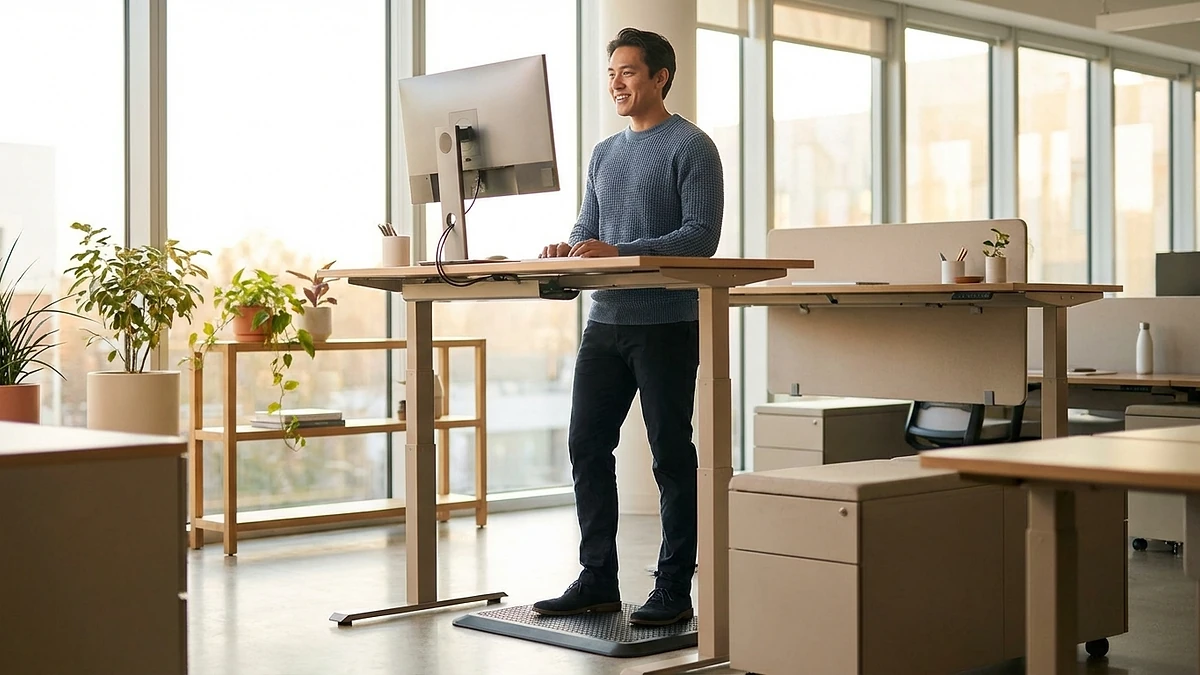
Run the ERGOLA adjustable standing desk through the framework above. It is built around the things that change the day-to-day experience: a height range that covers ordinary seated and standing positions, smooth electric height adjustment, memory presets so switching takes one touch, and a frame engineered to stay steady when raised rather than chasing a headline number. It is the desk we would recommend to most people setting up a sit-stand workstation, and it is the only one we make, so we have put the effort into the specs that matter rather than spreading it thin. You can see how it sits alongside our other options in the standing desks collection.
If you are tall, near a heavy multi-monitor load, or have an unusual setup, apply the height-range and stability checks above carefully before buying any desk, ours included. Those two criteria, more than motor count or weight rating, decide whether you will be happy a year from now.
The desk is half the system
A standing desk handles the standing half of your day. Most people still sit for a good portion of it, so the seated half needs to support your lower back too, or the sitting blocks undo the standing benefit. Set your chair and monitor up properly - top of the screen at or just below eye level, about an arm's length away, per the OSHA workstation guidance - and take a short walking break every half hour or so whether sitting or standing. Movement and variety are the actual mechanism; the desk just makes them easy.
A quick medical note: a standing desk addresses a mechanical, posture-and-movement cause of discomfort and may help with the kind of back ache that builds up from sitting all day. It is not a treatment for an underlying condition. If your back pain is severe, came on after an injury, radiates down a leg, or comes with numbness, tingling, or weakness, see a doctor or physiotherapist rather than relying on equipment.
The bottom line
The best electric standing desk in 2026 is the one whose height range fits your body, stays steady when raised, and lets you switch positions without thinking about it. Decide whether you need a dual motor based on how often you will adjust it and how much you will load it, add up your real weight needs and then stop worrying about capacity, treat stability at full height as a first-class spec, and pay for memory presets if you can. Apply those checks and you will choose well - then use the desk to keep moving, which is where the real benefit lives. Start with the ERGOLA adjustable standing desk and build the sit-stand rhythm into your workday.