
Best Travel Neck Pillow (2026): Honest Buying Guide
If your head drops forward the moment you doze off on a plane, train or coach - jerking you awake, leaving your neck stiff for the rest of the trip - you are looking for the best travel neck pillow for the right reason. A good one stops that forward head-fall by giving your chin and the sides of your head something to rest against, so your neck is not holding the weight while you sleep upright. That is a real, narrow job, and plenty of pillows sold for it do it badly.
We make and sell a neck support pillow, so read this as a buying framework, not a neutral ranking of products we have never tested. We will lay out the criteria that decide whether any travel pillow works, judge our own against the same criteria, and tell you plainly who does not need one. A travel neck pillow is a comfort and posture aid, not a medical device, and it cannot diagnose or treat neck pain.
What a travel neck pillow should actually do
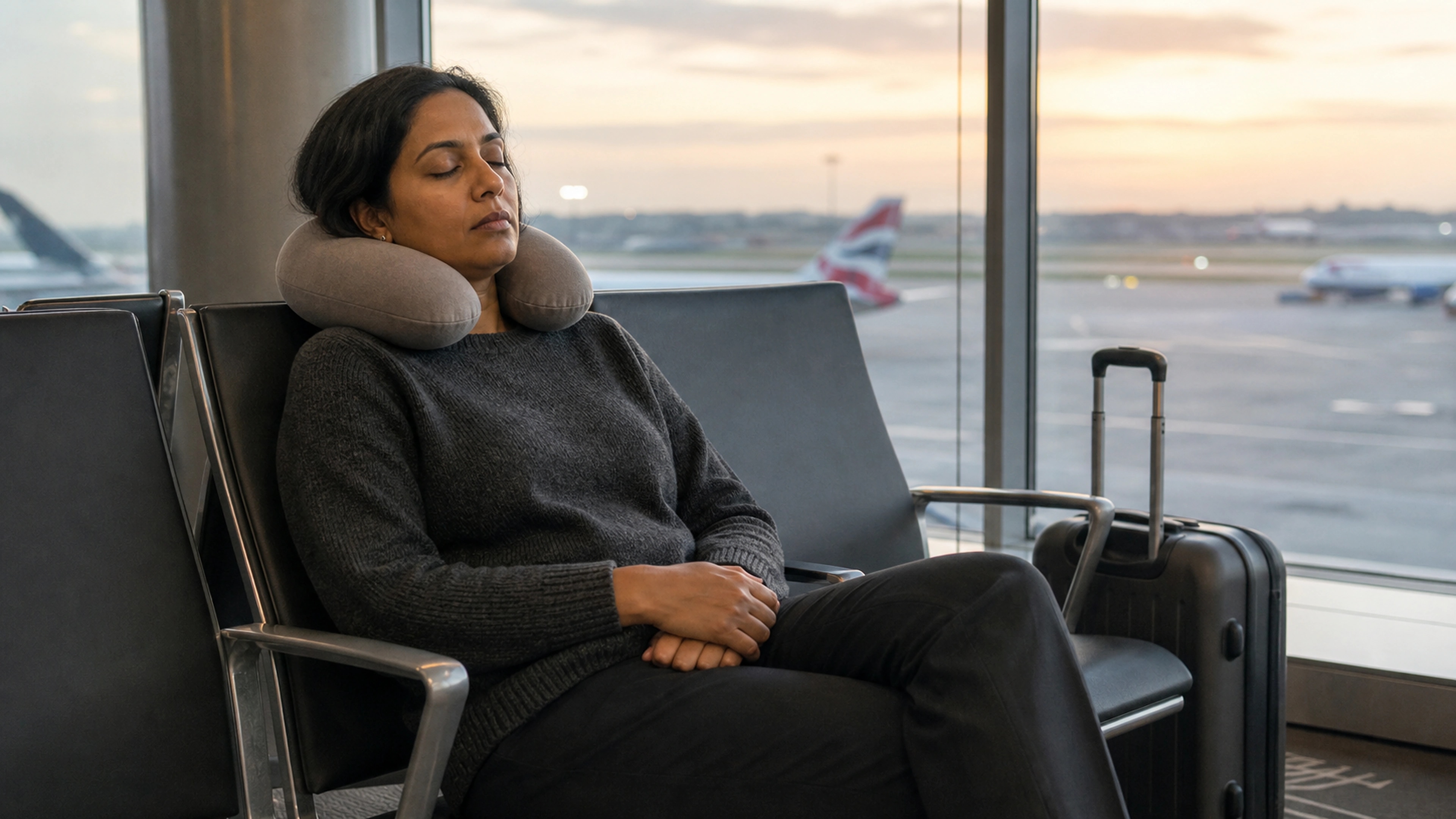
A travel neck pillow's only real job is to stop your head falling forward or sideways when you sleep sitting upright, by supporting the chin and the sides of the head so the neck muscles do not have to hold the weight. The relief is mechanical: it changes where your head rests, not what your spine can tolerate.
When you sleep upright without support, your head - which is heavy - tips forward as your neck muscles relax. The neck ends up bent and strained, which is why you wake stiff. The forward drop is the worst version, because the front of the neck has the least to brace against. A pillow that only fills the gap behind your neck does little about this; the head still pitches forward over the top of it. The support has to be in front, at the chin and jaw, to actually catch the fall.

This is a positioning tool, not a treatment. Guidance from CCOHS on seated working and the NHS on neck pain is consistent that no single position is healthy for hours on end - the pillow makes a given stretch of upright sitting more comfortable, but it does not make long, cramped travel good for your neck.
The criteria that actually matter
The brand and the colour tell you nothing. Five properties decide whether a travel neck pillow does its job and is worth carrying, and you should judge every pillow - ours included - against them.
Chin and forward support
This is the one that separates a useful pillow from a padded collar. The support has to come up high enough at the front to catch your chin or jaw, so when your head tips forward it meets the pillow instead of dropping onto your chest. A pillow with a tall, firm front and a lower back panel is built for upright travel sleep. A symmetrical ring with a thin front does almost nothing about the forward fall, which is the exact problem most people are trying to solve.
Fill type
Fill decides whether the support holds. Memory foam holds a firm, consistent shape and resists compressing flat, so it keeps catching your head all flight - the trade-off is bulk and a little warmth. Microbead and polyester-fibre pillows are lighter and softer but compress under load, so they often flatten just when you lean into them. Inflatable pillows pack tiny and let you tune the firmness, but many feel slippery and unstable, and a slow leak ruins them. Firmness that survives your full head weight matters more than initial plushness.
Fit around your neck
A travel pillow that is too big rides up into the back of your skull and pushes your head forward; one that is too small leaves a gap your head falls through. The opening should close enough at the front to stay put, and the height should match the distance between your shoulder and jaw so your head sits level, not tipped. People with broader or narrower necks genuinely need different sizes, and a one-size ring is a compromise that fits no one perfectly.
Packability and weight
A pillow you leave at home because it is awkward to carry has failed regardless of how supportive it is. Memory foam pillows that compress into a stuff sack, or clip to a bag, travel far better than a rigid ring strapped to your luggage. Weight matters for carry-on travellers. The honest tension here is real: the firmest, most supportive fills are usually the bulkiest, and the most packable fills usually support least. You are choosing where on that line you sit.
Washable cover
A travel pillow touches your face and neck, picks up sweat and travels through airports, so a removable, washable cover is not a luxury. A breathable cover also helps with the warmth that firmer foams trap. A pillow you cannot clean becomes one you stop wanting near your face.
Shapes compared: U, J and wrap
Most travel pillows fall into three shapes, and the shape decides what kind of head-fall it controls. The short version: a standard U does least about the forward drop, a J or chin-forward design targets it directly, and a wrap or scarf style trades neat support for adjustability.
No shape is universally best. A classic U suits someone whose head tends to loll sideways against a window and who values availability and a familiar feel. A chin-forward design suits the larger group whose head drops straight forward, because that is the fall it is built to catch. A wrap suits light packers who do not mind setting it up each time. Match the shape to how your head actually falls, not to what is on the shelf at the gate.
Who benefits and who will not

A travel neck pillow earns its place for a specific traveller, and is more than many people need. You are a good candidate if you regularly try to sleep upright on long flights, trains or coaches, if you wake with a stiff or sore neck after travel, if your head drops forward and jerks you awake, or if you have a long commute where you nap sitting up. For these cases, supporting the head is a genuine comfort gain.
You probably will not benefit if you do not sleep on transport, or if your journeys are short enough that you stay awake. You also gain little from a travel pillow if your seat reclines fully into a flat bed, where a normal pillow does the job. And if your goal is lower-back comfort on a long flight or drive rather than head support, a neck pillow is the wrong tool - that is a lumbar question, and our guide to lumbar support for travel covers it.
No pillow fixes neck strain caused by long, cramped sitting. NHS guidance on neck pain is clear that gentle movement and not staying locked in one position for hours matters more than any single piece of kit. A travel pillow makes the hours you do sit upright more comfortable - it does not replace getting up, stretching, and changing position when you can.
Using it correctly: support worn to the front
Most people wear a travel pillow back to front, which is why they decide it does not work. Placement is the difference between a pillow that catches your head and one that just warms your neck.
- Tall side to the front. If your pillow has a higher panel, that panel goes under your chin at the front - not behind your neck. The thicker front is what stops the forward fall, which is the fall that wakes you.
- Close the gap. Bring the opening together at the front so the pillow stays seated and your head cannot slide through. A pillow that hangs open behind your neck does little.
- Match the height to you. Your head should rest level, not tipped up or pushed forward. If the pillow rides up into your skull and shoves your chin down, it is too tall for your neck; if your head still drops, it is too short.
- Pick your lean. Against a window, let the side of the pillow take your head's sideways tilt. In a middle seat, rely on the front support to hold your head upright over your own shoulders.
- Still move when you can. Roll your shoulders, look left and right, and change position every hour or two on a long journey. The pillow makes sitting still more comfortable; movement is what your neck actually needs.
Bed pillows and upright travel pillows are different

An upright travel pillow should be judged by side support, chin support, fit, packability, and whether it stays in place. The two bed pillows in our current range were not designed for that job.
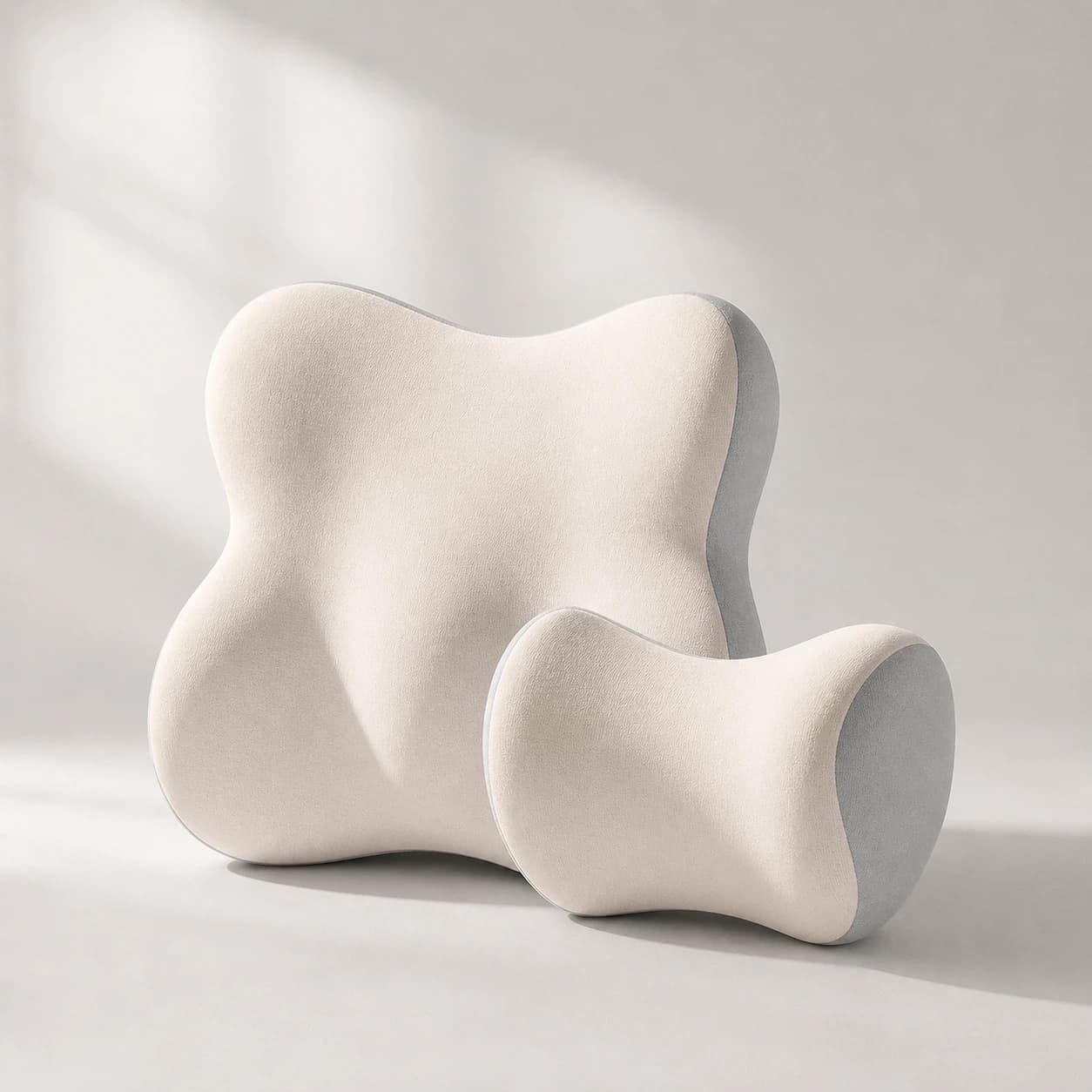
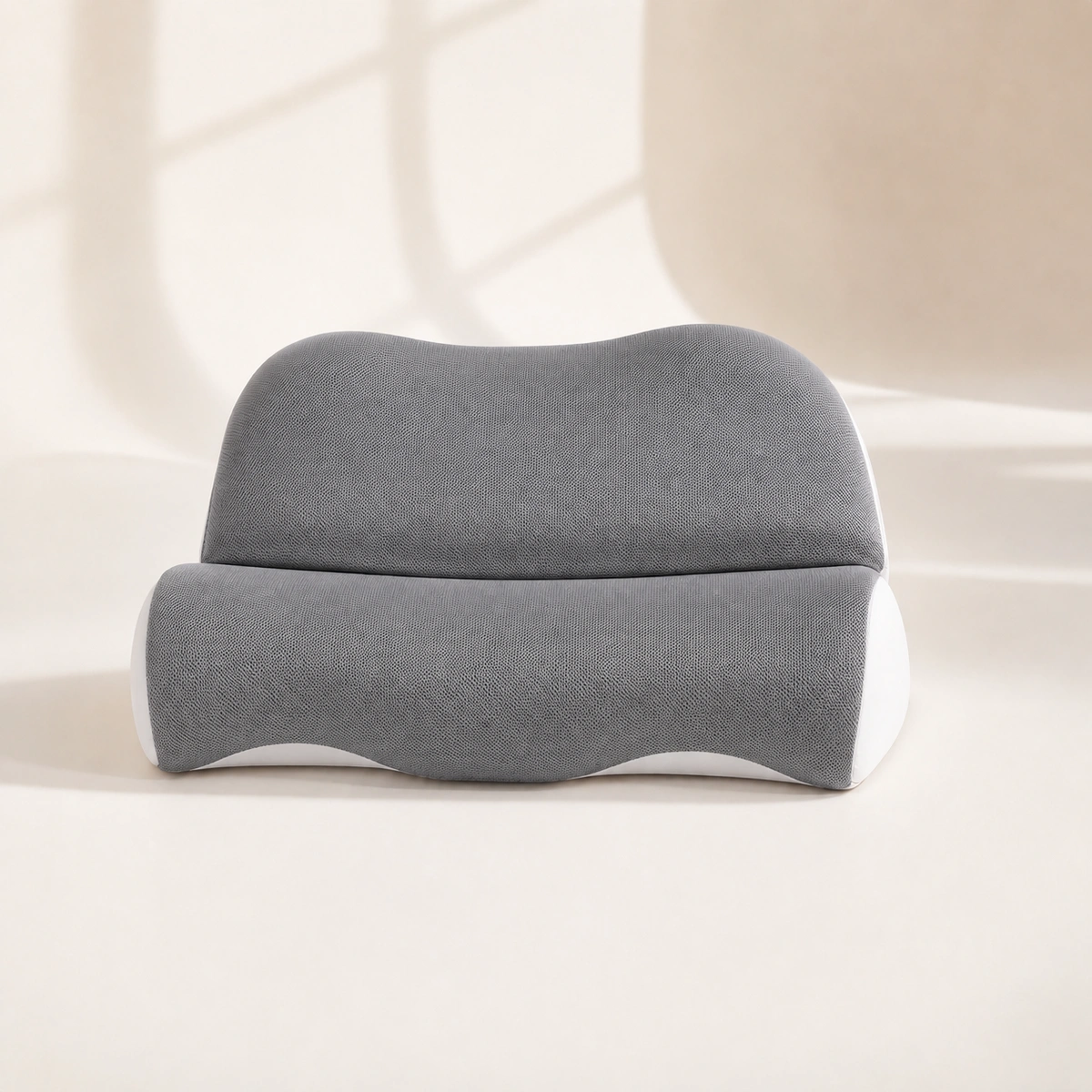 Product mentioned in this guideCloudArc Neck PillowTwo-component 52 × 35 cm neck-pillow system with separate head-cradle and cervical-bolster pieces, fixed 6/10 cm zones, slow-rebound polyurethane foam,…Free US shipping on every order60-Day Home Trial · we pay return shippingSee current price
The CloudArc Neck Pillow can be considered for sleeping in a bed at your destination. Its separate head cradle and cervical bolster require a horizontal sleeping surface and should not be presented as a raised-front travel pillow.
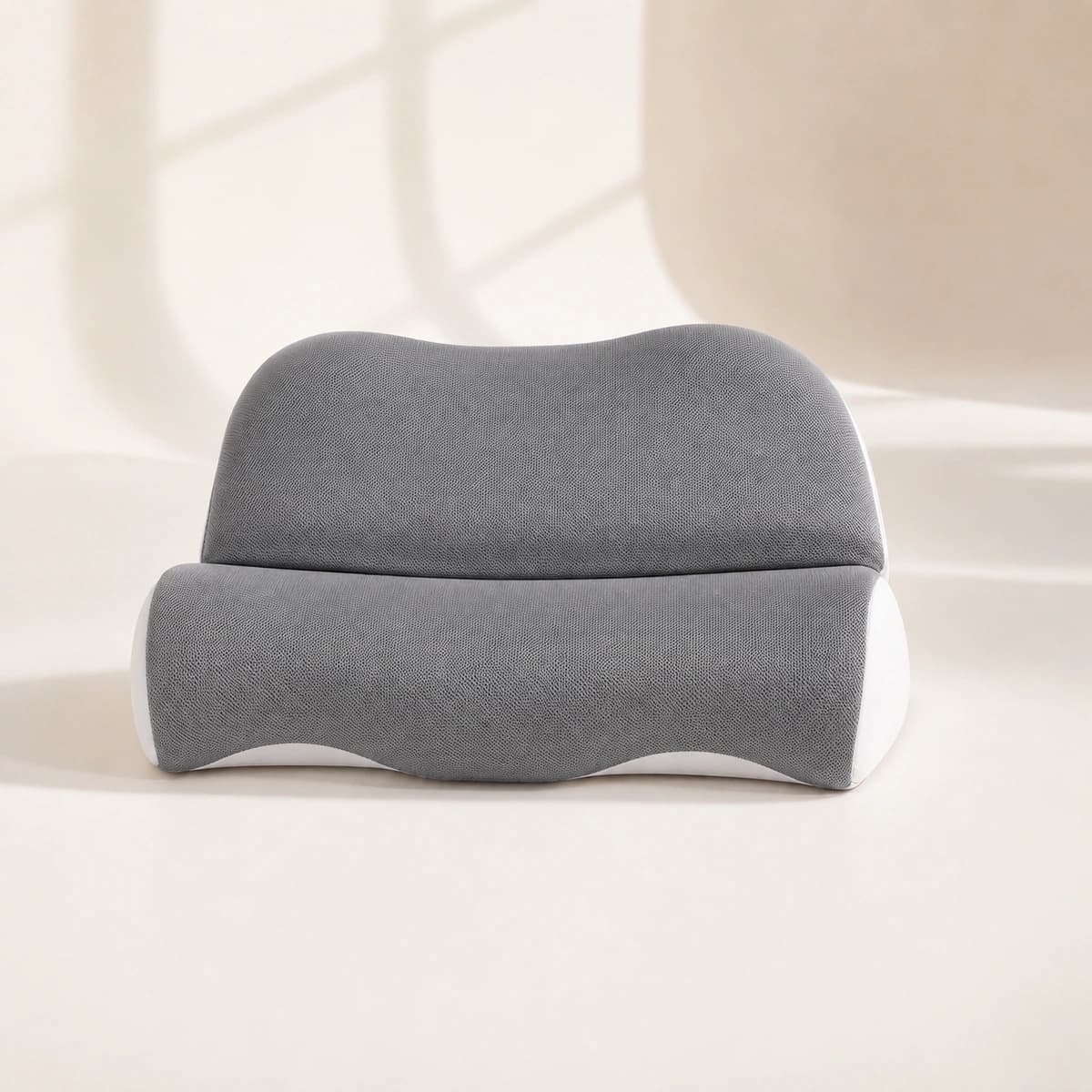
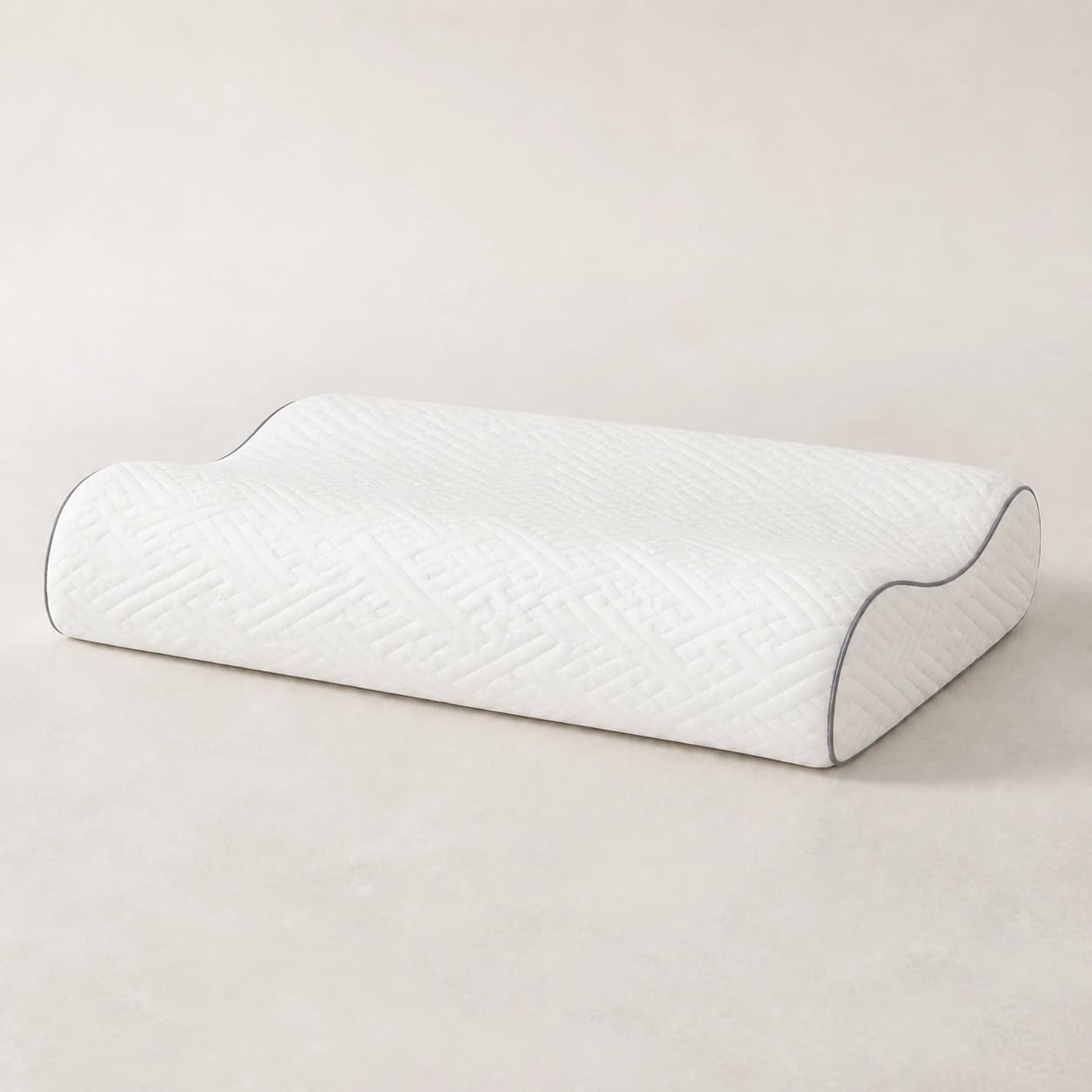
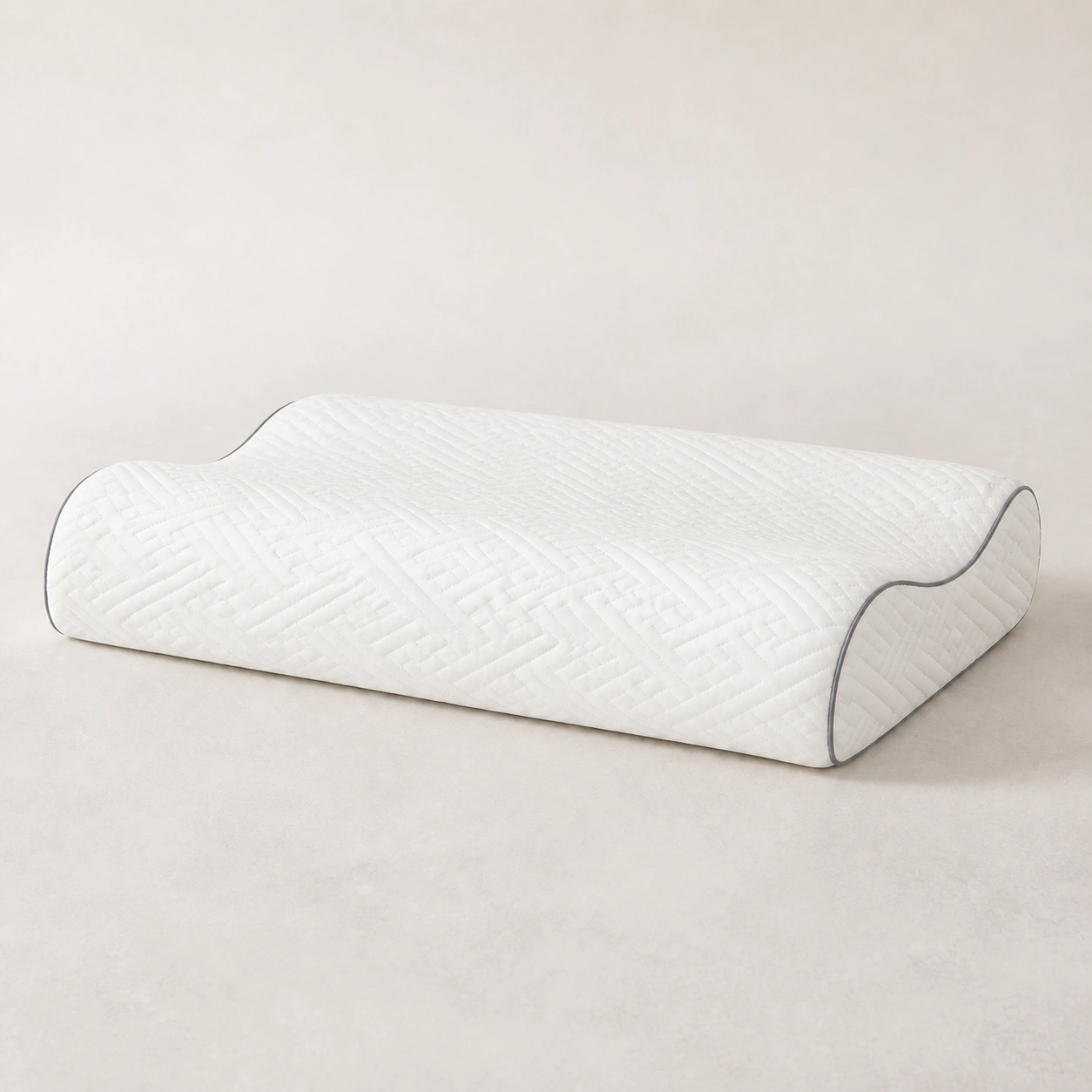 Product mentioned in this guideWaveRest Memory Pillow60 × 35 cm wave pillow with a choice of fixed low 7/9 cm or high 9/11 cm edges, polyurethane memory foam, a lyocell-fiber exterior, and removable zip…Free US shipping on every order60-Day Home Trial · we pay return shippingSee current price
The WaveRest Memory Pillow is also for a horizontal bed setup. Its shallow trough and two fixed edge rolls do not wrap around the neck or support the chin while seated.
When to see a professional
A travel neck pillow is a comfort and posture aid, not a medical device, and some neck pain needs a clinician rather than a pillow. See a doctor or physiotherapist if your neck pain followed a fall, a crash, or another injury; if it is severe, getting steadily worse, or not settling after a few weeks; or if it comes with any warning sign that points beyond ordinary stiffness.
Seek prompt medical advice for numbness, tingling or weakness spreading into an arm or hand, a stiff neck with a high fever or severe headache, problems with balance or coordination, loss of bladder or bowel control, or unexplained weight loss alongside the pain. These are red flags, not pillow problems. Waiting for a travel pillow to fix them only delays the care you actually need.
The bottom line
Choose a travel pillow for the way your head moves while seated. Choose CloudArc or WaveRest only if you also need a bed pillow at your destination; neither substitutes for an upright travel design.