
Lower Back Pain From Sitting: Causes and What Helps
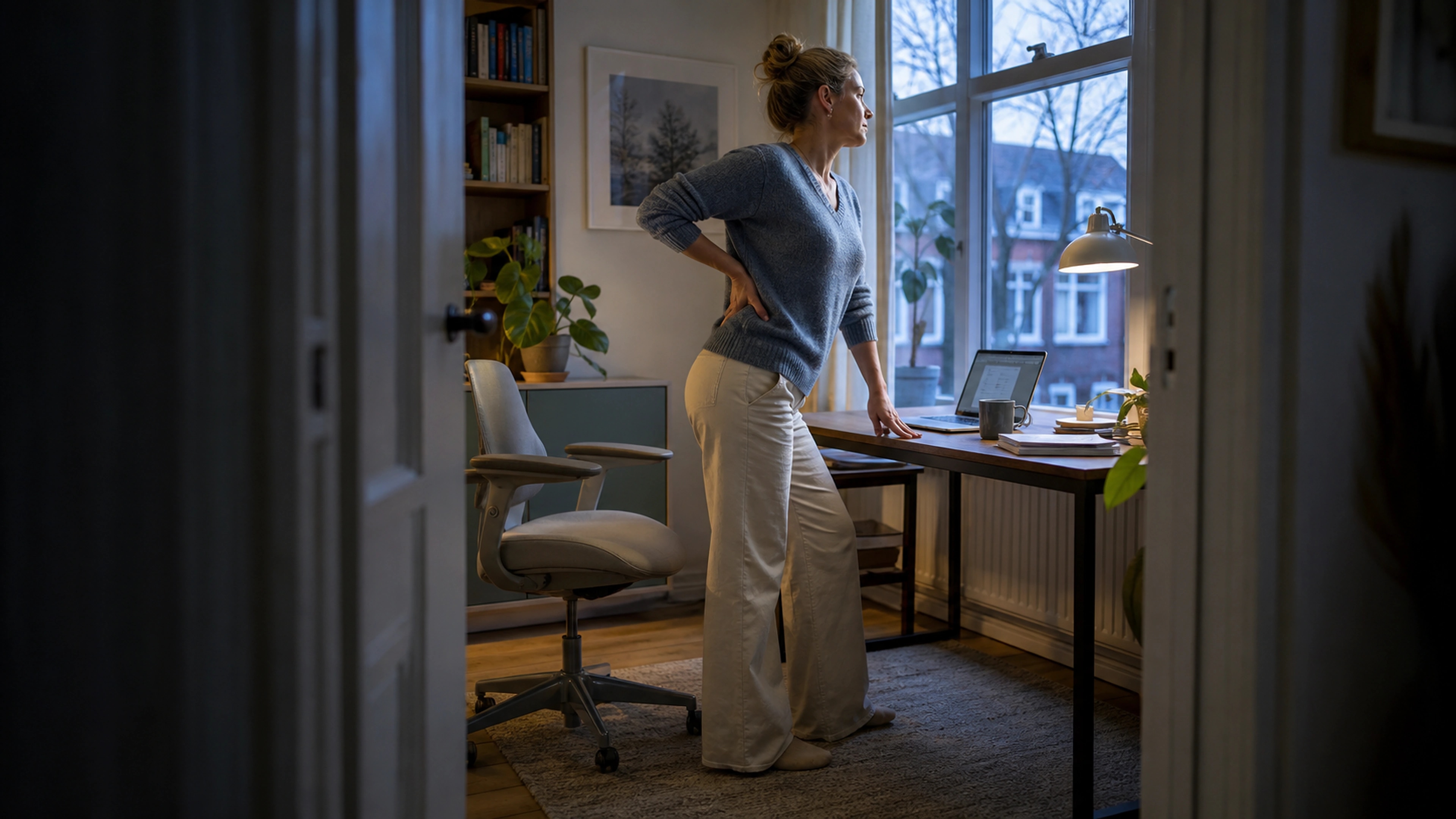
You sit down to work feeling fine, and by mid-afternoon there is a dull, nagging ache low in your back that eases the moment you stand up. That pattern is the most recognisable sign of lower back pain from sitting, and it is one of the most common complaints among people who spend most of the day at a desk, in a car, or on the sofa with a laptop.
This post explains why sitting loads the lower back, what the evidence actually says about back pain (most of it is reassuring), and where a lumbar support pillow genuinely fits, including where it does not. We sell lumbar support, so treat what follows as a buying framework judged against stated criteria, ours included, rather than a sales pitch. Our products are comfort and posture aids, not medical devices.
Why sitting causes lower back pain
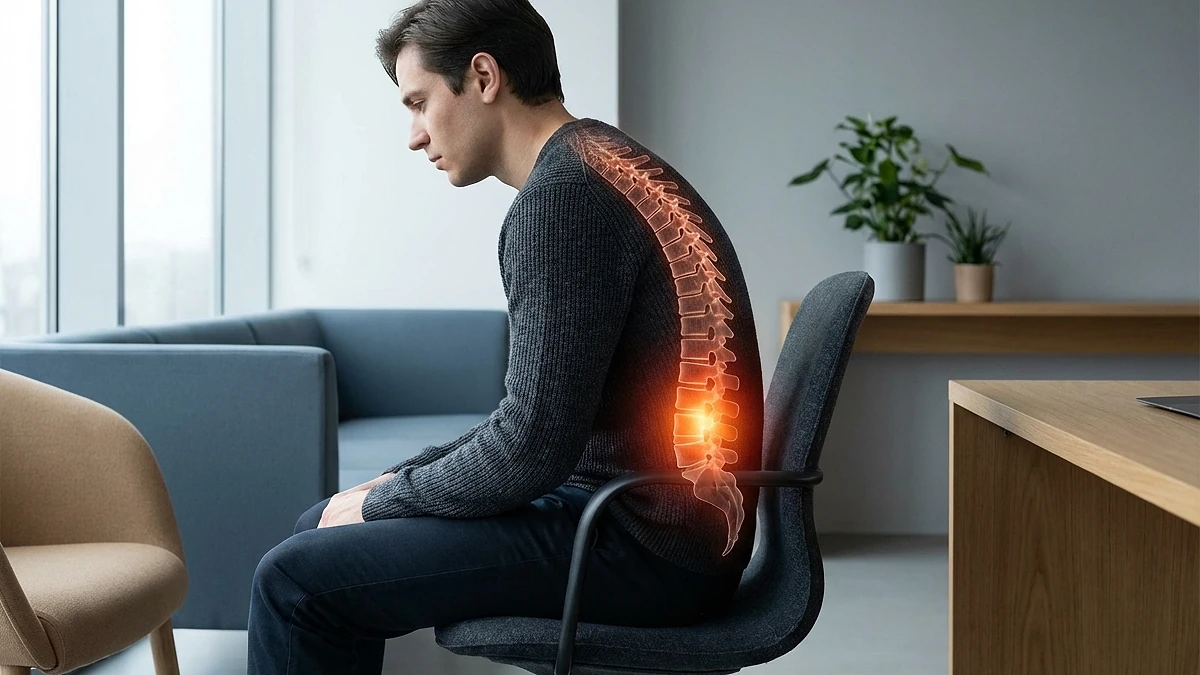
Sitting causes lower back pain mainly because a static, slumped posture held for hours rolls your pelvis backwards, flattens the natural inward curve of your lower spine, and loads the discs and soft tissues unevenly. Add a lack of movement and the supporting muscles fatigue, so the ache builds and eases when you stand.
Sitting is not inherently dangerous, but it changes how load passes through your spine. When you stand, your pelvis sits upright and the natural inward curve of your lower back (the lumbar lordosis) is preserved. When you sit, especially when you slump or perch on the front edge of a seat, the pelvis tends to roll backwards, that curve flattens or reverses, and the soft tissues and discs of the lower back take a more sustained, uneven load. The Canadian Centre for Occupational Health and Safety notes that sitting is less physically demanding than standing in some ways, but a static, poorly supported sitting posture held for hours has its own costs.
Two things make it worse. The first is duration: holding any single posture for a long time, good or bad, lets muscles fatigue and stiffen. The second is the lack of movement, which is separate from posture and arguably more important. Tissues in your back rely on movement to stay supplied and comfortable, and a chair, however good, cannot move for you.
What the evidence actually says
Here is the honest, reassuring version. Most lower back pain is not caused by serious damage, is not dangerous, and tends to improve on its own within weeks. The NHS guidance on back pain is clear that staying active and continuing your normal activities as much as the pain allows is one of the most helpful things you can do, and that prolonged bed rest tends to make recovery slower, not faster.
The other strand of evidence concerns sitting time itself. A large analysis published in the Lancet found that long sitting time is associated with worse health outcomes, but that an adequate amount of daily physical activity substantially reduces, and in the most active people effectively removes, that association. In plain terms: the movement you do across the day matters more than the chair you do it in. That is an unusual thing for a company selling seating accessories to say, but it is what the data shows, and pretending otherwise would undermine the only thing that makes this advice worth reading.
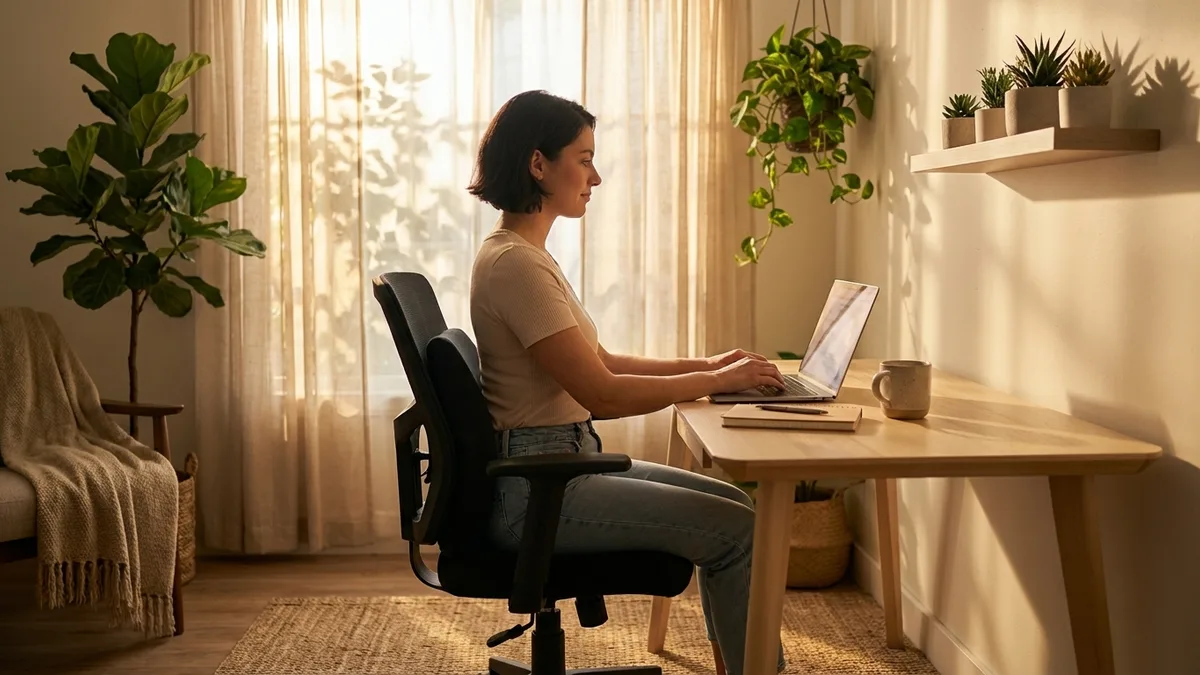
So the certainty here is mixed in a useful way. The evidence that staying active and reducing prolonged sitting helps is strong. The evidence that any specific product cures back pain is weak, because back pain has many causes and responds mostly to movement, time, and reassurance.
What lumbar support does and does not do
A lumbar support pillow has one job: it fills the gap between your lower back and the backrest so the chair holds your natural lumbar curve for you, instead of you having to hold it with muscle effort you will not sustain for eight hours. When the support sits in the right place, the pelvis is encouraged to stay more upright, the lower back keeps its curve, and the slump that loads your spine becomes harder to fall into by default. That is a real, mechanical benefit, and for many people it makes a long sitting day noticeably more comfortable.
What it does not do is equally important to say plainly. A lumbar pillow does not treat or cure a back condition, it does not replace movement, and it does not make sitting all day healthy. If you slump over the top of it, or set it too high or too low, it does little. It is one supportive input in a setup that also needs a sensible chair, a sensible desk height, and regular breaks. Used honestly, it removes one avoidable source of strain. It is not a fix for everything sitting does to a back.
Chair and desk setup
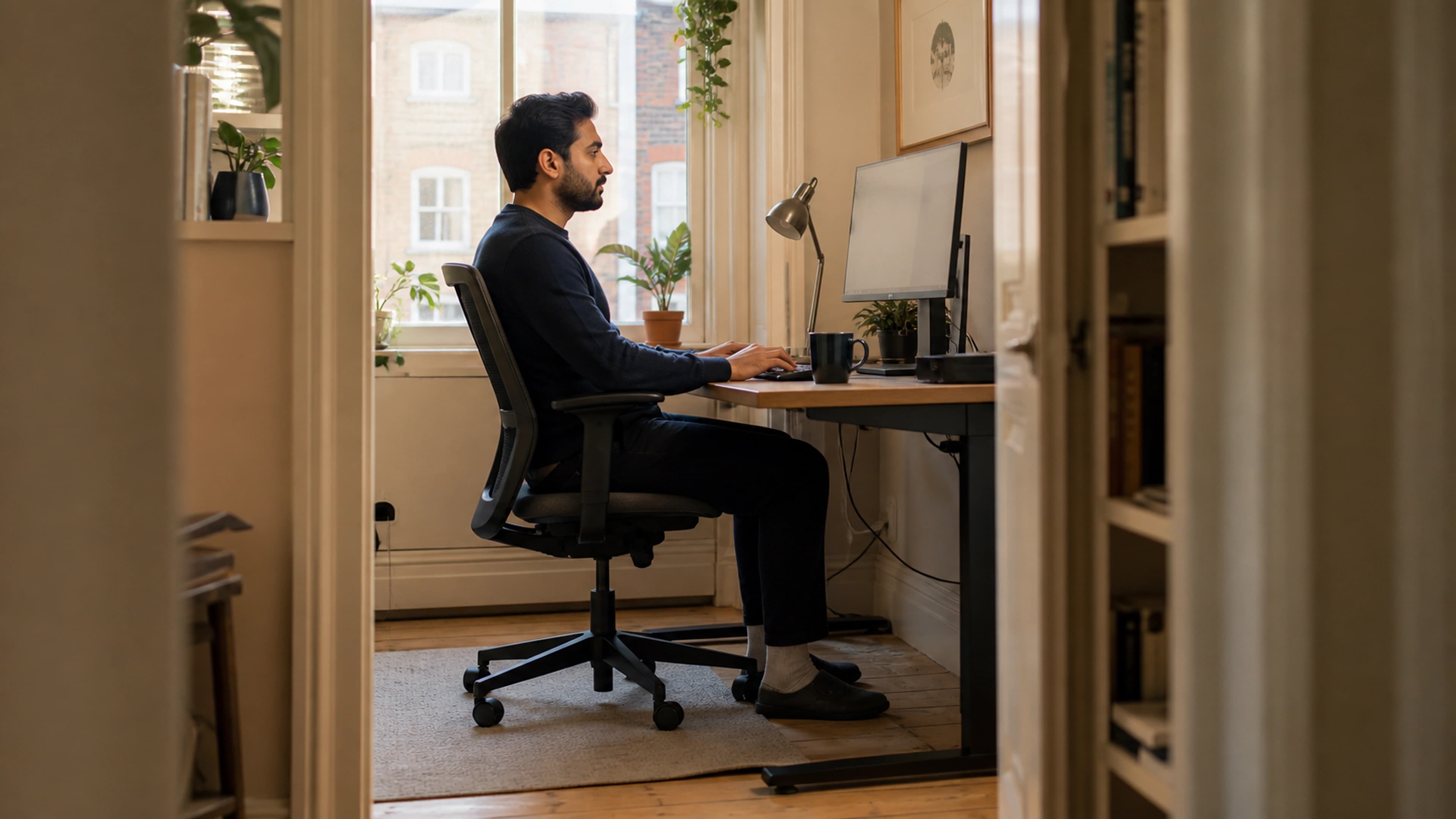
Before you buy anything, get the free fixes right, because they often matter more than the accessory. U.S. OSHA's workstation guidance describes a neutral seated posture you can aim for: feet flat on the floor or a footrest, thighs roughly parallel to the floor, knees near hip height, forearms about level with the desk, and the monitor top near eye level so you are not craning forward.
- Set seat height first. Raise or lower the seat until your forearms are about level with the desk and your shoulders are relaxed. If your feet then dangle, support them rather than dropping the seat and hunching.
- Sit back, not forward. Use the full backrest. A lumbar pillow only works if your back is actually against the chair, not perched on the front edge.
- Position the support at your belt line. The fullest part of the pillow should sit in the small of your back, roughly at belt height, not up between your shoulder blades.
- Raise the screen. A laptop on a desk pulls your head and upper back forward, which drags on the lower back too. A stand or stacked books helps.
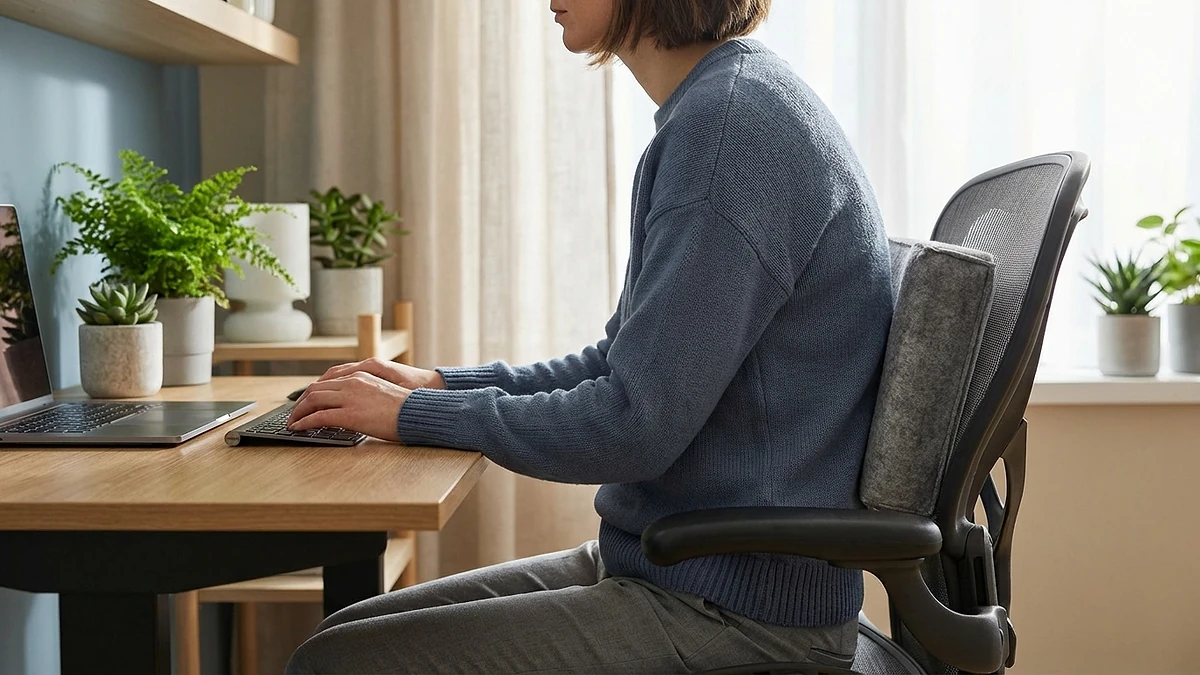
Our guide on proper sitting posture at a desk walks through each of these in more detail if you want a step-by-step.
Building a movement habit
If you take one thing from this post, make it this: the most effective thing you can do for lower back pain from sitting is to sit less and move more across the day. That does not mean a gym session. It means breaking up long static stretches. Stand up, walk to refill your water, or do a slow stretch every 30 to 60 minutes. The point is to interrupt the static load, not to exercise hard.
A short, frequent break beats one long break, and it beats any accessory you can buy. A lumbar pillow makes the sitting portions more comfortable, but it is the standing-up portions that do the heavy lifting for your back and your circulation. Think of the support as something that makes good habits easier to keep, not a substitute for them.
Choosing lumbar support: the criteria
If you decide a lumbar support pillow is worth trying, here are the criteria we would judge any of them against, including ours.
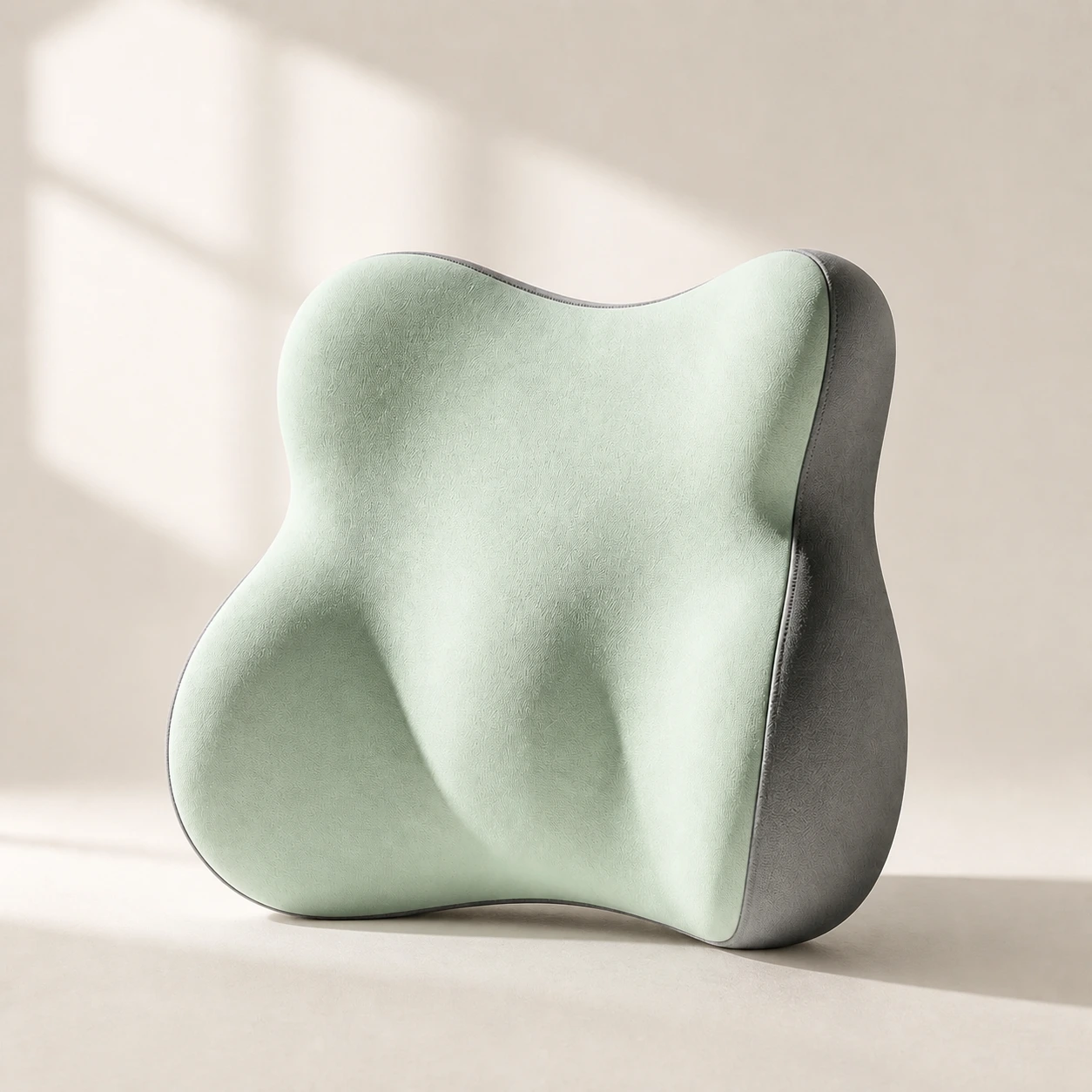 Product mentioned in this guideLumaWing Lumbar Cushion39 × 34 × 14 cm lumbar cushion available in four colours with a slow-rebound memory-foam core, fixed central ridge, recessed side channels, and broad outer…Free US shipping on every order60-Day Home Trial · we pay return shippingSee current price
Against those criteria, the product we make and stand behind is the ERGOLA lumbar support pillow: a contoured shape sized to fill the lower-back curve at belt line, firm enough to hold up across a full day, and held in place with an adjustable strap. If you want to see how to set it correctly, our how-to on positioning lumbar support covers the belt-line placement that makes the difference between help and clutter.
Who should not buy it. If your chair already has effective built-in lumbar support that holds your curve, a separate pillow is redundant and may push you too far forward. If your main problem is that you barely sit, or that you already move plenty and only ache occasionally, the support is more than you need; the free setup fixes above will do. And if your pain has any of the warning signs in the next section, an accessory is the wrong first step entirely.
When to see a professional
Most lower back pain from sitting is mechanical, settles within weeks, and responds to movement and time. Some symptoms are different and need assessment rather than a cushion. See a GP, physiotherapist, or other clinician promptly if your back pain follows a significant fall or accident, if it comes with a fever or unexplained weight loss, if you have numbness or tingling around your buttocks, genitals, or inner thighs (the saddle area), or any loss of bladder or bowel control, if you have progressive weakness, numbness, or pins and needles spreading down a leg, or if the pain is severe, steadily worsening, or not improving after a few weeks of staying active. These are red flags, not reasons to panic, but they are signals to get checked rather than self-treat. A lumbar pillow is a comfort aid; it does not diagnose or treat anything.
The bottom line
Lower back pain from sitting is common, usually not serious, and tends to improve, and the single most effective response is to sit less and move more across the day. Good chair and desk setup costs nothing and matters most. Within that picture, a lumbar support pillow earns its place by holding your natural curve through the sitting portions so the slump is harder to fall into, no more and no less. If that is the gap you are trying to fill, the ERGOLA lumbar support pillow is built to the criteria above; you can compare it against the rest of our lumbar pillow collection and decide whether it suits your chair and your back.