
How to Sit With Sciatica: Positions That Ease It
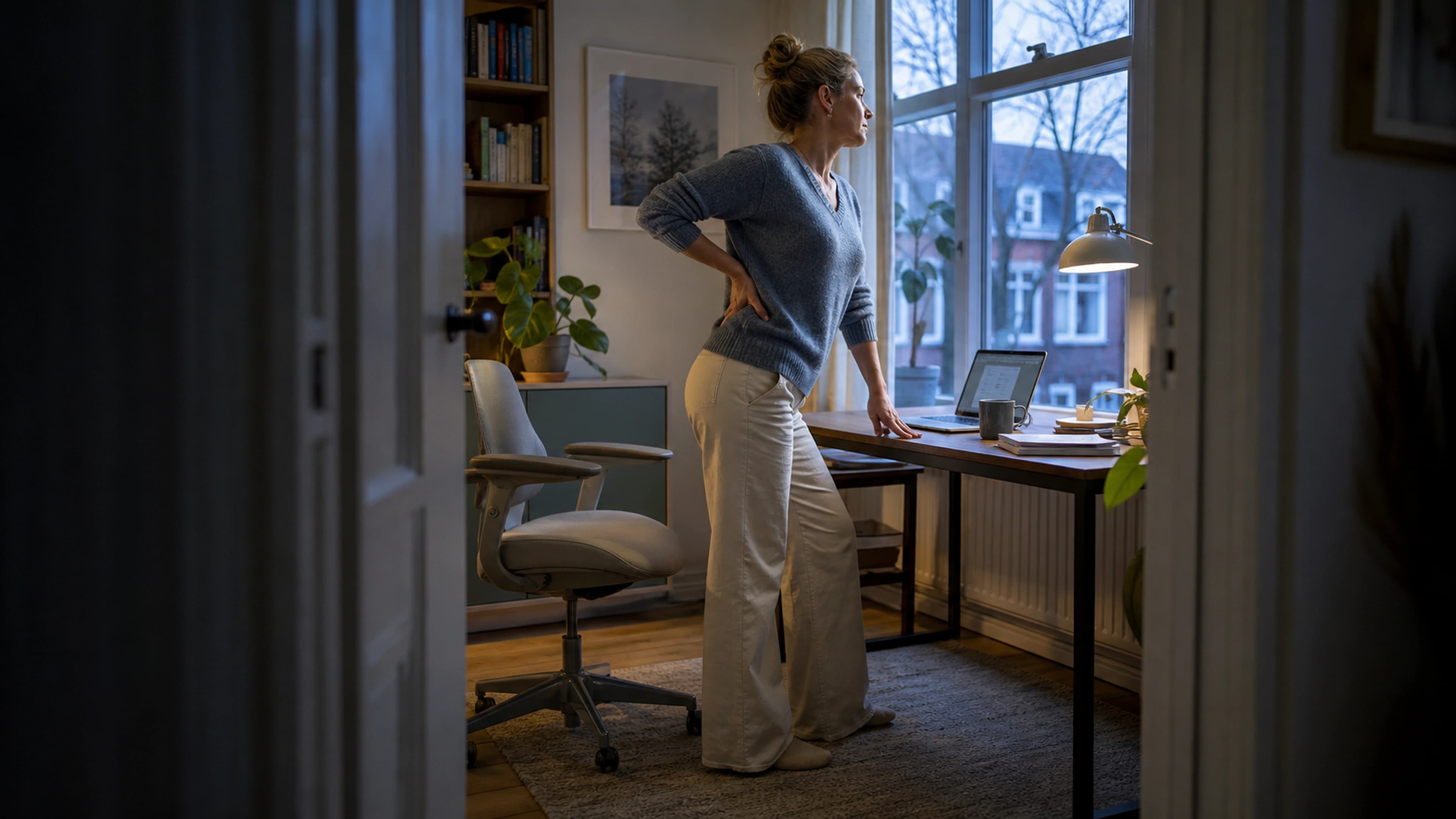
Sciatica has a cruel habit of making the thing you do most, sitting, the thing that hurts most. You settle into your chair or your car seat and within minutes there is a hot, shooting, or tingling line running from your lower back or buttock down the back of your leg. If that is you, learning how to sit with sciatica can take some of the daily edge off, even though no sitting position is a cure.
This post is about reducing how much you irritate the sciatic nerve while you are seated. We sell seat cushions and lumbar support, so treat the recommendations here as a buying framework judged against stated criteria, ours included, not a sales pitch. Our products are comfort and posture aids, not medical devices, and sciatica in particular is something to get assessed rather than self-treat if it is severe or comes with the warning signs near the end of this article.
What sciatica actually is
Sciatica is not a diagnosis in itself; it is a description of symptoms caused by irritation or compression of the sciatic nerve, the large nerve that runs from your lower back through your buttock and down each leg. The NHS describes the typical pattern as pain, tingling, numbness, or weakness that travels from the lower back or buttock into the leg and sometimes the foot, usually on one side. Common underlying causes include a slipped (herniated) disc pressing on the nerve root, but the reassuring part is that most sciatica eases over a few weeks with self-care and movement, and serious causes are uncommon.
Because the irritation is mechanical, your position changes how much the nerve is provoked. Sitting tends to be uncomfortable because it loads the lower spine and can put the nerve under tension, particularly in a slumped posture or on a hard, flat surface that presses straight onto the buttock the nerve passes through. That is why how you sit matters, even though it is the underlying cause, not the chair, that ultimately needs to settle.
Best sitting positions for sciatica
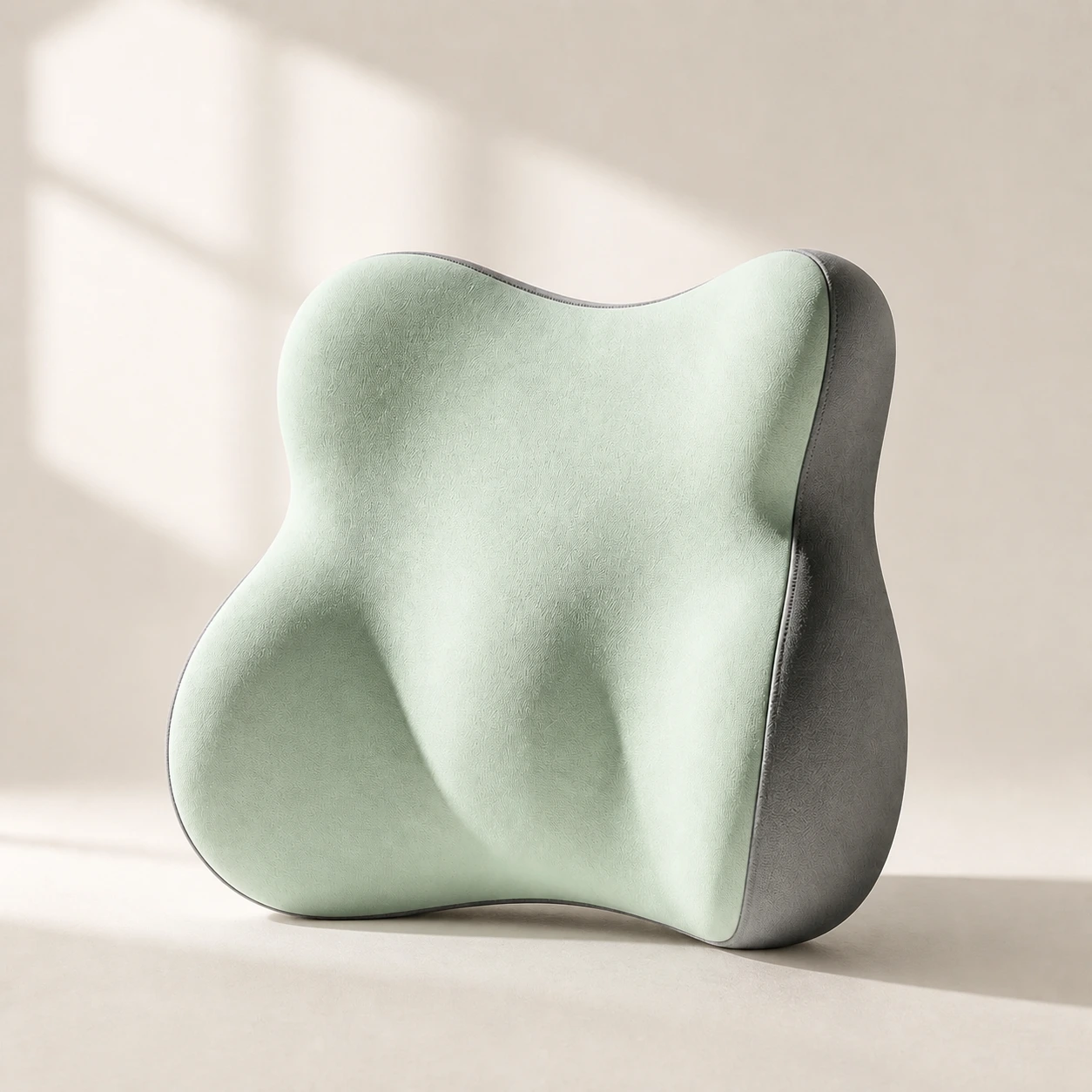 Product mentioned in this guideLumaWing Lumbar Cushion39 × 34 × 14 cm lumbar cushion available in four colours with a slow-rebound memory-foam core, fixed central ridge, recessed side channels, and broad outer…Free US shipping on every order60-Day Home Trial · we pay return shippingSee current price
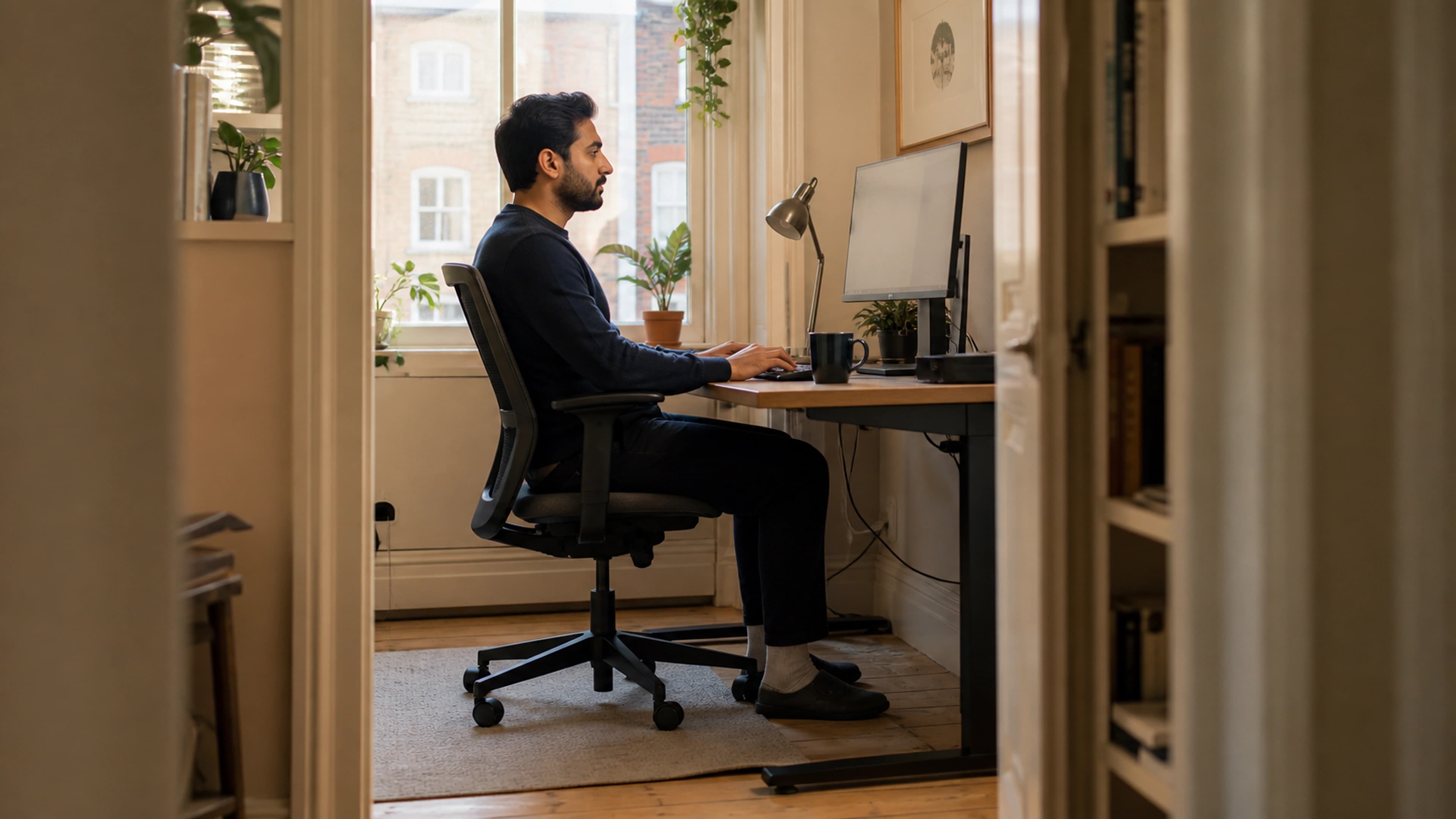
The most comfortable way to sit with sciatica is usually upright with your pelvis level and your lower back supported in its natural inward curve, both feet flat on the floor, hips and knees at roughly right angles, and your weight even on both sides rather than leaning onto the painful side. Sit back fully, avoid slumping, and get up to move often, because no single position stays comfortable for long.
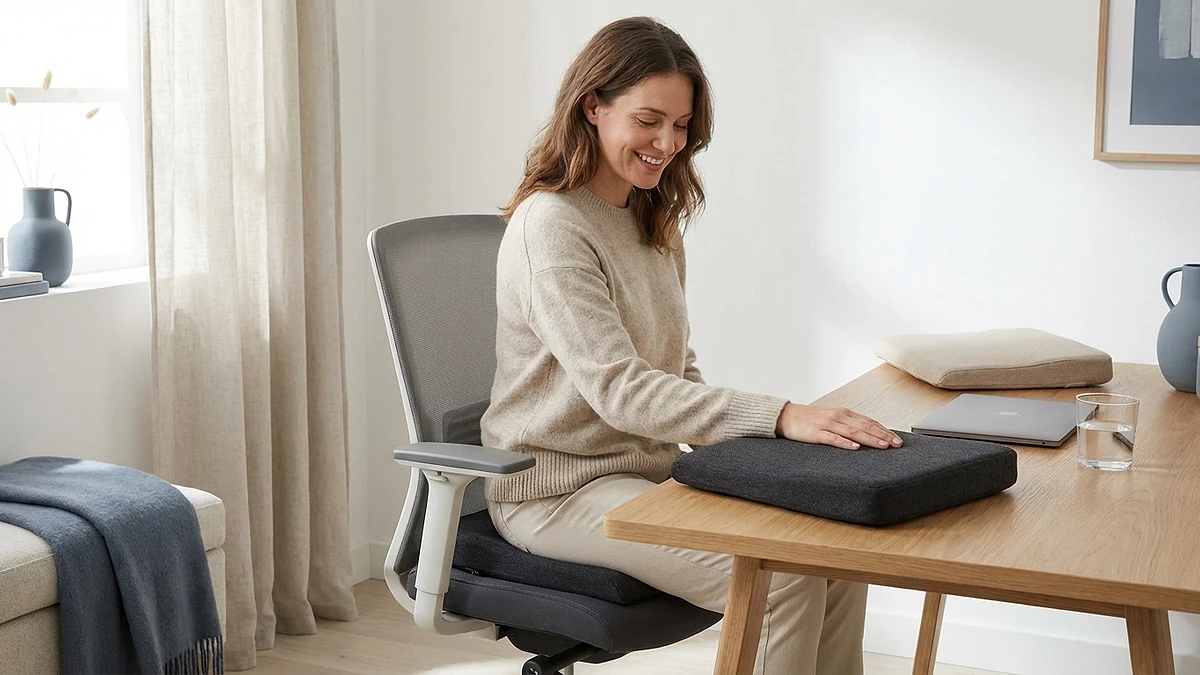
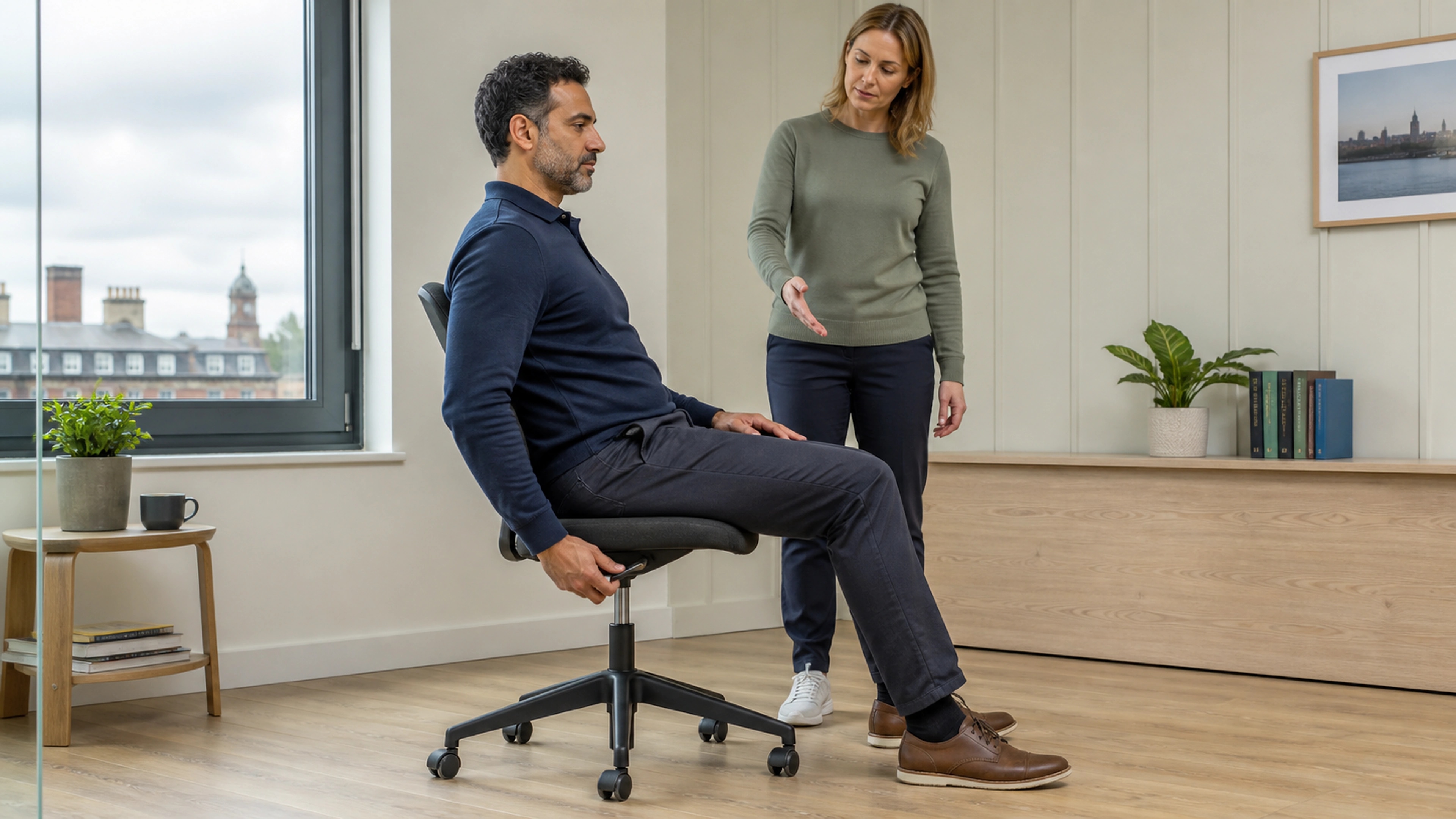
The principle behind that is keeping a neutral pelvis. When you slump, your pelvis rolls backwards, the lumbar curve flattens, and the lower back and nerve take a more sustained, uneven load. When you perch forward or cross your legs, you tilt the pelvis and twist the load onto one side. A level, supported, symmetrical position spreads things out and tends to provoke the nerve less. It will not feel perfect, but it is usually the least bad option for a stretch of sitting.
Setting up your seat
A few setup choices make the neutral, symmetrical position easier to hold. The Canadian Centre for Occupational Health and Safety notes that no sitting posture is good for long, which is why the aim is a comfortable default you can return to, not a rigid pose you force.
- Level the pelvis first. Sit fully back so both sit bones take weight evenly. If you tend to slide forward, that is the habit to break, because a forward perch tilts the pelvis and loads one side.
- Support the lower back. Fill the gap between the small of your back and the backrest so the chair holds your natural curve instead of leaving you to slump into it. A lumbar support pillow placed at belt height does this; our how-to on positioning lumbar support covers the placement.
- Take pressure off the buttock. A hard, flat seat presses directly onto the area the sciatic nerve runs through. A cushion that distributes weight more evenly can make a long sit more tolerable.
- Keep feet flat and supported. Feet flat on the floor or a footrest, with knees near hip height, keeps the pelvis level. Dangling feet or a too-high seat tip you out of neutral.
What to avoid when sitting
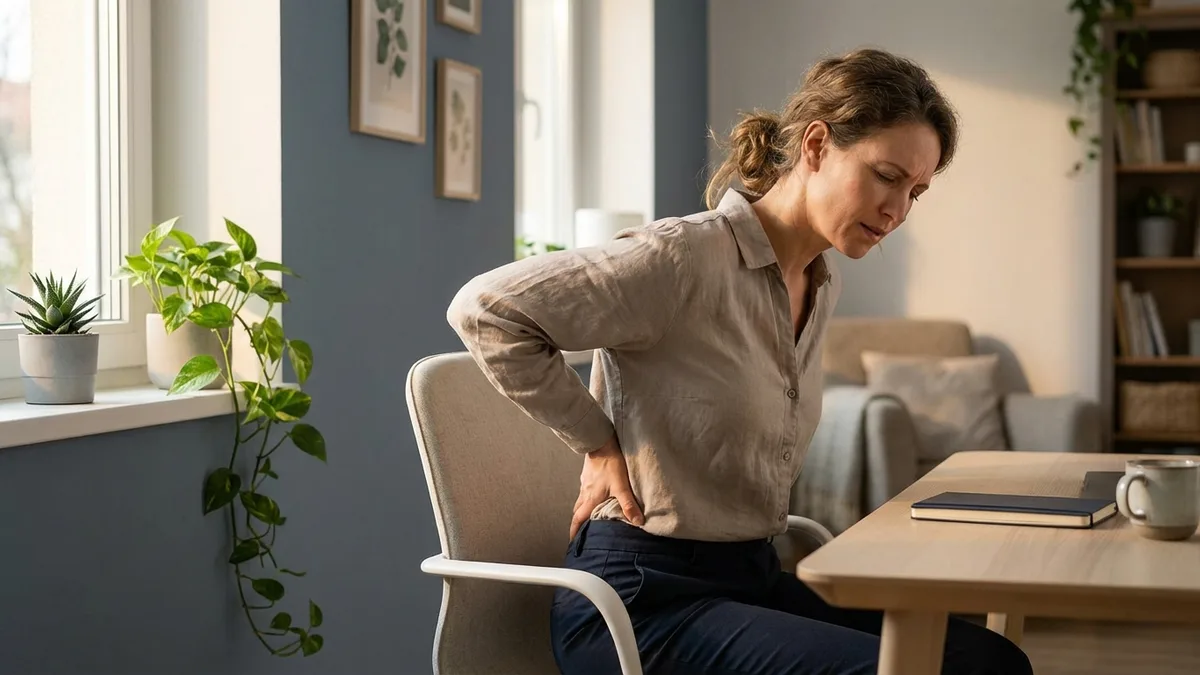
Some seated habits reliably provoke sciatic pain, and avoiding them often helps as much as anything you add.
- Deep, soft sofas. A seat you sink into lets your pelvis roll back and your spine collapse into a long slump, exactly the loaded position the nerve dislikes. A firmer, supportive seat is usually kinder during a flare.
- Crossing your legs. Crossing or tucking a leg under you tilts the pelvis and twists the load onto one side. Keep both feet down and your weight even.
- Slumping or perching forward. Both flatten the lumbar curve and concentrate load low in the back. Sit back against support instead.
- Long, unbroken sitting. Holding any position too long lets the nerve stay provoked and the muscles stiffen. The fix is not a better chair; it is getting up.
Gentle movement matters more than the chair
If you take one thing from this post, make it this: for sciatica, the NHS advises staying gently active and continuing your normal activities as much as the pain allows, rather than resting in bed, which tends to slow recovery. Movement, within comfort, is the part that actually helps the nerve settle over time. A cushion makes the sitting portions more bearable; it does not treat the cause.
In practice that means breaking up long sitting. Stand, walk a few steps, and change position every 30 to 60 minutes rather than sitting through the discomfort. Gentle walking and the stretches a physiotherapist gives you do far more than any seating accessory. Think of the cushion as something that makes it easier to stay comfortable between movements, not a substitute for moving. Our guide to lower back pain from sitting covers the same movement principle in more depth.
Where a seat cushion honestly fits
A contoured seat cushion has one mechanical job for sciatica: it spreads your seated weight more evenly and takes some of the direct pressure off the buttock and tailbone area the sciatic nerve passes through, which can make a hard chair or a long car seat more tolerable during a flare. For many people that is a genuine, if modest, comfort benefit. Judge any cushion, ours included, against a few criteria.
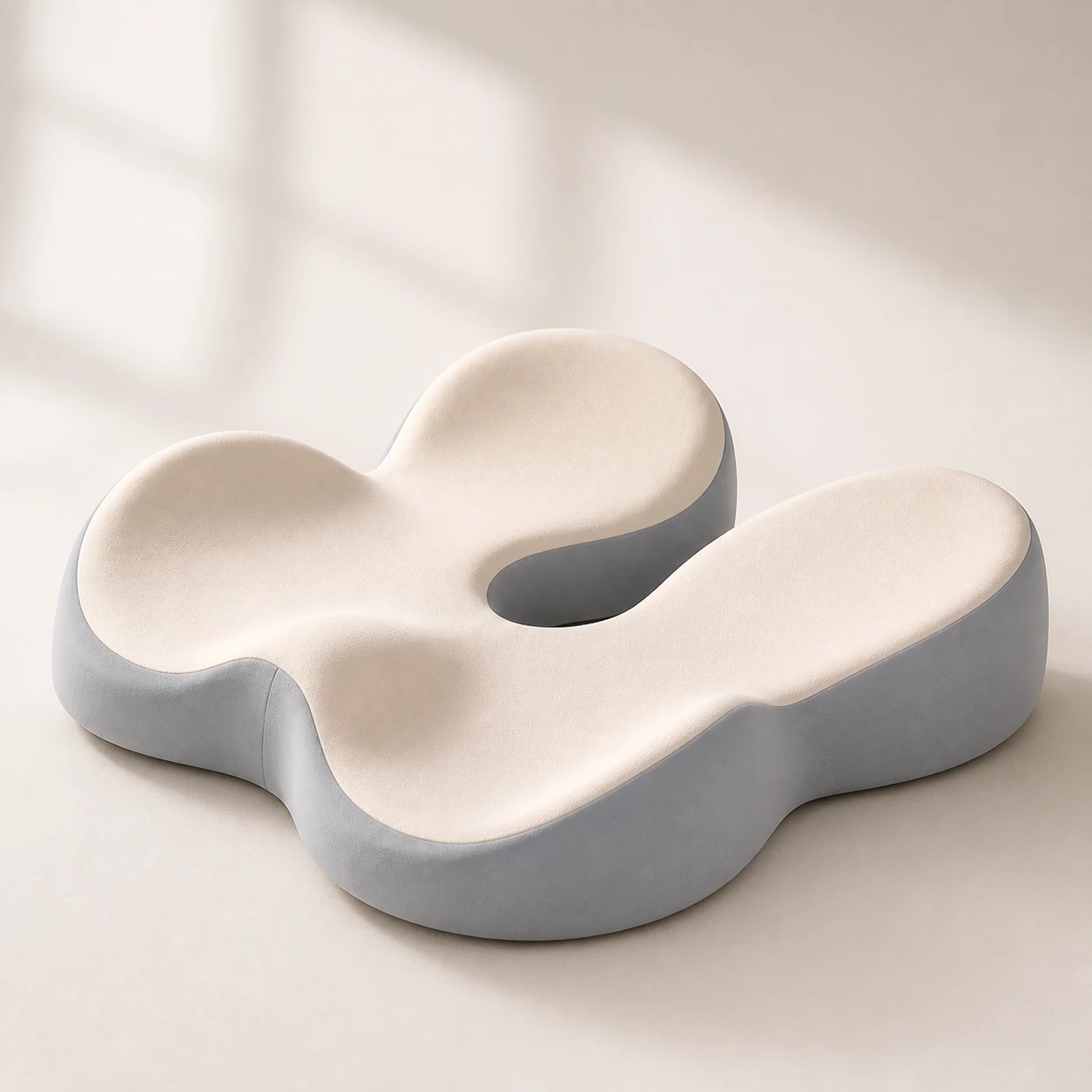 Product mentioned in this guideMemory Foam Seat CushionA sculpted seat cushion with a deep, open U-shaped rear channel designed to reduce direct contact beneath the coccyx and tailbone area. Raised rear…Free US shipping on every order60-Day Home Trial · we pay return shippingSee current price
Against those criteria, the cushion we make and stand behind is the ERGOLA memory foam seat cushion: a contoured, dense-foam shape that distributes seated weight to ease pressure on the lower body, with a non-slip base. You can compare it with the rest of our seat cushion collection to find the shape that suits your chair.
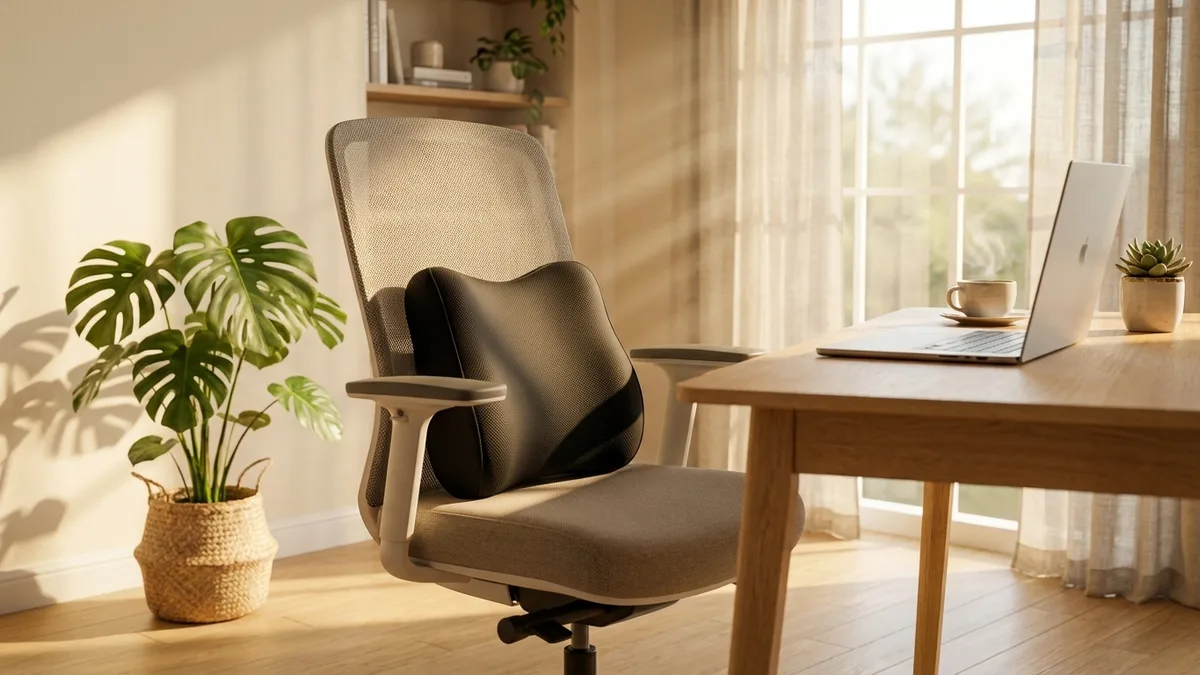
Who should not buy it, or who needs more than a cushion. If your sciatica is severe, recent, or worsening, a cushion is the wrong first step, and you should get assessed before spending on accessories. If your chair is already comfortable and your pain only bites on hard or flat seats occasionally, the cushion may be more than you need. And a cushion treats pressure, not the nerve; if your main provocation is a slumped posture, a lumbar pillow that holds your curve may help more, and most people benefit from both plus movement rather than any one item.
When to see a professional
Most sciatica eases within a few weeks with gentle movement and self-care, but some symptoms need prompt medical assessment rather than a cushion. See a GP or physiotherapist if your sciatica does not improve after a few weeks, keeps coming back, or is getting steadily worse. Seek urgent medical help, and do not wait, if you have numbness or tingling around your buttocks, genitals, or inner thighs (the saddle area), any loss of bladder or bowel control, progressive weakness or numbness in one or both legs, sciatica on both sides at once, or symptoms that follow a significant fall or accident, and also if your pain comes with a fever or unexplained weight loss. These are red flags for problems that need fast attention. A seat cushion is a comfort aid; it does not diagnose or treat the cause of nerve pain.
The bottom line
Sitting with sciatica is about provoking the nerve as little as possible: a level pelvis, a supported lower-back curve, even weight on both sides, feet flat, and frequent breaks to move, because gentle activity is what actually helps it settle. No position or product is a cure, and severe or worsening symptoms belong with a clinician, not a cushion. Within that honest picture, if a hard or flat seat is part of what makes your day worse, the ERGOLA memory foam seat cushion can take some of the direct pressure off while the underlying problem settles, alongside the gentle movement that does the real work.