
The Best Foot Rest Under Your Desk: An Evidence-Based Buying Guide
The best foot rest under your desk is one that keeps the entire sole of your foot supported, holds your knees at or slightly above hip level, and lets your feet move rather than freezing in one spot. For most home and office workers, that means a contoured or rocking footrest sized to your desk height - not a flat box that simply props your feet up.
If your chair is set high enough to keep your elbows level with the desk, your feet often end up dangling or pressed flat with no support. A foot rest closes that gap. This guide explains what the research actually says, which features matter, and how to choose a model that earns its place under your desk every single day.
Why a Foot Rest Matters More Than People Think
When you raise your chair to get your arms and wrists into a neutral typing position, your feet frequently lose contact with the floor. The U.S. Occupational Safety and Health Administration (OSHA) addresses this directly in its Computer Workstations guidance: “If the seat cannot be lowered (for example, it would make the keyboard or monitor too high), use a footrest to provide stable support for the feet.” OSHA also notes that a footrest “may elevate the knee slightly to relieve pressure on the back of the leg.”
That pressure on the back of the leg - the soft tissue and blood vessels just behind the knee - is the quiet problem most people never connect to their afternoon fatigue. Without support, the front edge of the seat compresses the underside of your thighs, and your feet have nowhere to settle. A footrest restores the supported, slightly elevated position OSHA describes, taking load off your lower back and hips at the same time.
The bigger picture: sitting still is the real risk
A footrest does not undo the cost of sitting all day, and no honest guide should claim it does. The World Health Organization is blunt about the stakes: in adults, sedentary behaviour is associated with “increased all-cause mortality, cardiovascular disease mortality and cancer mortality and incidence of cardiovascular disease, cancer and type-2 diabetes,” and WHO recommends that all age groups limit the amount of time spent sedentary.
The occupational data backs this up. A 2024 analysis published in JAMA Network Open found that workers who mostly sat on the job had roughly a 34% higher risk of cardiovascular disease mortality compared with those who mostly did not - but the same study found that alternating between sitting and non-sitting at work, plus a small amount of extra daily activity, attenuated that harm.
This is exactly why the type of footrest matters. A static footrest holds you in one position. A footrest that lets your ankles and calves move keeps a little motion in your lower body without pulling your attention off your work - the small, frequent postural changes that the research keeps rewarding.
Static vs. Active: The Most Important Choice
Under-desk footrests fall into two broad camps, and choosing the right one is more important than chasing any single feature.
Static footrests
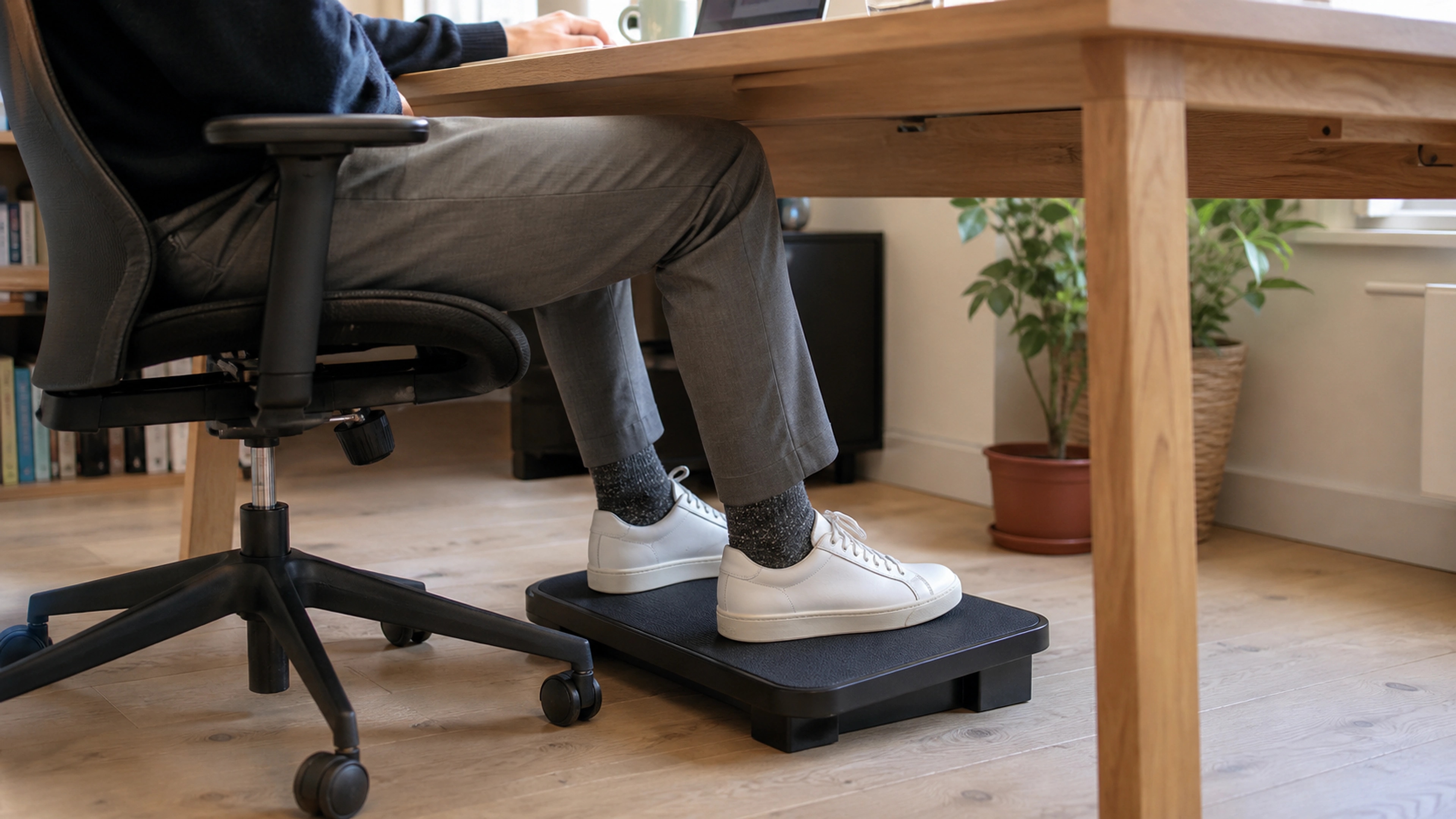
- What they are: A fixed platform, sometimes with an adjustable tilt angle and height.
- Best for: People who mainly need to close a height gap so their feet stop dangling, and who already get up and move regularly.
- The trade-off: They support your feet but encourage you to hold one posture. If you tend to freeze in place for hours, a static model can quietly become part of the problem.
Active (rocking) footrests
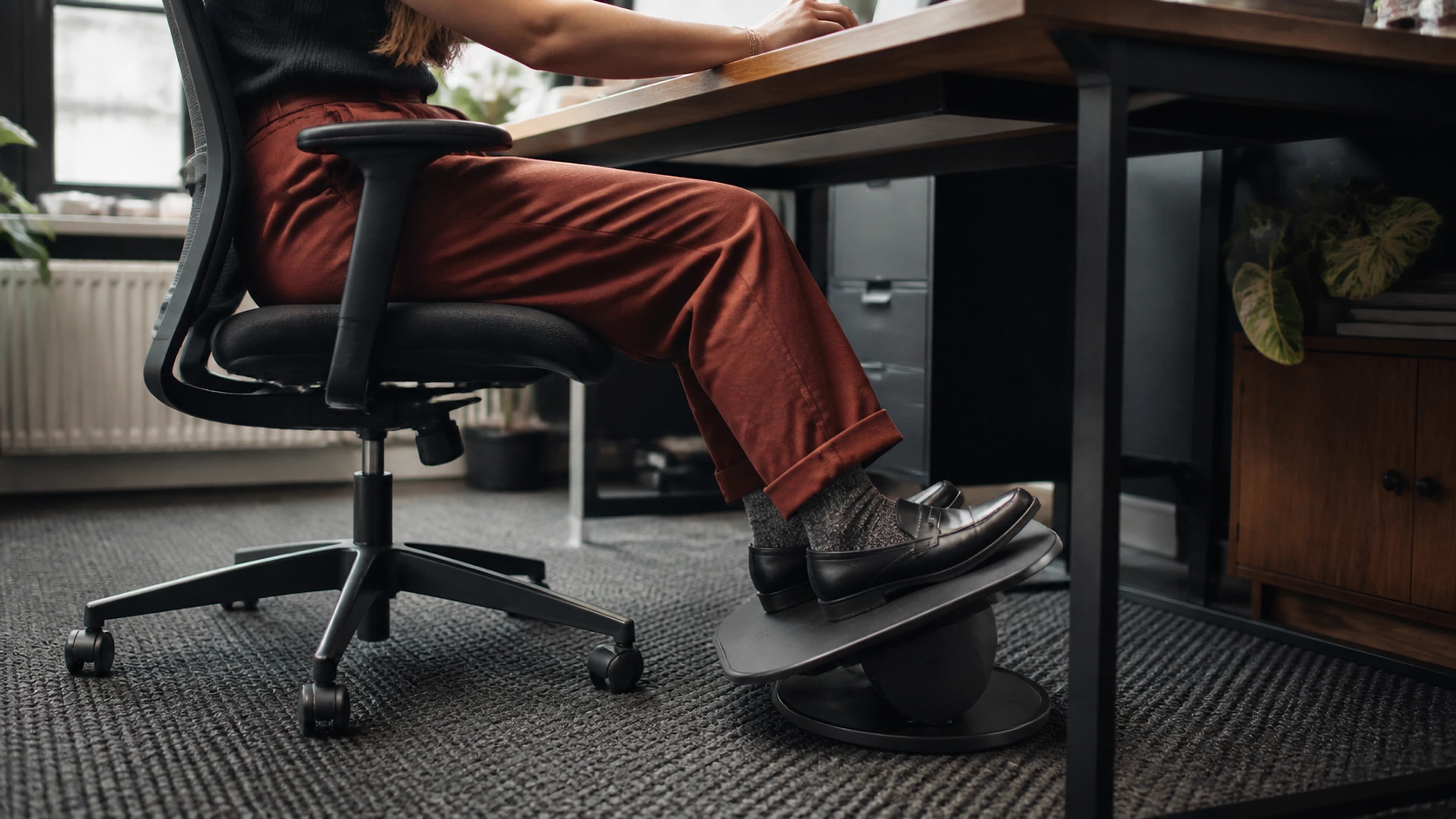
- What they are: A curved or pivoting platform that lets you rock your feet forward and back, flexing your ankles and calves through the day.
- Best for: Anyone who sits for long, uninterrupted stretches and wants gentle movement built into the workstation itself.
- Why it helps: Rocking engages the calf muscles, which act as a natural pump that helps push blood back up from the lower legs - the reason the calf is sometimes called the body’s “second heart.” You get the supported foot position OSHA recommends, plus the frequent micro-movement the sitting research favors.
The research on dynamic workstations points in the same direction. A systematic review by Karakolis and Callaghan in Applied Ergonomics (2014) examined sit - stand and dynamic office setups and concluded they are likely effective at reducing perceived discomfort without hurting productivity. A footrest that adds motion brings a slice of that benefit to people who cannot or do not want a full standing desk.
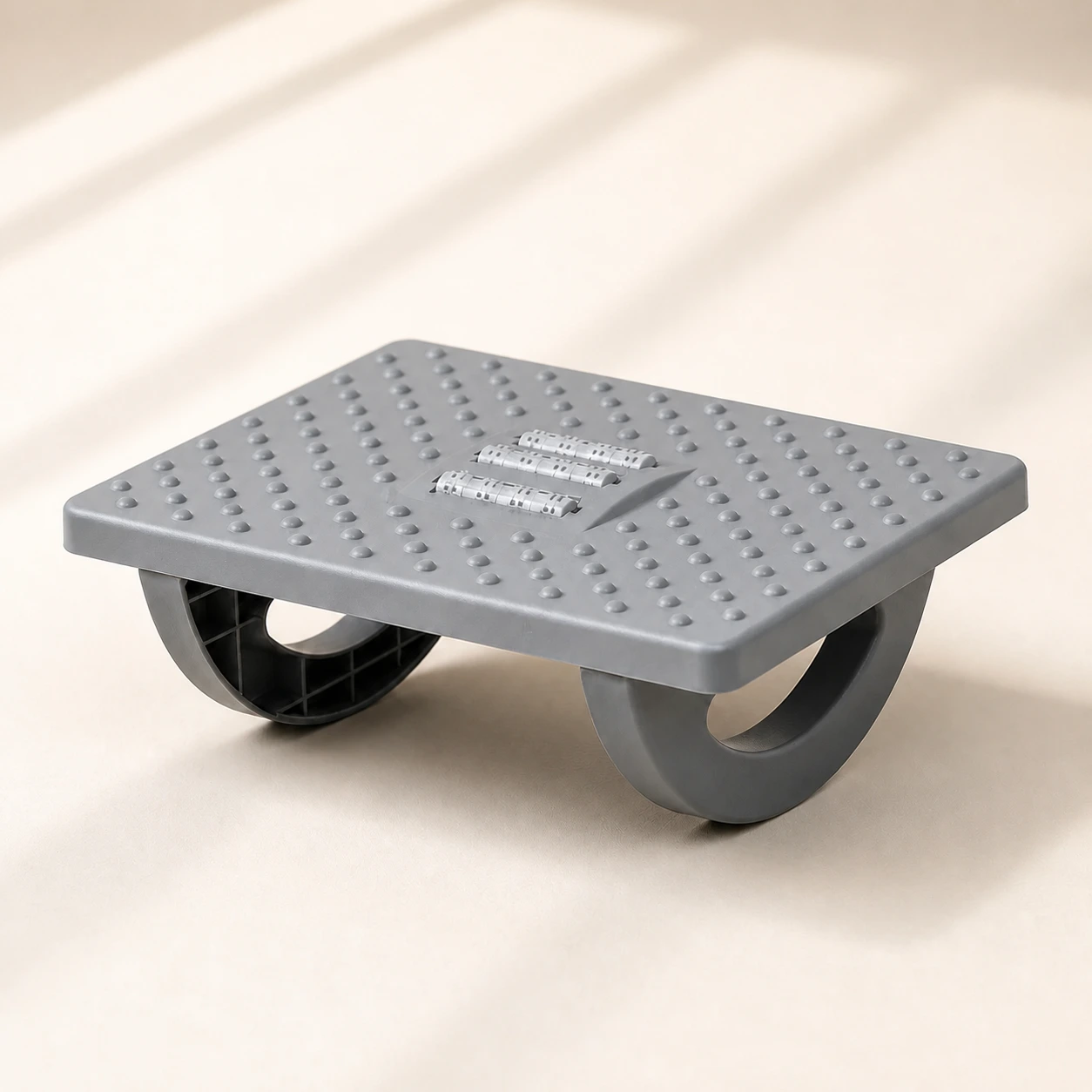 Product mentioned in this guideRollArc Rocking FootrestCompact gray footrest with twin curved supports for user-controlled rocking, a textured deck, and three central roller tracks.Free US shipping on every order60-Day Home Trial · we pay return shippingSee current price
Our ergonomic foot rocker sits in this active category: a curved rocking surface that supports the full sole of your foot while letting your ankles move freely, so the supported position never turns into a frozen one.
What to Look For in the Best Under-Desk Foot Rest
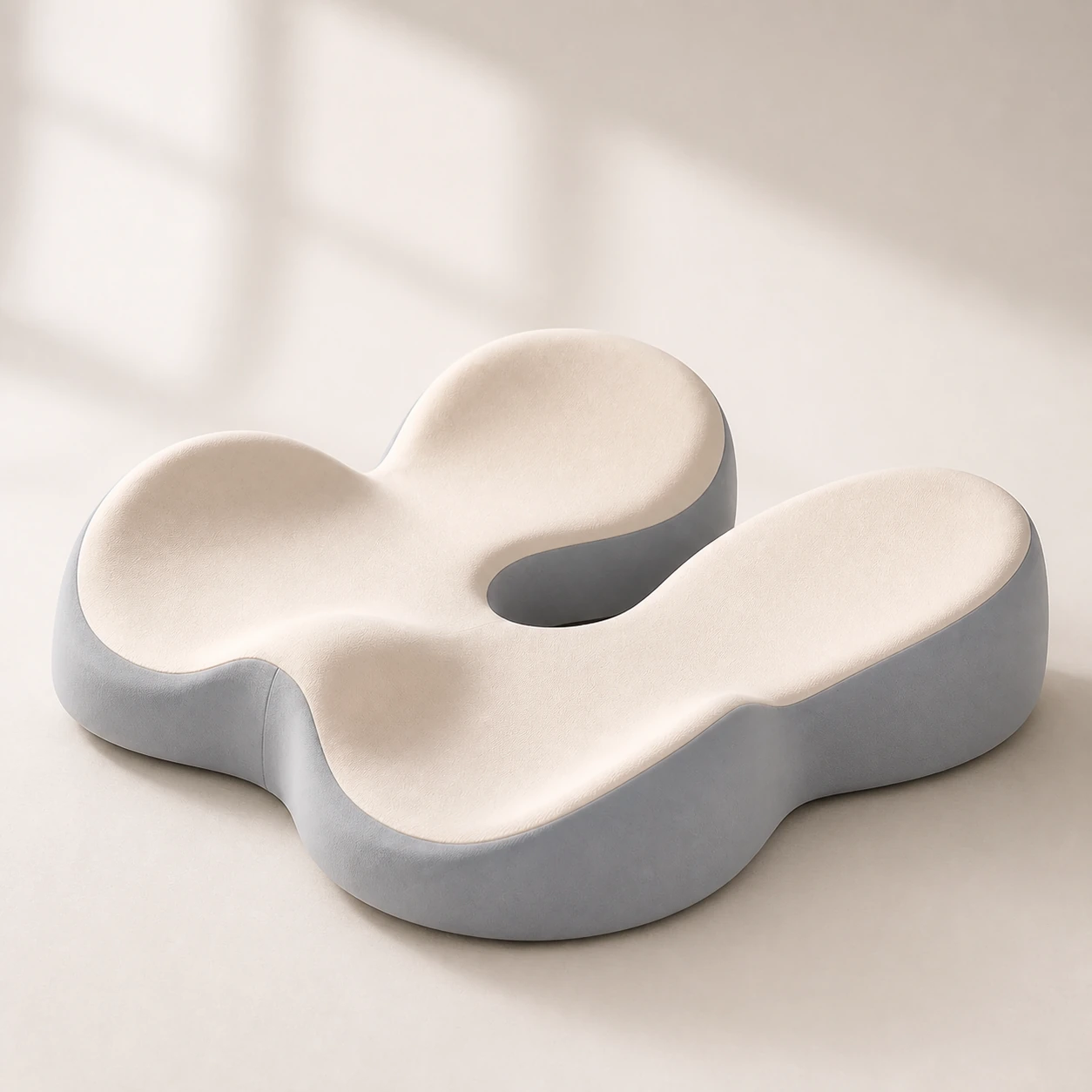 Product mentioned in this guideMemory Foam Seat CushionA sculpted seat cushion with a deep, open U-shaped rear channel designed to reduce direct contact beneath the coccyx and tailbone area. Raised rear…Free US shipping on every order60-Day Home Trial · we pay return shippingSee current price
Once you have decided between static and active, these are the features that separate a footrest you actually use from one that ends up shoved in a closet.
1. The right height for your desk
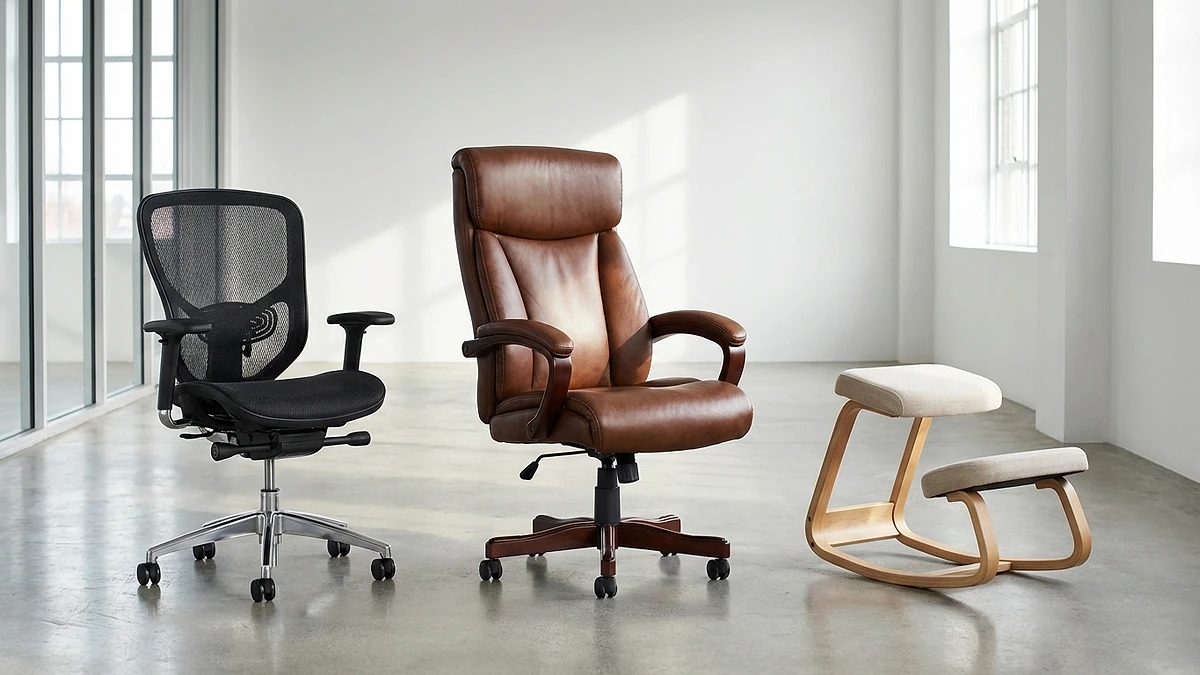
The whole point is to fill the gap between your feet and the floor while keeping the back of your knee slightly higher than the seat. Measure that gap with your chair set so your forearms are level with the desk. If a footrest is too tall, it pushes your knees up and crowds your thighs; too short, and your feet still dangle. Models with adjustable height or a generous rocking range adapt to more setups.
2. A surface that supports the whole foot
OSHA’s guidance is about supporting the entire sole. A platform too small for your feet just shifts the pressure points around. Look for a surface wide and deep enough that your feet rest fully, whether flat or rocking.
3. A non-slip, textured top
A footrest that slides away the moment you shift your weight defeats the purpose. A textured or grippy surface keeps your feet planted and works whether you are in socks or shoes.
4. Movement, not just elevation
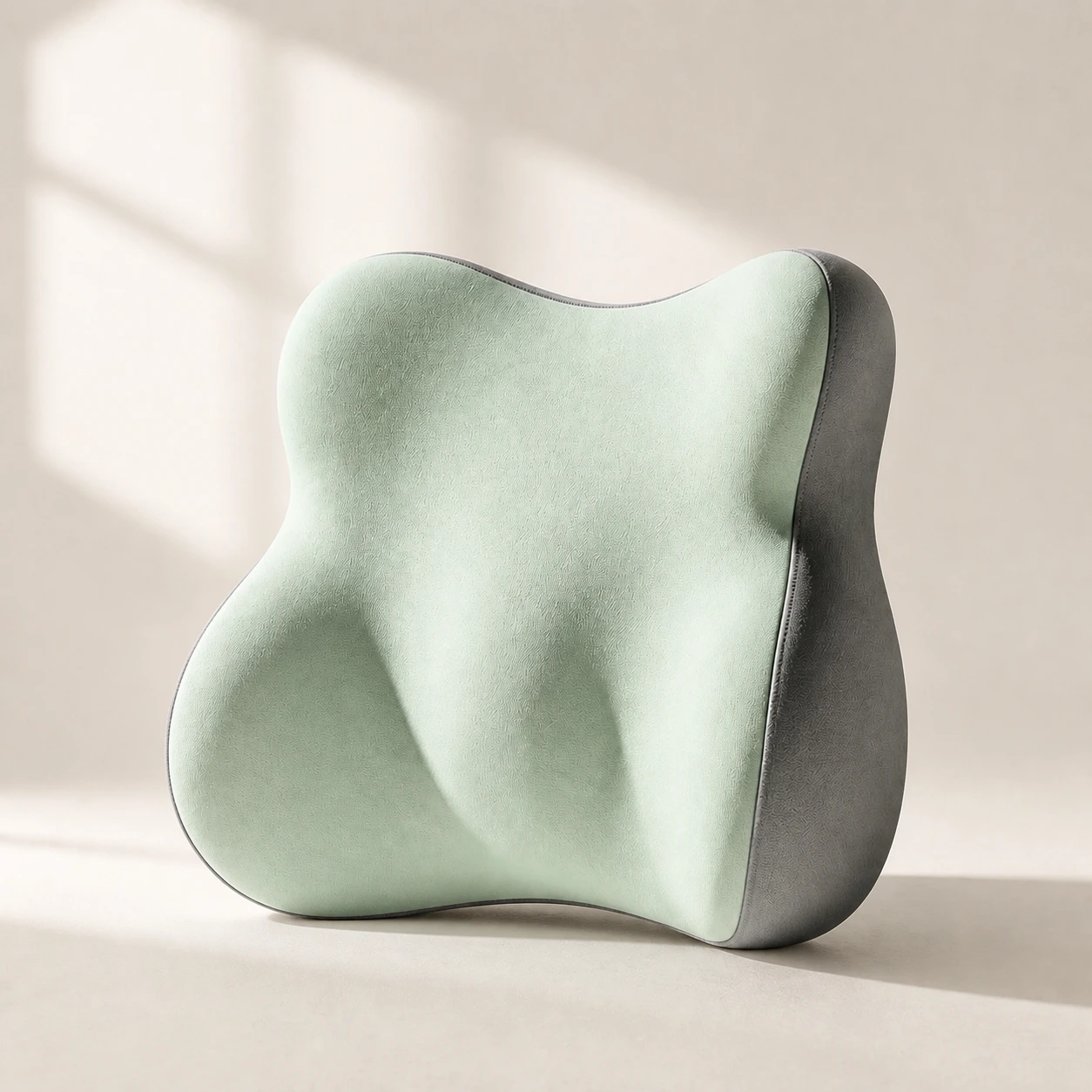 Product mentioned in this guideLumaWing Lumbar Cushion39 × 34 × 14 cm lumbar cushion available in four colours with a slow-rebound memory-foam core, fixed central ridge, recessed side channels, and broad outer…Free US shipping on every order60-Day Home Trial · we pay return shippingSee current price
Given everything the sitting research says about frequent posture change, prioritize a design that invites your ankles and calves to move. Even a modest rocking range turns a passive prop into an active part of your ergonomic setup.
5. Durable, stable build
You will rest your full lower-body weight on this thing for thousands of hours. A solid wood-and-felt or reinforced platform that does not creak, crack, or tip is worth more than any gimmick feature.
How to Position and Use Your Foot Rest
- Set your chair for your arms first. Raise the seat until your forearms are roughly level with the desk and your wrists are straight. This is the step that usually lifts your feet off the floor.
- Slide the footrest into the gap. Place it so the entire sole of each foot is supported and your knees sit at or slightly above hip level.
- Check the back of your knees. There should be no hard pressure from the seat edge against the underside of your thighs. Adjust footrest height or tilt until that pressure disappears.
- Keep moving. If you have a rocking model, let your feet drift back and forth while you read, think, or take calls. Movement is a feature, not a distraction.
- Still get up. A footrest complements movement breaks; it does not replace them. Stand, stretch, or walk regularly - the WHO and the occupational data are clear that this is what protects you most.
Where a Foot Rest Fits in Your Whole Setup
A footrest is one piece of a balanced workstation, and it pairs naturally with a few other upgrades depending on your situation.
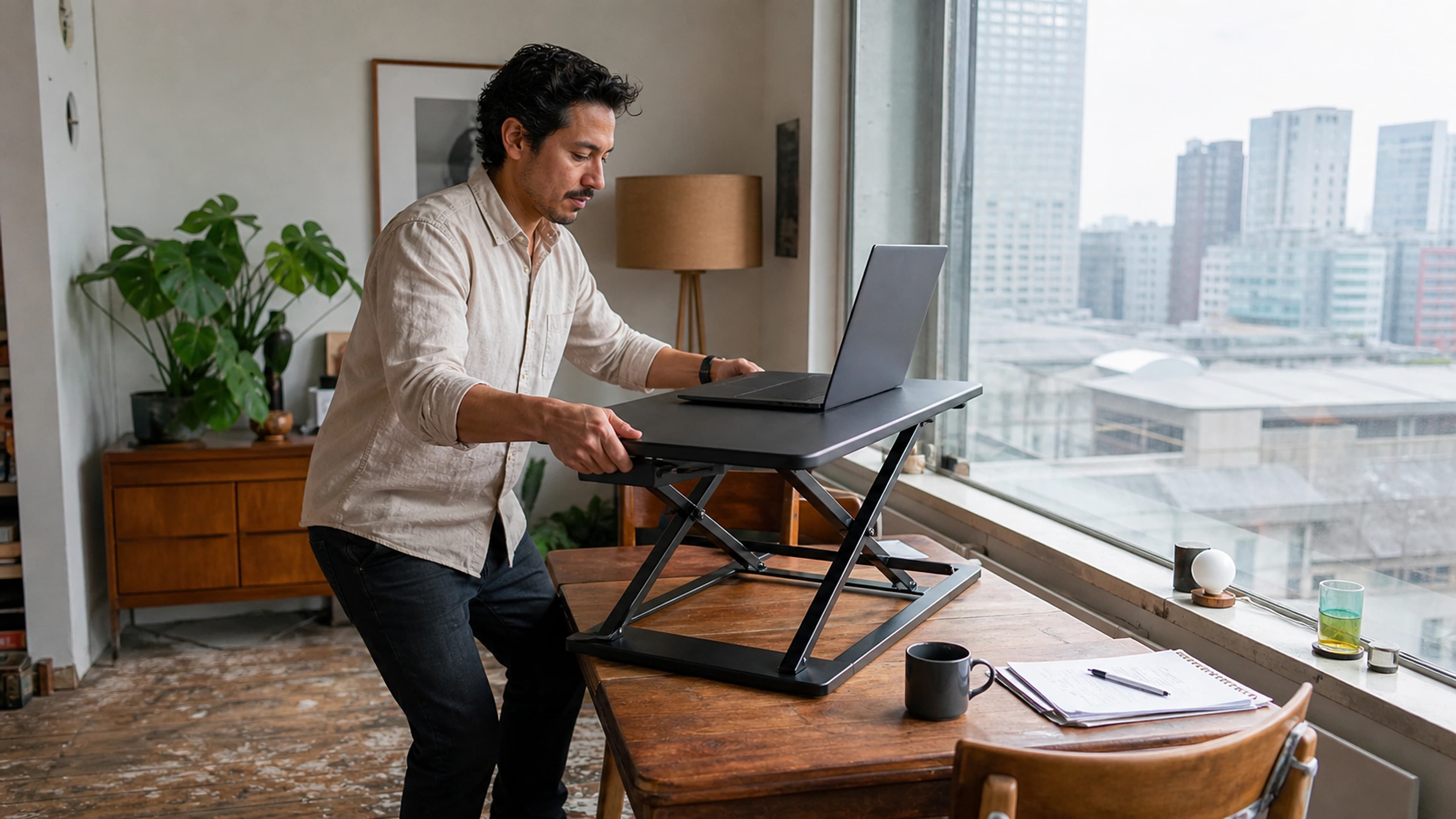
- If your feet still cannot reach the floor comfortably, the desk height itself may be the issue. An adjustable standing desk lets you tune the work surface to your body and alternate between sitting and standing - the alternation the cardiovascular research specifically rewards.
- If you also feel pressure or numbness in your seat, support from below helps too. A memory foam seat cushion or a gel seat cushion redistributes weight away from the tailbone so your footrest and cushion work together.
- If your lower back fatigues by mid-afternoon, a lumbar support pillow preserves the natural curve of your spine while the footrest steadies your base.
Browse the full footrests collection to compare options, or explore standing desks and seat cushions if you are building out a complete workstation.
The Bottom Line
The best foot rest under your desk supports the entire sole of your foot, keeps your knees at or slightly above hip level to relieve pressure behind the leg, and - ideally - lets your feet move rather than locking them in place. That combination matches OSHA’s positioning guidance and answers what the sitting research keeps telling us: support your posture, but keep moving within it.
If you want both in one piece, the ERGOLA ergonomic foot rocker is built for exactly this - full-foot support on a stable curved base, with a gentle rocking motion that keeps your lower legs active through long work sessions. Pair it with movement breaks and a setup that fits your body, and your feet, knees, and lower back will feel the difference by the end of the week.