
How to Use a Lumbar Support Pillow (Correct Placement, Common Mistakes, and Daily Routine)
To use a lumbar support pillow correctly, place it against the small of your lower back so it fills the natural inward curve of your spine while you sit all the way back in your chair. Position the thickest part of the pillow at roughly belt level, sit upright with your hips pushed to the rear of the seat, and adjust the height up or down until your lower back feels gently supported rather than pushed forward.
That sounds simple, but most people get one detail wrong: the height. A pillow placed too high lands on your mid-back and forces your ribs out; placed too low it sits under your tailbone and does nothing. This guide walks through exact placement, how to use a pillow in different seats, the mistakes that quietly cancel the benefit, and a daily routine that helps your back adapt.
Why Placement Matters More Than the Pillow Itself
Your lower spine has a natural inward curve called lordosis. When you sit for long stretches, that curve tends to flatten, which shifts load onto the discs and soft tissue of the lower back. Low back pain is not a niche problem: the World Health Organization reports that low back pain affected 619 million people globally in 2020 and is the single leading cause of disability worldwide.
A lumbar support pillow works by filling the gap between your lower back and the backrest so that curve is preserved instead of collapsing. The U.S. Occupational Safety and Health Administration (OSHA) makes the same point in its computer-workstation guidance: a backrest should have an outward curve that "fits into the small of the back," and where a chair lacks one, a removable support cushion is a reasonable substitute.
The effect is real but modest, and it depends almost entirely on placement. A 2013 study in Chiropractic & Manual Therapies measured seated posture with and without a lumbar pillow and found the pillow moved the lower spine closer to a neutral position during prolonged sitting. The authors noted the angular change was small and that long-term clinical significance needs more study, so treat a lumbar pillow as one helpful tool among several, not a cure. A well-placed pillow helps; a poorly placed one is just a cushion taking up space.
Step-by-Step: How to Position Your Lumbar Pillow
- Sit all the way back. Push your hips to the very rear of the seat so your back makes contact with the backrest. A lumbar pillow only works if you actually lean against it.
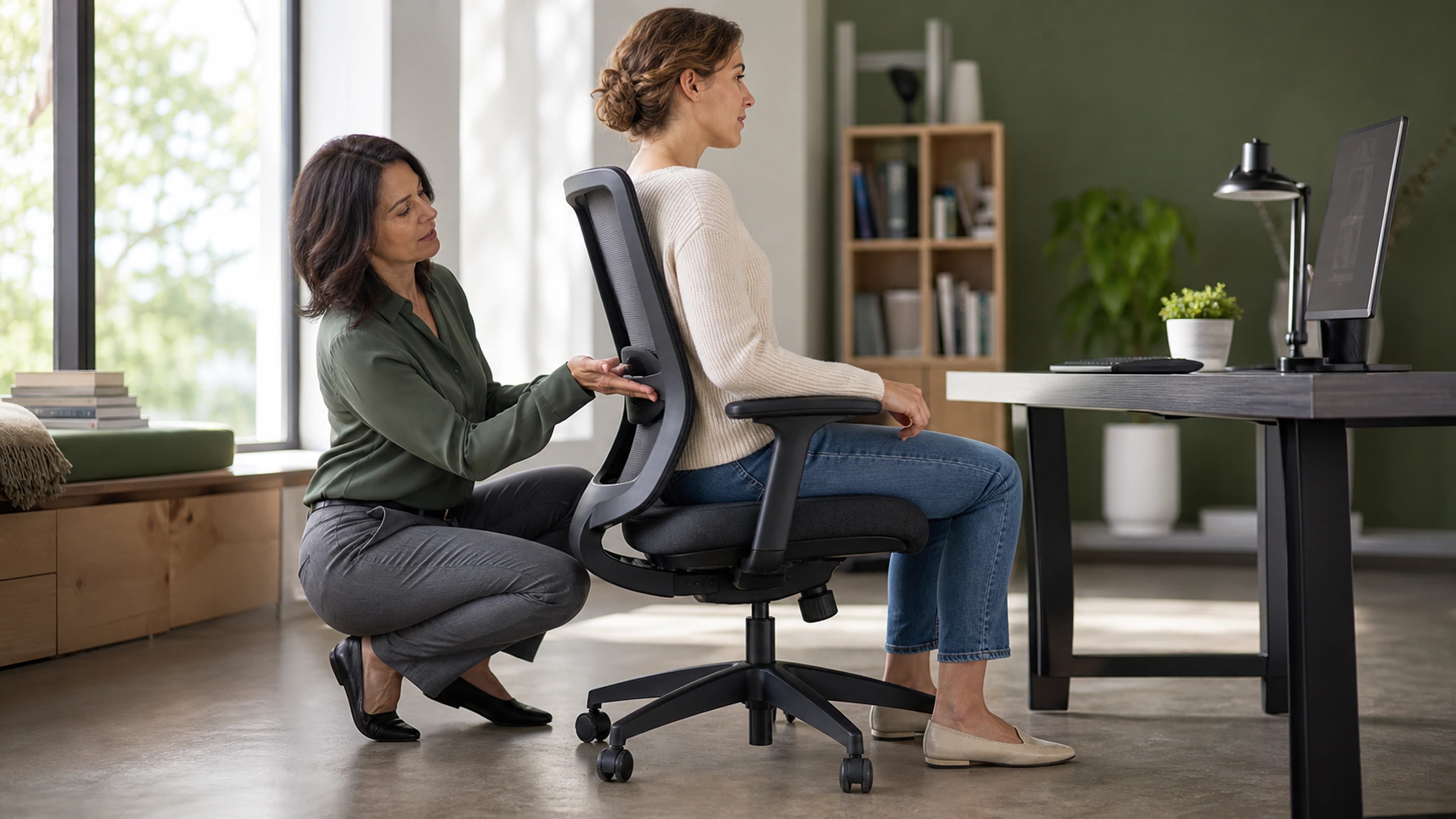
- Place the pillow at the curve of your lower back. Slide it between your back and the backrest so the thickest part sits in the small of your back, roughly at belt level or just above.
- Adjust the height. Move the pillow up or down a few centimeters at a time. It is too high if you feel pressure on your mid-back or your ribs push forward; too low if it sits under your tailbone.
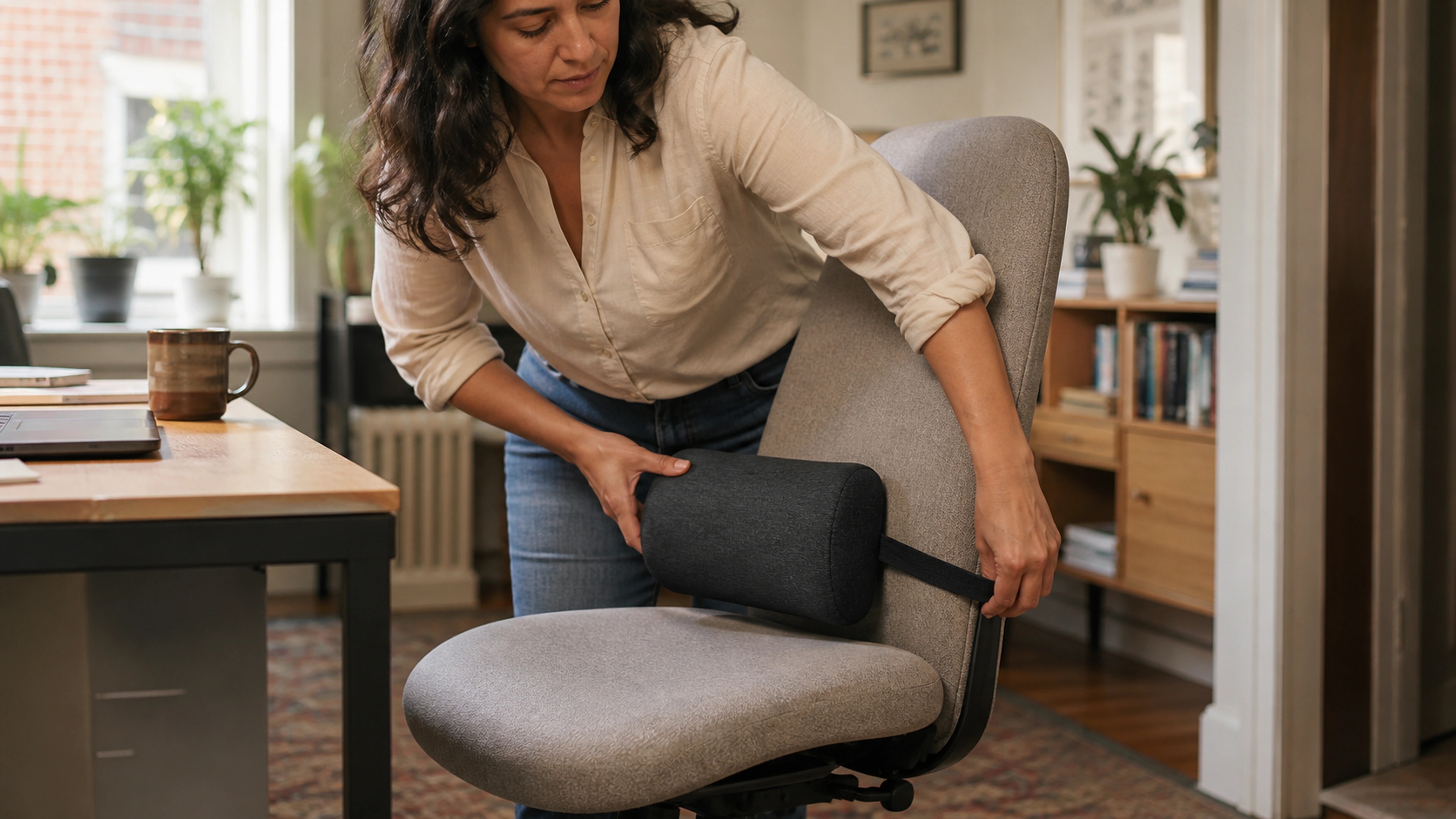
- Secure the strap. If the pillow has an adjustable strap, fasten it around the backrest so the pillow stays at the right height when you stand up and sit back down.
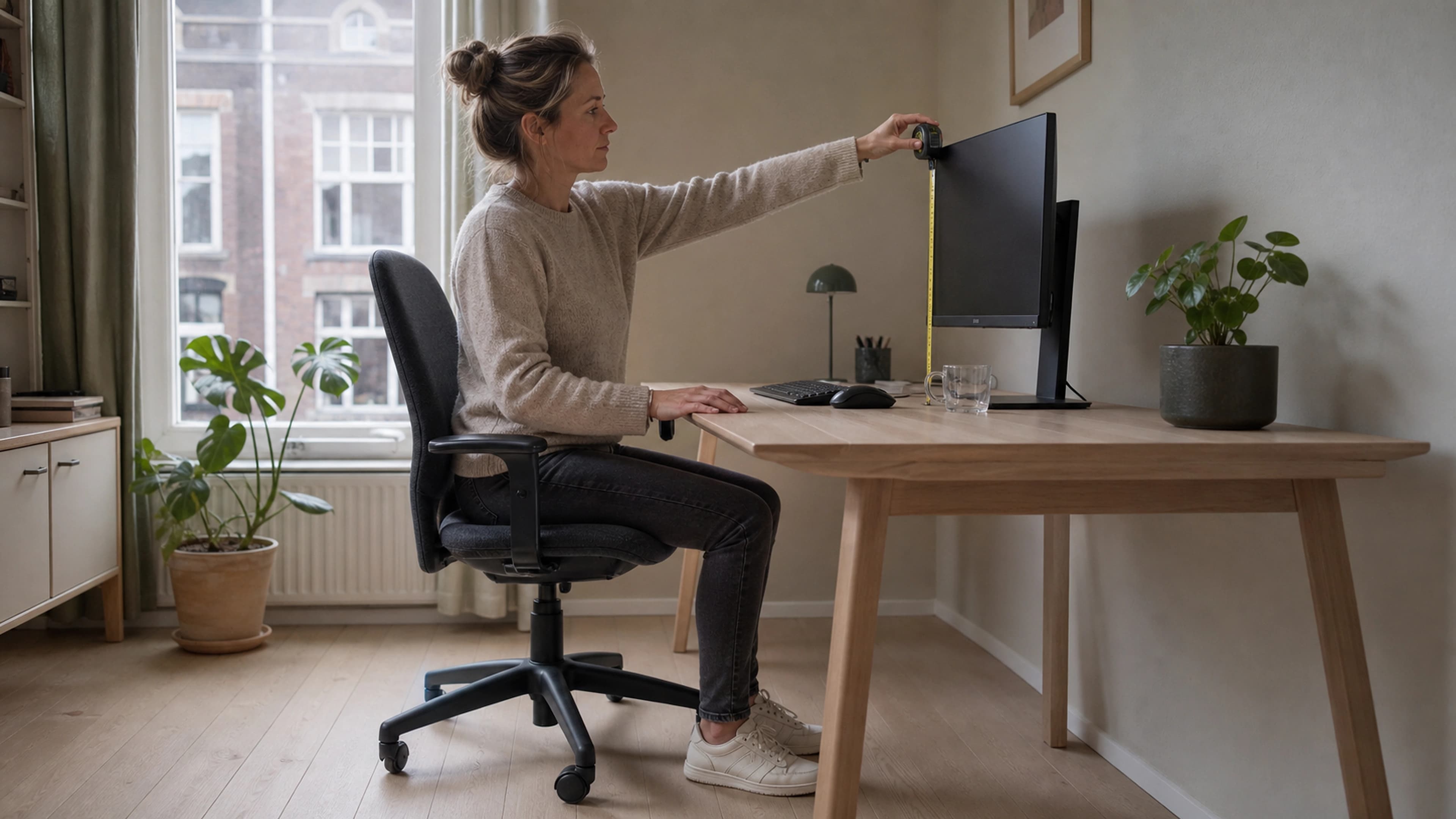
- Check your sitting position. Your shoulders should stack roughly over your hips, feet flat on the floor or a footrest, and the pillow should feel like a gentle backstop, not a shove forward.
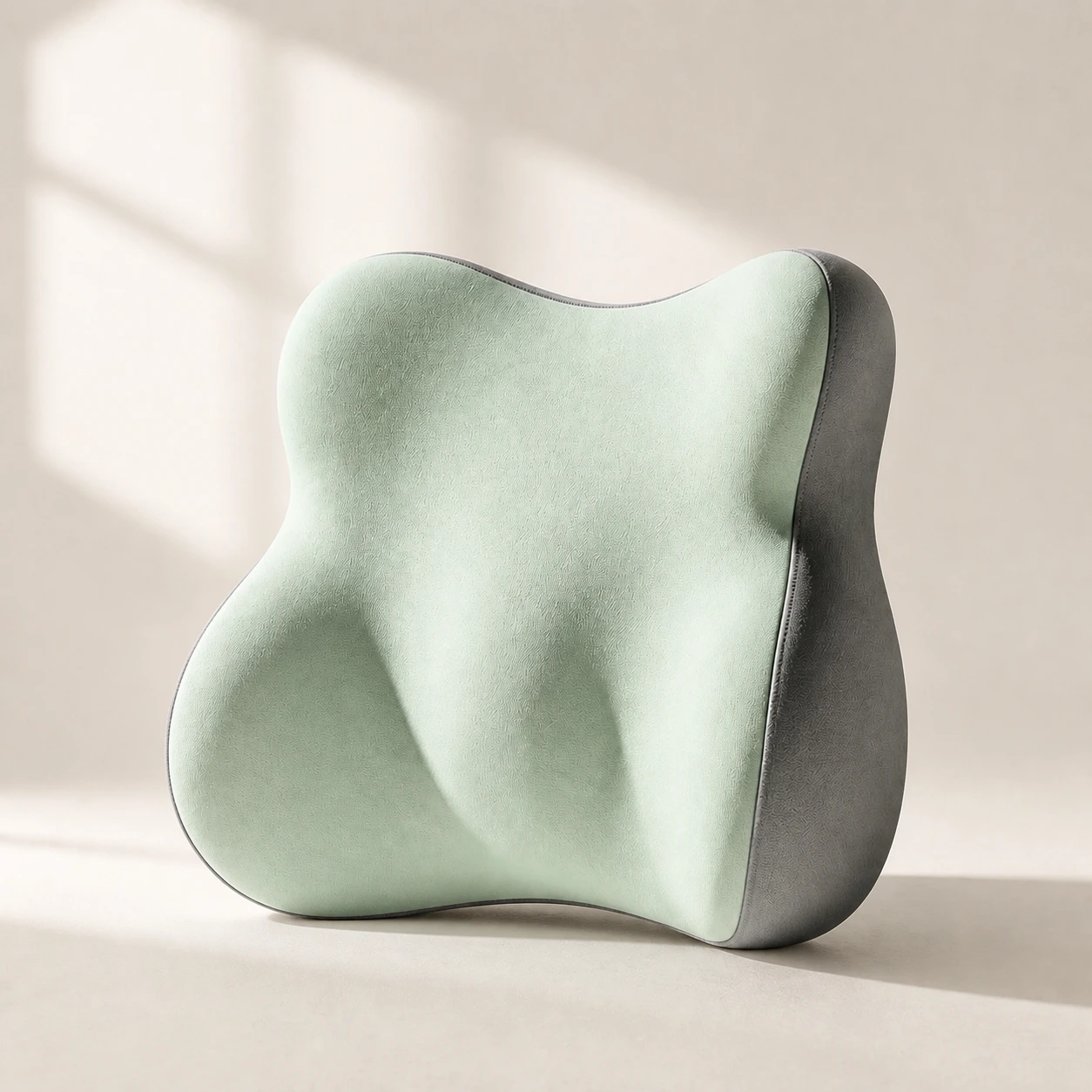 Product mentioned in this guideLumaWing Lumbar Cushion39 × 34 × 14 cm lumbar cushion available in four colours with a slow-rebound memory-foam core, fixed central ridge, recessed side channels, and broad outer…Free US shipping on every order60-Day Home Trial · we pay return shippingSee current price
A correctly placed lumbar support pillow should let you sit upright with almost no conscious effort. If you have to brace your core to stay off the pillow, it is too thick or too high for your chair.
How High Should It Sit?
For most adults the sweet spot is the belt line: the deepest point of your lumbar curve. A quick test is to place your hand on your lower back while seated, find the inward dip, and aim the thickest part of the pillow at that point. Because there is, in OSHA's words, "no single correct posture" that fits everyone, expect to spend a day or two fine-tuning the height before it feels natural.
Using a Lumbar Pillow in Different Seats
Office Chair

An office chair is the easiest case: a tall backrest gives the pillow room to sit at the right height, and a strap keeps it in place all day. If your chair already has a built-in lumbar adjustment, set that first, then add the pillow only if you still feel a gap. For a deeper look at chair setup, see our ergonomic office chairs and pair the pillow with a seat that suits long sessions.
Car Seat
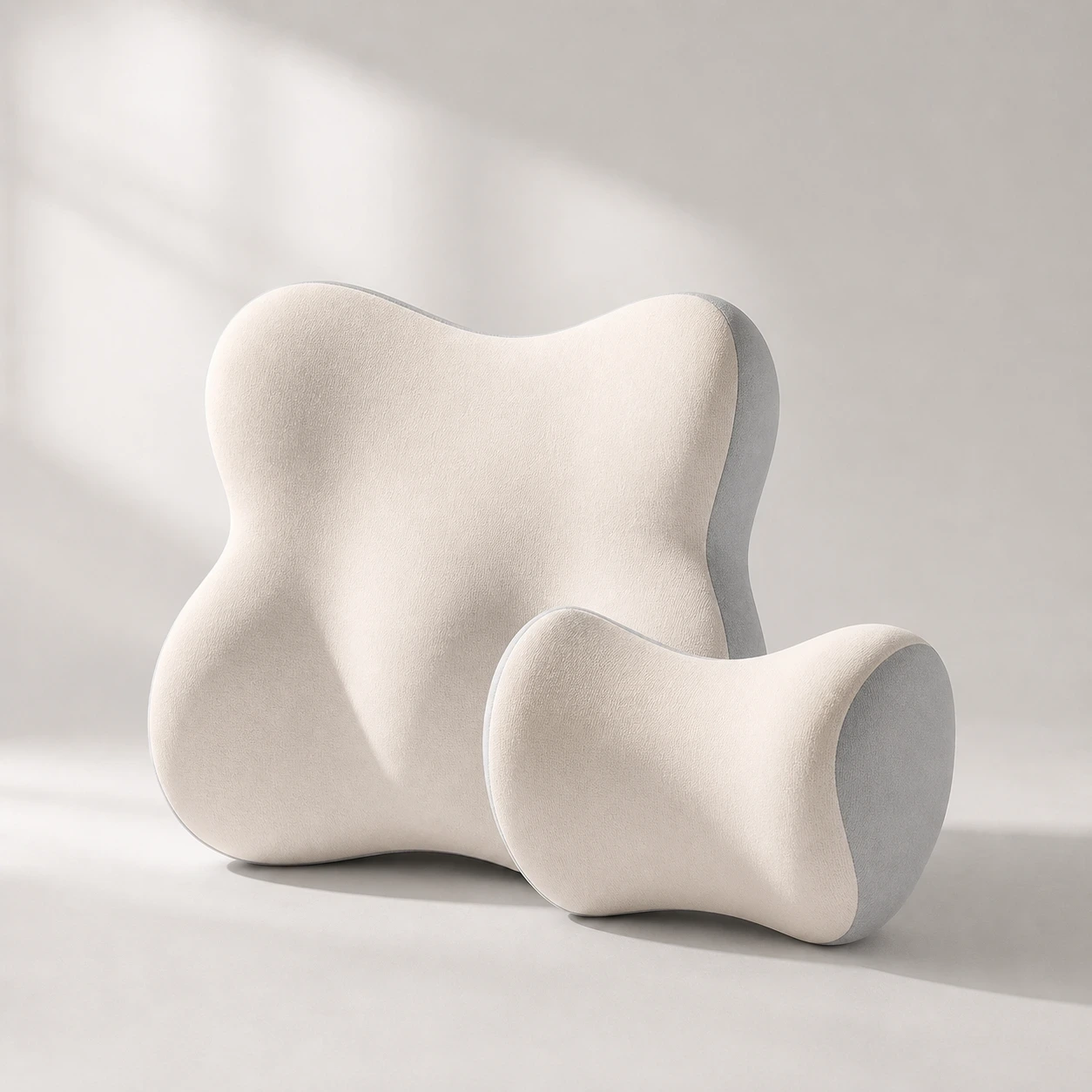 Product mentioned in this guideDriveNest DuoCar headrest and lumbar-cushion set available in four colours with 60D slow-rebound memory foam and two distinct contoured shapes.Free US shipping on every order60-Day Home Trial · we pay return shippingSee current price
Car seats recline more and curve differently, so a full-size office pillow often sits too high or pushes you toward the wheel. A slimmer profile designed for driving works better and stays put against seatbelt movement. If you spend real time behind the wheel, a dedicated car lumbar pillow is worth having rather than reusing your desk pillow.
Couch, Recliner, and Travel
Soft furniture offers little structure, so a lumbar pillow can restore some support when you read or watch TV. On a plane or train, a compact pillow at the small of your back makes long journeys easier. The placement rule never changes: thickest point at the lumbar curve, sitting all the way back.
Common Mistakes That Cancel the Benefit
- Placing it too high. The most frequent error. A pillow on your mid-back rounds your shoulders forward and creates new tension instead of relieving it.
- Not sitting back. Perching on the front of the seat leaves the pillow doing nothing. Support only works when you lean into it.
- Using it as a backrest replacement. A lumbar pillow supplements a backrest; it does not replace a chair that fits poorly.
- Sitting still all day anyway. No pillow offsets six unbroken hours of sitting. It supports good posture between breaks; it does not replace movement.
- Keeping a flattened pillow. When memory foam stops springing back within a few seconds, it has lost the contour that does the work, and support quietly fades.
A Simple Daily Routine
Getting the most from a lumbar pillow is as much about habit as hardware. Try this rhythm:
- Morning: Set the pillow height once, before your first work block, and leave the strap fastened so it holds position.
- Every 30 to 60 minutes: Stand, walk, or stretch for a minute or two. Movement matters more than any single piece of equipment.
- Midday: Re-check the pillow position. It is easy to slide forward after lunch and lose contact with the support.
- End of day: Notice where you feel tired. Mid-back fatigue usually means the pillow is too high; lower-back fatigue can mean it is too low or too thin.
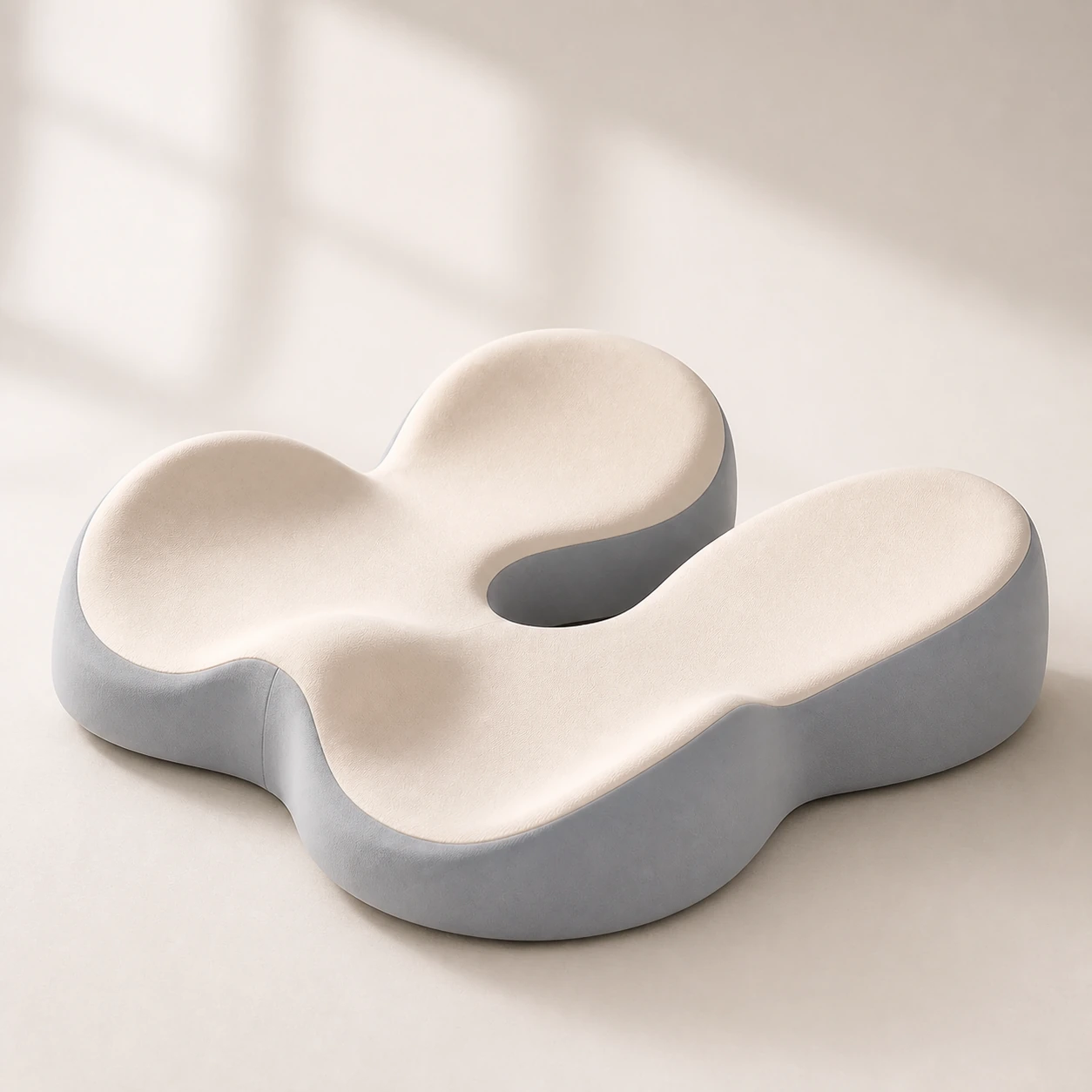 Product mentioned in this guideMemory Foam Seat CushionA sculpted seat cushion with a deep, open U-shaped rear channel designed to reduce direct contact beneath the coccyx and tailbone area. Raised rear…Free US shipping on every order60-Day Home Trial · we pay return shippingSee current price
Expect a short adjustment period. Many people feel less end-of-day back fatigue within the first week, with posture feeling more natural over two to three weeks as the supported position becomes a habit. If you also sit on a hard chair, adding a memory foam seat cushion can take pressure off your tailbone and round out the setup.
When a Pillow Is Not Enough
A lumbar pillow is a passive aid. If your back pain is severe, came on suddenly, follows an injury, or radiates down a leg, see a clinician rather than relying on a cushion. For everyday desk-related stiffness, a well-positioned pillow, regular movement, and a chair that supports your lower back are a sensible combination. When your chair is the weak link, browse our LumaSpine Pro ergonomic chair for built-in lumbar support that works with, or instead of, a pillow.
The Takeaway
Using a lumbar support pillow correctly comes down to three things: sit all the way back, place the thickest part at the curve of your lower back, and adjust the height until support feels effortless rather than forced. Fasten the strap, re-check it through the day, and keep moving. Done consistently, it is one of the cheapest, most portable ways to protect your lower back during long seated hours.
Ready to set yours up the right way? Explore the ERGOLA lumbar support pillow or compare options across our lumbar pillow collection to find the contour and size that fit your chair and your back.