
Best Coccyx Cushion (2026): An Honest Buying Guide
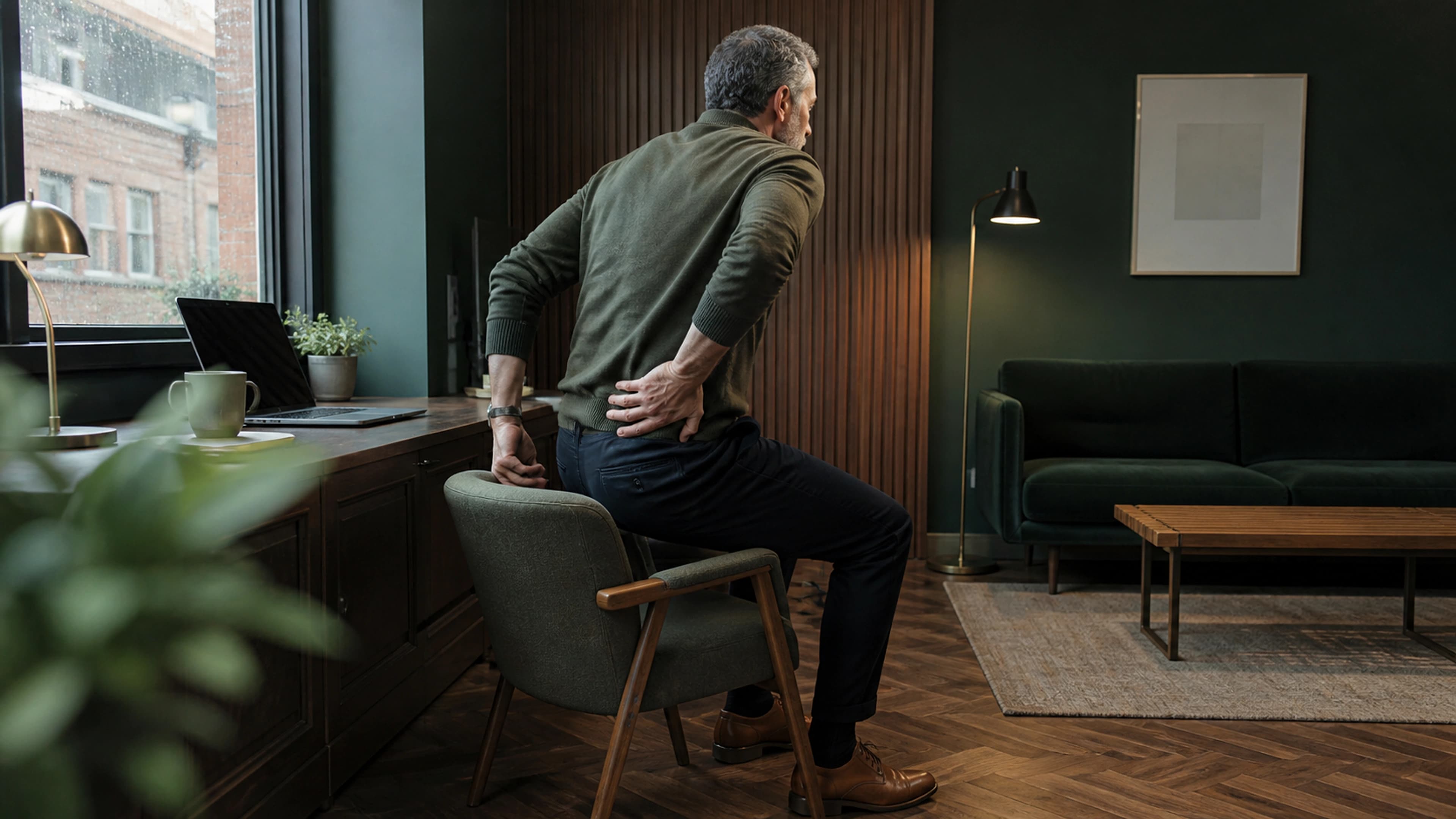
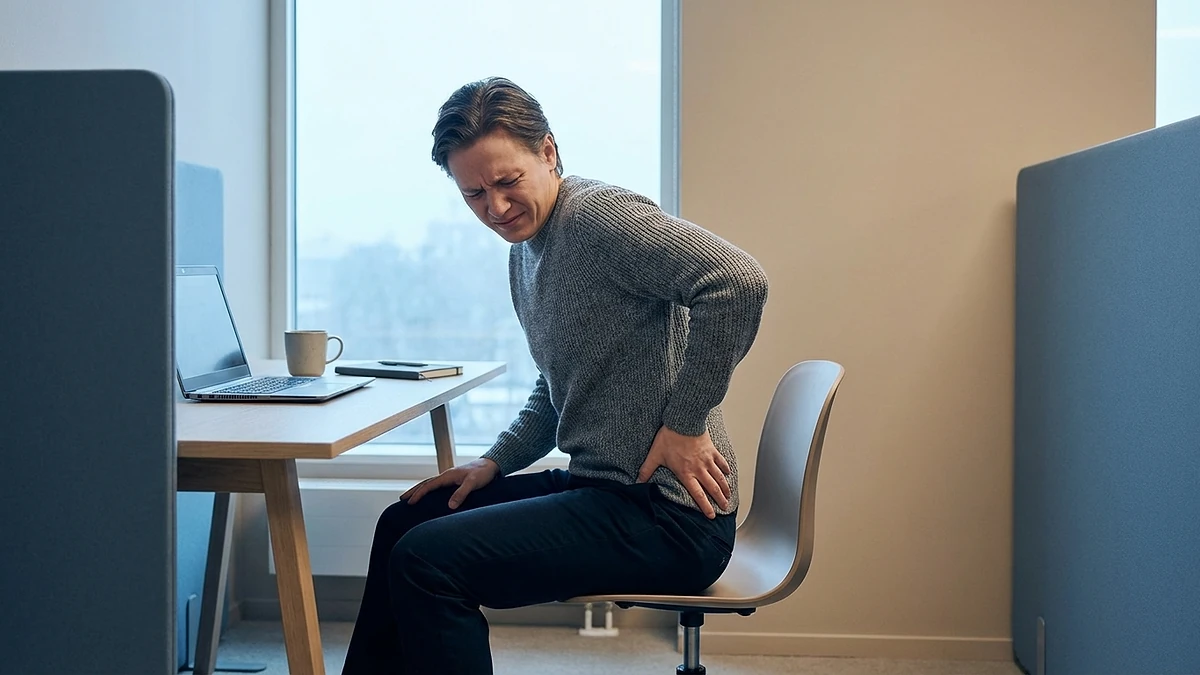
If sitting puts a sharp, focused ache right at the base of your spine - worse on hard chairs, worse the longer you sit, and easing the moment you stand - you are looking for the best coccyx cushion for the right reason. A well-shaped cushion takes load off the tailbone by transferring your weight onto the parts of your body built to carry it. That is a real, specific job, and not every cushion sold as one does it well.
We make and sell a seat cushion, so read this as a buying framework, not a neutral ranking of products we have never tested. We will lay out the criteria that matter, judge our own cushion against the same criteria, and tell you plainly who does not need one. A coccyx cushion is a comfort and posture aid, not a medical device, and it cannot diagnose or cure anything.
What a coccyx cushion actually does
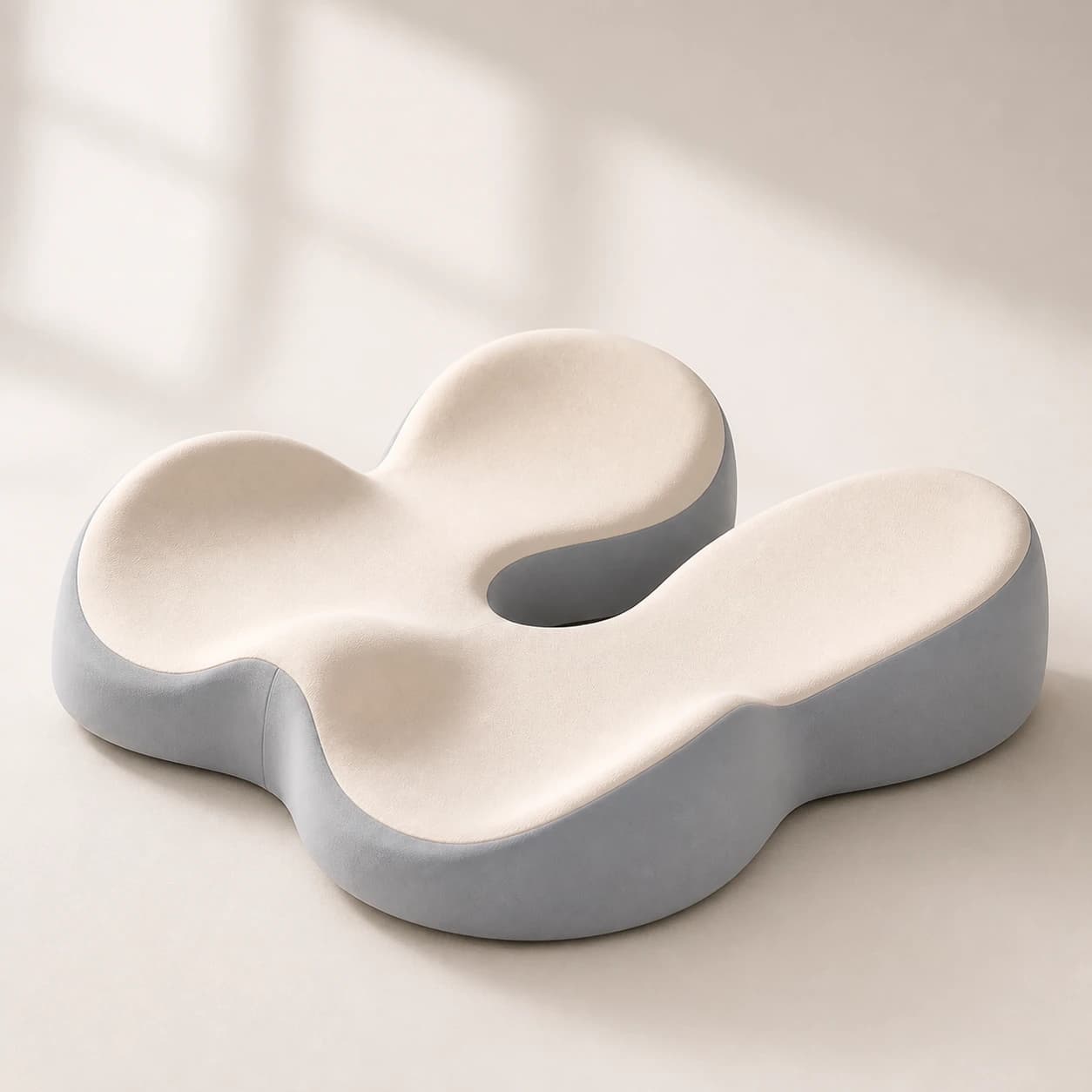
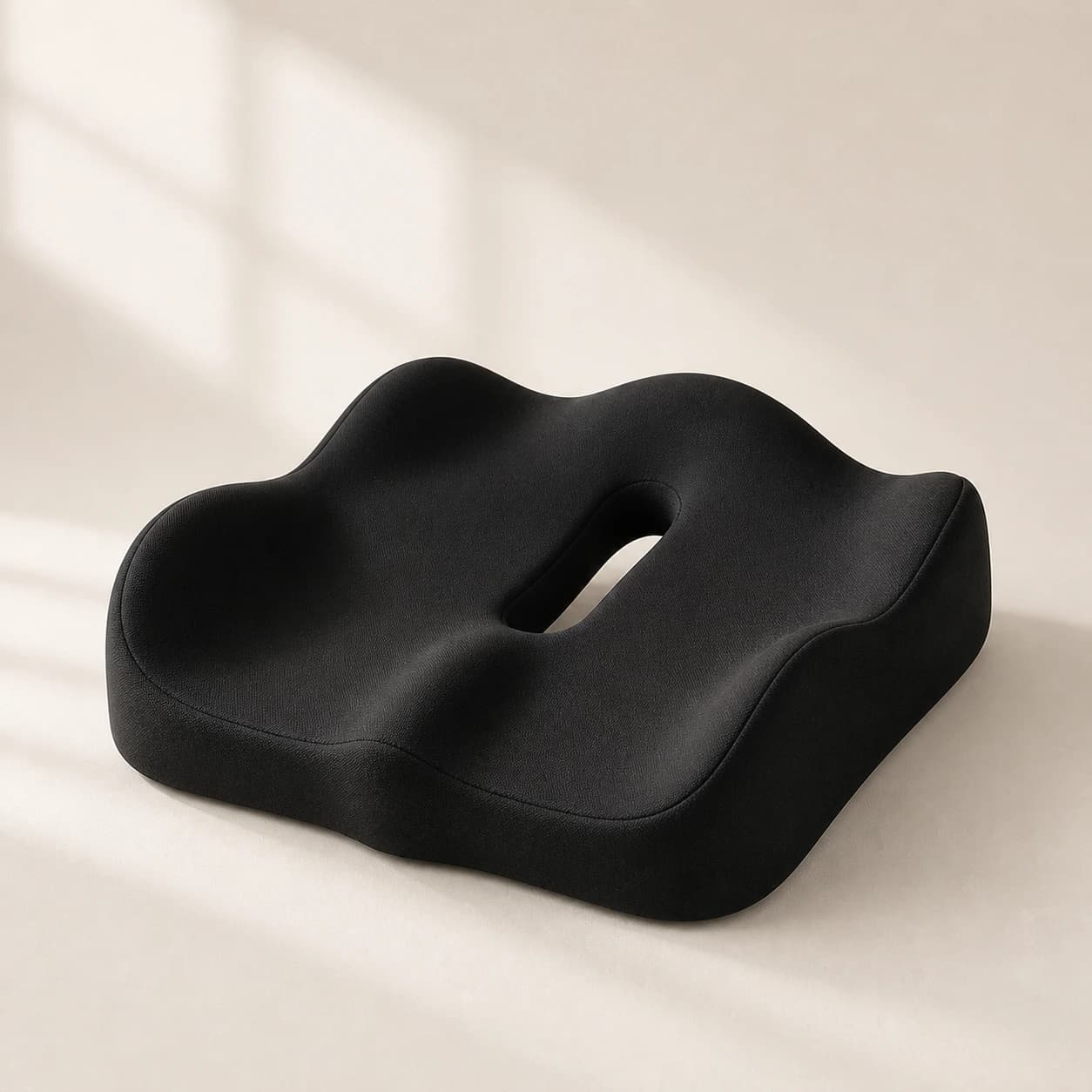
A coccyx cushion relieves tailbone pressure by shifting your seated weight off the coccyx and onto the two sitting bones built to bear load. It does this with a U-shaped or wedge cutout at the rear, which leaves the tailbone unsupported so it never presses into the seat. The relief is mechanical, not therapeutic.
When you sit, your weight should land mostly on the ischial tuberosities - the two bony points you can feel under each buttock - not on the tailbone behind them. On a flat, firm chair, weight spreads backward onto the coccyx, and on a hard surface that contact becomes a focused pressure point. A coccyx cushion changes the contact map: the cutout creates a gap exactly where the tailbone would otherwise press, so the load moves forward onto the sitting bones.
This is a pressure-management tool, not a treatment. Ergonomics guidance from CCOHS and Cornell University is consistent that no sitting setup is healthy for hours on end - the cushion makes a given amount of sitting more comfortable, but movement and posture still do the heavy lifting.
The criteria that actually matter
The brand on the box tells you very little. Four properties decide whether a coccyx cushion does its job and stays comfortable, and you should judge every cushion - ours included - against them.
Cutout geometry
The cutout is the whole point, and its shape and position decide everything. It needs to sit far enough back, and be deep and wide enough, that your tailbone clears the foam entirely when you settle in. A cutout that is too shallow or too far forward still lets the coccyx touch down, which defeats the purpose. Too aggressive a cutout, and the rear edge can dig into the soft tissue around it. The geometry has to match where your tailbone actually lands.
Foam density
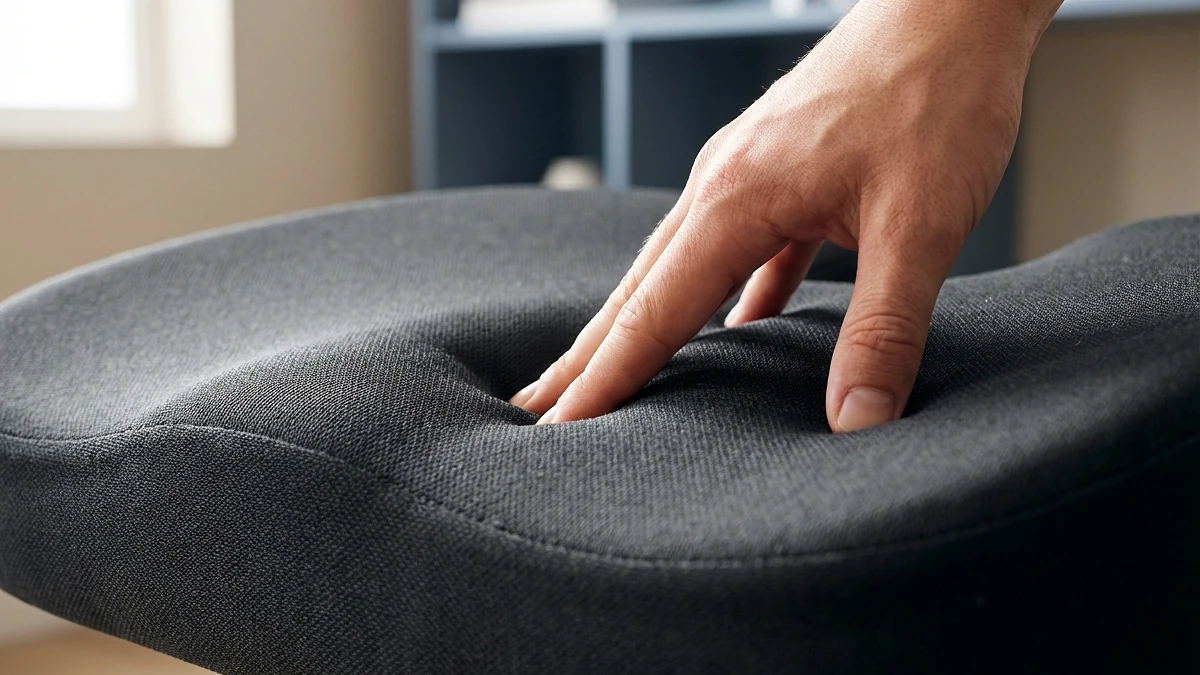
Density, not softness, is what carries you. A cushion that feels plush in the shop but bottoms out under your full weight after a minute is worse than no cushion - your sitting bones sink straight through to the hard seat. Firm, dense foam holds its shape and keeps the cutout open all day. Too firm and unyielding, though, and it creates its own pressure points. You want supportive density that recovers its shape, not a pillow that collapses.
Height and chair fit
Every coccyx cushion raises you. That is fine until it pushes your hips so high your forearms no longer sit level with the desk, or your feet stop resting flat on the floor. A taller cushion is not automatically better - it has to leave you in a workable seated position. If a thick cushion lifts you too far, the fix is a footrest or a lower desk, not a thinner cushion that fails to unload the tailbone.
Cover and grip

The cover decides whether you keep using the cushion. A breathable, washable cover matters because a seat cushion absorbs heat and gets used daily. A non-slip base matters more than people expect: a cushion that slides forward on the chair pulls the cutout out from under your tailbone, so the relief quietly disappears mid-afternoon. Grip keeps the geometry where you set it.
Memory foam vs gel for the coccyx
Both materials can work, and the better choice depends on what bothers you. The honest summary is that memory foam wins on contoured pressure relief and warmth, while gel wins on firmness and heat dissipation - neither is universally superior.
Memory foam moulds to your shape under body heat, so it spreads pressure evenly across the contact area and conforms around the cutout. That makes it the better pick for focused tailbone pain, where even pressure distribution is the goal. The trade-offs are real: it can feel warm over a long day, and very soft foam can let you sink too far. Density is what separates a good memory foam cushion from a mushy one.
Gel - usually a gel layer over foam - stays firmer and sleeps cooler, so it suits people who run hot or find memory foam too enveloping. The trade-off is that firmer support spreads pressure less evenly, and some gel cushions are heavier. If you want a fuller comparison of the two materials, we wrote a dedicated piece on memory foam versus gel seat cushions. The short version: choose memory foam for conforming relief, gel for firmness and coolness.
Who needs one and who does not
A coccyx cushion earns its place for a specific group, and is more than many people need. You are a good candidate if you have focused pain at the very base of your spine when seated, if hard chairs make it noticeably worse, if you sit for long stretches on an unforgiving surface, or if you are recovering from a tailbone bruise or a long period of desk-bound sitting and need to take direct pressure off the area while it settles.

You probably do not need one if your discomfort is broad lower-back ache rather than a pinpoint tailbone sting - that is usually a lumbar-support or posture question, and our piece on tailbone pain when sitting helps you tell the two apart. You also do not need one if your chair is already well-padded and you sit comfortably without a focused pressure point. Adding a cutout cushion to a chair that already suits you mostly just raises you a few centimetres for no benefit.
And no cushion fixes a sitting problem caused by too much sitting. NHS guidance on back pain is clear that staying active and breaking up long static periods matters more than any single piece of equipment. A cushion makes the hours you do sit more comfortable - it does not replace standing up and moving.
Our cushion, judged on the same criteria
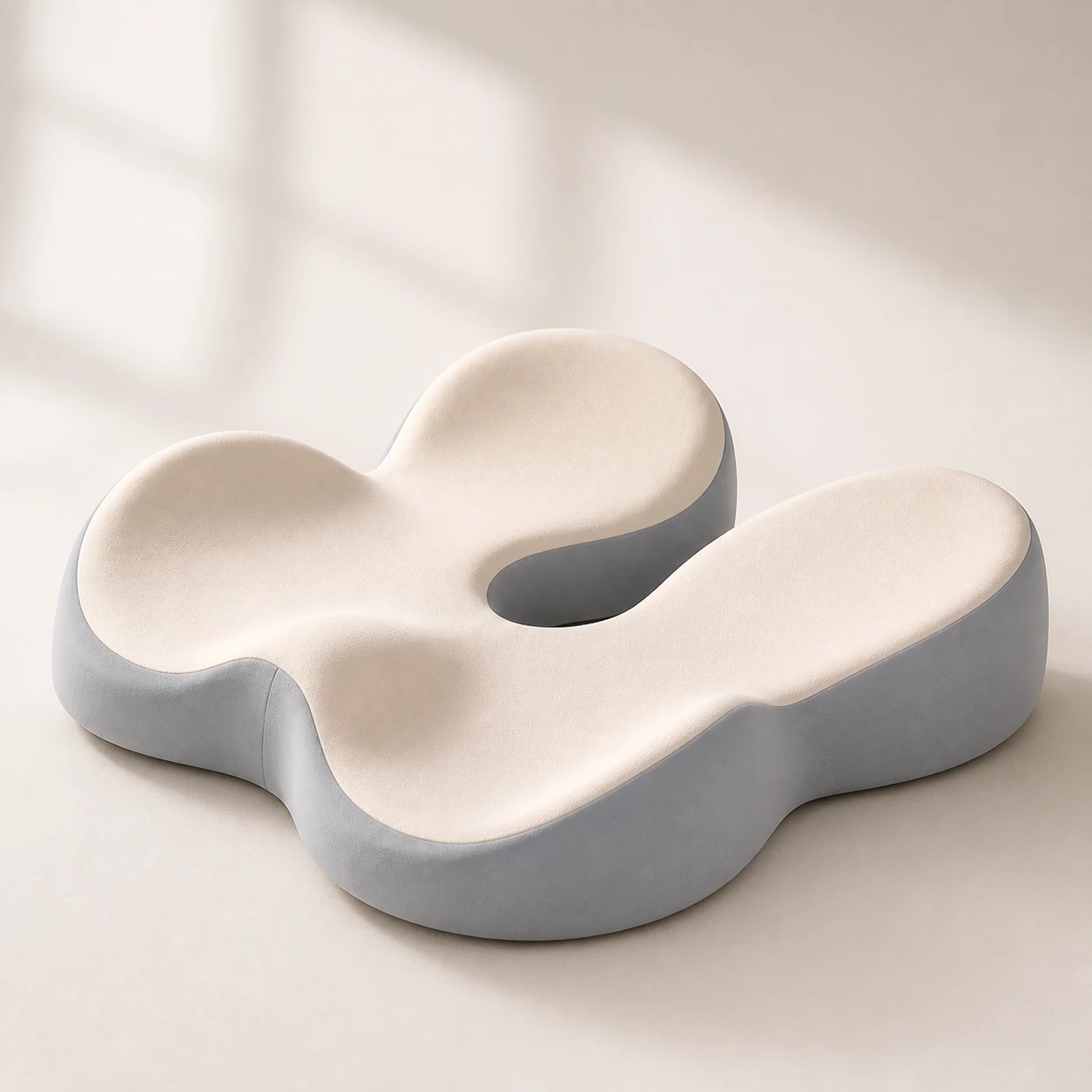 Product mentioned in this guideMemory Foam Seat CushionA sculpted seat cushion with a deep, open U-shaped rear channel designed to reduce direct contact beneath the coccyx and tailbone area. Raised rear…Free US shipping on every order60-Day Home Trial · we pay return shippingSee current price
Held against the four criteria above, the cushion we make and back is the ERGOLA Memory Foam Seat Cushion. We will judge it the same way we asked you to judge everything else, including where it is more than you need.
On cutout geometry, it uses a U-shaped rear cutout positioned so the tailbone clears the foam when you settle in - that is the feature doing the work. On foam density, it is firm, high-density memory foam chosen to hold its shape and keep the cutout open through a full day rather than bottoming out under load. On cover and grip, it has a breathable, removable washable cover and a non-slip base so the cutout stays under your tailbone instead of drifting forward.
On height, it lifts you by roughly 6-8 cm (about 2.5-3 inches), which is the honest caveat: on an already-low chair or short desk, that lift can push your forearms above the desk or your feet off the floor, and you may need a footrest or a desk adjustment to keep a workable position. It is also a memory foam cushion, so if you run hot or strongly prefer a firmer, cooler feel, our gel seat cushion is the more honest match for you - same cutout job, different material. We would rather point you to the right one than oversell this one.
Care and correct placement
Placement decides whether the cushion works at all, and it is easy to get wrong.
- Cutout to the back. The U-shaped gap goes at the rear of the chair, behind you, so the opening sits under your tailbone - not at the front under your thighs.
- Sit back, then settle. Slide your hips to the back of the cushion so your sitting bones land on the firm pads and your tailbone hangs over the cutout. If you perch on the front edge, the geometry does nothing.
- Check your desk height. Once you are raised, confirm your forearms still sit roughly level with the desk and your feet rest flat. Adjust the chair, add a footrest, or lower the desk if the lift has thrown your position off.
- Keep it from sliding. Make sure the non-slip base is gripping the seat. If the cushion creeps forward through the day, the cutout leaves your tailbone and the relief goes with it.
- Clean it simply. Unzip and machine-wash the cover on a gentle cycle, air-dry the foam, and never soak the memory foam itself. Letting it breathe between long days helps with warmth.
However you set it up, keep moving. Standing and walking for a minute or two every half hour to hour does more for your back and circulation than any cushion, and it is the part the cushion cannot do for you.
When to see a professional
A coccyx cushion is a comfort and posture aid, not a medical device, and some tailbone or back pain needs a clinician rather than a cushion. See a doctor or physiotherapist if your pain followed a fall, a blow, or other trauma; if it is severe, getting steadily worse, or not improving after a few weeks; or if it comes with any warning sign that points beyond simple pressure pain.
Seek prompt medical advice for numbness or tingling in the saddle area between your legs, loss of bladder or bowel control, progressive weakness or numbness in a leg, fever alongside back pain, or unexplained weight loss. These are red flags, not cushion problems. Waiting for a cushion to fix them only delays the care you actually need.
The bottom line
The best coccyx cushion in 2026 is not the loudest one - it is the one whose cutout geometry, foam density, height and cover match your body and your chair. If you have focused tailbone pain that hard chairs make worse, a well-shaped cutout cushion takes direct pressure off the coccyx and makes long sitting tolerable, as long as you still get up and move. If your problem is broad lower-back ache instead, a cushion is the wrong tool. Our Memory Foam Seat Cushion is built to those criteria and is the right call for conforming relief; if you want firmer and cooler, start from the rest of our seat cushion collection instead.