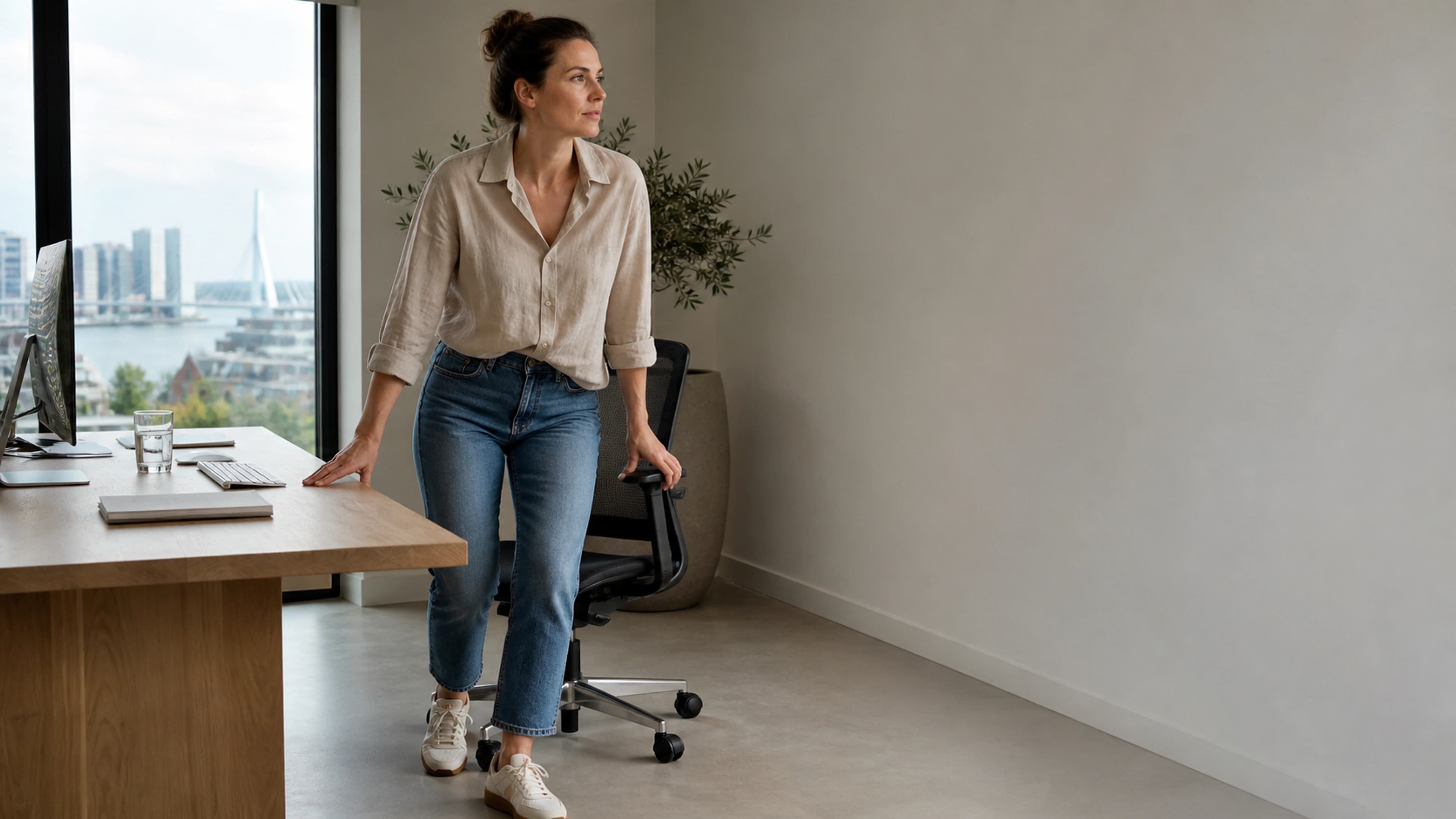

If sitting makes one buttock ache or sends symptoms down your leg, the answer is rarely to hold a single perfect posture all day. Start with a chair that supports both feet, gives your hips room, and lets you change position easily. Remove anything in a back pocket, then test shorter sitting periods separated by standing or walking. These changes may make sitting more tolerable; they cannot tell you whether the piriformis muscle is the cause.
Piriformis syndrome is one possible cause of buttock and leg symptoms, but a spinal problem can feel similar. Cleveland Clinic notes that diagnosis often involves ruling out other causes. If you have not been assessed, use this as a comfort-focused workstation guide, not a self-diagnosis. Our guide to sitting with sciatica-like symptoms explains the broader picture.
Sitting fixes at a glance
To sit with piriformis syndrome, aim for a supported, changeable position: both feet resting, weight shared across the seat, and no object pressing into one buttock. A cushion may change how the chair feels, but moving regularly and getting the right diagnosis matter more than buying a particular shape.
Want to compare cushion shapes before buying? Start with our seat-cushion comparison for sciatica-related sitting discomfort. It separates tailbone clearance from broader seat contouring rather than promising a cure.
Why sitting can feel worse
The piriformis is a small muscle deep in the buttock. The sciatic nerve usually passes beneath it. When the muscle irritates or compresses that nerve, symptoms can include buttock pain, tingling, or pain extending down the leg. MedlinePlus lists prolonged sitting among factors that can aggravate symptoms, while Cleveland Clinic stresses that other causes of sciatica must be considered.
A hard seat and a very soft seat can create different problems
A hard seat may make a tender area more noticeable because little padding separates it from the surface. A deeply soft sofa can let the pelvis sink, make the feet lose firm contact, and make it awkward to stand up or shift. Neither material is automatically wrong. The useful test is whether you can sit evenly, keep your feet supported, and change position without fighting the seat. If sitting on any surface worsens pain, do not force longer sessions simply because the chair is labeled ergonomic.
Do not diagnose the source from the chair alone
One-sided buttock pain does not prove piriformis syndrome. Disc-related sciatica, hip conditions, and other problems can overlap. Notice where symptoms begin, whether they travel below the knee, whether there is numbness or weakness, and what changes them. Share that pattern with a healthcare professional rather than trying to identify a nerve problem from a cushion test. Our numb-legs guide explains why altered sensation deserves more than a seat adjustment.
What is the best sitting position?
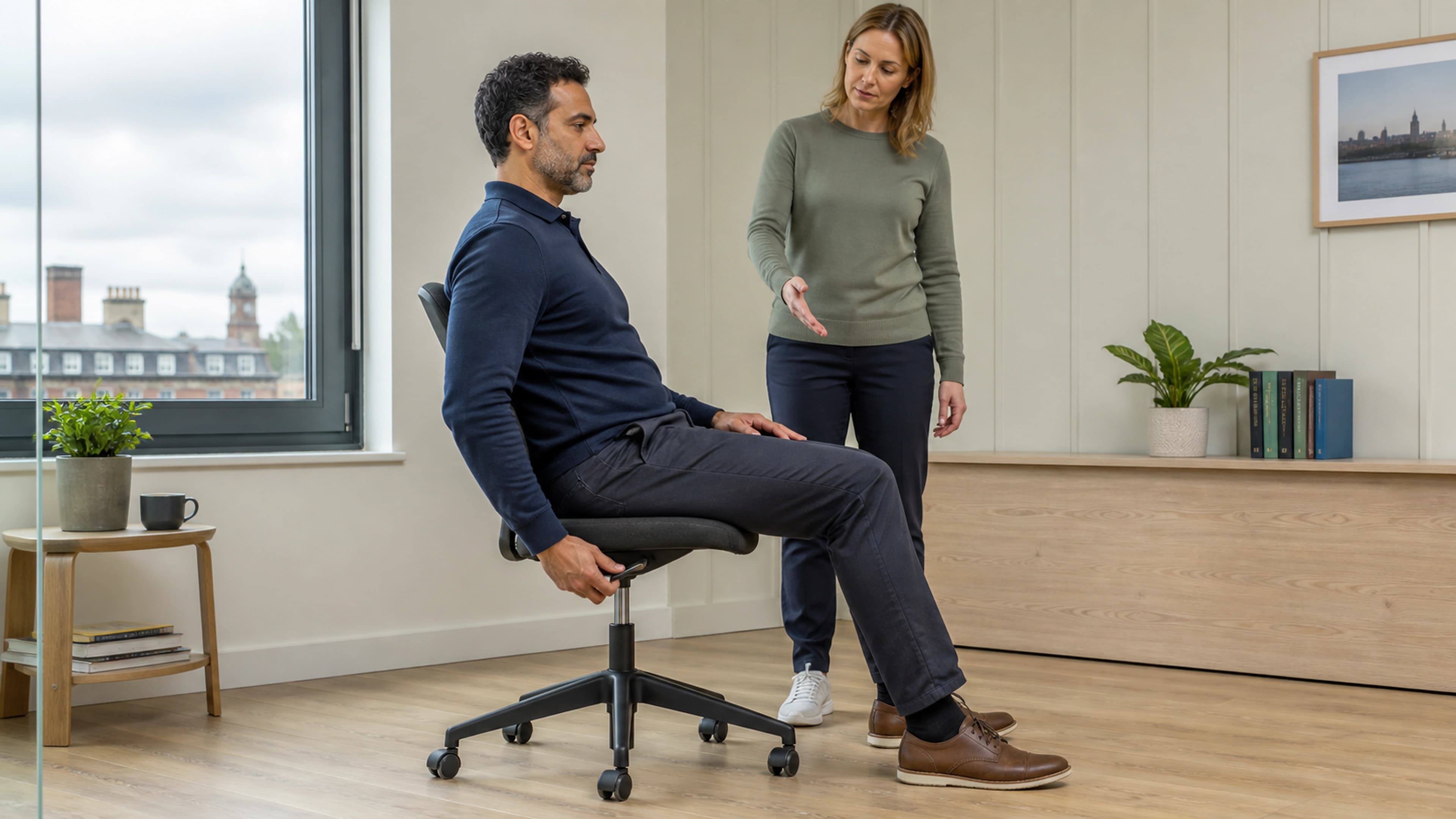
There is no evidence-backed angle that everyone with piriformis-related symptoms must hold. As a starting position, sit back on the chair with weight spread across both sides, feet supported, and hips roughly level with or a little above your knees. Let the backrest carry some of your weight rather than balancing at the front edge. If that position hurts, change it; comfort and the ability to move matter more than a rigid diagram.
Upright and supported
Adjust the chair so both feet reach the floor without pointing your toes. Keep a small gap between the seat edge and the backs of the knees. If the desk forces the chair higher and your feet dangle, a stable footrest can restore support. Set the keyboard where your shoulders can relax and your elbows stay close to your sides. A chair that fits the work surface can be more useful than an accessory added to compensate for a poor setup.
A slight recline can be a change of position
A modest backrest recline may feel better than a straight-up pose, provided you can still reach the desk without leaning or twisting. Try it as one position among several, not as a permanent treatment. If the seat is so deep that reclining pulls the feet off the floor, adjust the chair or choose a shallower seat. A low, deep sofa is often harder to work from because the hips sink below the knees and the screen sits off to one side.
What to avoid
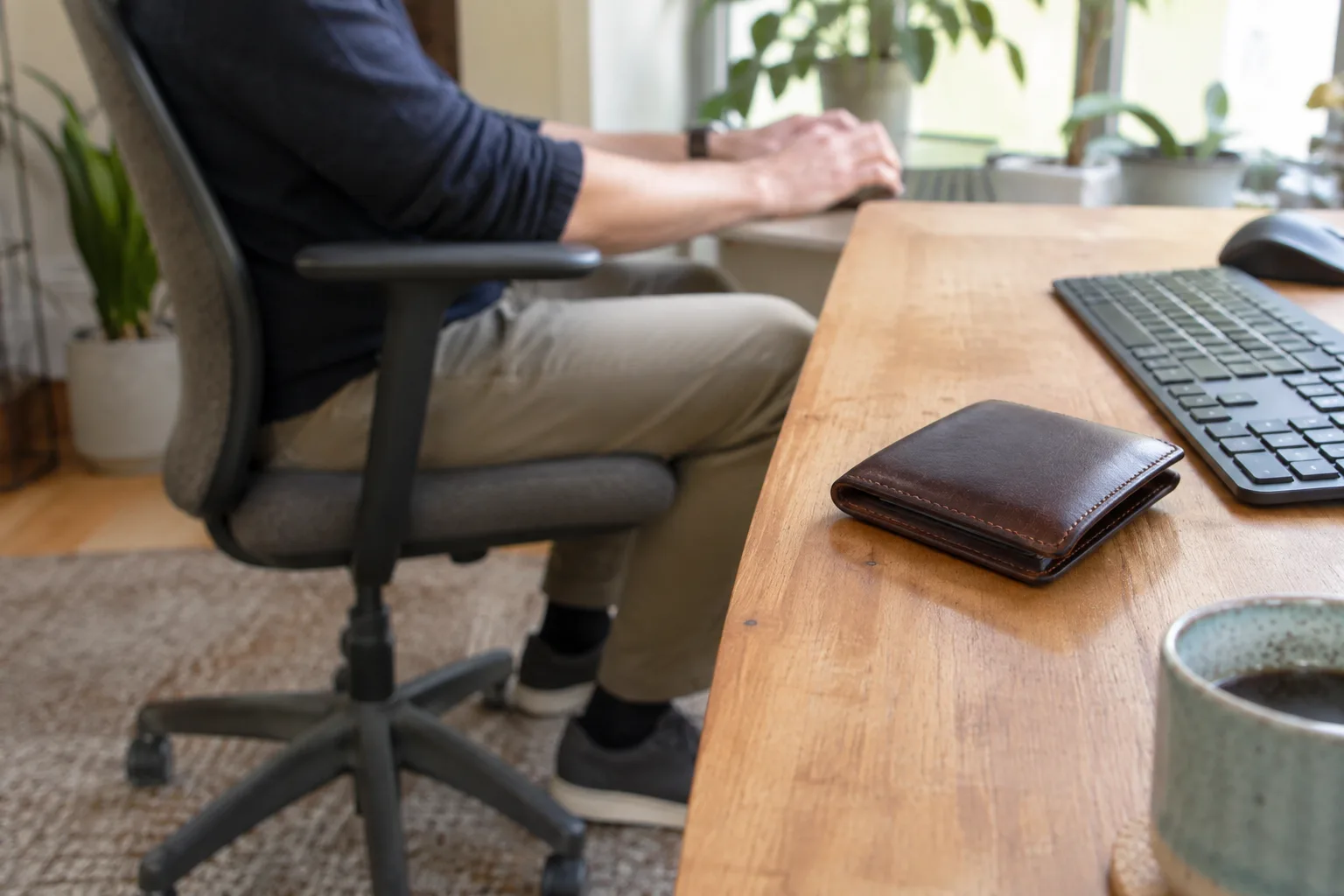
Remove a thick wallet or phone from the back pocket before sitting: it creates an uneven, hard contact point under one side. Uncross your legs if that position reproduces symptoms. Avoid leaning onto one hip for a long call or driving with an object under one buttock. You do not need to ban every crossed-leg moment; the practical rule is to stop repeating a position that clearly makes symptoms worse.
Choose the chair before the cushion
First check the chair's height, depth, and firmness. The seat should support the thighs without pressing hard behind the knees. The feet should have a stable surface. Armrests should not force the shoulders upward. If one side of the chair is worn down, a new cushion may not fix the underlying tilt. Our guide to hip discomfort from long sitting covers breaks and basic chair adjustments in more detail.
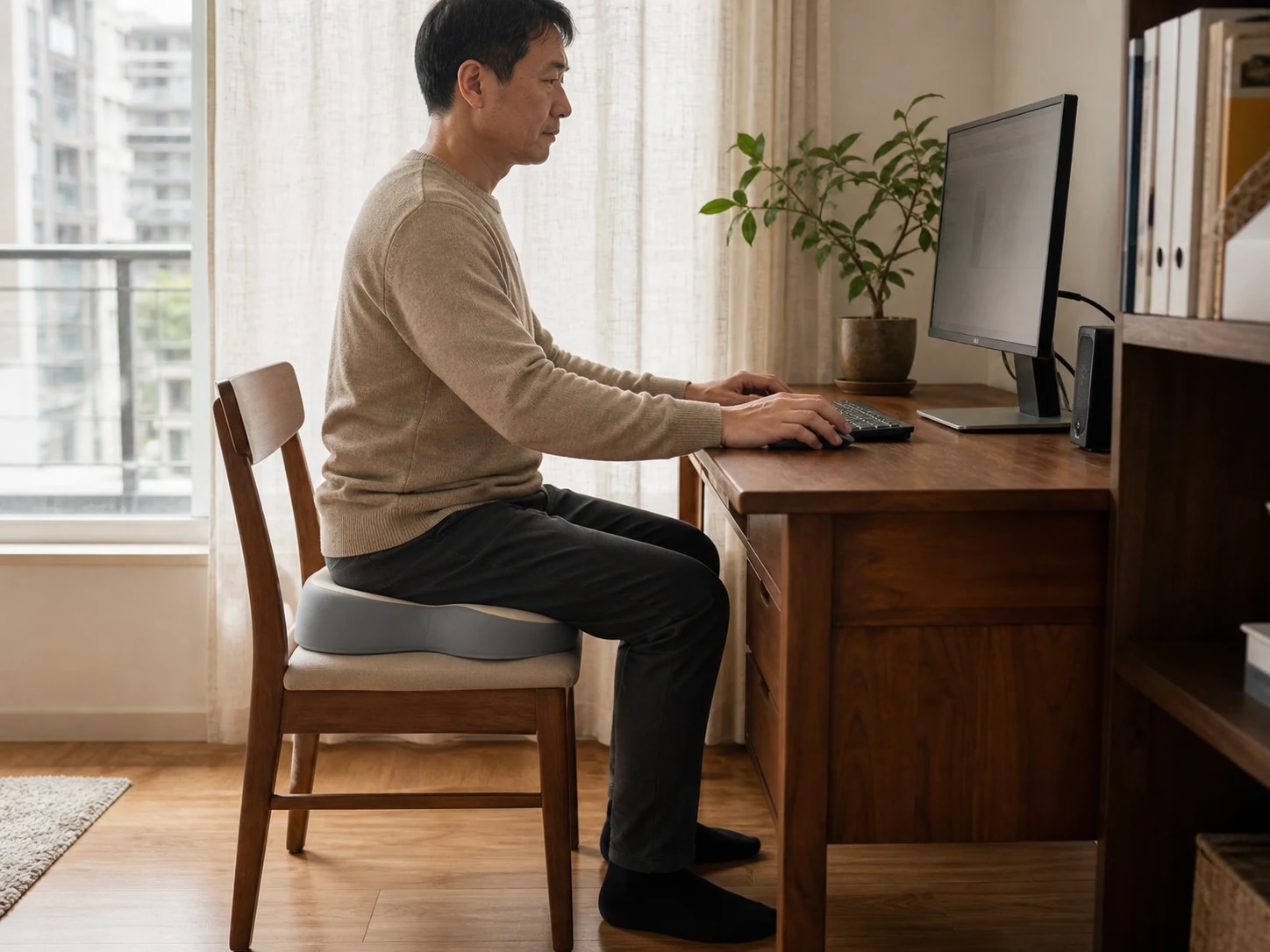
A cushion is worth testing when the seat itself feels too firm or its contact points are uncomfortable. A contoured surface changes where the seat meets the body; an open rear channel leaves space behind the central seat area. That is a shape description, not evidence that a particular cushion treats piriformis syndrome or decompresses the sciatic nerve. Added thickness also raises your sitting height, so recheck feet, knees, desk, and armrests after placing one.
Our product fit: Memory Foam Seat Cushion
ERGOLA's Memory Foam Seat Cushion has a contoured surface with an open rear channel. It is a sensible shape to compare if you want a more defined sitting surface and space at the back of the cushion. The open channel is especially relevant when direct tailbone contact is uncomfortable; it is not a piriformis-specific treatment. Put the open end toward the back of the chair, make sure the whole cushion is supported by the seat, and stop using it if it shifts or increases discomfort.
It is not the best choice for every chair. A narrow car seat, a shallow office chair, or a seat already high for your legs may leave too little room or lift you too far. The SeatNest Memory Cushion offers another sculpted profile with a central rear opening; compare its dimensions against your actual seat rather than assuming the smaller-looking shape will fit. If you also need separate back support, the SitContour Duo combines a seat and lumbar piece, but extra support is useful only when both pieces fit your chair.
A five-step desk setup to test today
- Clear the seat. Move your wallet and phone to the desk or a front pocket. Check that the chair surface and any cushion sit flat and do not slide.
- Set chair height for the desk. Bring the keyboard close enough to use without reaching. Let your shoulders relax and keep your elbows near your body.
- Support both feet. Place them flat on the floor, or use a stable footrest if the desk height requires a higher chair. Aim for roughly level hips and knees, then adjust to what is comfortable.
- Share the load. Sit back, avoid twisting toward one screen, and notice whether you are leaning onto the painful side. Use the backrest without pressing yourself into a rigid posture.
- Build in movement. Stand or walk before a long sitting spell becomes uncomfortable. There is no universal minute limit; a reminder can help you find a rhythm you can actually keep. Our micro-break routine offers a simple starting point.
Test one change at a time for a few work sessions. If you change chair height, cushion, and break frequency together, you will not know what helped. Keep a brief note of the seat, time to discomfort, and whether symptoms travel. If the pattern worsens, seek advice rather than continuing a self-experiment.
Driving and sofas need a different check
In a car, adjust the seat so you can reach the pedals without stretching or sitting on a wallet. Keep the backrest supportive and plan stops on long trips. Do not place a thick cushion where it changes safe pedal reach or seat-belt position. For a sofa, the most useful change may be a firmer, shallower place to sit rather than stacking pillows in a low, deep seat. Try a short supported session, then get up and move. If symptoms consistently flare while driving or resting, discuss that pattern with a clinician.
When to see a healthcare professional
Book an assessment if buttock or leg symptoms last more than a few weeks, start after an injury, keep getting worse, or interfere with daily activity. Seek urgent medical help for sudden severe back or leg pain with weakness or numbness, new difficulty controlling your foot, or loss of bowel or bladder control. These warnings follow MedlinePlus guidance; a chair adjustment or cushion is not the response to those symptoms.
The bottom line
Start with the free changes: clear your back pockets, support your feet, sit without a one-sided lean, and break up long sitting periods. If the chair surface itself remains uncomfortable, compare a cushion by its shape and fit on your actual seat, not by a promise to treat piriformis syndrome. You can explore the ERGOLA seat-cushion collection and test a suitable option under the 60-Day Home Trial. Persistent or spreading symptoms deserve a professional assessment first.