Vai al contenuto

Spedizione gratuita oltre 50 €

Recensioni su Trustpilot

Soluzioni

Best Lumbar Support for Car Seats and Long Drives

Greta ŠimkutėGreta ŠimkutėSpecialista di ergonomia

Compare car lumbar support cushions by seat fit, straps, vibration, and vehicle type. Find options for long drives and sciatica-related sitting discomfort.

Editorial photograph illustrating Best Lumbar Support for Car Seats and Long Drives

Compare Lumbar Support for Cars and Long Drives

Choose a car lumbar support cushion by matching depth, strap stability, vibration resistance, and shape to your vehicle seat. A car seat cushion for sciatica-related discomfort is a separate fit decision because it works at the sitting surface, not the backrest.

Driving situationDaily commuteSupport profile to compareSecure car lumbar support cushionWhat to checkStable belt-line contact and attachment retentionFit and safety checkTest while parked, then on a short familiar drive
Driving situationLong drivesSupport profile to compareResilient fixed contourWhat to checkShifting, rebound, heat, and vibration responseFit and safety checkKeep normal steering, mirror, pedal, and seat-belt position; take movement breaks
Driving situationBucket or sport seatSupport profile to compareSlim profile or lumbar rollWhat to checkFills the lower-back gap without fighting side bolstersFit and safety checkMake sure it does not push the torso toward the wheel
Driving situationSedan, SUV, or truck with a flatter seatbackSupport profile to compareBroader contoured cushionWhat to checkCoverage plus a secure attachment pathFit and safety checkConfirm compatibility with the actual seat and safety equipment
Driving situationLeather or vinyl seatSupport profile to compareAnti-slip backing plus a secure attachmentWhat to checkReduced sliding and material compatibilityFit and safety checkCheck for material or dye transfer while parked
Driving situationSciatica-related sitting discomfortSupport profile to compareLumbar support plus a separate seat cushion only if neededWhat to checkBackrest contact and seat-surface pressure are different fit decisionsFit and safety checkComfort aid only, not treatment

Acquista i prodotti di questa guida

Esattamente i prodotti consigliati da questa guida, ognuno con la prova a casa di 60 giorni.

Punti chiave

Match cushion depth to the lower-back gap without moving your torso toward the wheel.
Check strap retention and shifting on the actual seat before a long drive.
Reconfirm steering, mirror, pedal, seat-belt, and head-restraint positions after setup.
Treat lumbar support and a car seat cushion as separate fit decisions.
Editorial photograph illustrating Match support depth to the vehicle seat

Match support depth to the vehicle seat

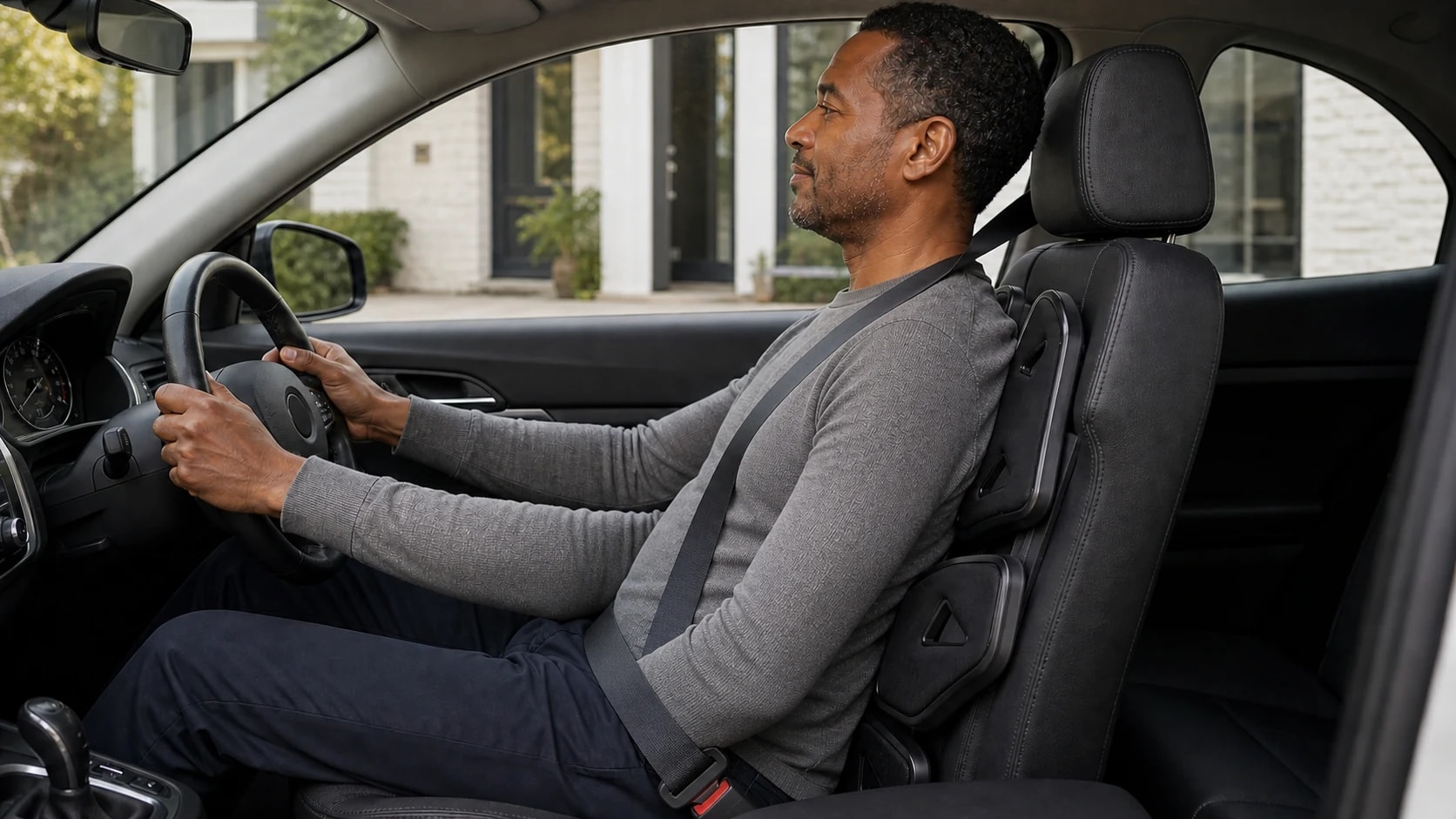
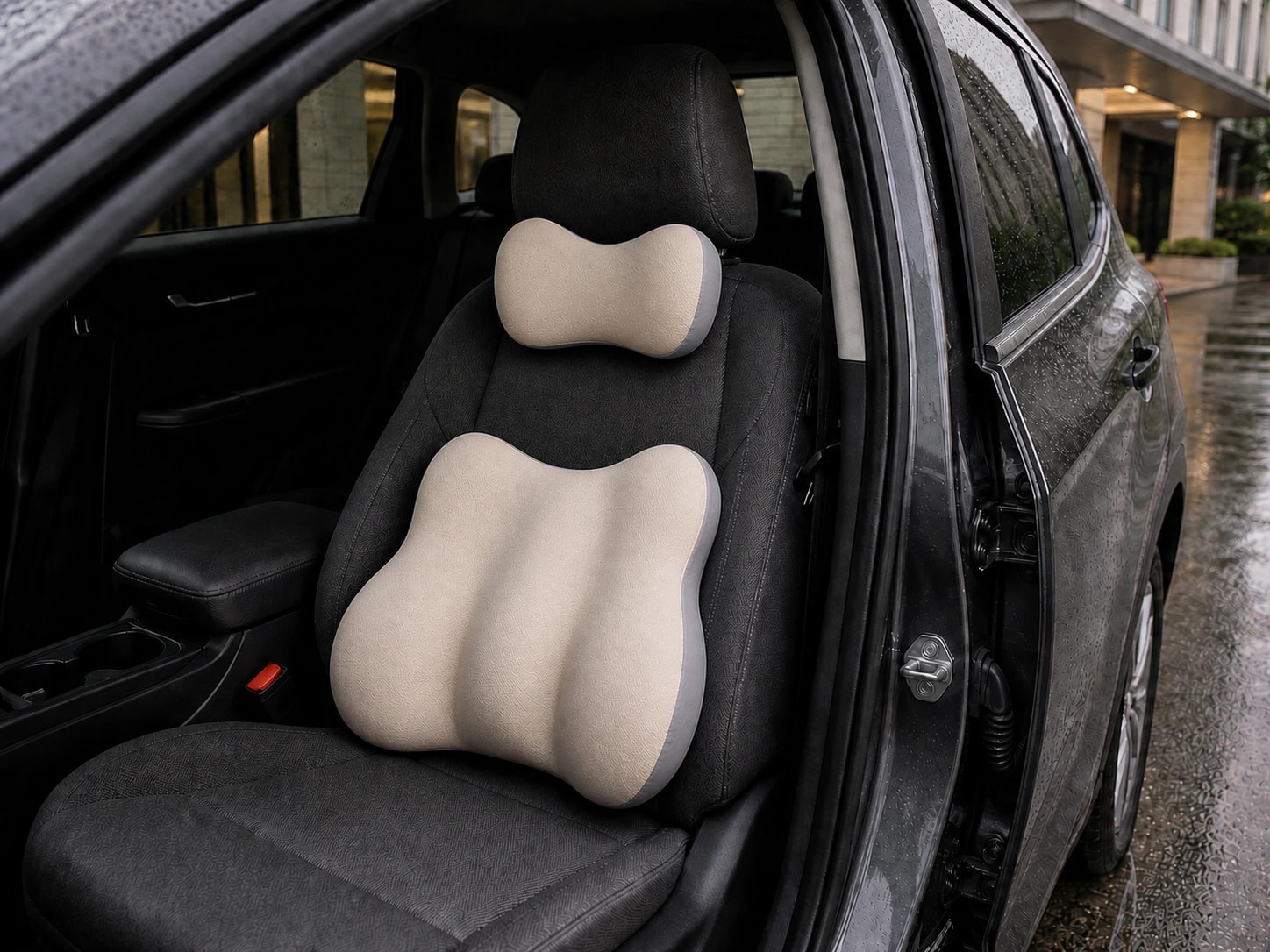
The best lumbar support for a car begins with seat fit. Sit in your normal driving position and note the space between the lower-back curve and the seatback. A car lumbar support cushion should fill that space without moving your shoulders away from the backrest or bringing your torso closer to the steering wheel.

Deep bucket seats and pronounced side bolsters leave less room for a broad contour. Flatter sedan, SUV, and truck seatbacks may accept a wider cushion, but the actual seat geometry matters more than the vehicle label. Compare the cushion dimensions with the available space before ordering.

  • Compare profile depth with the actual lower-back gap.
  • Check clearance around side bolsters and the seatback contour.
  • Reject a setup that moves you closer to the steering wheel.
  • Do the first fit check while the vehicle is parked.
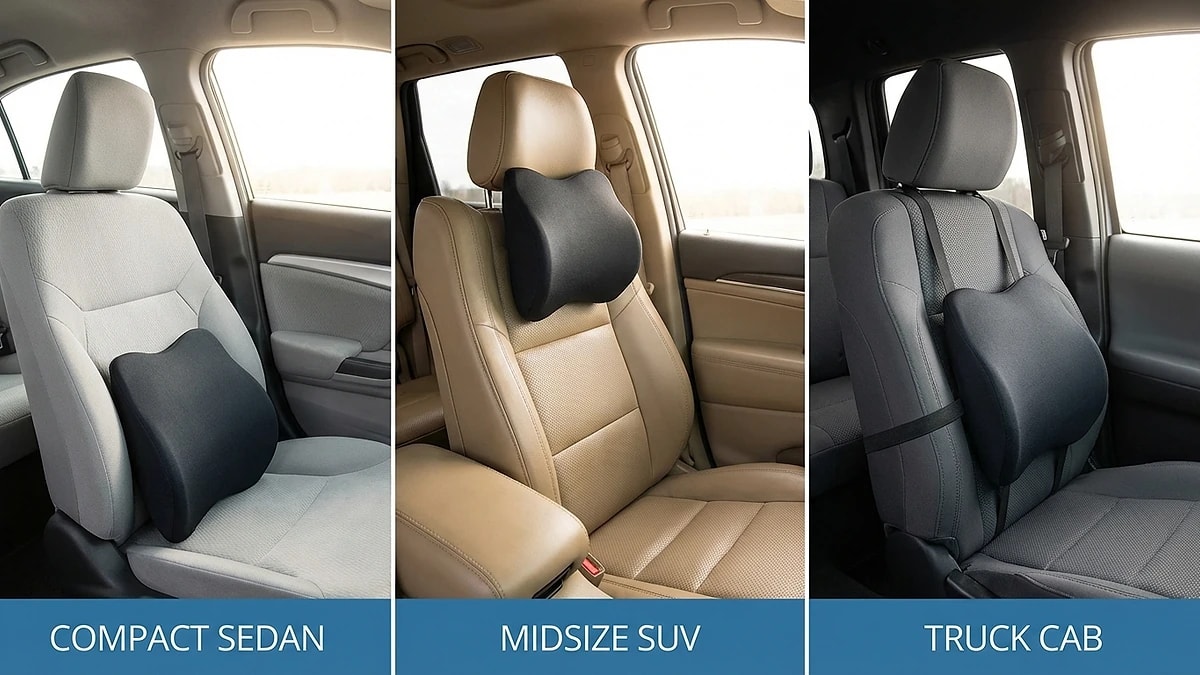
Editorial photograph illustrating Check straps, shifting, and road vibration

Check straps, shifting, and road vibration

A car lumbar support cushion must remain in the chosen position through normal entry, exit, cornering, and road vibration. Compare the published attachment method with your seat. Headrest posts, seatback seams, integrated head restraints, and upholstery all change whether a strap has a safe and stable path.

After fitting the cushion while parked, take a short familiar drive and check for vertical or sideways movement. Refit or remove it if it shifts, blocks a control, interferes with seat adjustment, or changes the position of the seat belt or head restraint.

  • Confirm the product's attachment method matches the seat.
  • Check for movement after entering and leaving the car.
  • Recheck position after a short drive on a familiar route.
  • Remove any support that interferes with the seat or safety equipment.
Editorial photograph illustrating Compare support types for long drives

Compare support types for long drives

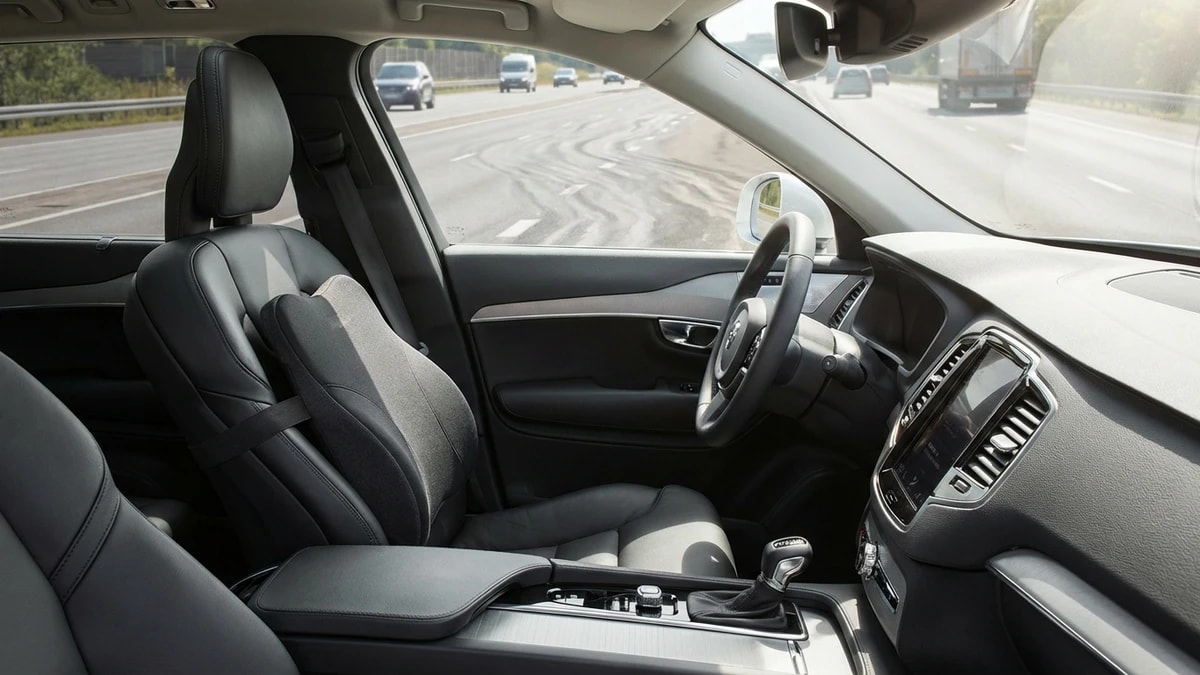
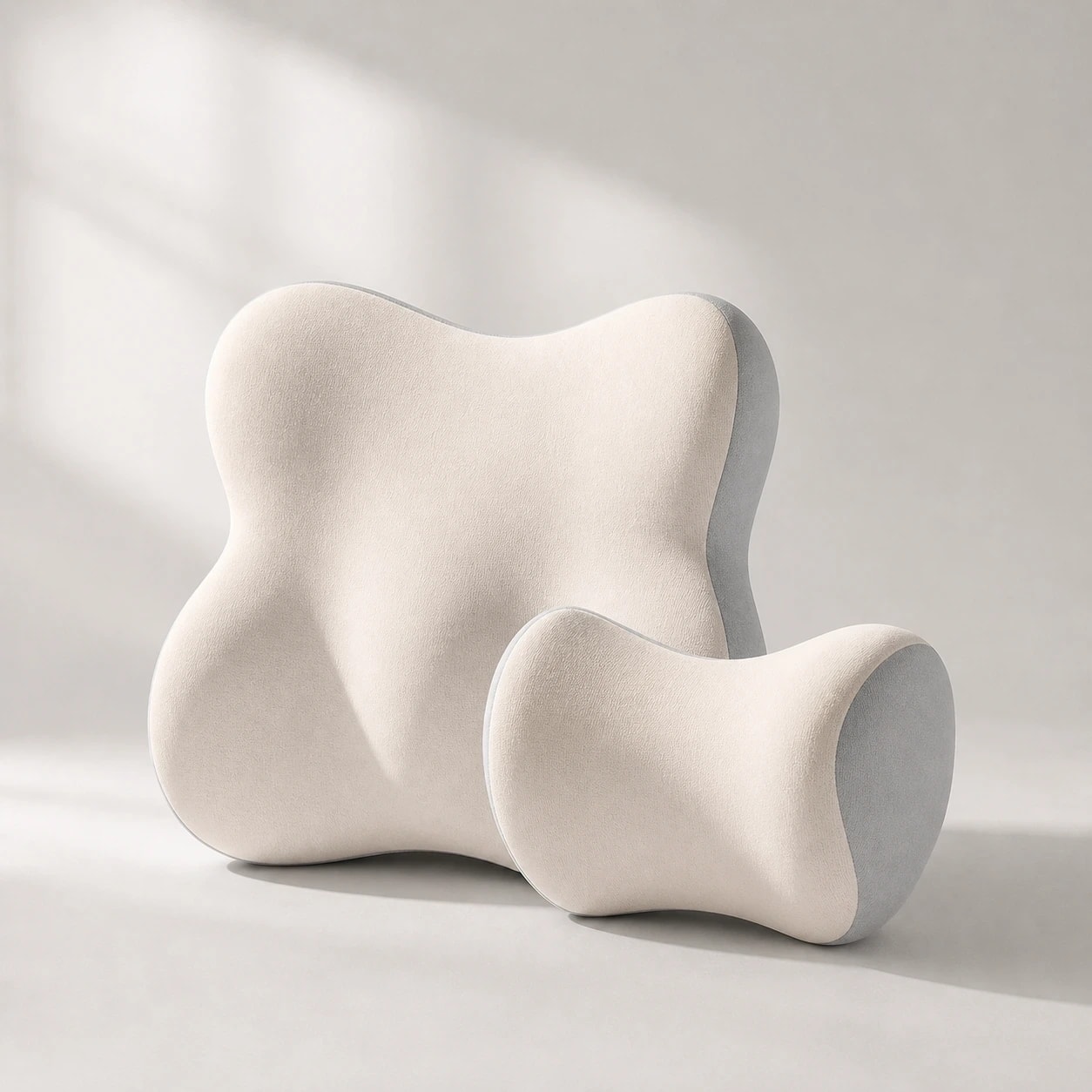
Broad contoured cushions and compact lumbar rolls solve different fit problems. A broad cushion covers more of the lower back but requires more space. A roll uses less space and creates a smaller contact area. Neither format is automatically the best lumbar support for every car seat, so compare the profile with the backrest rather than choosing by shape alone.

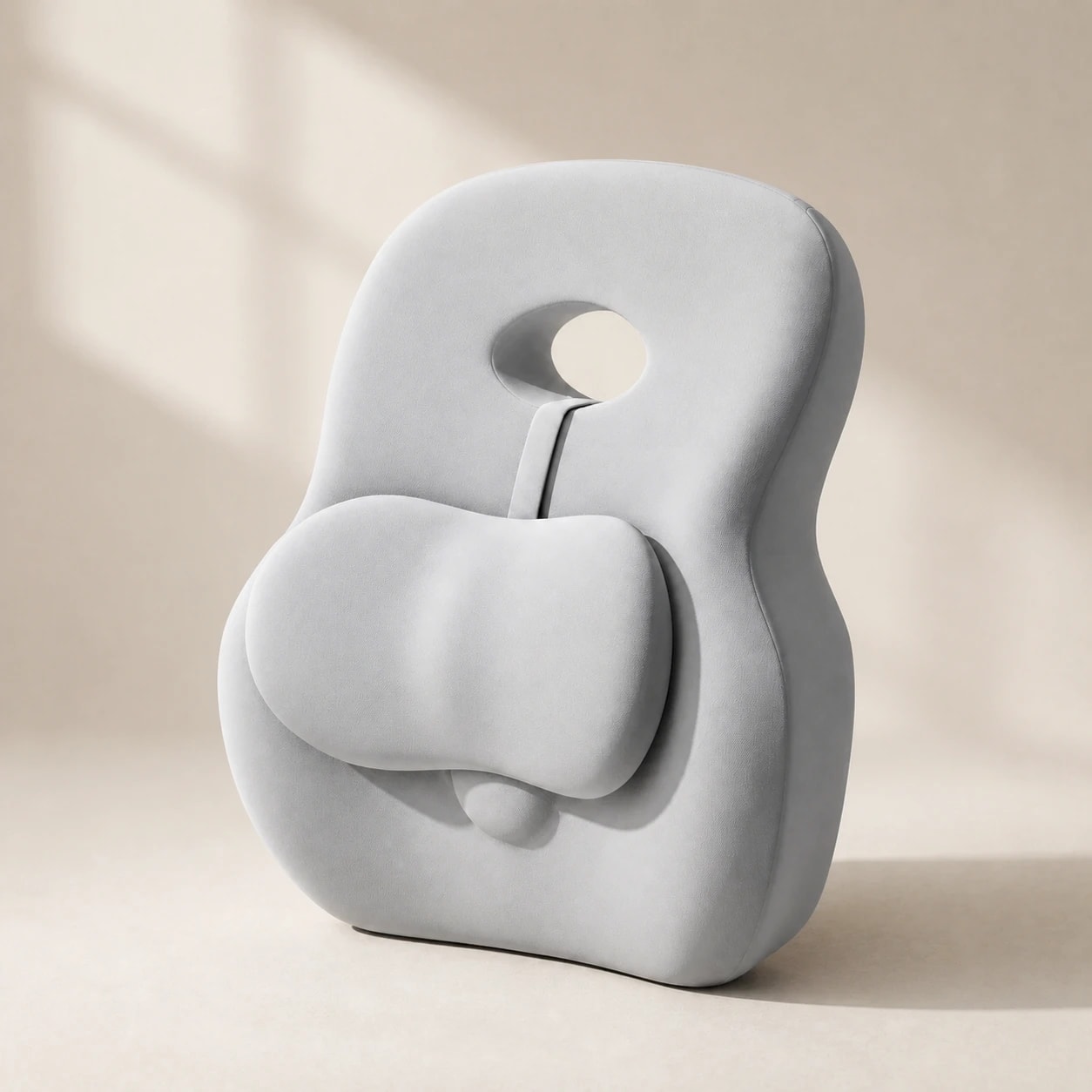
A car seat cushion for sciatica-related sitting discomfort works at the sitting surface, while a lumbar cushion works against the backrest. These are separate fit decisions. A cushion may make sitting more comfortable, but it does not diagnose or treat sciatica. Seek medical advice for persistent pain, weakness, numbness, or tingling.

  • Lumbar cushion: compare contour coverage and available backrest space.
  • Lumbar roll: compare focused contact and stability on the seatback.
  • Seat cushion: compare seat-surface pressure and added sitting height separately.
  • For long drives, plan movement breaks instead of relying on one fixed posture.
Editorial photograph illustrating Run a complete parked safety check

Run a complete parked safety check

Any added support changes how you meet the vehicle seat. While parked, confirm that your normal steering reach, mirror sightlines, pedal access, seat-belt path, and head-restraint position remain unchanged. The cushion must not cover seat controls, interfere with airbags, or route straps across areas the vehicle manufacturer says to keep clear.

Read the vehicle manual and the cushion instructions before use. If the setup changes your driving position or you cannot verify compatibility with the seat and safety systems, do not use it in that vehicle.

  • Confirm comfortable steering and full pedal access.
  • Recheck mirrors, seat belt, and head restraint.
  • Keep controls and safety equipment unobstructed.
  • Follow both the vehicle manual and product instructions.
Editorial photograph illustrating Reassess the fit in each vehicle

Reassess the fit in each vehicle

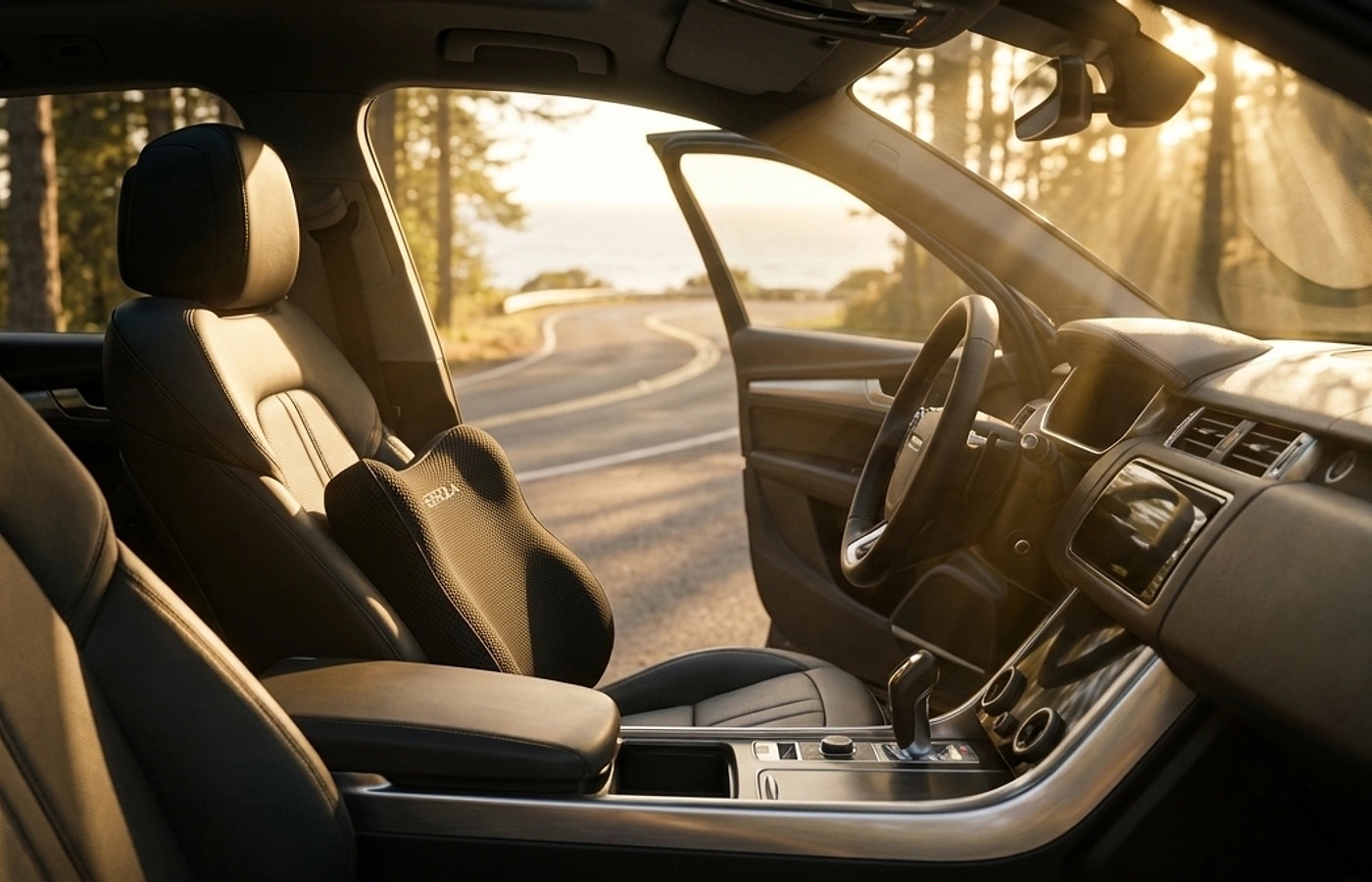
Do not assume that a cushion fitted in one car will work in another. Seatback angle, bolster shape, upholstery, head-restraint design, and strap paths can differ even between vehicles of the same general type. Repeat the parked fit and safety check every time you move the cushion.

Inspect the cushion and attachment before a long drive. Follow the supplied care guidance, and stop using it if the cover, seams, fasteners, or foam no longer hold the intended shape or position.

  • Repeat the fit check after moving the cushion to another car.
  • Inspect seams, attachment points, and shape before long trips.
  • Use only the care method supplied for the specific model.
  • Stop use if the support no longer stays in the intended position.

Domande frequenti

What is the best lumbar support for a car?

The best option is the one that fits the lower-back gap, stays stable, and does not change safe access to the steering wheel, pedals, mirrors, seat belt, head restraint, or controls. No cushion can claim universal vehicle fit.

What should I check before using a car lumbar support cushion?

While parked, check cushion depth, attachment, steering reach, mirror sightlines, pedal access, seat-belt path, head-restraint position, and clearance around controls and safety equipment. Follow the vehicle manual and product instructions.

What lumbar support works for long drives?

For long drives, compare stability, contour fit, and how the cushion responds to normal movement and vibration. Test it on a short familiar route first, and take regular movement breaks rather than holding one position for the entire trip.

Is a car seat cushion for sciatica the same as lumbar support?

No. A seat cushion changes the sitting surface, while lumbar support contacts the backrest. Either may improve comfort when correctly fitted, but neither treats sciatica. Persistent or worsening symptoms need medical assessment.

Can I use the same lumbar cushion in different cars?

Only after repeating the fit and safety checks in each vehicle. Seat shape, strap paths, controls, upholstery, and safety equipment vary, so a stable setup in one car may not transfer safely to another.

How do I know if a lumbar cushion is too thick for my car seat?

It is too thick if it pushes your torso forward, changes your steering or pedal position, prevents natural shoulder contact, or alters the seat-belt or head-restraint fit. Remove it and compare a shallower profile.

Greta Šimkutė

Scritto da

Greta Šimkutė

Specialista di ergonomia e allestimento della postazione · scrive per Ergola dal 2024

Greta Šimkutė è una specialista di ergonomia che scrive le guide su postura e postazione di lavoro di Ergola. Si concentra sul lato pratico delle tensioni a schiena, collo e anche legate allo stare seduti - come l'altezza della scrivania, il supporto lombare e la vestibilità della sedia cambiano davvero il comfort per tutta la giornata - e valuta i prodotti in base ai criteri che contano, non alle schede tecniche. Si occupa di arredo ergonomico e allestimento delle postazioni dal 2024.

Guide correlate

Esplora queste guide per saperne di più e trovare la soluzione giusta per le tue esigenze.