
Car Lumbar Support for Long Drives: How to Stop Back Pain Behind the Wheel
If your lower back aches after a long drive, the fix is usually simple: restore the natural inward curve of your lumbar spine and stop sitting still for hours at a time. A well-fitted car lumbar support pillow plus a few seat and break-timing adjustments addresses the two biggest causes of driving-related back pain, namely a slumped, unsupported posture and the constant low-level vibration of the road.
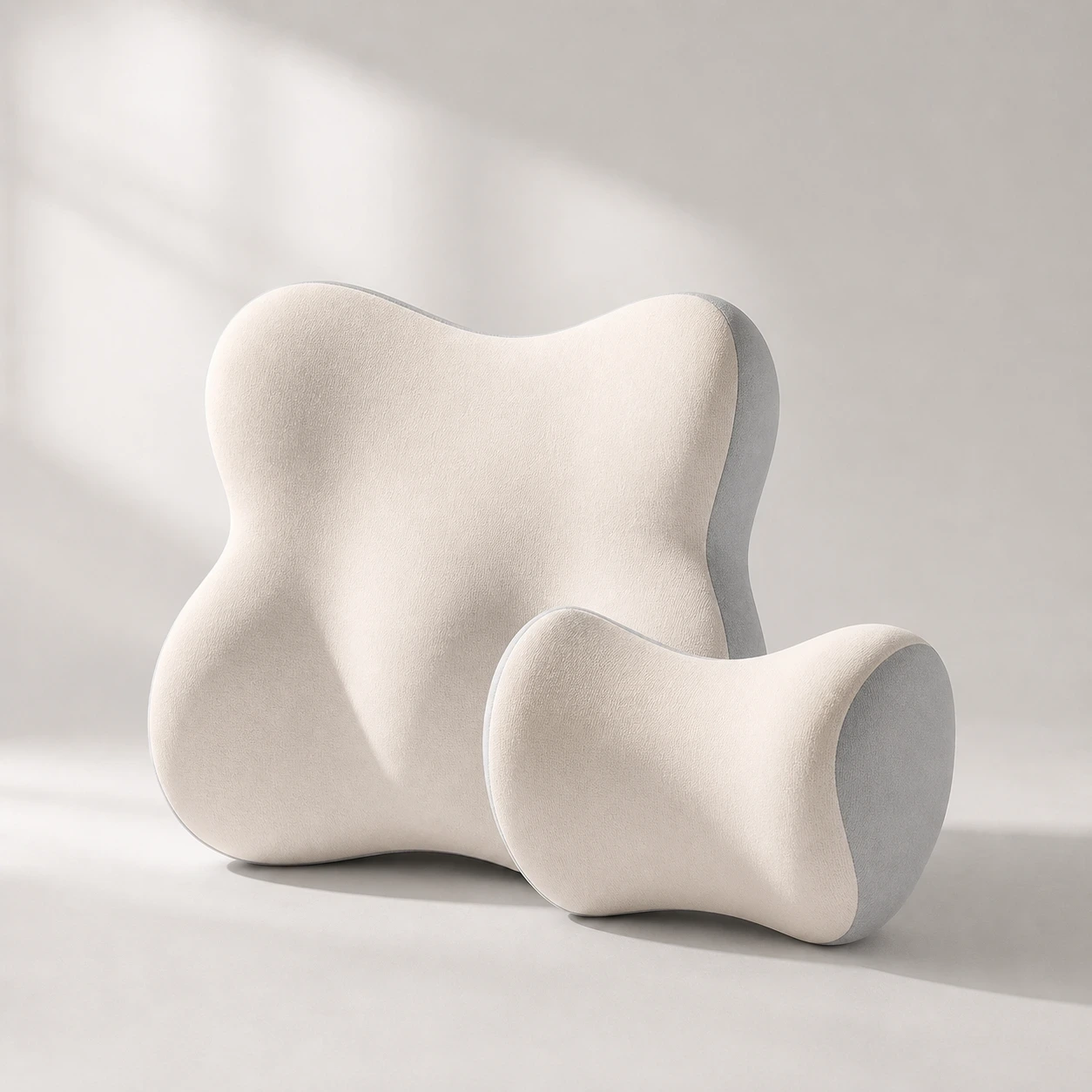 Product mentioned in this guideDriveNest DuoCar headrest and lumbar-cushion set available in four colours with 60D slow-rebound memory foam and two distinct contoured shapes.Free US shipping on every order60-Day Home Trial · we pay return shippingSee current price
This guide explains why driving is harder on your back than ordinary sitting, what the research actually shows, and exactly how to set up your seat and support so the discomfort does not come back. If you already know you want a fix, our car lumbar pillow is built specifically for the more reclined angle and seatbelt geometry of a vehicle seat.
Why Long Drives Cause Lower Back Pain
Three things stack up against your spine the moment you settle into a car seat for a long trip.
1. Your lumbar curve flattens
Your lower back has a natural inward curve called lordosis. Most car seats are designed for a wide range of body shapes, so the backrest rarely matches your individual curve. As the miles add up, your pelvis tilts backward, that curve flattens, and the load shifts onto your discs and the soft tissue around them. The classic in vivo pressure study by Wilke and colleagues, which implanted a pressure transducer directly into a lumbar disc, showed that posture and muscle activity meaningfully change the load a disc carries, and that relaxed, unsupported positions are not the rest your back thinks they are.
2. You barely move

Driving locks you into one position. You cannot stand up, stretch, or shift your weight the way you can at a desk. That matters because spinal discs have no direct blood supply: they rely on movement and changing posture to pump fluid and nutrients in and out. Wilke's work specifically highlighted that constantly changing position promotes the flow of fluid to the disc. Hold one position for three hours and you deprive the disc of exactly the gentle motion it needs to stay healthy.
3. The road vibrates
This is the factor most people overlook. The engine and road surface transmit continuous, low-frequency whole-body vibration up through the seat and into your spine. A 2025 systematic review in BMJ Military Health examining drivers found that whole-body vibration and low back pain are associated, with reported pain prevalence climbing alongside vibration exposure. Professional drivers, who spend the most hours exposed, consistently report more low back trouble than the general population. You do not have to drive for a living to feel it on a long highway stretch.
Put those together and a long drive is not just "sitting for a while." It is static loading, no recovery movement, and continuous vibration, all at once. That combination is why the back pain from a road trip often feels worse than a comparable day at your desk.
What a Car Lumbar Support Actually Does
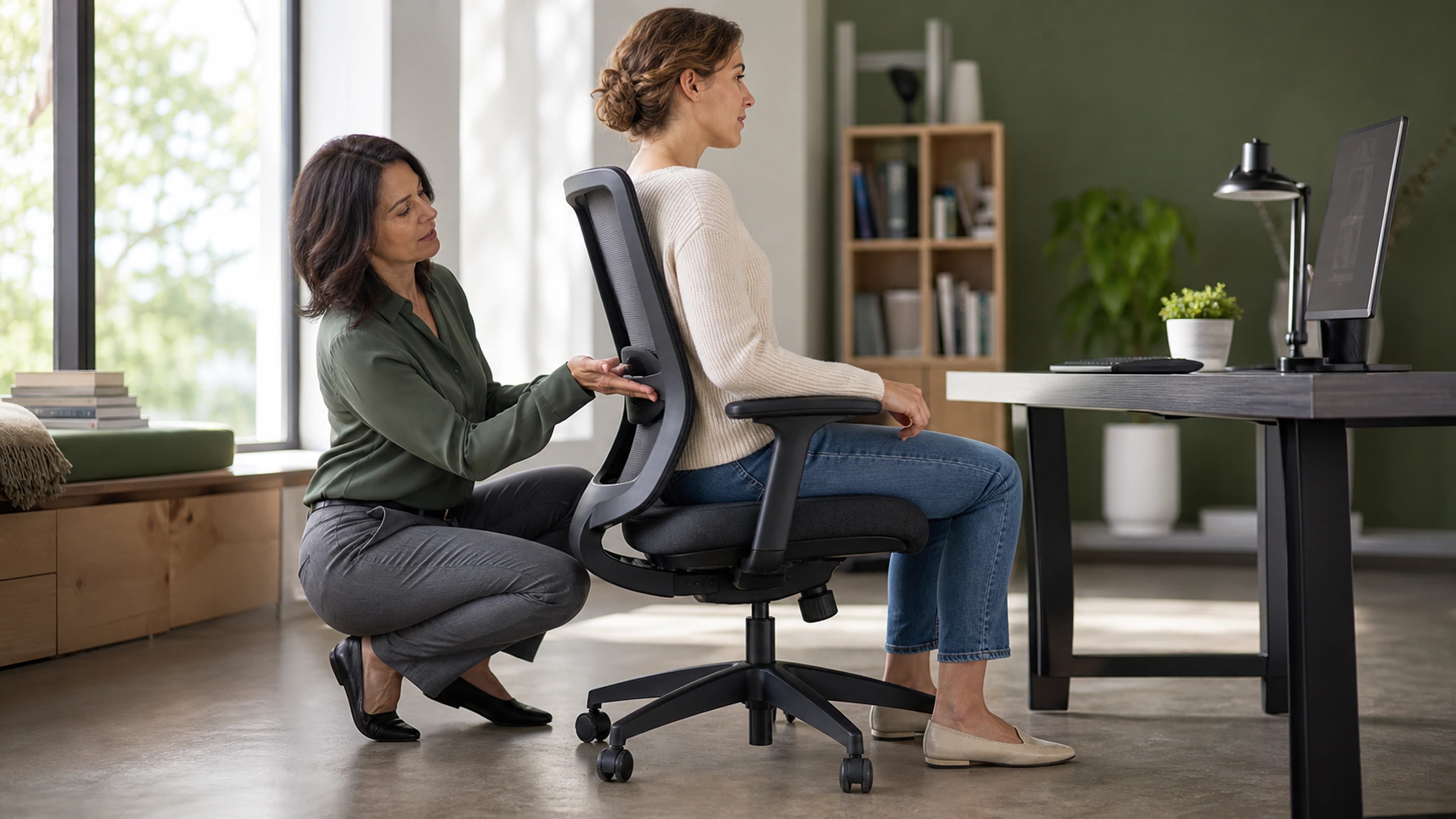
A lumbar support pillow fills the gap between your lower back and the seatback, holding your pelvis in a neutral position so the lumbar curve is supported rather than collapsed. That is the entire job, and it is a meaningful one.
The evidence on disc pressure is more nuanced than the old "sitting doubles your spinal load" headlines suggest. A 2022 meta-analysis in Life comparing in vivo intradiscal pressure between sitting and standing found that the difference is real in some studies but inconsistent across the literature, and depends heavily on how you sit. That is the key insight: it is not sitting itself that punishes your back, it is sitting badly for a long time. Supported, upright sitting keeps the load manageable; slumped, unsupported sitting is what drives the discomfort. A car lumbar pillow exists to keep you in the first category.
A purpose-built car cushion differs from a generic office one in three ways that matter on the road:
- A slimmer profile that suits the more reclined angle of a car seat without pushing your ribs forward or crowding your torso against the steering wheel.
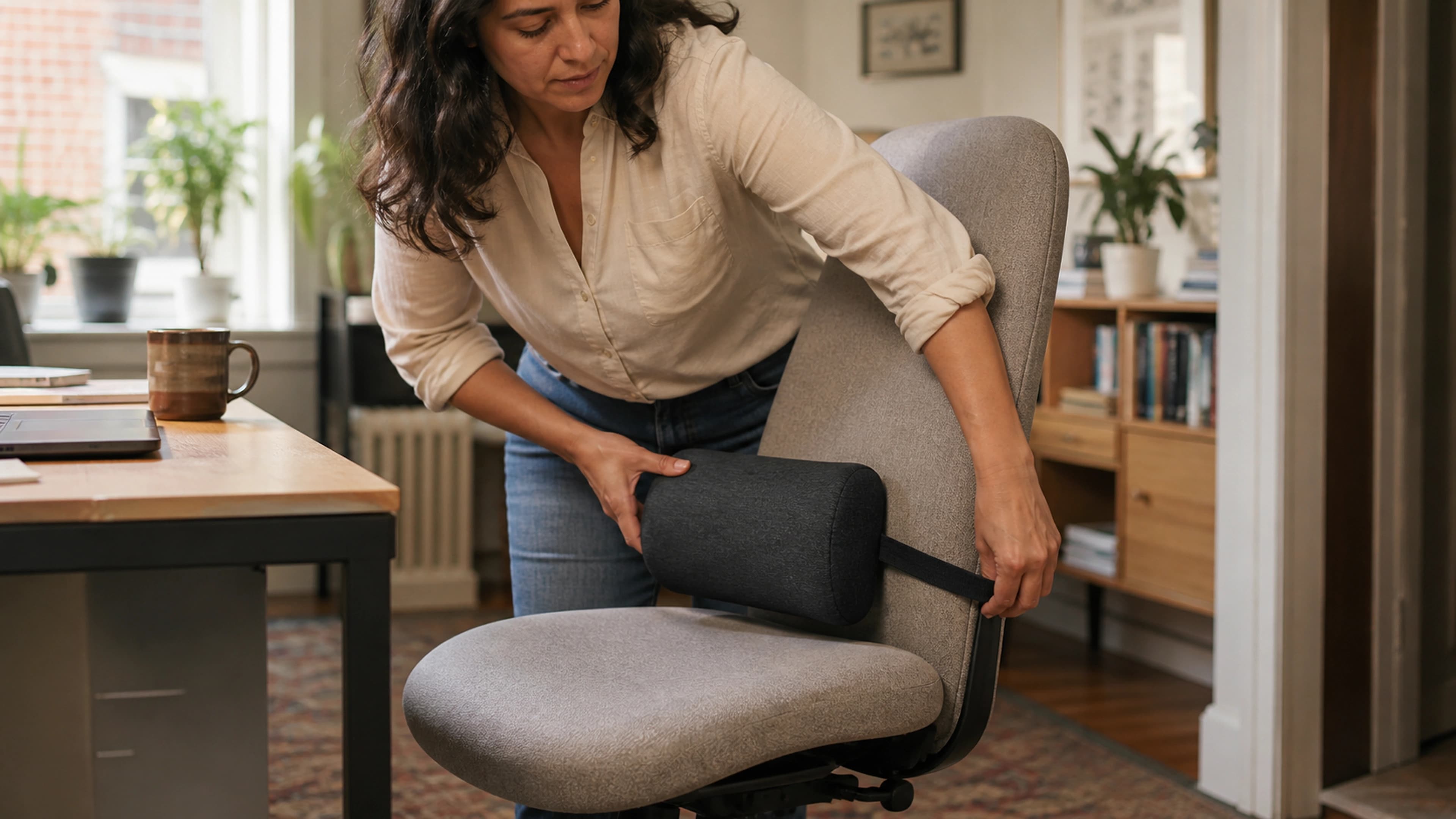
- A secure strap system that anchors to the headrest or seatback so the pillow does not slide out of position every time you shift or get in and out.
- Breathable, supportive foam that holds its shape through hours of vibration and body heat rather than compressing flat after the first hour.
Our car lumbar pillow is engineered around these three requirements specifically for the in-vehicle environment.
How to Set Up Your Car Seat for a Pain-Free Drive
The pillow is only half the solution. Adjust the seat first, then add support. Work through these in order before your next long trip.
- Set the backrest angle to roughly 100 to 110 degrees. Bolt upright is fatiguing; deeply reclined throws your head and neck forward. A slight recline distributes load comfortably.
- Slide the seat so your knees are slightly bent when your foot is flat on the pedal, with a relaxed bend in your elbows at the wheel. You should not be reaching or stretching for either.
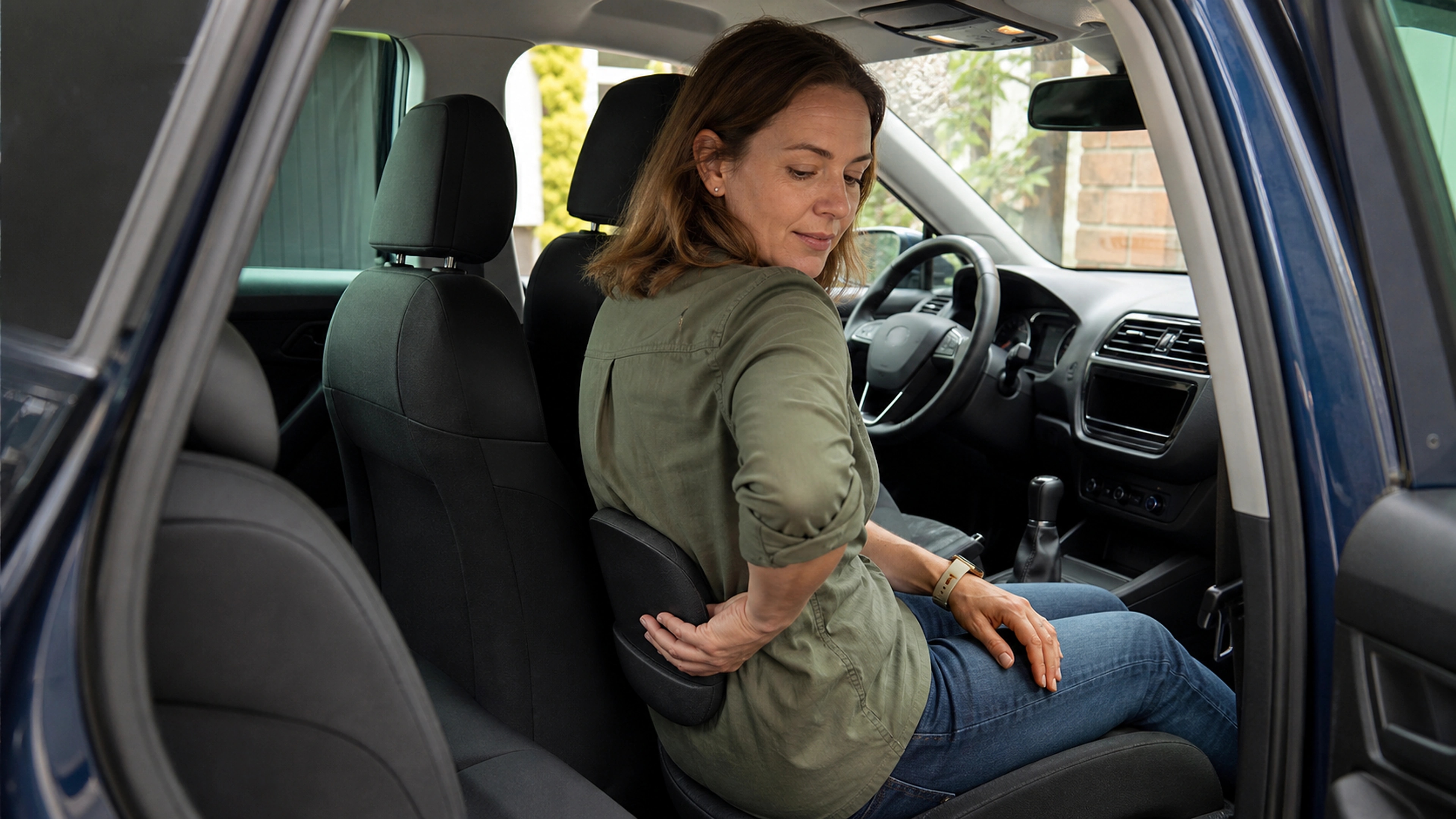
- Position the lumbar pillow at belt level. The thickest part of the support should sit at the small of your back, level with your waistband, not up between your shoulder blades and not down on your tailbone. This is the single most common setup mistake.
- Adjust the headrest so its center is level with the top of your ears, close to the back of your head. This protects your neck and reinforces a tall, supported posture.
- Tilt the seat base so your thighs are gently supported without pressure behind the knees. If your seat lacks tilt adjustment, a gel seat cushion can relieve pressure on long drives and reduce numbness.
The break rule that matters most
No cushion replaces movement. Because your discs depend on changing position to stay nourished, the most effective single habit is to stop every 90 to 120 minutes, get out, and walk for two to three minutes. Roll your shoulders, do a few standing back extensions, and let your spine move through its range. This directly counters the static-loading problem that a pillow alone cannot solve.
Choosing the Right Car Lumbar Pillow
Not every cushion belongs in a car. Use this short checklist when you compare options.
- Contour, not a flat block. Look for a convex front surface that matches the lumbar curve. A flat rectangular cushion props you forward without actually supporting the curve.
- Firm enough to hold its shape. Memory or supportive foam that springs back is what keeps support consistent over a long drive. A pillow that compresses flat in the first hour is doing nothing for hours two through five.
- Real attachment straps. Cars are full of movement; without a strap, the pillow migrates and you spend the trip readjusting it.
- Breathable cover. Long drives plus body heat plus seat heating equals a sweaty back. A mesh or breathable cover keeps you comfortable.
- The right thickness for your seat. A bulky office pillow can crowd you in a compact car. Match the support depth to how reclined your seat sits.
CloudArc and WaveRest are bed pillows, not vehicle headrest supports. For a compatible car-seat setup, see the DriveNest Duo and confirm that any add-on leaves the vehicle's original head restraint and seat-belt path unobstructed.
When to See a Professional
Lumbar support and better seating habits resolve the everyday stiffness and ache that most drivers experience. They are not a treatment for injury. See a doctor or physical therapist if your back pain is severe, does not improve with rest, follows a fall or crash, or comes with numbness, tingling, or weakness running down a leg. Persistent low back pain deserves a proper assessment, not just a cushion.
The Bottom Line
Long-drive back pain comes from a flattened lumbar curve, a body held too still for too long, and continuous road vibration. A car lumbar support pillow tackles the first cause directly and makes the other two far more tolerable, and a 90-minute break habit handles the rest. Set your seat correctly, position the support at belt level, and stop to move on a schedule, and most road-trip back pain simply stops being a problem.
Ready to drive without the ache? See our car lumbar pillow, designed for the angle, straps, and support a vehicle seat actually needs.