Pereiti prie turinio

Nemokamas pristatymas virš 50 €

Naudojimo vadovai

How to Choose a Seat Cushion for Your Office Chair

Choose the best seat cushion for your office chair: coccyx relief, cooling gel, firmness, budget, plus fit and cleaning tips for all-day comfort.

How to Choose a Seat Cushion for Your Office Chair

Svarbiausios įžvalgos

Match the cushion to your top complaint before comparing every spec.
Material choice mainly affects pressure relief, cooling, and firmness.
A cushion plus lumbar support covers seat and lower back together.
Best-for picks: match the cushion to your problem

Best-for picks: match the cushion to your problem

The best seat cushion for your office chair is the one that solves your specific complaint, not the one with the longest spec list. Start by naming your top issue, then pick the cushion built for it. The labels below group cushions by the problem they address rather than by brand.

If you have more than one issue, choose the cushion for whichever bothers you most during a normal workday. You can layer a lumbar support separately to handle lower-back curve, since a seat cushion only manages what happens under your sit bones and thighs.

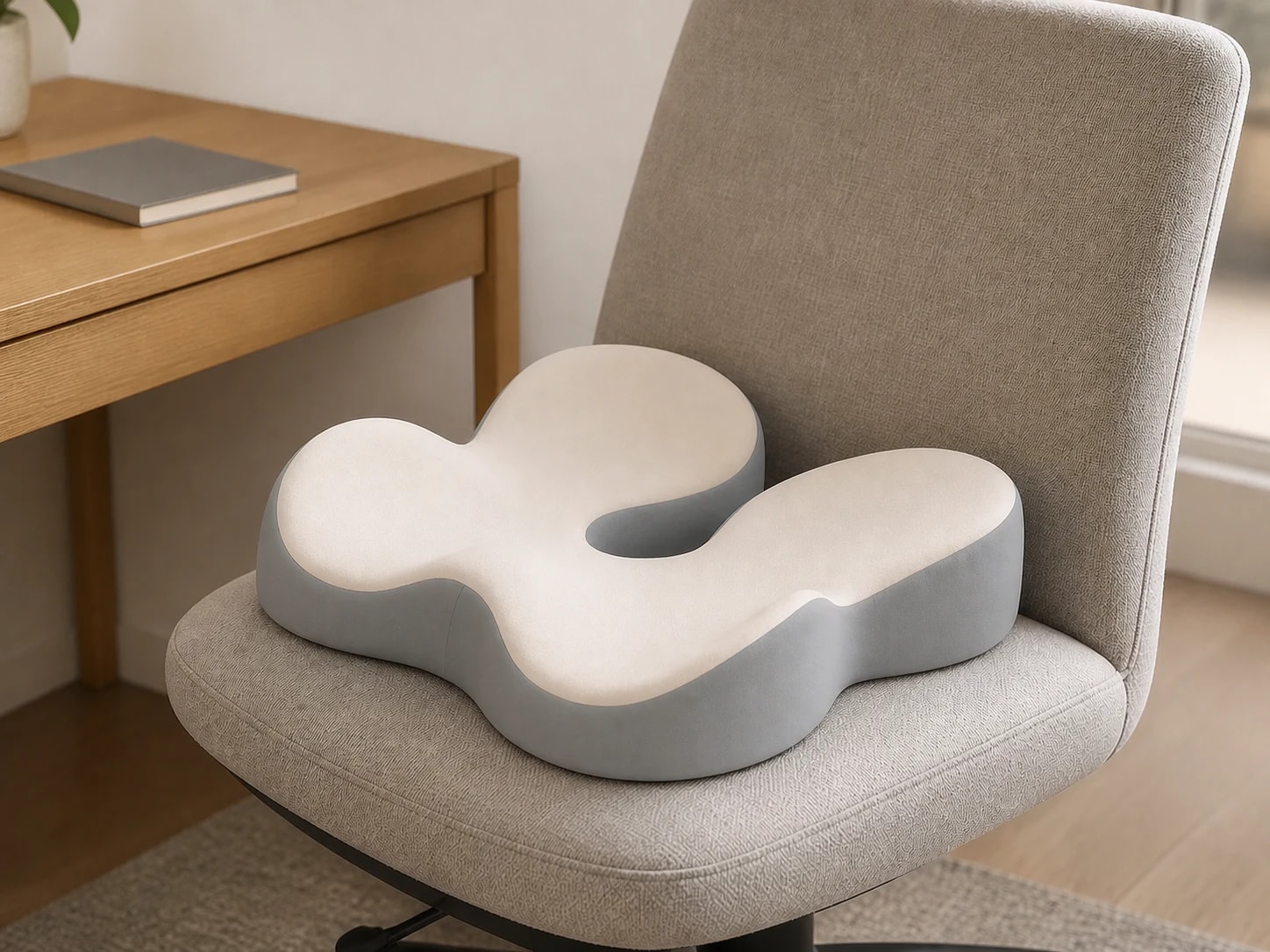
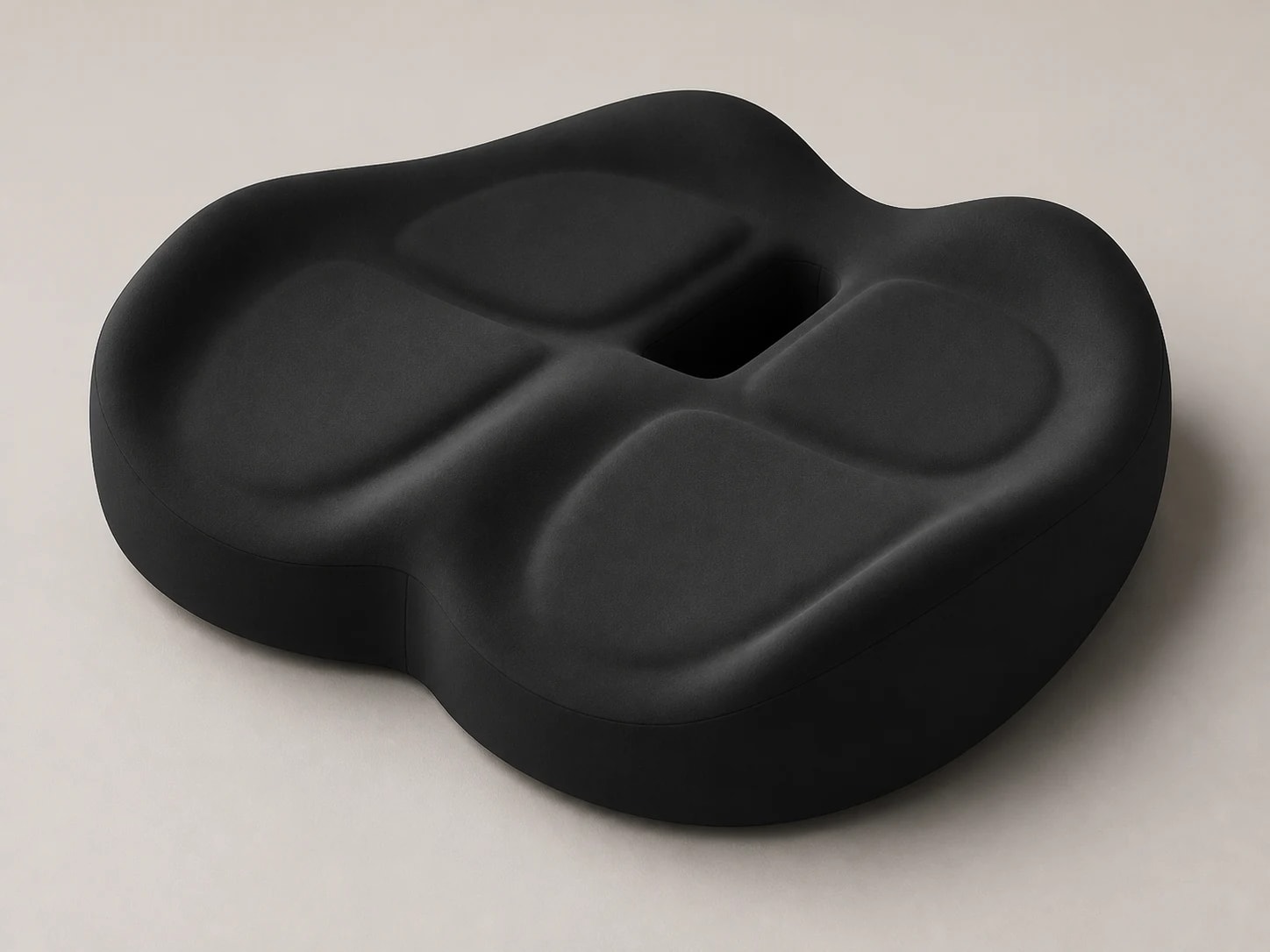
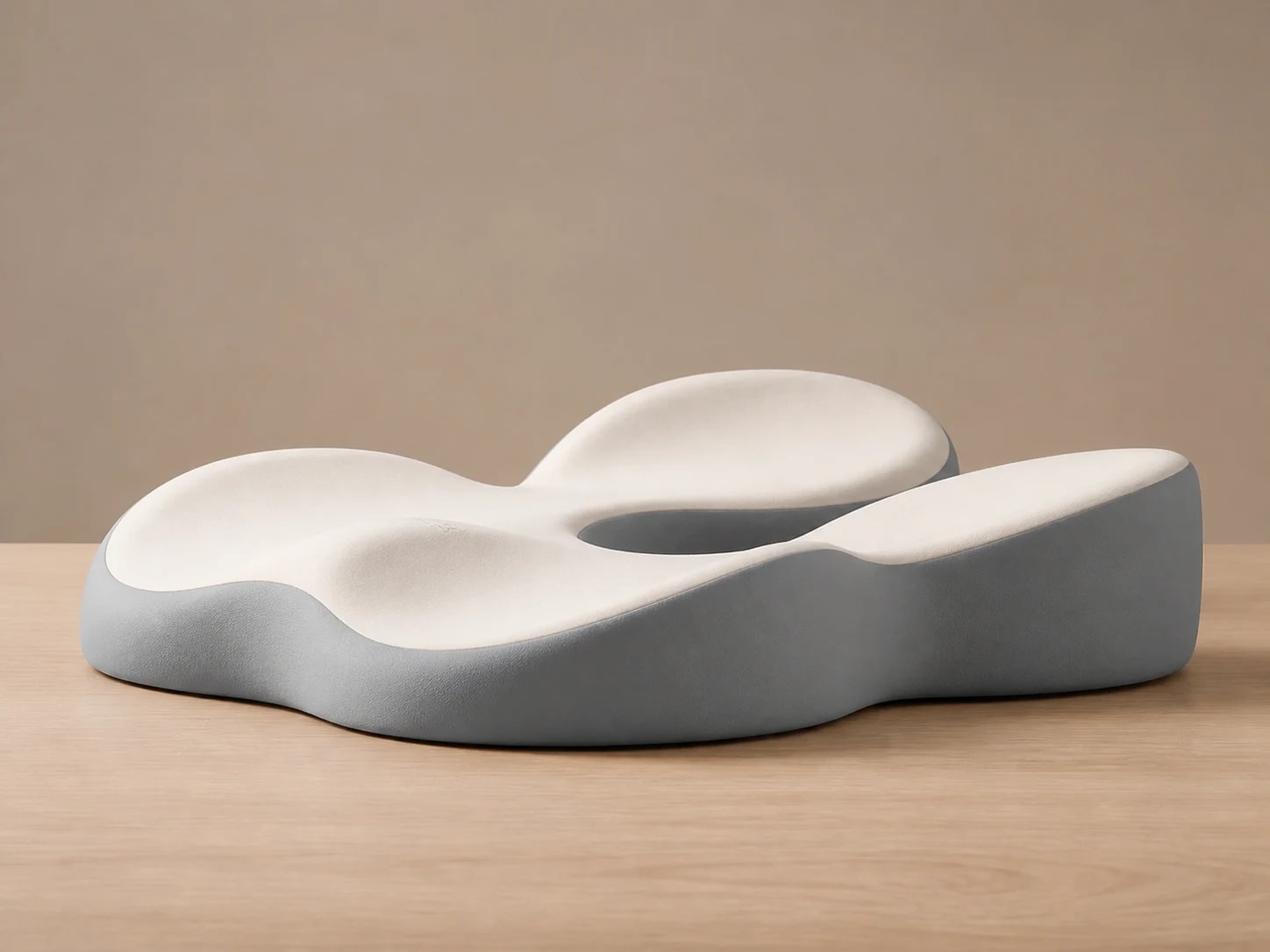
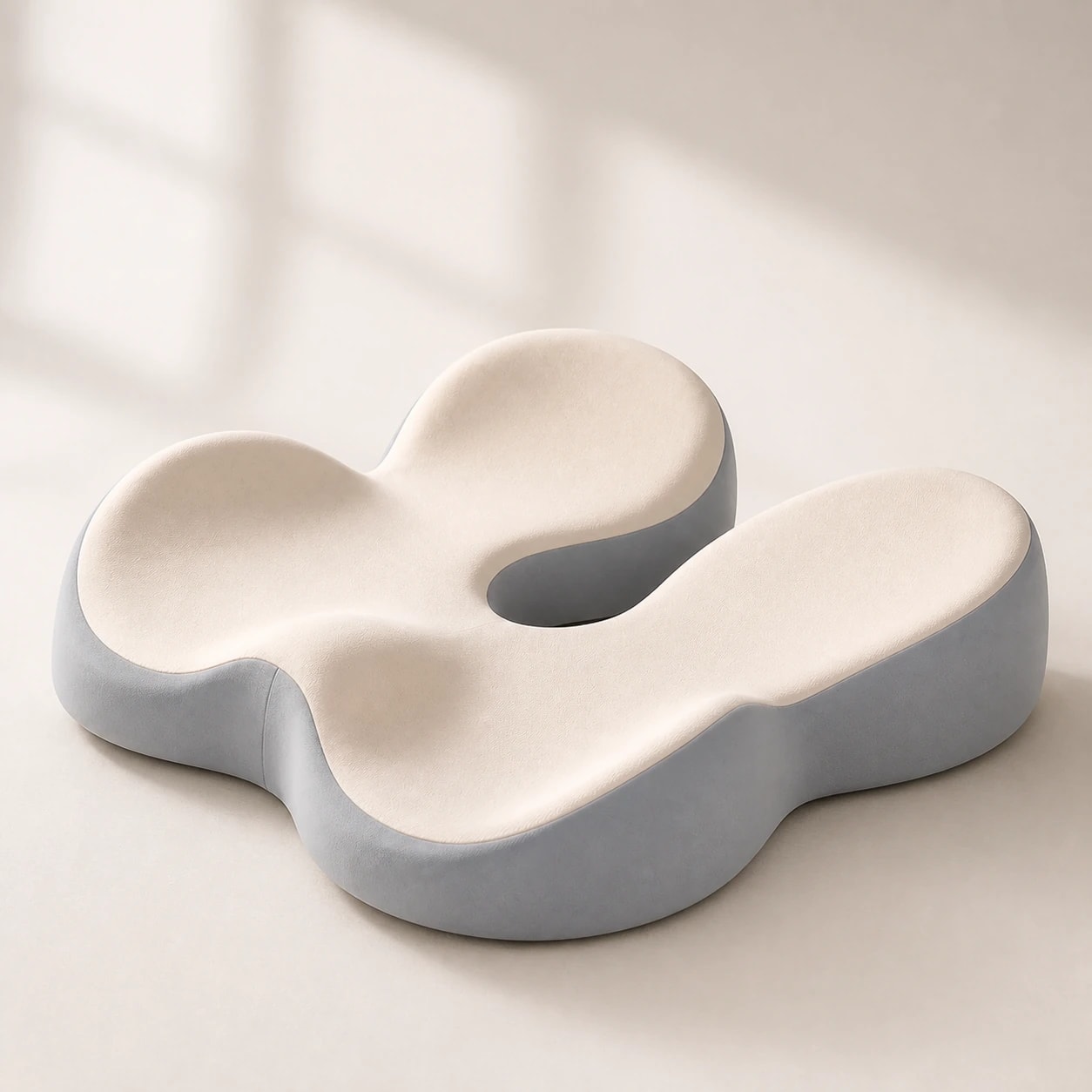
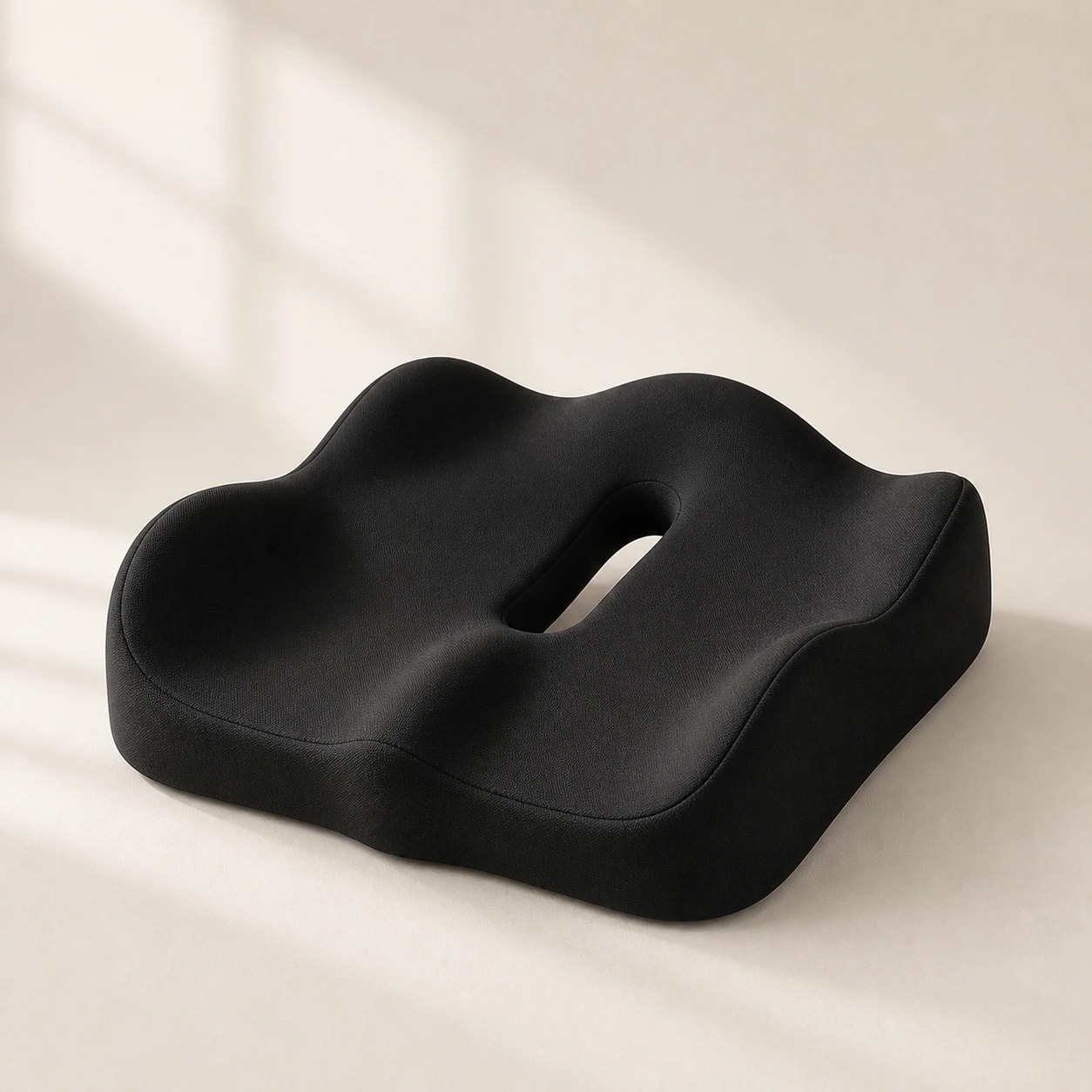
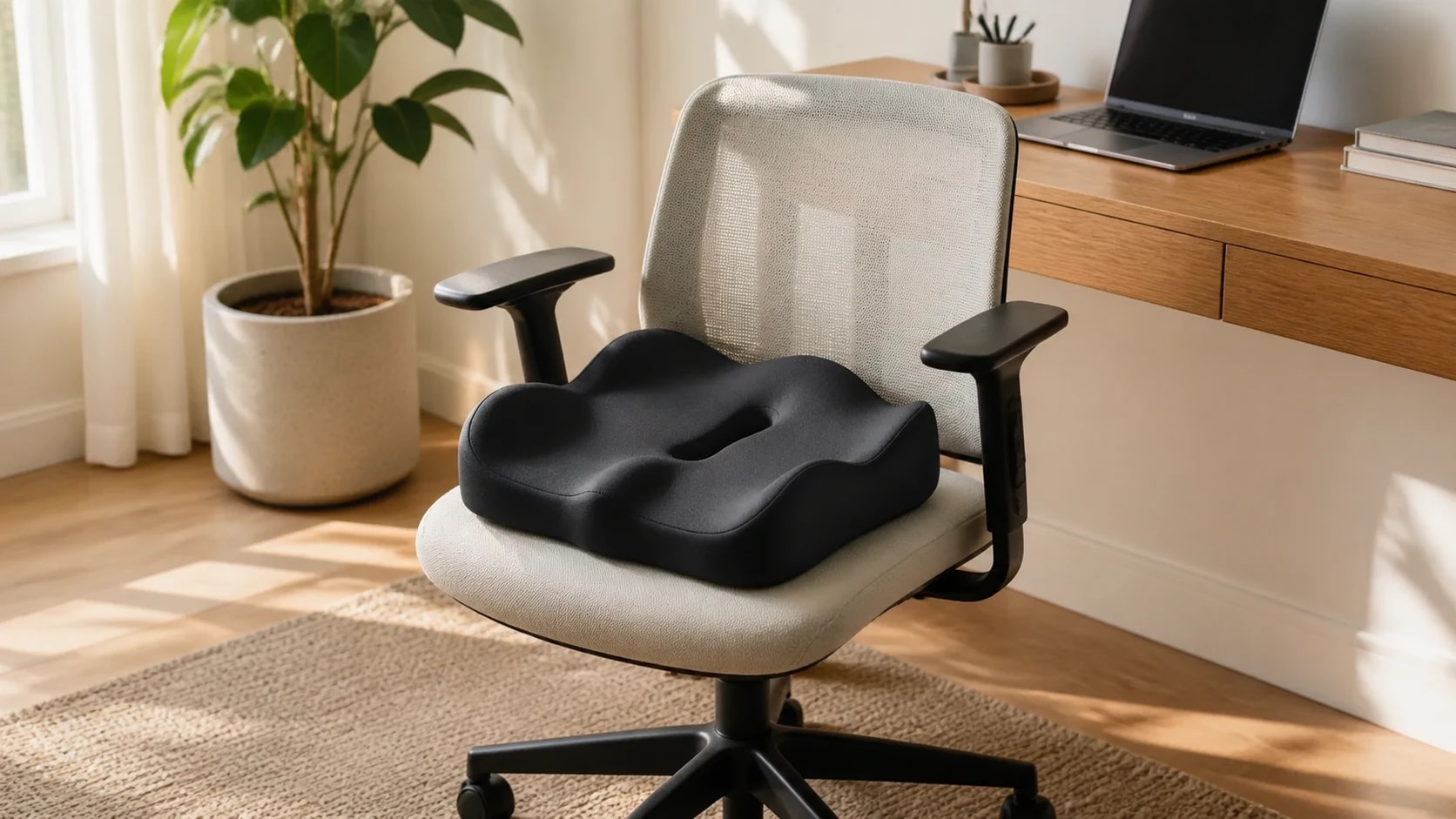
  • Best for coccyx relief: a contoured cushion with a rear cutout or U-shaped channel that reduces direct tailbone contact.
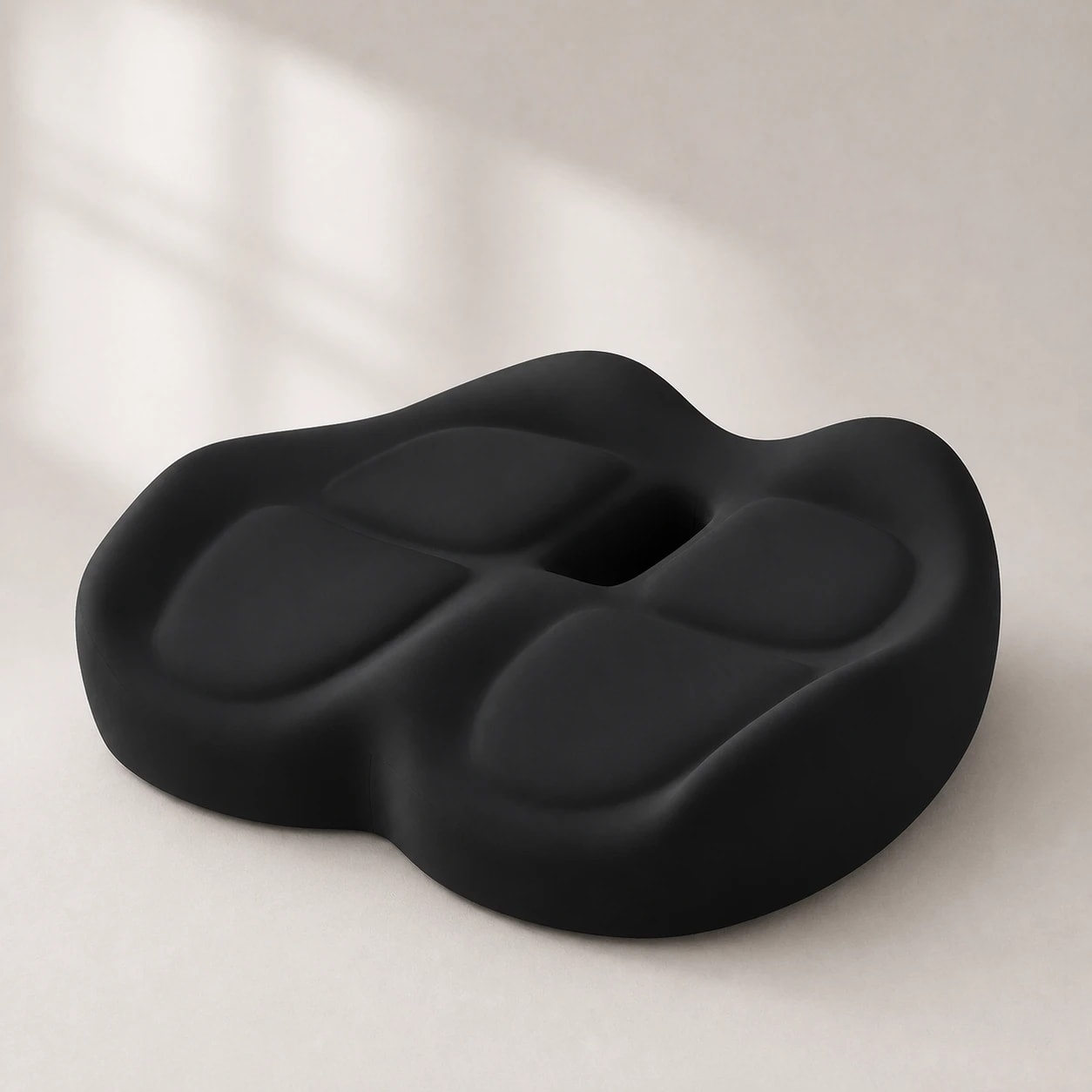
  • Best for heat: a gel or gel-grid cushion that lets air move through it and stays temperature-neutral longer.
  • Best for firm support: a higher-density memory foam cushion that resists bottoming out under heavier loads.
  • Best for budget: a single-material foam cushion without extra covers or cooling layers, which keeps cost down.
Material primer: foam, gel, and what each does

Material primer: foam, gel, and what each does

Memory foam responds to body heat and weight, gradually conforming to your shape and spreading pressure across the whole seating surface. Gel uses a flexible grid or solid layer that stays neutral until compressed, giving immediate support with no break-in period and steadier temperature.

Neither material is universally better. Memory foam tends to win on contoured pressure relief; gel tends to win on cooling and instant response. If you are weighing the two head to head, the comparison guide below breaks down session length, heat, and durability in detail.

  • Memory foam: even pressure distribution, custom-molded feel, can trap heat over long sessions.
  • Gel and gel-grid: cooler surface, instant cushioning, more consistent firmness rather than a molded fit.
  • Foam density (pounds per cubic foot) signals how well a cushion resists long-term compression.
  • Gel-infused foam splits the difference, adding some cooling to a contouring base.
Tailbone and coccyx relief

Tailbone and coccyx relief

Tailbone discomfort usually comes from direct pressure on the coccyx while seated, which a flat chair pad does little to relieve. A cushion with a rear cutout or U-shaped channel removes contact under the tailbone and shifts your weight onto the sit bones and thighs instead.

A coccyx cushion may help reduce that pressure during long seated blocks, but persistent or sharp tailbone pain can have causes a cushion will not address. If pain continues, worsens, or follows an injury, see a doctor or physical therapist rather than relying on a cushion alone.

  • Look for a defined rear cutout or U-shaped channel positioned under the tailbone.
  • Confirm the cutout aligns with your coccyx, not your sit bones, when you sit centered.
  • Pair with correct seat depth so you are not perching on the front edge.
  • Treat a cushion as comfort support, not a treatment for ongoing pain.
Cooling, firmness, and value

Cooling, firmness, and value

If you run warm or work in a non-air-conditioned room, cooling matters more than contour. Gel-grid designs allow airflow through their structure and stay temperature-neutral longer than closed-cell foam, which insulates body heat after a few hours. A breathable mesh cover helps either material dissipate heat.

For value, a cushion that fixes your seat pressure plus a lumbar pillow for your lower back covers both contact points for less than buying a new chair. Bundling the two is the most common way to get full seated support without overspending on a single premium accessory.

  • Cooling: gel-grid first, gel-infused foam second, plain memory foam last.
  • Firmness: higher-density foam holds shape under heavier loads without flattening.
  • Value: pair a seat cushion with lumbar support to cover seat and back together.
  • Check seat height clearance so the cushion does not lift you too high for your desk.
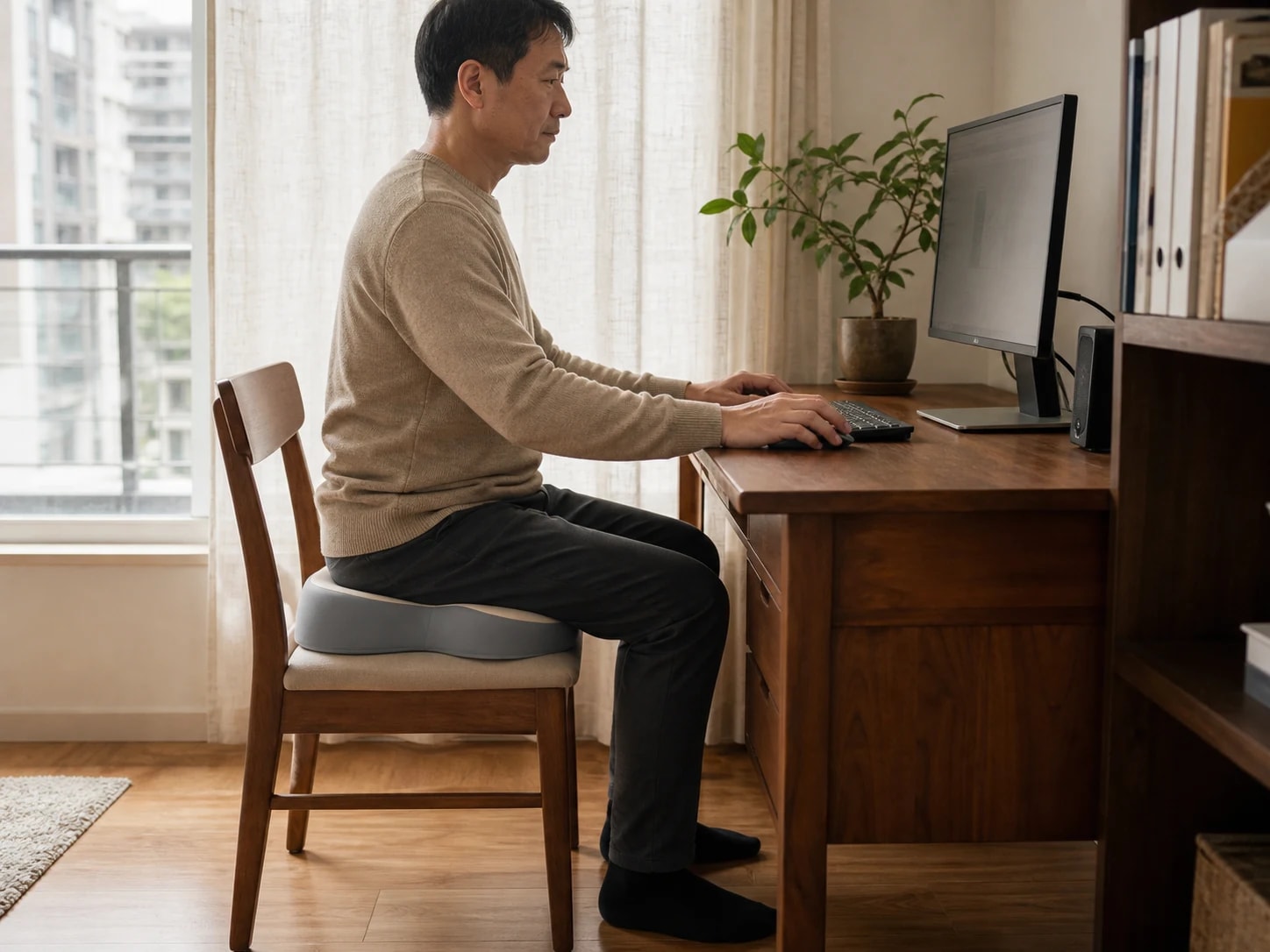
Focused workstation designed for long sessions

Fit and cleaning checklist

Fit decides whether a good cushion actually works for you. Measure your seat width and the depth from the backrest to the front edge, then confirm the cushion sits flat without overhanging or sliding. A non-slip base keeps it in place on smooth or mesh seats.

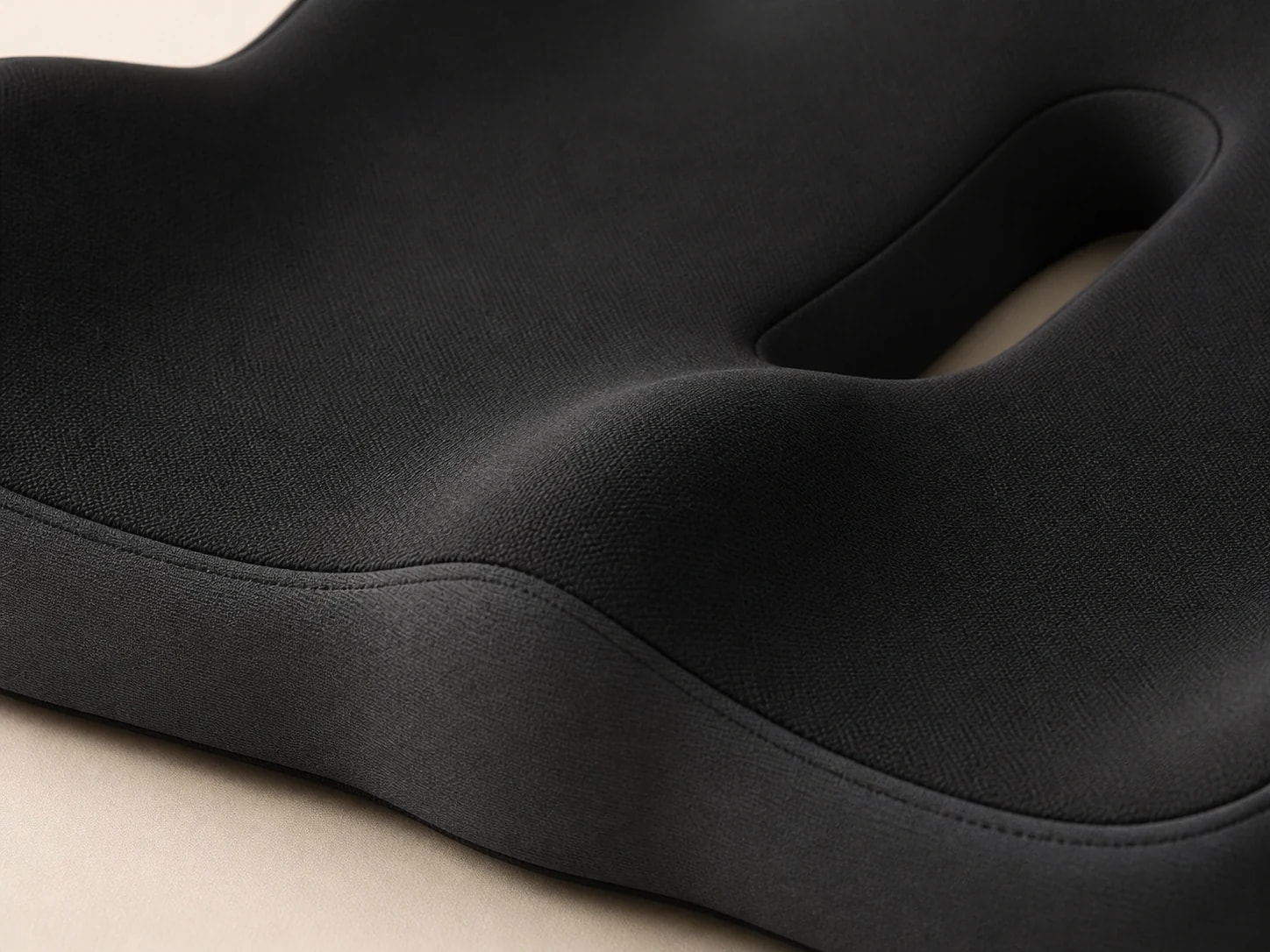
For upkeep, choose a cushion with a removable, machine-washable cover so you can clean it without soaking the foam. Foam cores should be spot-cleaned and air-dried, never machine-washed, since saturation breaks down the material over time.

  • Measure seat width and depth before buying to avoid overhang or sliding.
  • Prefer a removable, machine-washable cover for routine cleaning.
  • Spot-clean and air-dry the foam core; do not submerge it.
  • Add a non-slip base or strap if your seat surface is slick.

Dažnai užduodami klausimai

How thick should an office seat cushion be?

Most desk users do well with roughly two to three inches. Thicker cushions add cushioning but can raise you too high for your desk, so check that your elbows still rest near 90 degrees after installing it.

Are seat cushions machine washable?

The cover usually is if it is removable, but the foam or gel core is not. Spot-clean the core and air-dry it. Look for a cushion with a washable cover if easy cleaning matters to you.

Will a seat cushion work on any chair?

Most cushions work on any flat seat, including office, dining, and car seats. Confirm the cushion is not wider or deeper than your seat, and add a non-slip base for mesh or leather surfaces.

Which cushion is best for tailbone pain?

A contoured cushion with a rear cutout or U-shaped channel reduces direct coccyx pressure and may help during long sitting. If tailbone pain persists or worsens, see a healthcare professional.

Do I still need lumbar support with a seat cushion?

Often yes. A seat cushion handles pressure under your sit bones, while a lumbar pillow supports your lower back curve. Pairing both covers the two main contact points for seated comfort.

Susiję vadovai

Susipažinkite su šiais vadovais, kad sužinotumėte daugiau ir rastumėte tinkamiausią sprendimą savo poreikiams.