30-day money back guarantee | Spring sale — 40% off + free shipping

Sprendimai

Best Lumbar Support Pillow

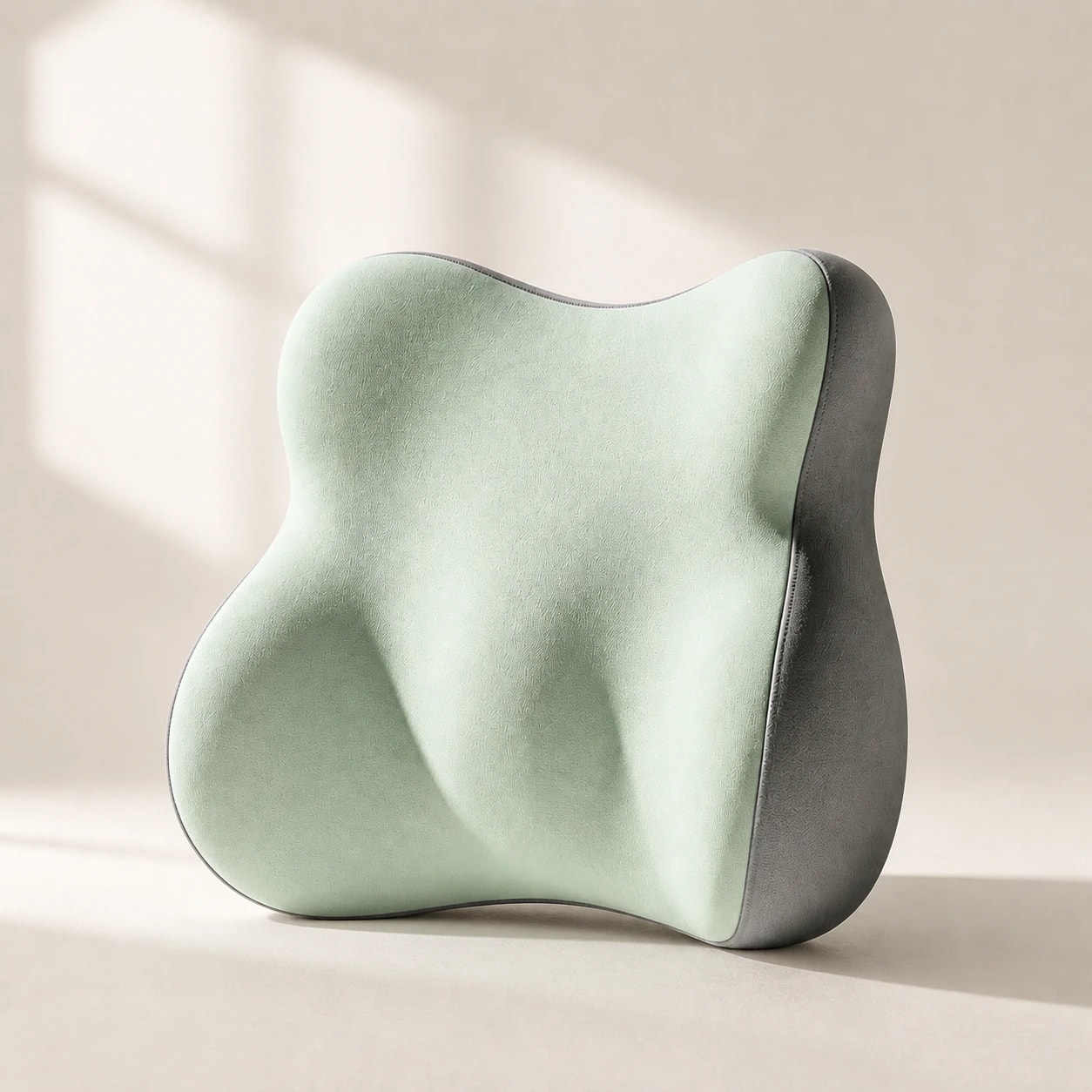
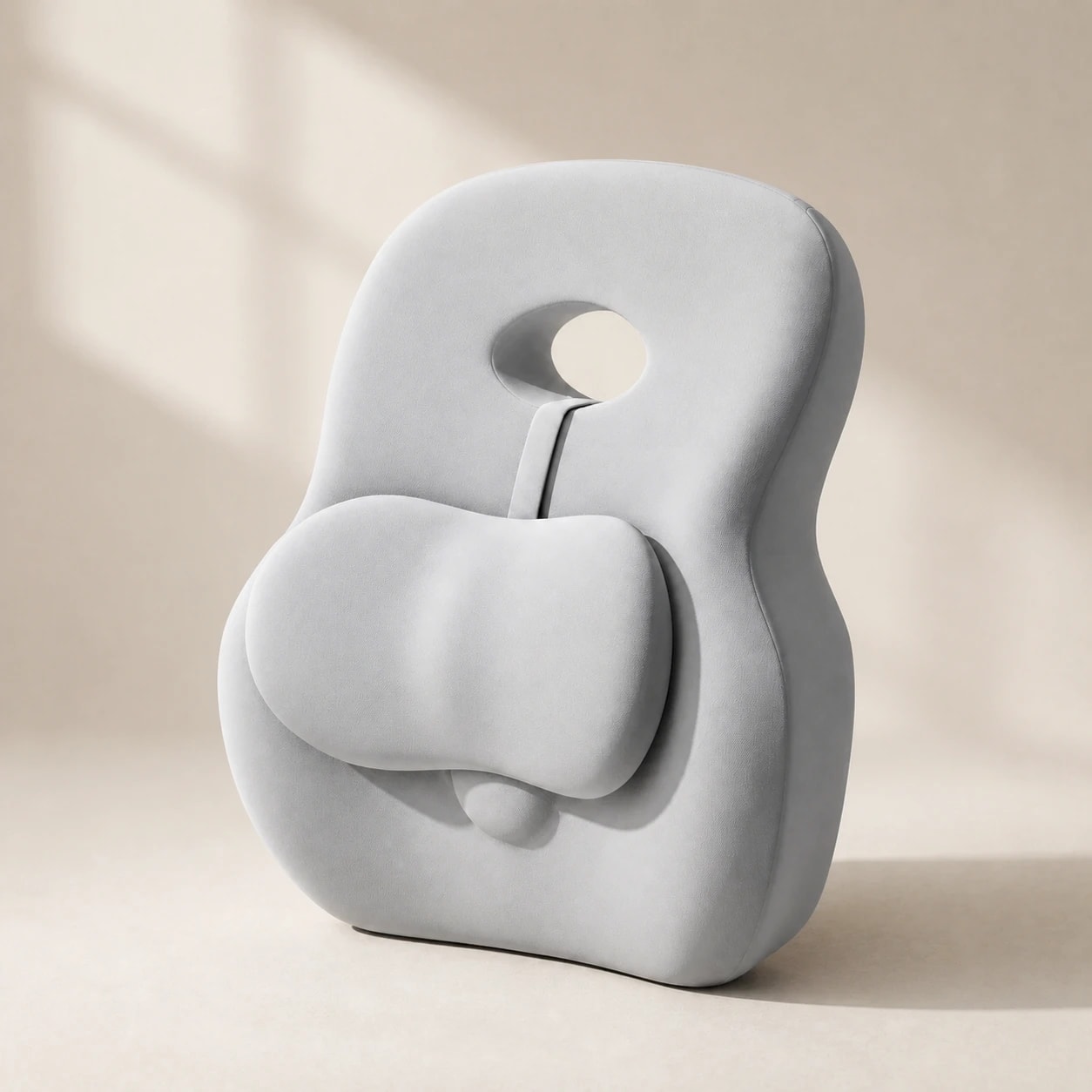
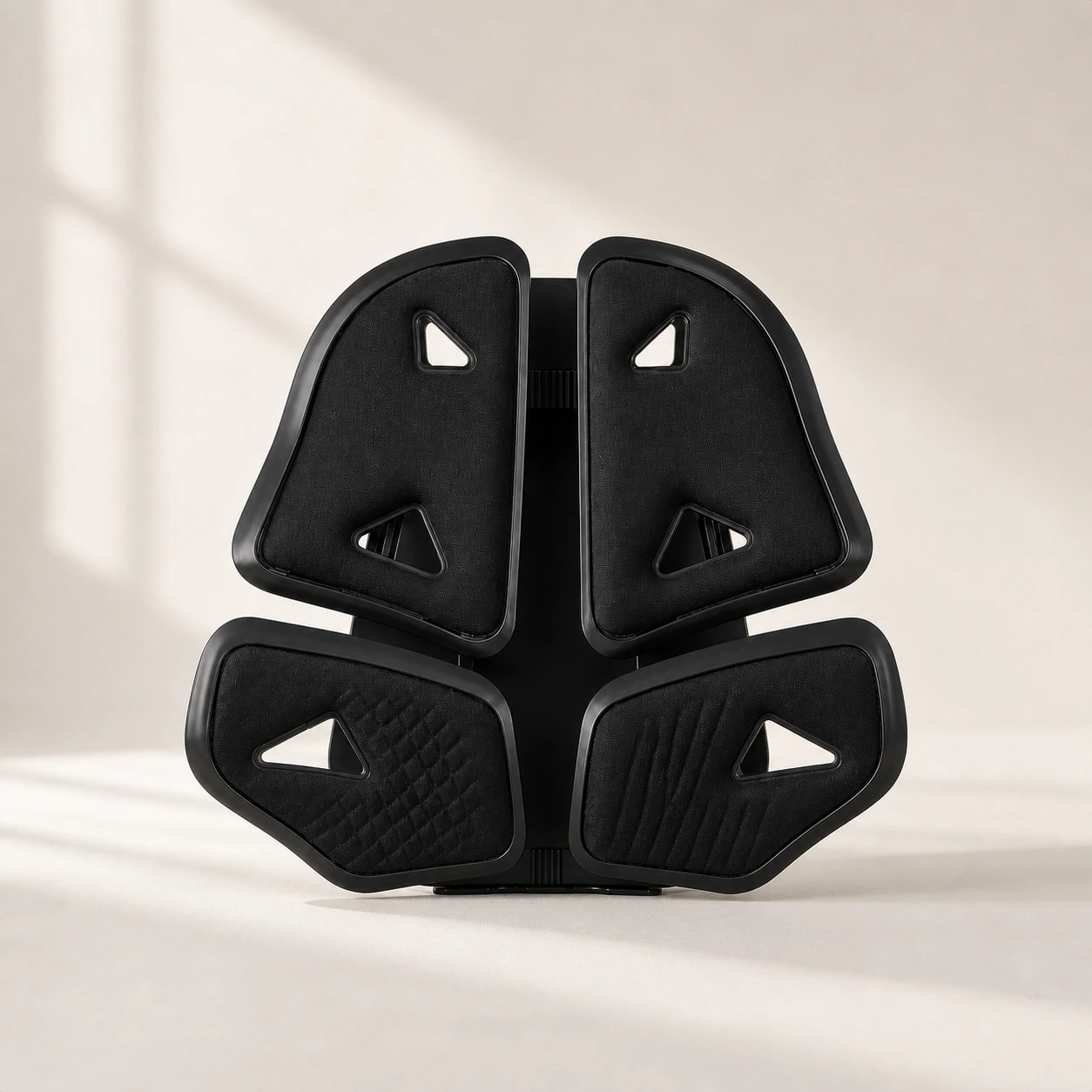
Use objective criteria to choose the best lumbar support pillow. Compare contour geometry, foam quality, and fit stability.

Best Lumbar Support Pillow

Pagrindiniai patarimai

Rank by fit stability and all-day resilience.
Segment recommendations by office, car, and travel use.
Use clear disqualifiers to reduce mismatched purchases.
Scoring framework for lumbar support selection

Scoring framework for lumbar support selection

Choosing the best lumbar support pillow requires evaluating four measurable criteria rather than relying on marketing claims or star ratings alone. First, contour match quality — how well the pillow's shape aligns with your natural lumbar curve when seated in your primary chair. Second, material rebound — how quickly and completely the foam returns to its full shape after compression, which directly predicts long-term performance.

Third, attachment stability — whether the pillow stays in position during normal movement, including leaning forward, standing up, and resitting. Fourth, practical setup ease — how quickly you can install, adjust, and maintain the pillow in daily use. A pillow that scores highly on foam quality but poorly on attachment stability will frustrate users within the first week. The best product is the one that performs consistently across all four criteria for your specific use case.

  • Contour match: pillow shape should align with natural lumbar curve
  • Material rebound: foam should fully recover within 3 seconds
  • Attachment stability: pillow stays in place during all seated movements
  • Setup ease: installation and daily adjustment under 30 seconds
Environment-specific recommendations

Environment-specific recommendations

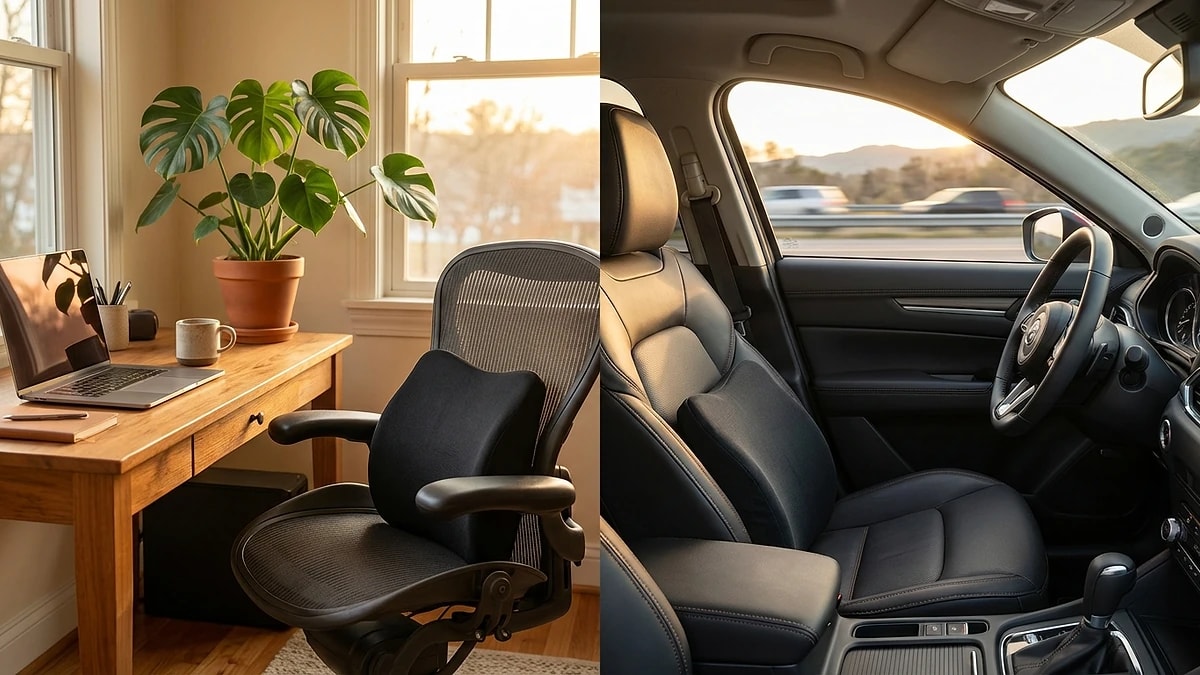
The best lumbar pillow for an office chair is not necessarily the best for a car seat or airplane travel. Office use prioritizes all-day foam resilience and breathable cover materials because the pillow is compressed for eight or more continuous hours in a climate-controlled environment. Car use adds vibration resistance and heat tolerance as critical factors. Travel use demands compressibility and lightweight design above all else.

If you primarily use lumbar support in one environment, optimize for that context entirely. If you need support across multiple environments, consider owning purpose-matched pillows rather than compromising with a single do-everything option. The cost of a second pillow is far less than the discomfort of using a poorly matched one for thousands of hours.

  • Office: prioritize all-day foam resilience and breathable cover
  • Car: add vibration resistance and heat tolerance criteria
  • Travel: prioritize compressibility, weight, and quick attachment
  • Multi-environment: dedicated pillows per context outperform one-size solutions
Foam types and quality indicators

Foam types and quality indicators

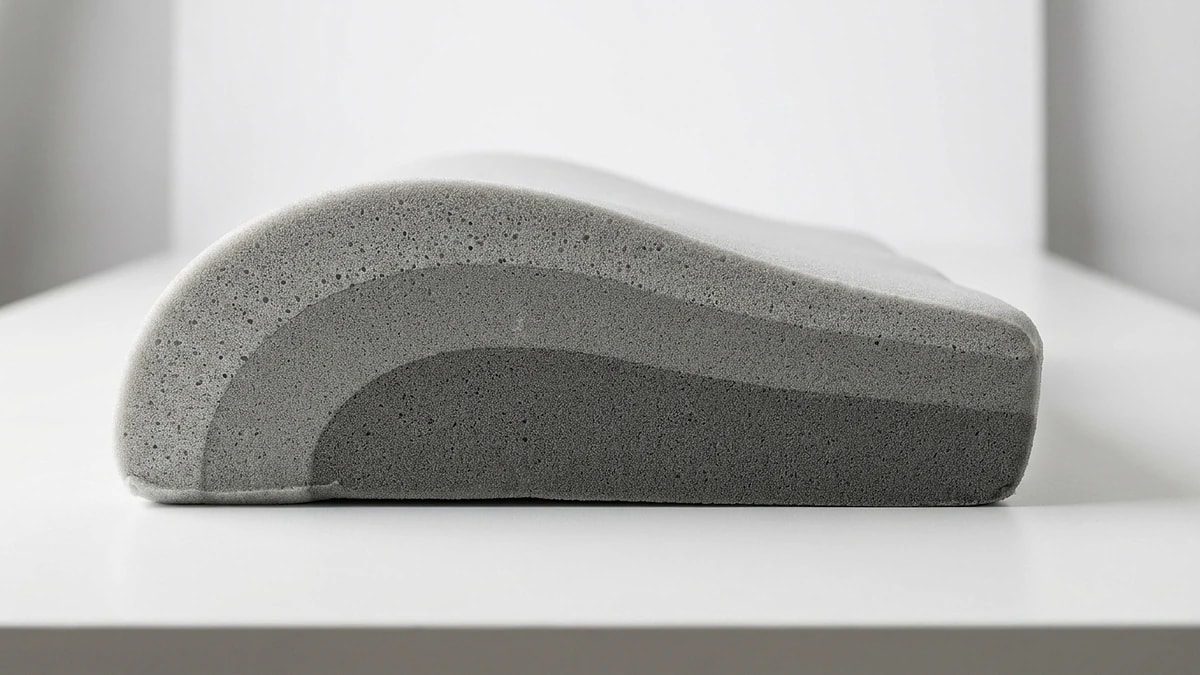
Memory foam is the most common material in lumbar pillows, but quality varies enormously across the market. Density is the single most reliable quality indicator — foam rated at 3.5 to 5.0 pounds per cubic foot provides the support stability that long sitting sessions require. Budget pillows often use foam under 2.5 lbs/ft³, which feels comfortable initially but compresses permanently within months, losing its contouring effectiveness.

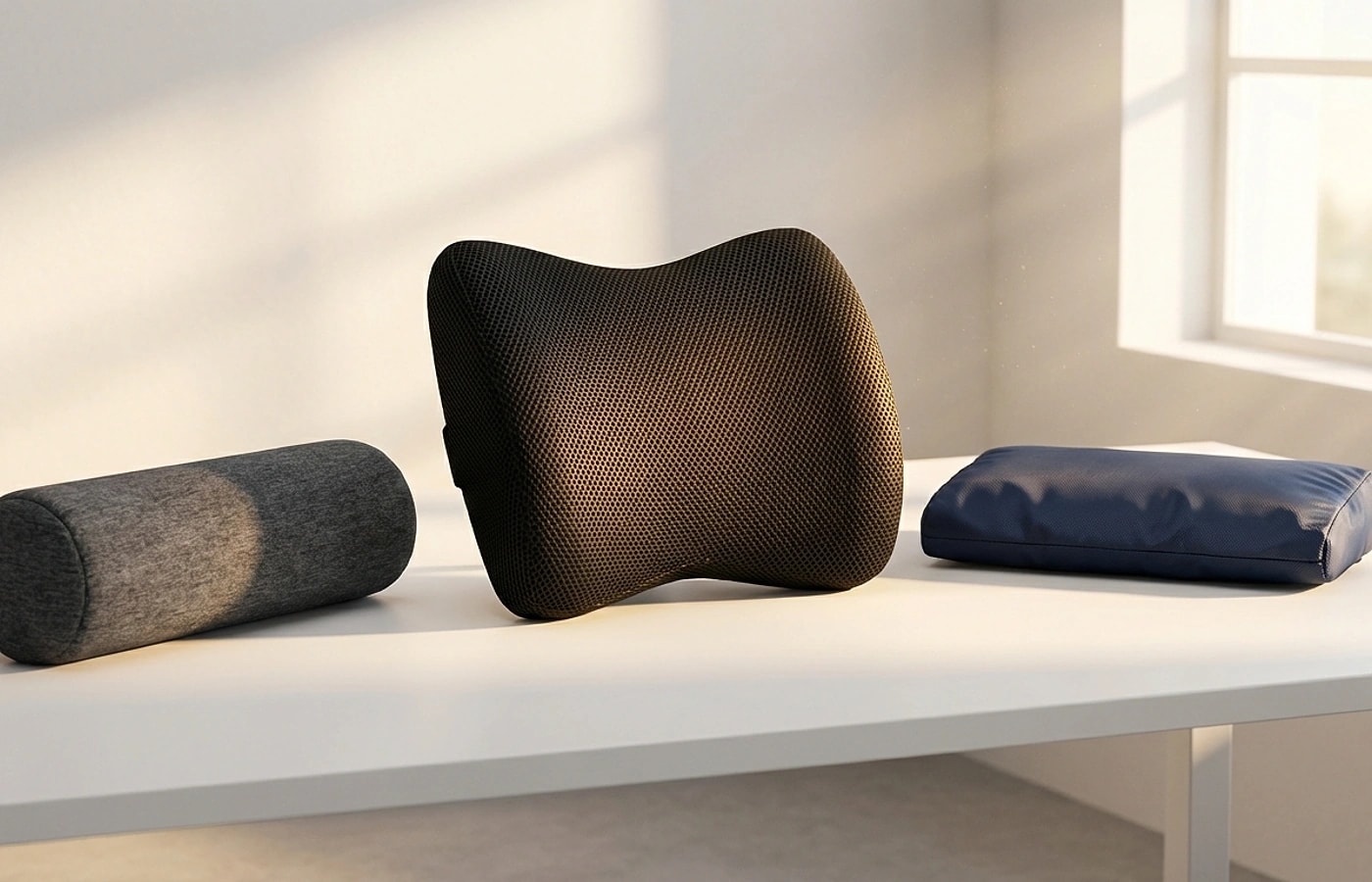
Beyond traditional memory foam, several alternative materials serve specific needs. Latex foam offers higher rebound speed and natural breathability but costs more. Buckwheat hull pillows provide firm, adjustable support by adding or removing fill, though they are heavier than foam options. Inflatable bladder systems offer the ultimate in adjustability and portability but sacrifice the consistent contouring that foam provides. Understanding these tradeoffs helps you match material to your priority.

  • Memory foam (3.5-5.0 lb/ft³): best all-around for daily use
  • Budget foam (under 2.5 lb/ft³): compresses permanently within months
  • Latex foam: higher rebound, natural breathability, premium price
  • Buckwheat hull: firm, adjustable fill, heavier than foam
  • Inflatable: most portable and adjustable, less consistent contouring
Comfort-focused seating and posture setup

When to replace your lumbar support pillow

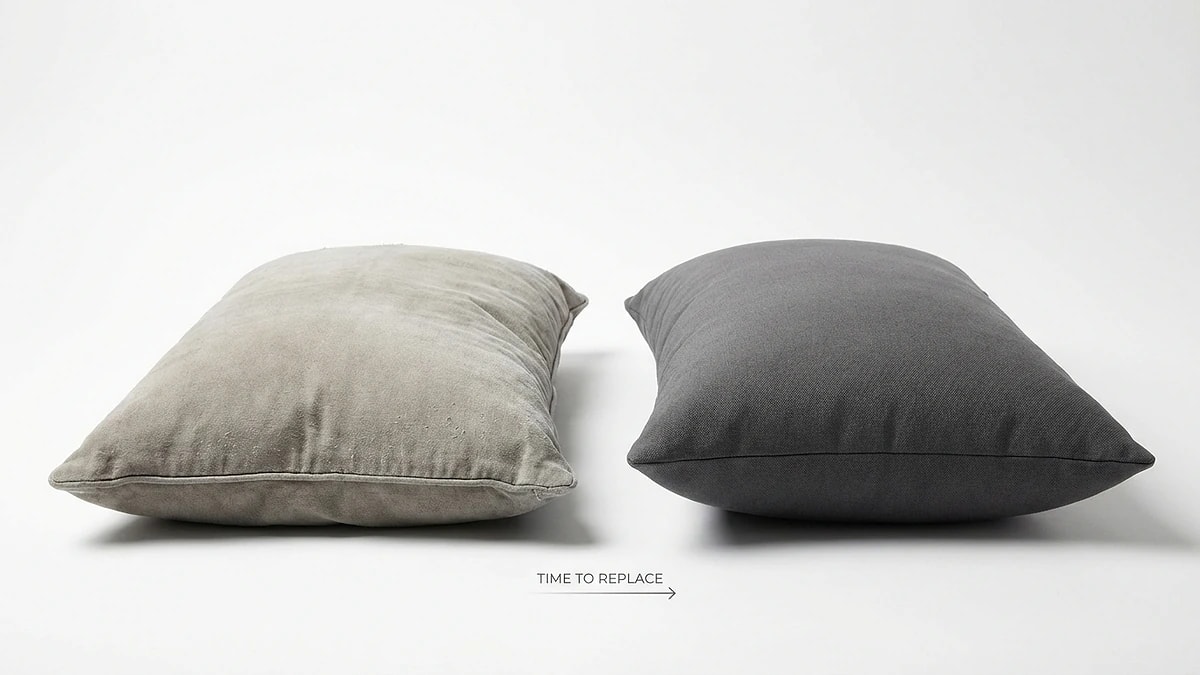
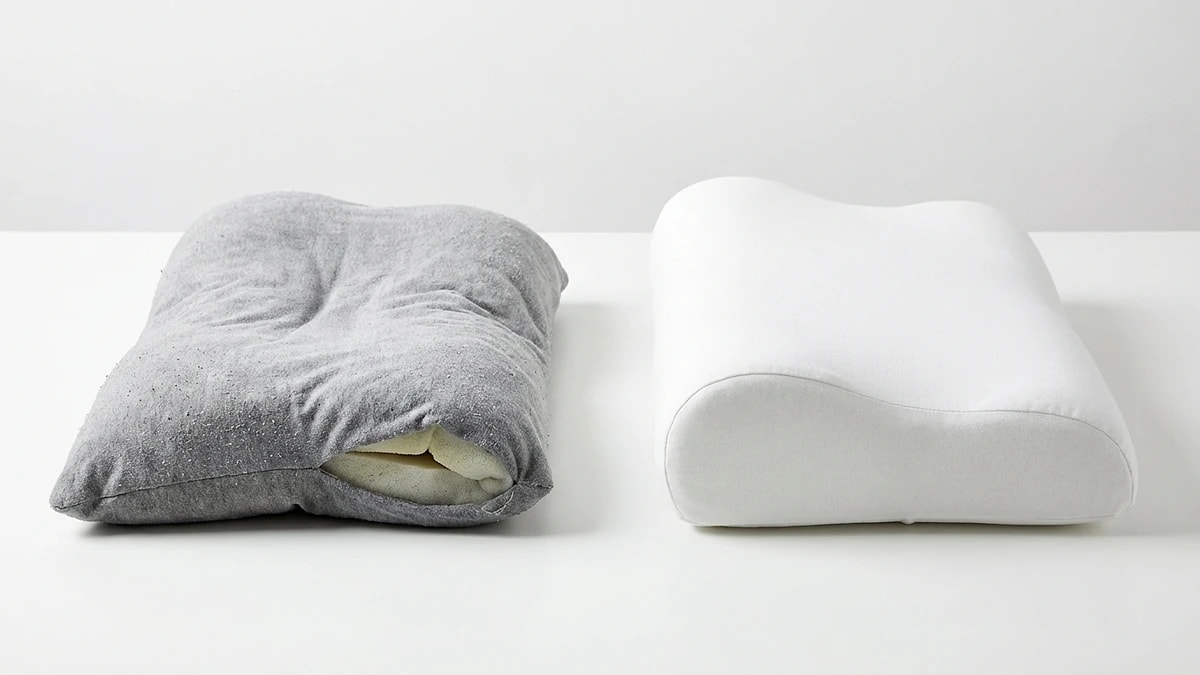
Lumbar pillows do not fail suddenly — they degrade gradually, which makes it easy to normalize declining support over months without realizing the pillow is no longer performing. The most reliable replacement test is the compression recovery check: press the pillow firmly with your fist and release. If the foam takes longer than three seconds to return to its full shape, the internal cell structure has degraded enough to meaningfully reduce support quality.

Other replacement signals include visible permanent compression marks where your back contacts the pillow, cover material that has stretched or lost elasticity even after washing, and the need to reposition the pillow more frequently than when it was new. Most quality pillows last 12 to 18 months of daily eight-hour use. Professional drivers or users in high-heat environments may need to replace sooner due to accelerated foam degradation.

  • Compression test: replace if foam recovery exceeds 3 seconds
  • Check for visible permanent compression marks on the surface
  • Increased repositioning frequency indicates declining attachment
  • Expected lifespan: 12-18 months for daily 8-hour use

Dazniausiai uzduodami klausimai

How do I compare lumbar pillows objectively?

Use four consistent criteria: contour match, foam rebound speed, attachment stability, and setup practicality. Test each for at least one week in your primary use environment.

Should I prioritize softness or support?

For long sitting sessions, support stability matters more than initial softness. Medium-firm foam maintains its shape throughout the day while soft fill collapses within hours.

Is one pillow best for office, car, and travel?

Rarely — each environment has different requirements. Most users get better results with dedicated pillows matched to their primary use context.

What foam density should I look for?

Foam rated 3.5 to 5.0 pounds per cubic foot provides the best balance of comfort and long-term durability. Avoid options under 2.5 lbs/ft³ for daily use.

How much should I spend on a quality lumbar pillow?

Quality options typically range from $30 to $80. The difference between budget and mid-range is usually more significant than between mid-range and premium.

Susije gidai

Naršykite šiuos gidus, kad sužinotumėte daugiau ir rastumėte tinkamą sprendimą.