
30-day money back guarantee | Spring sale — 40% off + free shipping

Sprendimai

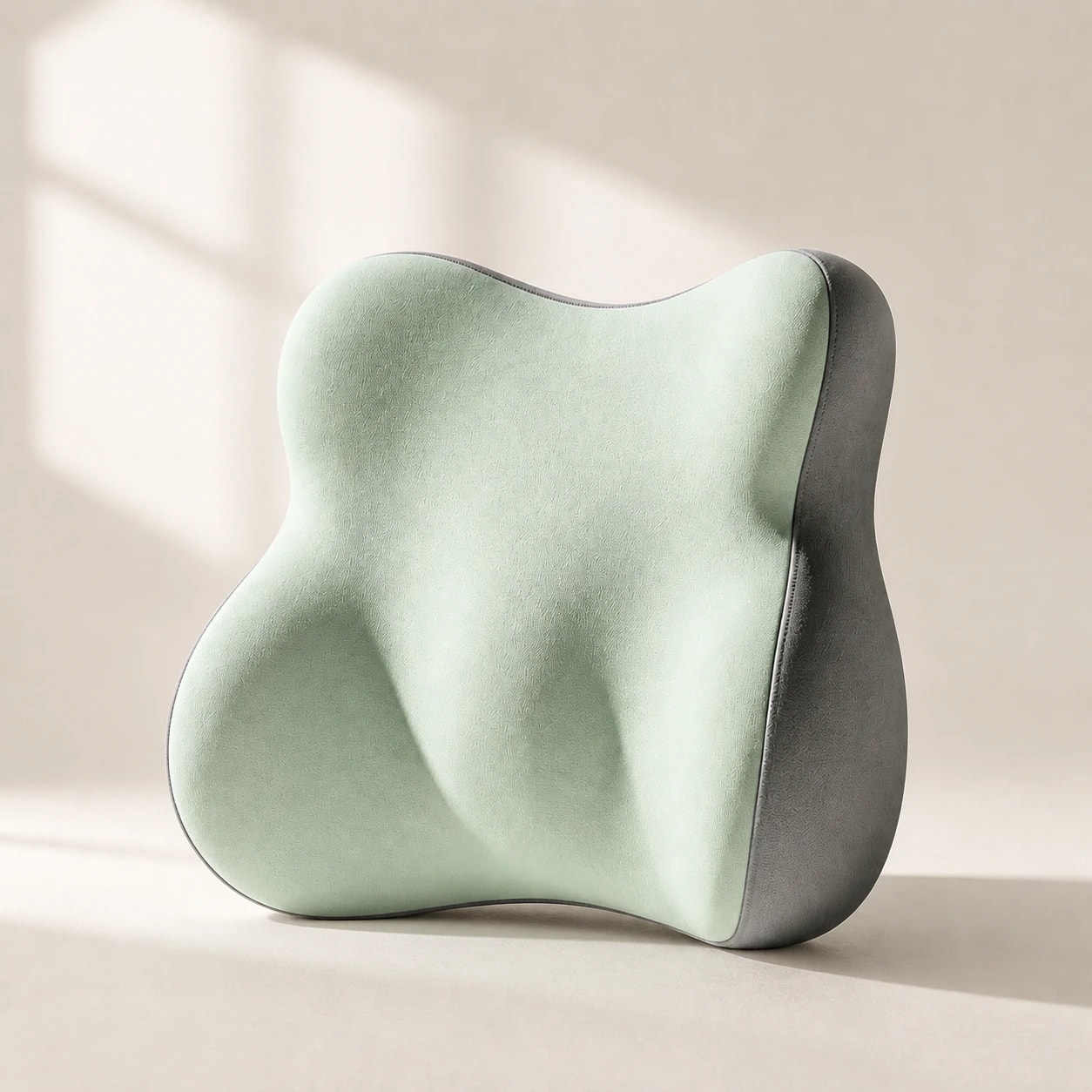
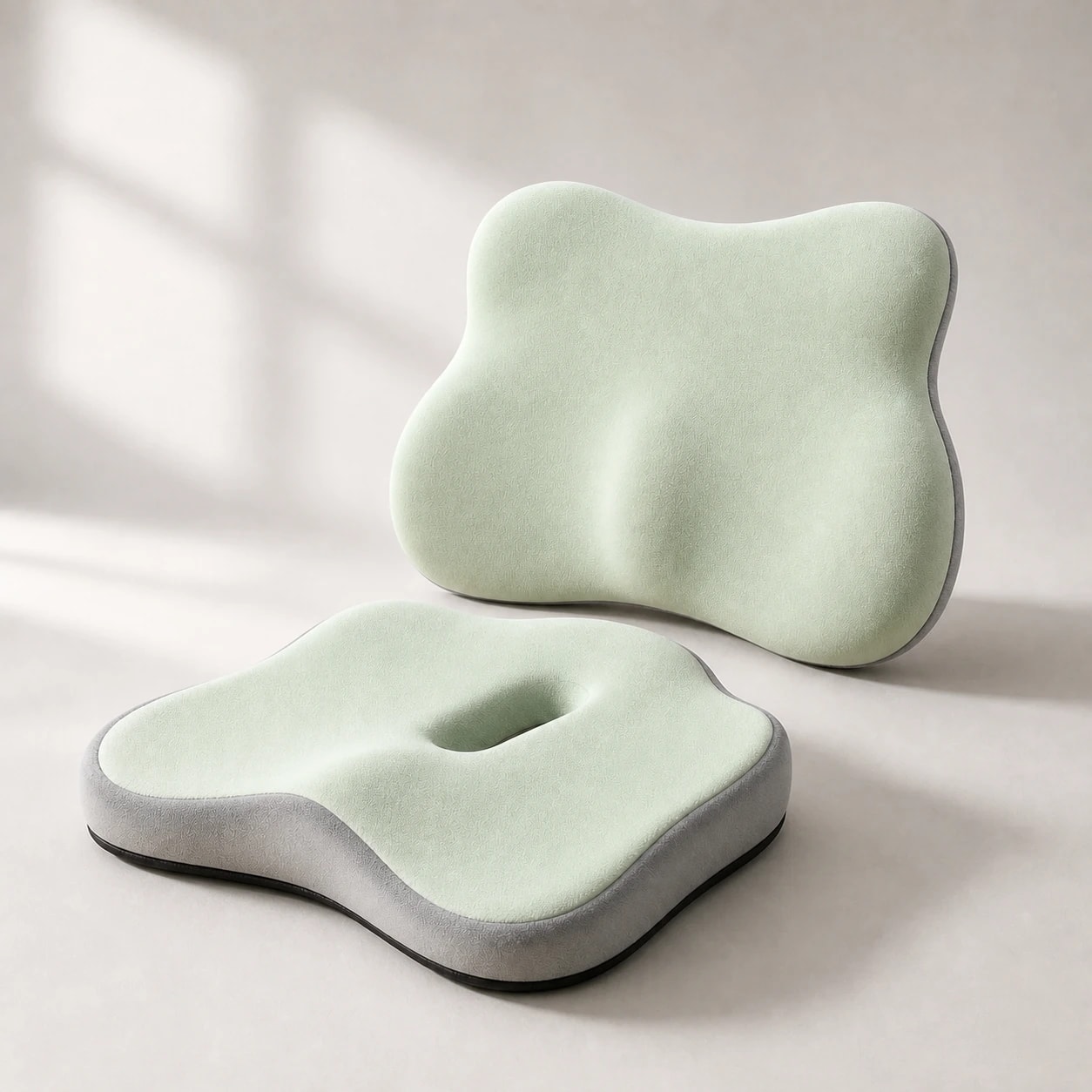
Lumbar Support Pillow for Office Chair

Find the right lumbar support pillow for office chairs. Compare fit, strap stability, foam density, and daily setup for 8+ hour desk sessions.

Lumbar Support Pillow for Office Chair

Pagrindiniai patarimai

Use contoured support that keeps contact during long sessions.
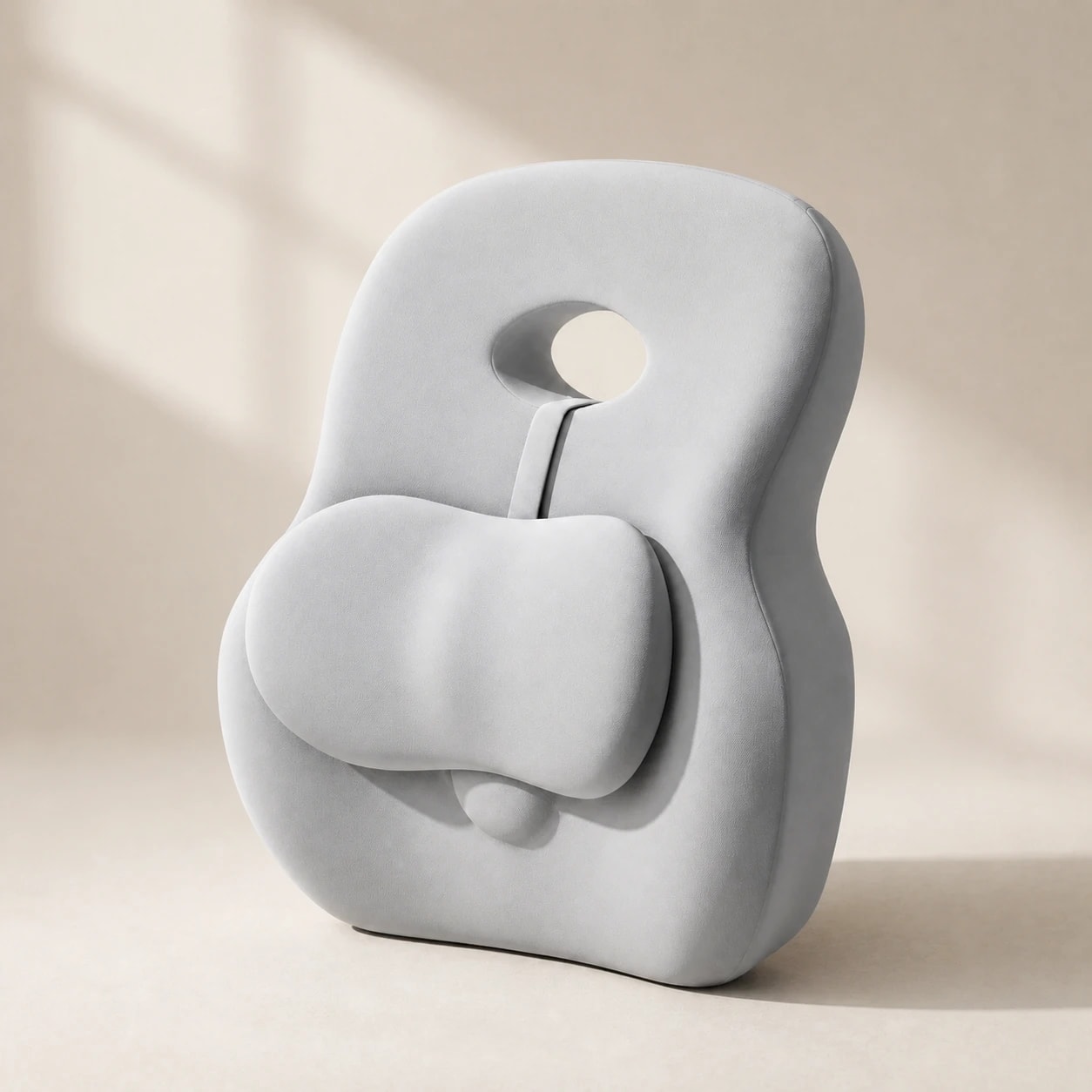
Choose adjustable straps to prevent mid-day slipping.
Pair with chair depth and armrest setup to reduce end-of-day strain.
What buyers check before they purchase

What buyers check before they purchase

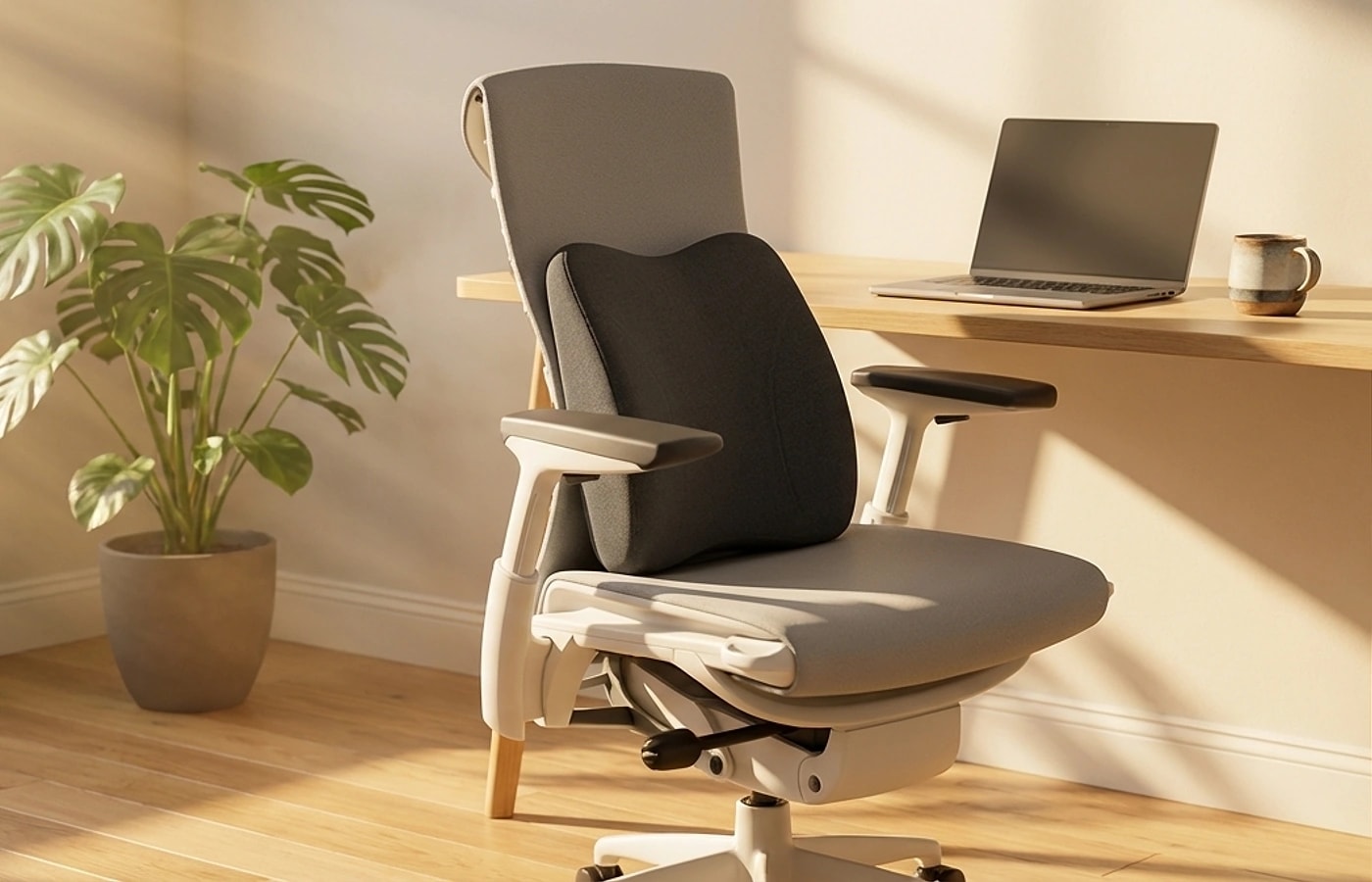
Most failed lumbar pillow purchases stem from poor fit and unstable positioning rather than foam quality alone. The pillow's contour height needs to match your natural lumbar curve, which sits roughly at belt-line level for most adults. If the support rides too high it pushes your shoulders forward, and if it sits too low it misses the spine entirely.

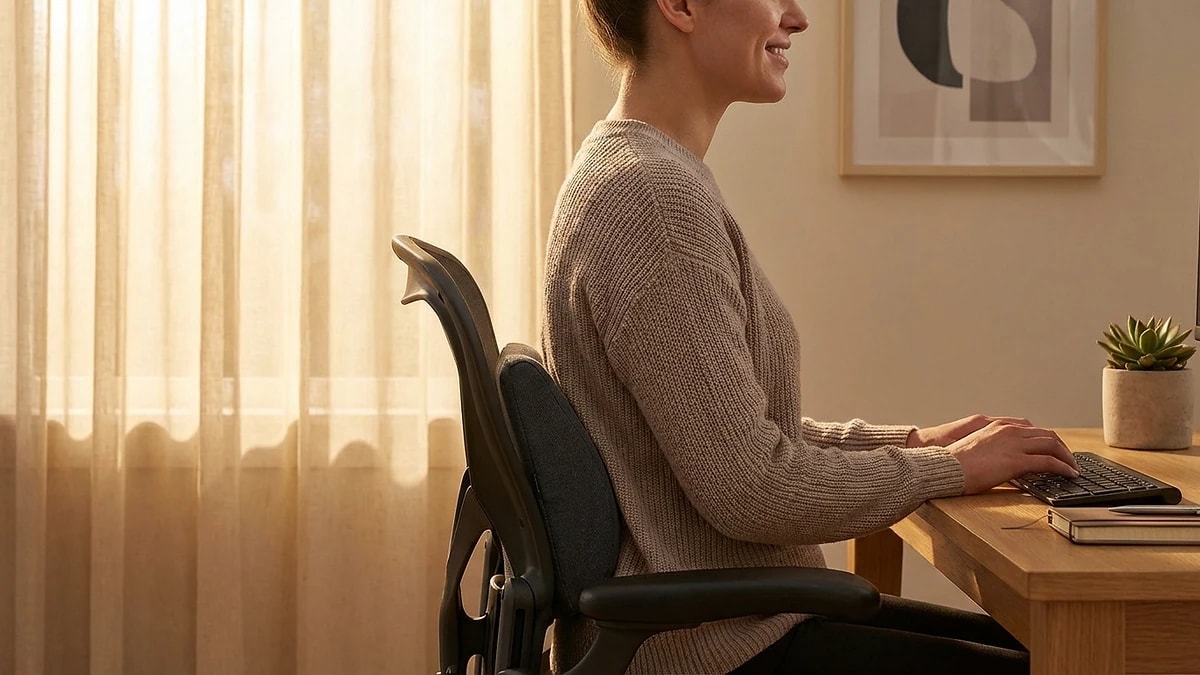
Strap design is equally important. A single-strap system works on mesh-back chairs with a clean anchor path, but thicker upholstered chairs may need a dual-strap or elastic-band attachment to prevent mid-day slipping. Always check that your chair's backrest shape allows a flush contact surface before committing to a specific pillow profile.

  • Mid-back and lower-back strap anchor options for different chair types
  • Recommended pillow height relative to belt line and natural lumbar curve
  • Signs the support is too high, too low, or too soft for your frame
  • Mesh vs upholstered backrest compatibility considerations
How to reduce discomfort during the first week

How to reduce discomfort during the first week

The adjustment period for a new lumbar pillow typically lasts five to ten days. During this time your postural muscles are adapting to a more neutral spinal alignment, which can feel unusual even when the position is biomechanically correct. Starting with two to three hours of use per day and gradually increasing prevents the soreness that causes many users to abandon their pillow prematurely.

Pairing the pillow with short micro-breaks every 45 to 60 minutes accelerates adaptation. Stand, stretch your hip flexors briefly, then reseat yourself with deliberate contact against the lumbar contour. This reinforcement cycle helps your body learn the new resting position faster than passive sitting alone.

  • Start with 2-3 hours daily and increase by one hour each day
  • Combine with micro-breaks every 45-60 minutes for faster adaptation
  • Re-check strap tightness after each break to maintain position
Pairing lumbar support with chair and desk setup

Pairing lumbar support with chair and desk setup

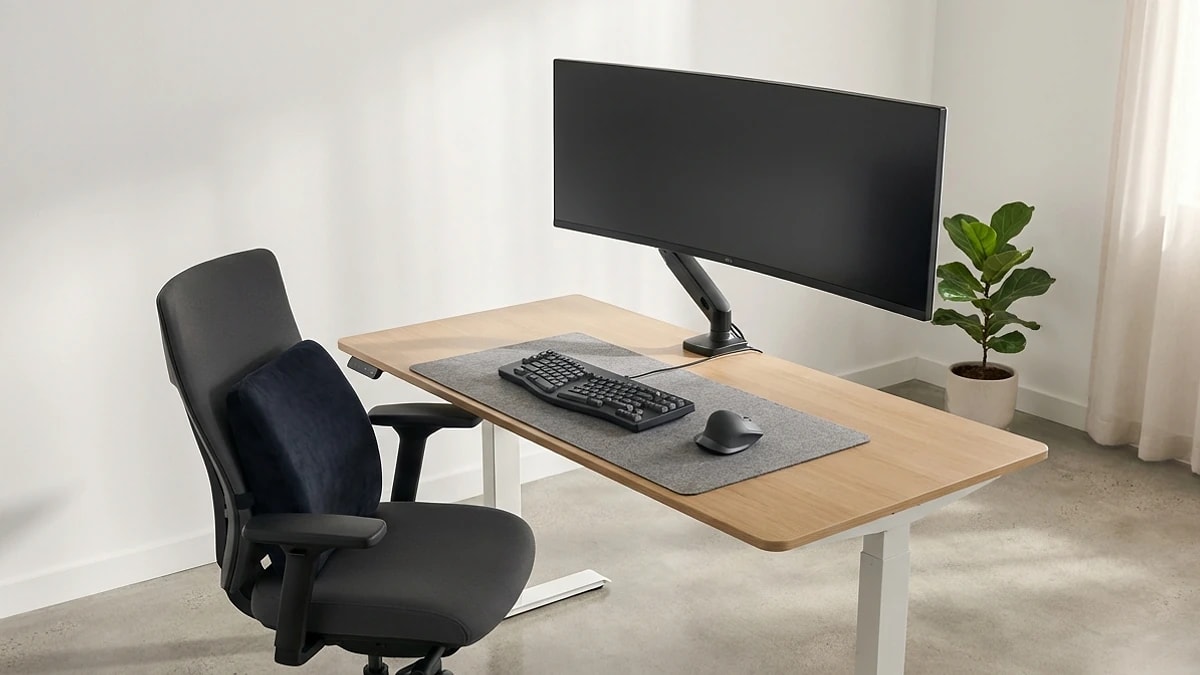
A lumbar pillow works best as part of a complete ergonomic chain. After positioning the pillow, adjust your chair height so your feet rest flat on the floor and your thighs are roughly parallel to the ground. Then set armrest height so your elbows form a 90-degree angle without shoulder elevation — this prevents the upper-body tension that undermines lumbar support effectiveness.

Desk height matters too. If your work surface forces your shoulders up or your wrists to bend sharply, you will unconsciously lean forward and break contact with the lumbar pillow. Aim for a setup where your forearms rest naturally on the desk surface while your back maintains full contact with the support.

  • Adjust chair height for flat feet and parallel thighs
  • Set armrests to maintain 90-degree elbow angle
  • Ensure desk height allows relaxed shoulders and neutral wrists
  • Monitor height should keep top of screen at or slightly below eye level
Home office desk and supportive work chair

Long-term maintenance and replacement timing

Memory foam lumbar pillows gradually lose their rebound properties over 12 to 18 months of daily use. The decline is subtle — the pillow still looks intact but provides progressively less resistance against your spine. A simple test is to press the pillow firmly and release: if it takes longer than three seconds to return to full shape, the foam density has degraded enough to affect support quality.

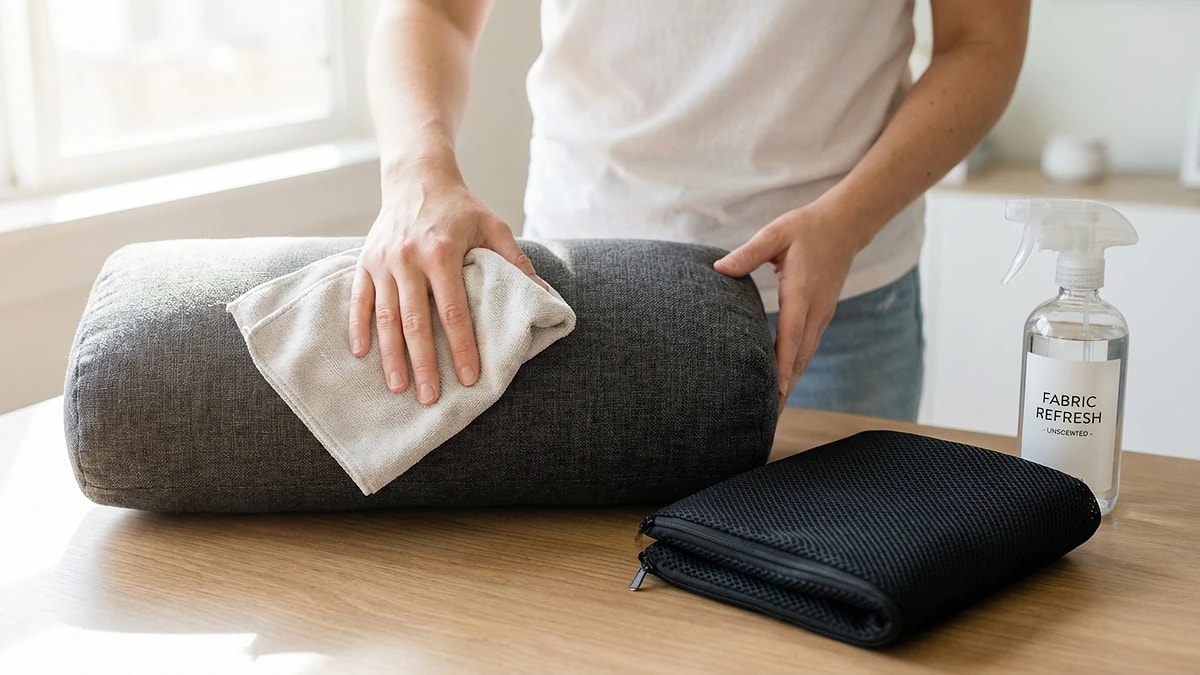
Removable covers should be washed every two to four weeks to prevent odor buildup and material degradation from body oils. Most covers are machine washable on gentle cycle, but always check care labels. Replacing the cover alone can extend the functional life of the inner foam by several months.

  • Test foam rebound monthly — replace if recovery exceeds 3 seconds
  • Wash removable cover every 2-4 weeks on gentle cycle
  • Expect 12-18 month lifespan for daily 8-hour use

Dazniausiai uzduodami klausimai

Will this fit any office chair?

It fits most task and mesh chairs with a stable back surface and strap path. Very wide gaming shells or headrest-only backs may require a different attachment method.

How firm should office lumbar support be?

For 8+ hour desk use, medium-firm support balances stability and comfort best. Very soft fill often collapses within a few hours and loses its contouring effect.

How long should I use it before deciding if it works?

Evaluate over 7 to 14 days with consistent positioning and micro-breaks. One-day testing rarely reflects how the support performs once your posture adapts.

Can I use the same pillow at home and the office?

Yes, if both chairs have similar backrest depth and strap compatibility. Many users keep a dedicated pillow at each location for convenience.

Does lumbar support help with sciatica while sitting?

Proper lumbar support can reduce spinal compression that contributes to sciatic nerve irritation. However, persistent sciatica should be evaluated by a healthcare professional.

Susije gidai

Naršykite šiuos gidus, kad sužinotumėte daugiau ir rastumėte tinkamą sprendimą.