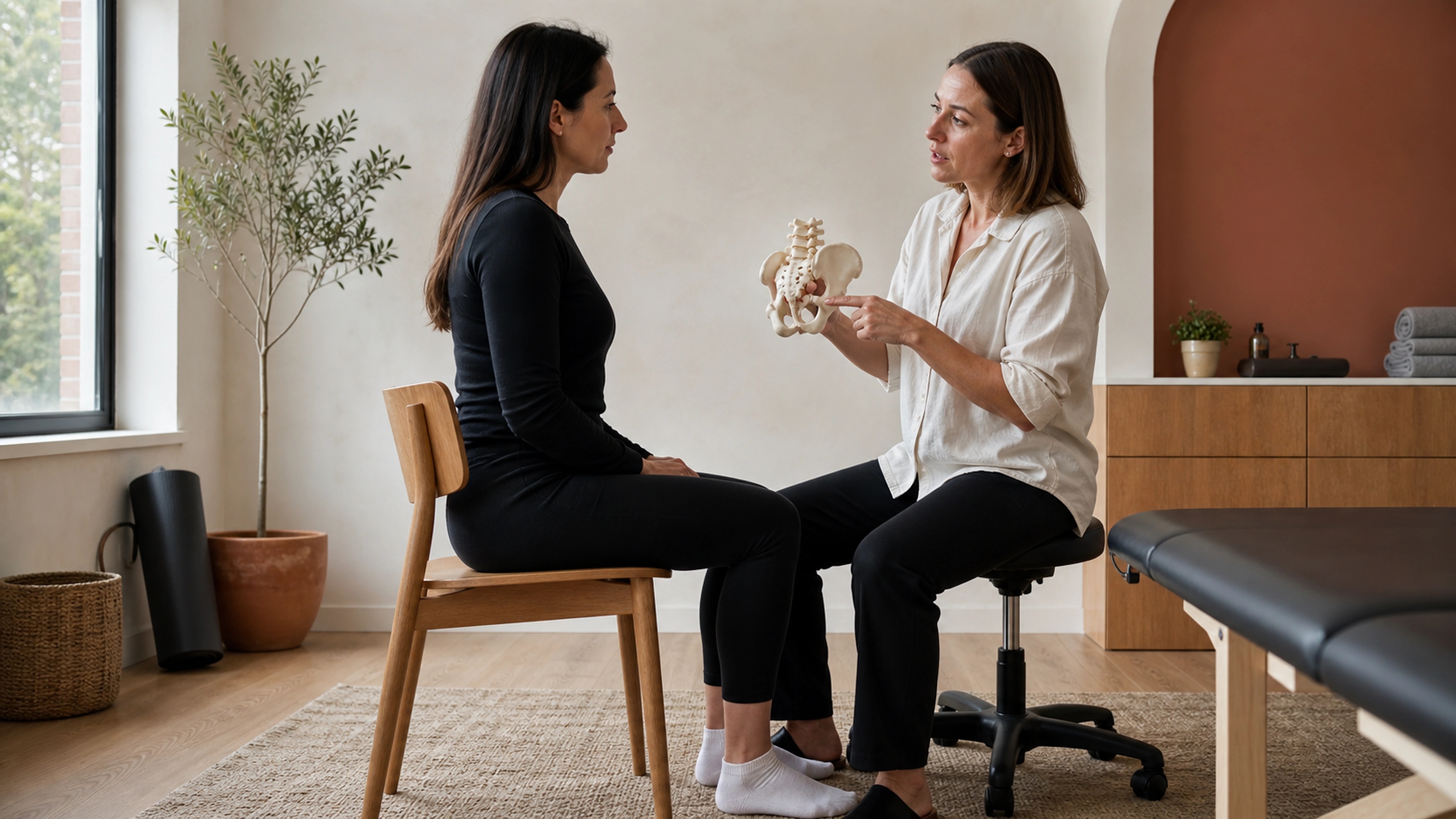

Tailbone Pain While Sitting: Causes and Fixes
Tailbone pain while sitting usually comes down to one mechanical problem: too much direct pressure on the coccyx and the soft tissue around it. The coccyx is the small, triangular bone at the very bottom of your spine. When you sit, especially on a hard or flat surface, your body weight loads onto the two sitting bones (the ischial tuberosities) and, if your posture tips you backward, onto the coccyx itself. Pain in this area is called coccydynia, and for most people it is driven by posture, surface, and sitting time rather than by anything structurally wrong with the spine.
The good news is that the most common forms of tailbone pain respond well to changes you control: how you sit, what you sit on, and how long you stay there. This guide explains what actually causes coccyx pain when sitting and the seating and posture fixes that take pressure off the bone.
What the tailbone does (and why sitting aggravates it)
The coccyx is not a useless vestige. It anchors several muscles, tendons, and ligaments of the pelvic floor and provides a weight-bearing point when you lean back. In an upright, neutral sitting posture, most of your load goes through the sitting bones, and the coccyx is largely unloaded. The moment you slump or recline onto a flat seat, the pelvis rotates backward and the coccyx takes a share of the load it was not designed to carry continuously. Sustained pressure compresses the tissue over the bone, irritates the surrounding ligaments, and produces the sharp or aching pain people describe as "sitting on a bruise."
Common causes of tailbone pain while sitting
- Posture and prolonged sitting. Slumping backward shifts load onto the coccyx. Long, uninterrupted sitting keeps that load constant, which is why discomfort often builds over a workday rather than appearing suddenly.
- Hard or flat seating surfaces. A hard chair, bench, or poorly padded seat concentrates pressure on a small area instead of distributing it.
- Direct trauma. A fall onto the buttocks or a hard knock can bruise, dislocate, or (rarely) fracture the coccyx. This is one of the most common single causes of acute coccydynia.
- Repetitive strain. Activities like cycling or rowing can irritate the coccyx over time.
- Childbirth. The coccyx can be injured during delivery, sometimes producing pain that lingers afterward.
- Body weight at the extremes. Higher body weight increases load through the coccyx when seated; very low body weight can mean less natural padding over the bone. Both can contribute.
- Less common medical causes. Infections, bone spurs, and (rarely) tumors can cause coccyx pain. Pain that is severe, worsening, or accompanied by other symptoms warrants a clinician's evaluation.
According to the U.S. National Library of Medicine's StatPearls reference on coccydynia, the condition is roughly five times more common in women than in men, largely because of pelvic anatomy and the angle of the coccyx, and most cases are managed conservatively without surgery.
The seating fixes that actually relieve pressure
1. Change the surface you sit on
The single most direct fix is to stop loading the bone. A well-designed cushion offloads the coccyx so your weight rests on the sitting bones and thighs instead. Two shapes do this:
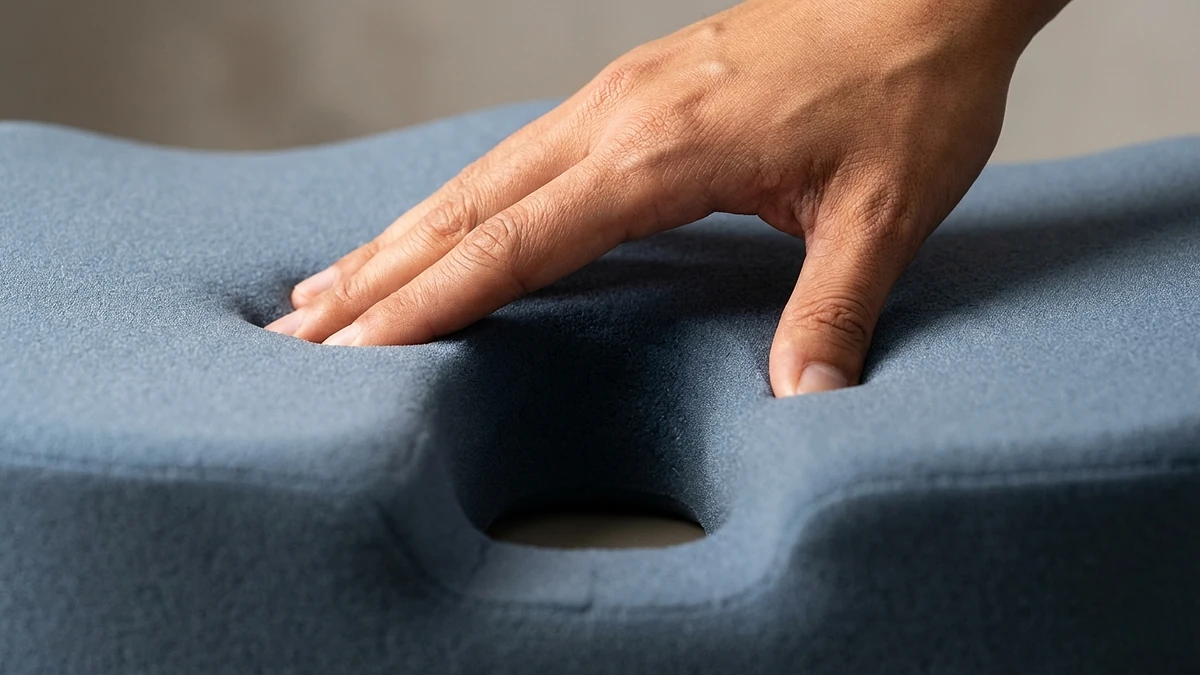
- Coccyx-cutout (U-shaped) cushions have a wedge or channel removed at the rear so nothing presses on the tailbone at all.
- Contoured memory-foam cushions distribute load across a wider area and conform to your anatomy, reducing peak pressure under the bone.
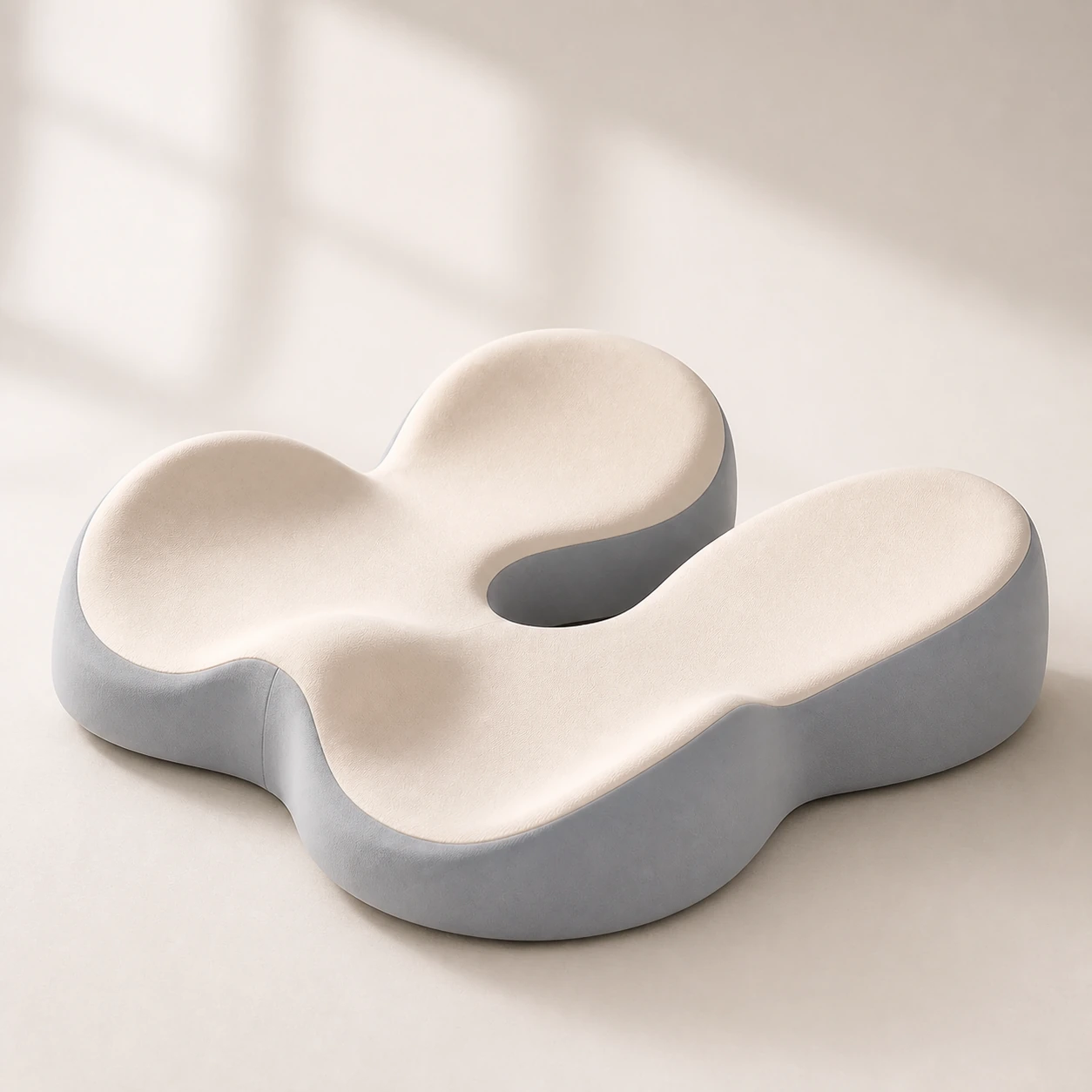 Product mentioned in this guideMemory Foam Seat CushionA sculpted seat cushion with a deep, open U-shaped rear channel designed to reduce direct contact beneath the coccyx and tailbone area. Raised rear…Free US shipping on every order60-Day Home Trial · we pay return shippingSee current price
A memory foam seat cushion with a coccyx cutout is the most common starting point for desk-bound coccyx pain, because it works on any existing chair. If you spend long stretches driving, a contoured gel seat cushion can keep the surface cooler over long sessions. The goal is the same: get the pressure off the bone and onto the structures built to bear it.
2. Fix your sitting posture
Cushions help, but posture is what keeps the coccyx unloaded between adjustments. Aim for a neutral pelvis: sit back in the chair, keep your hips level with or slightly above your knees, and let the chair's backrest support the natural curve of your lower spine rather than rounding into it. Pulling your weight forward onto the sitting bones, instead of rolling back onto the tailbone, is the core correction.
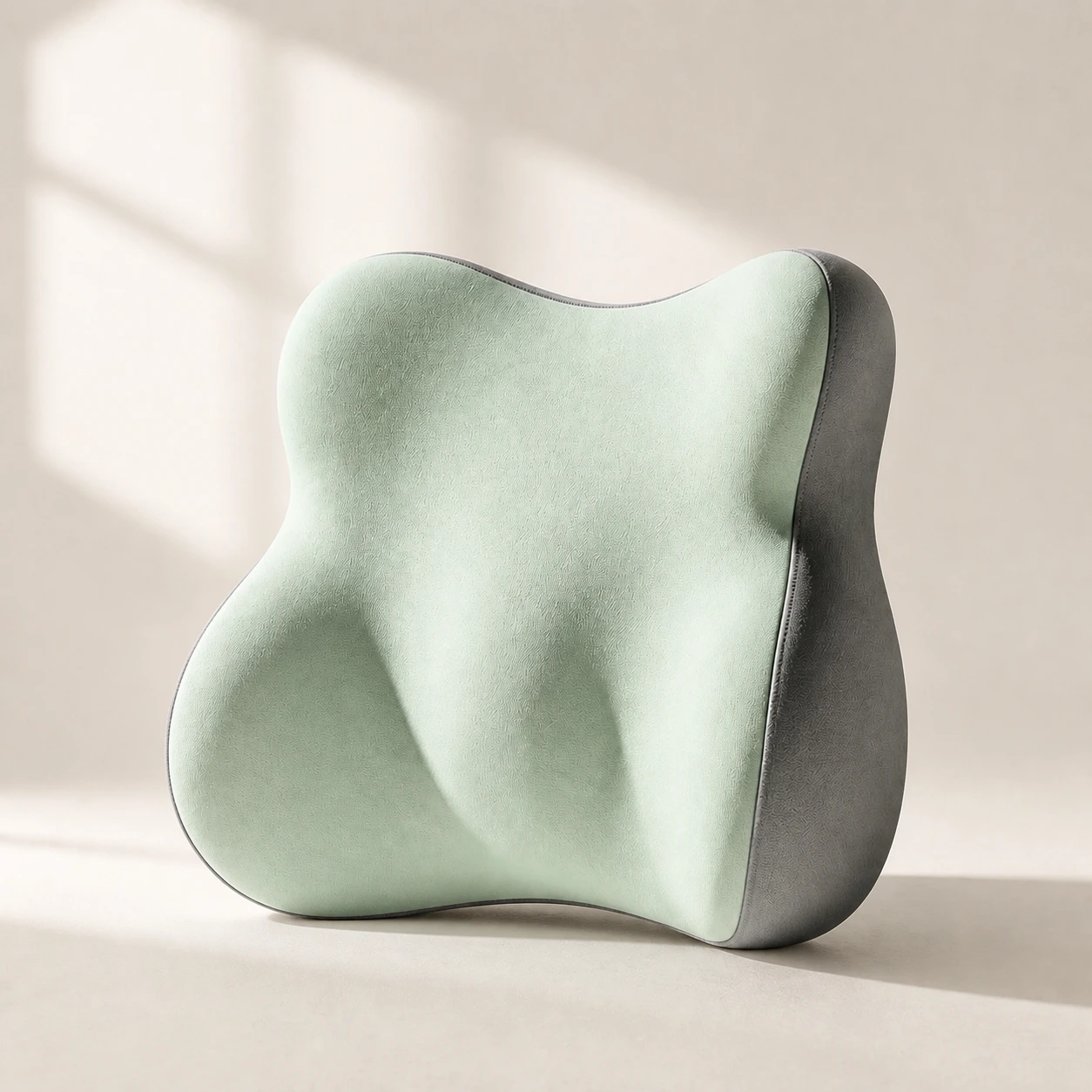 Product mentioned in this guideLumaWing Lumbar Cushion39 × 34 × 14 cm lumbar cushion available in four colours with a slow-rebound memory-foam core, fixed central ridge, recessed side channels, and broad outer…Free US shipping on every order60-Day Home Trial · we pay return shippingSee current price
Good lumbar support makes this far easier to sustain, because it stops your lower back from collapsing into a slump as you tire. A dedicated lumbar support pillow behind the small of your back, or a chair built with proper lumbar adjustment such as the LumaSpine Pro ergonomic office chair, holds the pelvis in the neutral position that keeps weight off the coccyx.
3. Break up sitting time
No cushion fully compensates for hours of unbroken pressure. Standing, walking, or simply shifting position every 30 to 60 minutes lets the tissue over the coccyx recover. A sit-stand setup such as an adjustable standing desk makes it practical to alternate between sitting and standing without leaving your work, which is one of the most reliable long-term defenses against coccyx pain for desk workers.
4. Lean forward, not back, when you must sit hard
If you are stuck on a hard surface with no cushion, leaning slightly forward shifts load off the coccyx and onto the sitting bones and thighs. It is a stopgap, not a posture to hold all day, but it can take the edge off in the short term.
Self-care and when to see a clinician
For pain that follows a minor injury or a stretch of hard sitting, mainstream medical guidance (including the U.K. National Health Service and the StatPearls coccydynia reference) points to conservative measures first: a coccyx cushion, posture changes, over-the-counter pain relief such as NSAIDs where appropriate, brief ice or heat, and avoiding prolonged sitting on hard surfaces. Most acute coccydynia improves within a few weeks of these steps.
See a clinician if the pain is severe, does not improve after a few weeks of self-care, follows a significant fall, or comes with numbness, fever, swelling, or changes in bowel or bladder function. These can signal a fracture, infection, or other issue that needs assessment. Persistent cases are sometimes treated with physical therapy, targeted injections, or, rarely, surgery, but those are later steps after conservative care has been tried.
The bottom line
Most tailbone pain while sitting is a pressure problem with a pressure solution. Offload the coccyx with the right cushion, hold a neutral pelvis with good lumbar support, and break up long sitting sessions. Those three changes resolve or substantially reduce the pain for the majority of people, without anything more invasive. If pain persists despite them, or if it followed a hard fall, get it checked.
This article is general information, not medical advice. For a persistent or severe problem, consult a qualified healthcare professional.