
Standing Desk Benefits: What the Research Actually Shows
The research on standing desks is genuinely positive, but more modest and more specific than the marketing suggests: the strongest evidence is for better blood-sugar control, less sitting time, and reduced lower back pain, while the calorie-burning benefit is small. The single biggest finding across the studies is that the benefit comes from alternating sitting and standing and moving more, not from standing still all day. This guide walks through what real, peer-reviewed studies found, where the claims are overblown, and how to actually capture the benefits with an adjustable standing desk.
Why standing desks became popular: the sitting problem
The case for a standing desk starts with the case against prolonged sitting. A large harmonised meta-analysis published in The Lancet by Ekelund and colleagues (2016) pooled data from more than one million adults and found that long sitting time was associated with higher mortality, an association that was substantially attenuated, and in some cases effectively eliminated, in people who were physically active. The headline that resonated with desk workers was simple: very long sedentary stretches are a health risk, and the antidote is movement.
That is the gap a sit-stand desk is meant to fill. It does not turn a desk job into exercise, but it gives you a low-friction way to break up sitting without leaving your work, which is exactly the behaviour the research points to.
Benefit 1: It reduces how long you sit (the best-evidenced effect)
The most reliable, repeatedly demonstrated benefit of a standing desk is the obvious one: people who have one sit less. A 2018 Cochrane systematic review by Shrestha and colleagues pooled multiple workplace trials and found that sit-stand desks reduced sitting time at work by roughly 84 to 116 minutes per day in the short term, settling to around 57 minutes per day over a three-to-twelve-month follow-up.
The honest caveat the reviewers themselves stressed: the certainty of the evidence for downstream health outcomes was low to very low, mostly because the studies were small and short. So the fair reading is that standing desks are a well-evidenced tool for sitting less, which is a sensible goal on its own, rather than a proven cure for any single condition. Encouragingly, the review found no evidence that standing more caused harm such as musculoskeletal pain or lost productivity.
Benefit 2: Better blood-sugar control after meals
This is where the metabolic case is most interesting. In a study published in Occupational and Environmental Medicine, Buckley and colleagues (2014) had office workers stand for 185 minutes after lunch on one day and sit on another. Standing attenuated the post-meal blood-glucose spike by 43% (p = 0.022) compared with sitting. Blunting those after-meal glucose surges is meaningful, because repeated large spikes over years are part of the path toward type 2 diabetes.
It is one small study, so it should be read as encouraging rather than definitive. But it points to a real mechanism: simply being upright after eating engages your leg muscles and changes how your body handles the meal, in a way that sitting does not.
Benefit 3: A small bump in calories burned (don't oversell this one)
The most over-hyped standing desk claim is weight loss, and here the research is a useful reality check. A 2018 systematic review and meta-analysis by Saeidifard and colleagues in the European Journal of Preventive Cardiology found that standing burns only about 0.15 more calories per minute than sitting. Over six hours of standing, that adds up to roughly 54 extra calories for a typical adult.
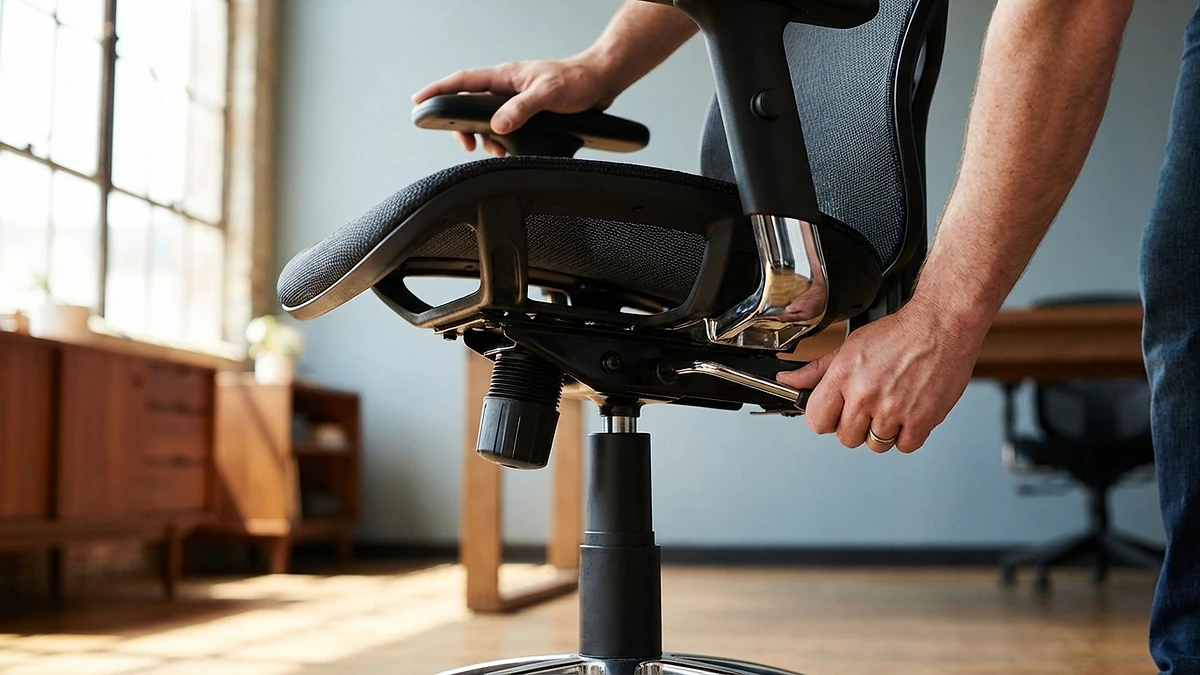
Fifty-odd calories is real but small: it is a short walk, not a workout. A standing desk is not a fat-loss device, and treating it as one sets you up for disappointment. The metabolic value is in the position change and the blood-sugar effect, not in the calorie ledger. If your goal is energy expenditure, pair standing with actual movement.
Benefit 4: Less lower back pain, when used correctly
For the most common desk complaint, the evidence is encouraging. In a randomized controlled trial published in the Journal of Occupational and Environmental Medicine, Ognibene and colleagues (2016) gave office workers who had chronic lower back pain access to a sit-stand workstation. Over the study period, participants reported a statistically significant reduction in both current low back pain (P = 0.02) and worst low back pain (P = 0.04) compared with their usual sitting setup.
The mechanism is the same theme that runs through all of this research: relief comes from breaking out of a single sustained posture, not from standing as a fixed position. If you want a deeper dive into that specific topic, see our guide on the standing desks built for alternating between sitting and standing.
The catch: standing all day is not the goal
Every benefit above shares one condition: you have to keep changing position. Standing rigidly in place for hours simply swaps one static load for another, and prolonged static standing has its own well-documented downside, including fatigue and standing-induced lower back discomfort. The Cochrane reviewers, the back-pain trial, and the metabolic studies all converge on the same practical point: the active ingredient is variety and movement.
So the goal is never to replace eight hours of sitting with eight hours of standing. It is to alternate, and to take short walking breaks regardless of which position you are in.
How to actually capture the benefits
Owning a standing desk does nothing on its own. Using it like this is what turns the research into results:
- Alternate sitting and standing. A common starting point is roughly 30 minutes sitting to 15 minutes standing, then adjust to what your body tolerates. Switch before either position starts to ache.
- Build up gradually. If you have sat all day for years, do not stand for four hours on day one. Start with short standing blocks and increase over a couple of weeks.
- Stand after meals. Given the blood-sugar findings, the post-lunch slot is a high-value time to be upright.
- Move while standing. Shift your weight, take a few steps, and avoid locking your knees. The point is motion, not a statue.
- Take walking breaks. Sitting or standing, get up and walk for a minute or two every half hour. This is the habit most strongly tied to the mortality benefit Ekelund described.
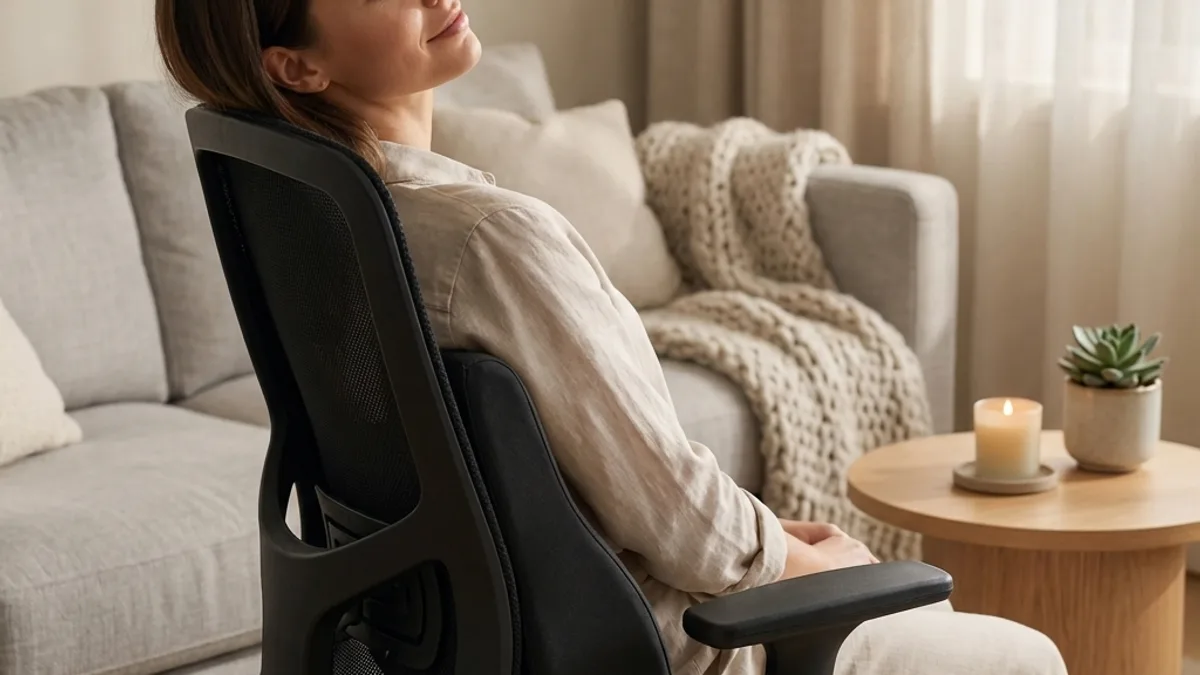
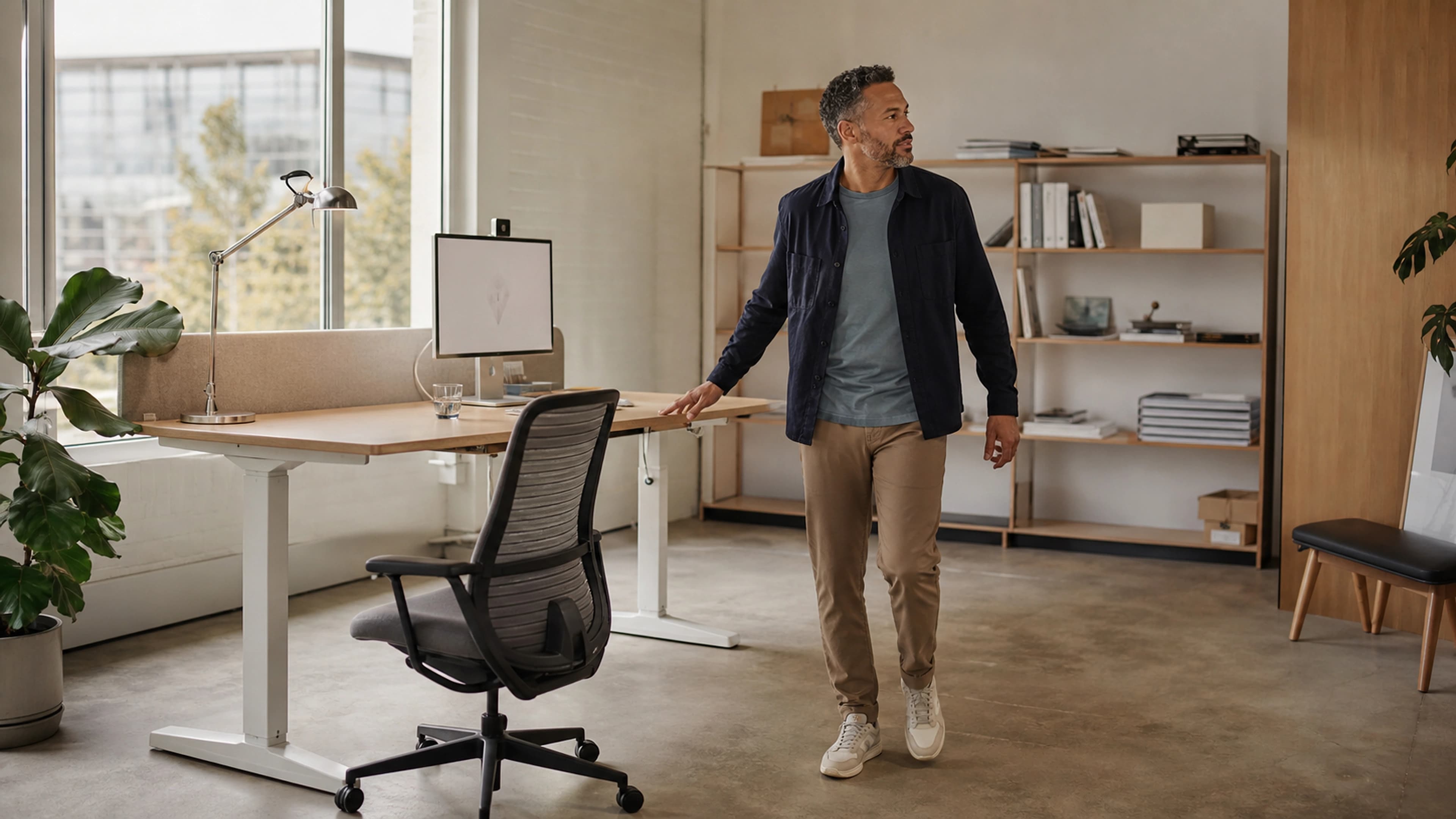
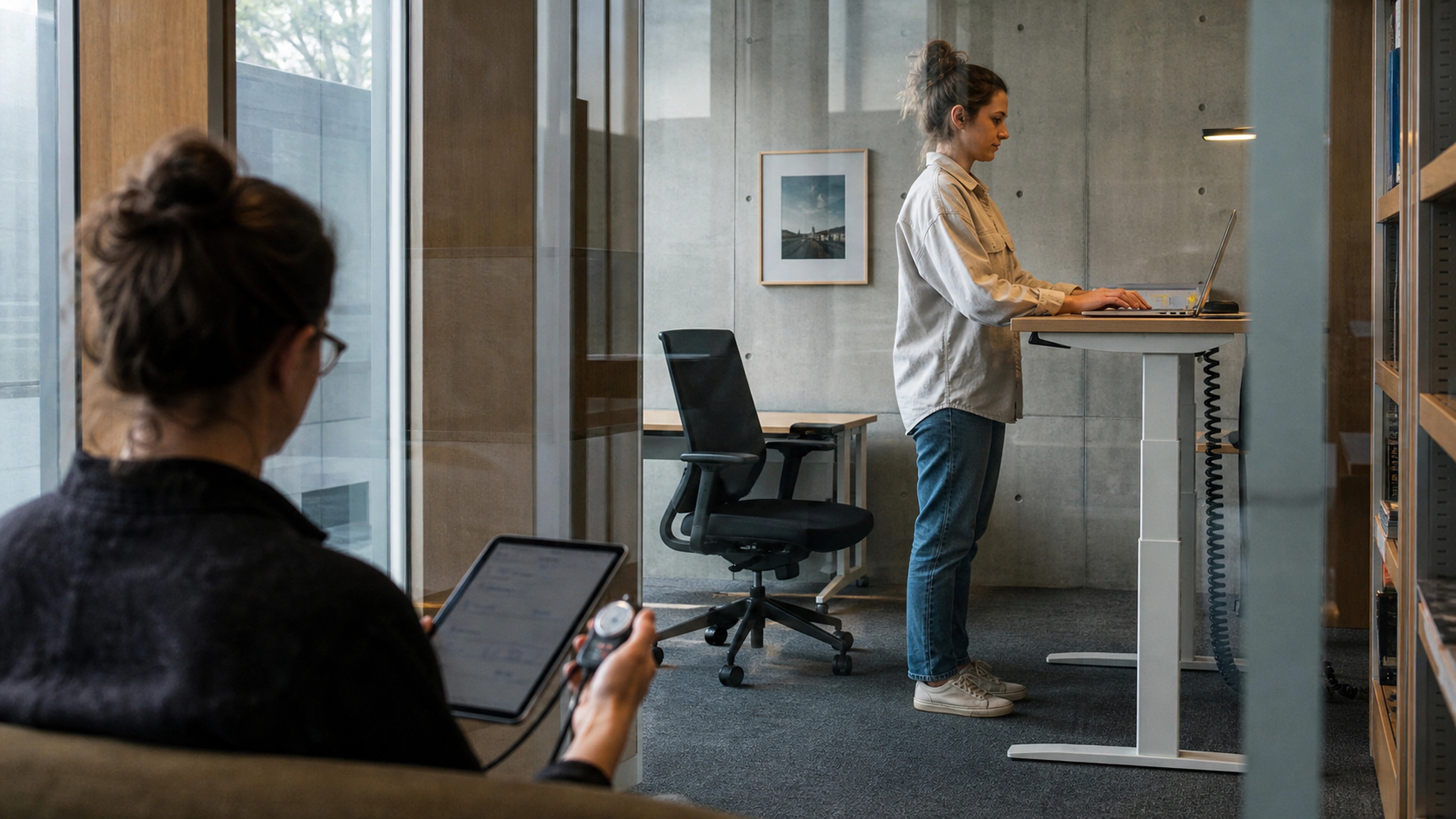
An adjustable standing desk makes this rhythm practical, because changing height takes seconds and there is no friction to stop you switching. If transitions are a hassle, you simply will not do them, and the whole benefit evaporates.
Set it up so the ergonomics are right
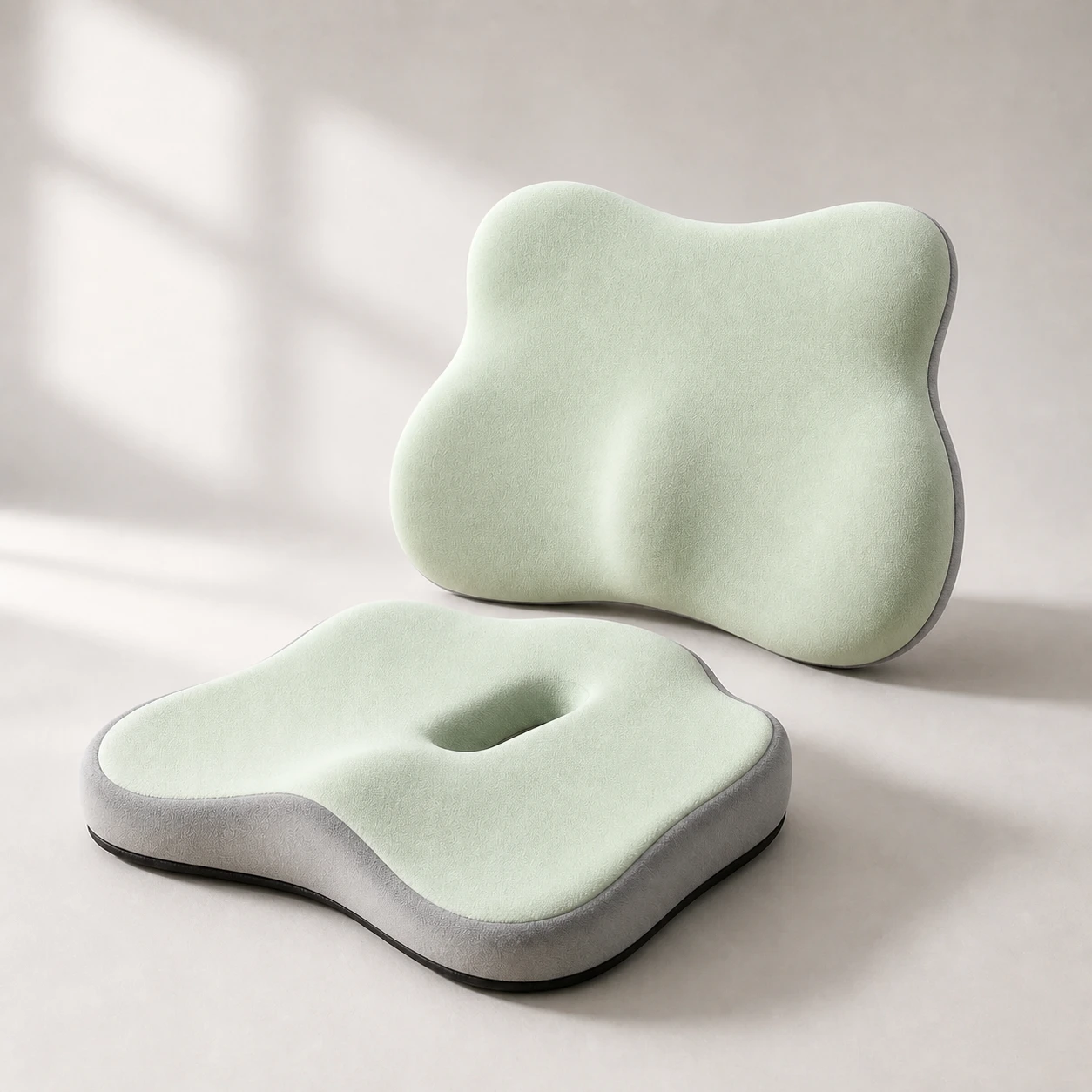 Product mentioned in this guideSitContour DuoSlow-rebound memory-foam set available in two colours with one contoured seat cushion and one separate four-lobed lumbar cushion.Free US shipping on every order60-Day Home Trial · we pay return shippingSee current price
Good positioning matters as much standing as sitting. Dial these in once:
- Desk height when standing: raise the surface so your elbows rest at roughly a 90-degree angle with forearms parallel to the floor and wrists neutral.
- Monitor height: the top of your screen should sit at or just below eye level, about an arm's length away, so you are not tipping your head down or leaning in.
- Feet and floor: distribute your weight evenly and use a cushioned anti-fatigue mat to make longer standing blocks comfortable.
The standing desk is half the system, not the whole fix
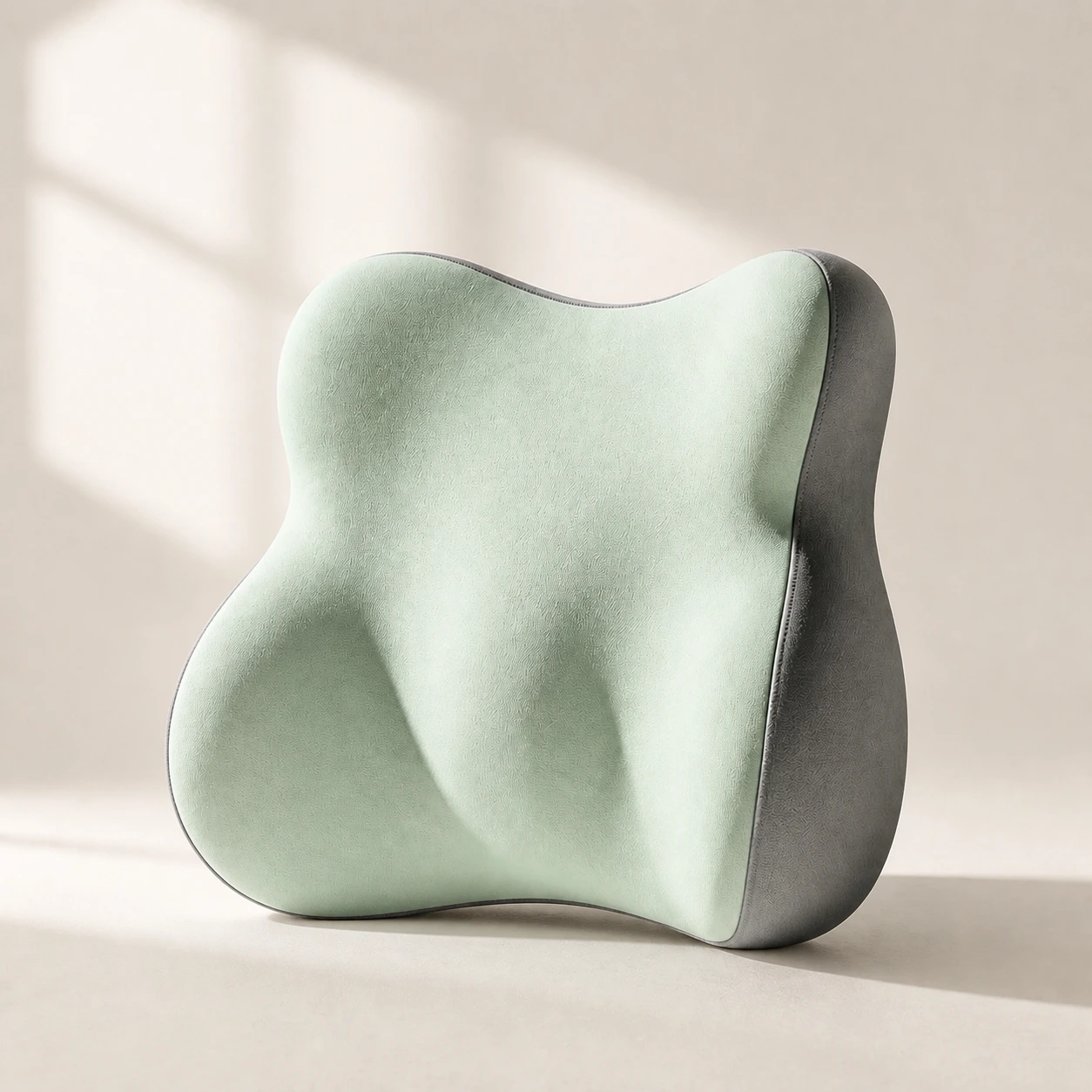 Product mentioned in this guideLumaWing Lumbar Cushion39 × 34 × 14 cm lumbar cushion available in four colours with a slow-rebound memory-foam core, fixed central ridge, recessed side channels, and broad outer…Free US shipping on every order60-Day Home Trial · we pay return shippingSee current price
Even with a standing desk, most people still sit for a large share of the day, so the seated half needs to be ergonomic too, or it quietly undoes the standing benefit. If your chair lacks proper lower-back support, the most cost-effective fix is a well-placed lumbar support pillow that retrofits the right curve onto a seat you already own. For longer seated stretches, a supportive gel seat cushion reduces pressure during the sitting blocks, and an ergonomic foot rocker keeps your feet and ankles moving even while seated, which is the same active ingredient the research keeps pointing to. If you want the core pieces in one go, the back pain remote work kit bundles them for a complete sit-stand workstation.
A note on what the research does not claim
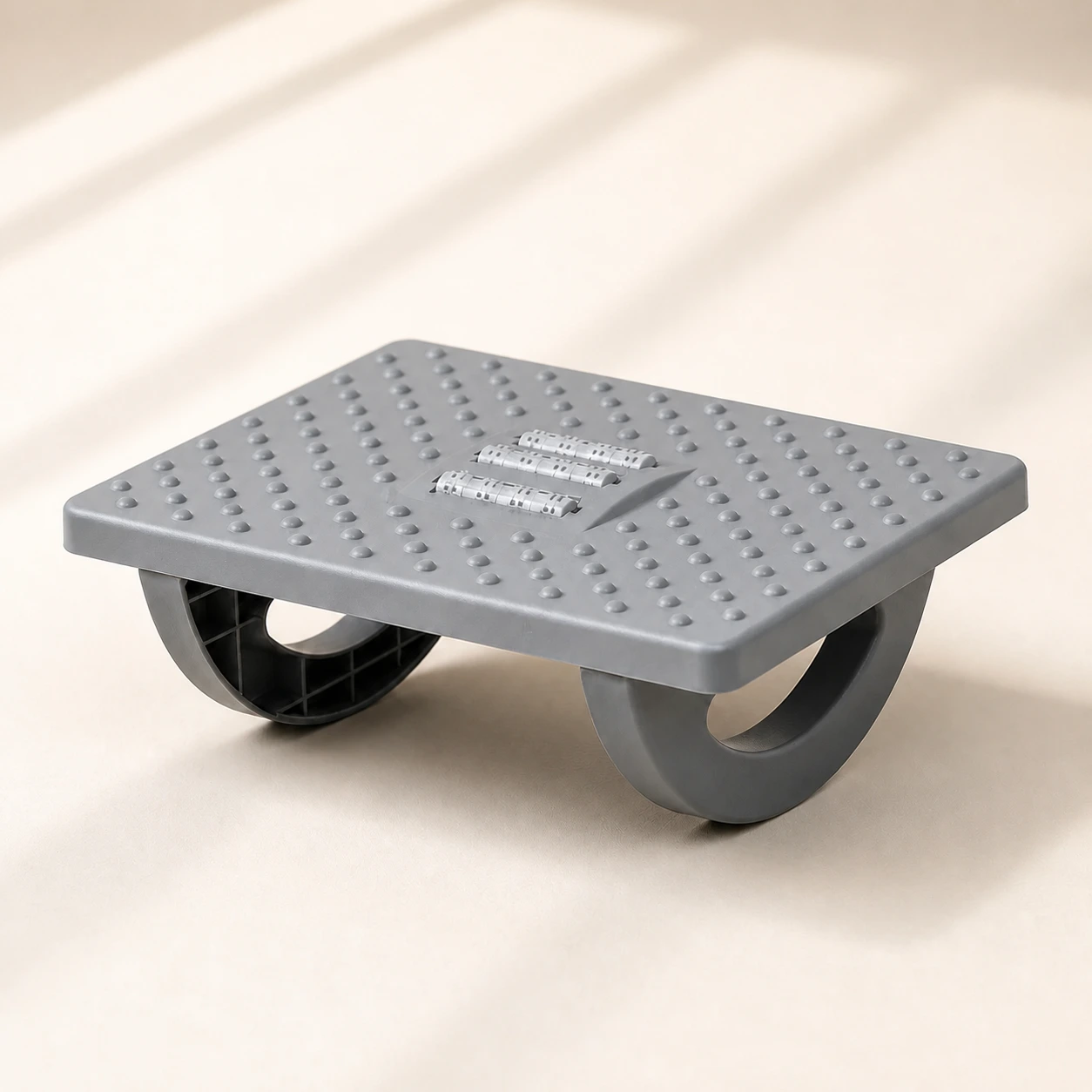 Product mentioned in this guideRollArc Rocking FootrestCompact gray footrest with twin curved supports for user-controlled rocking, a textured deck, and three central roller tracks.Free US shipping on every order60-Day Home Trial · we pay return shippingSee current price
Standing desks address a mechanical, posture-and-movement problem. They are not a treatment for an underlying medical condition, and they will not, on their own, drive meaningful weight loss. If you have severe, sudden, or radiating back pain, or pain with numbness or weakness, see a doctor or physiotherapist rather than relying on ergonomics alone. The research supports standing desks as a sensible way to sit less and move more, used realistically.
The bottom line
The strongest, most honest summary of the research: a standing desk reliably helps you sit less, can blunt post-meal blood-sugar spikes, and is linked to less lower back pain, while its calorie benefit is small. The thread tying it all together is movement and variety, not standing for its own sake. Use a sit-stand setup to alternate positions through the day, stand after meals, take walking breaks, and pair it with a supportive seated setup. Done that way, the evidence is on your side. Browse the adjustable standing desk to start building that rhythm into your workday.
Frequently asked questions
Do standing desks actually have research behind them?
Yes, though the evidence is strongest for some claims and weaker for others. A 2018 Cochrane review found sit-stand desks reliably reduce workplace sitting time, a 2014 study by Buckley and colleagues found standing after lunch cut blood-sugar spikes by 43%, and a 2016 randomized trial by Ognibene and colleagues found they reduced chronic lower back pain. The certainty for long-term outcomes is rated low, so they are best treated as a well-supported tool for sitting and moving more, not a guaranteed cure.
How many calories does a standing desk burn?
Very few extra. A 2018 meta-analysis by Saeidifard and colleagues found standing burns only about 0.15 more calories per minute than sitting, roughly 54 extra calories over six hours of standing. That is a short walk, not a workout, so a standing desk is not a weight-loss device. Its value is in the position change and metabolic effects, not the calorie count.
Are standing desks good for blood sugar?
The early evidence is encouraging. In a 2014 study, Buckley and colleagues had office workers stand for about three hours after lunch and found their post-meal blood-glucose spike was 43% lower than on a day spent sitting. It is one small study, so read it as promising rather than proven, but it points to a real mechanism, since being upright after eating engages your leg muscles and changes how your body handles the meal.
How long should I stand at a standing desk each day?
There is no single proven ratio, but a sustainable starting point is about 30 minutes sitting to 15 minutes standing, adjusted to comfort. Build up gradually rather than standing for hours on day one, and switch positions before either one starts to ache. The aim is frequent change and movement, not hitting a fixed standing target.
Do I still need a good chair if I have a standing desk?
Yes. Most people still sit for a large part of the day even with a standing desk, so the seated half needs to support your lower-back curve. A chair with proper lumbar support, or a lumbar support pillow added to an existing chair, keeps those sitting blocks from quietly undoing the benefit of the standing ones.