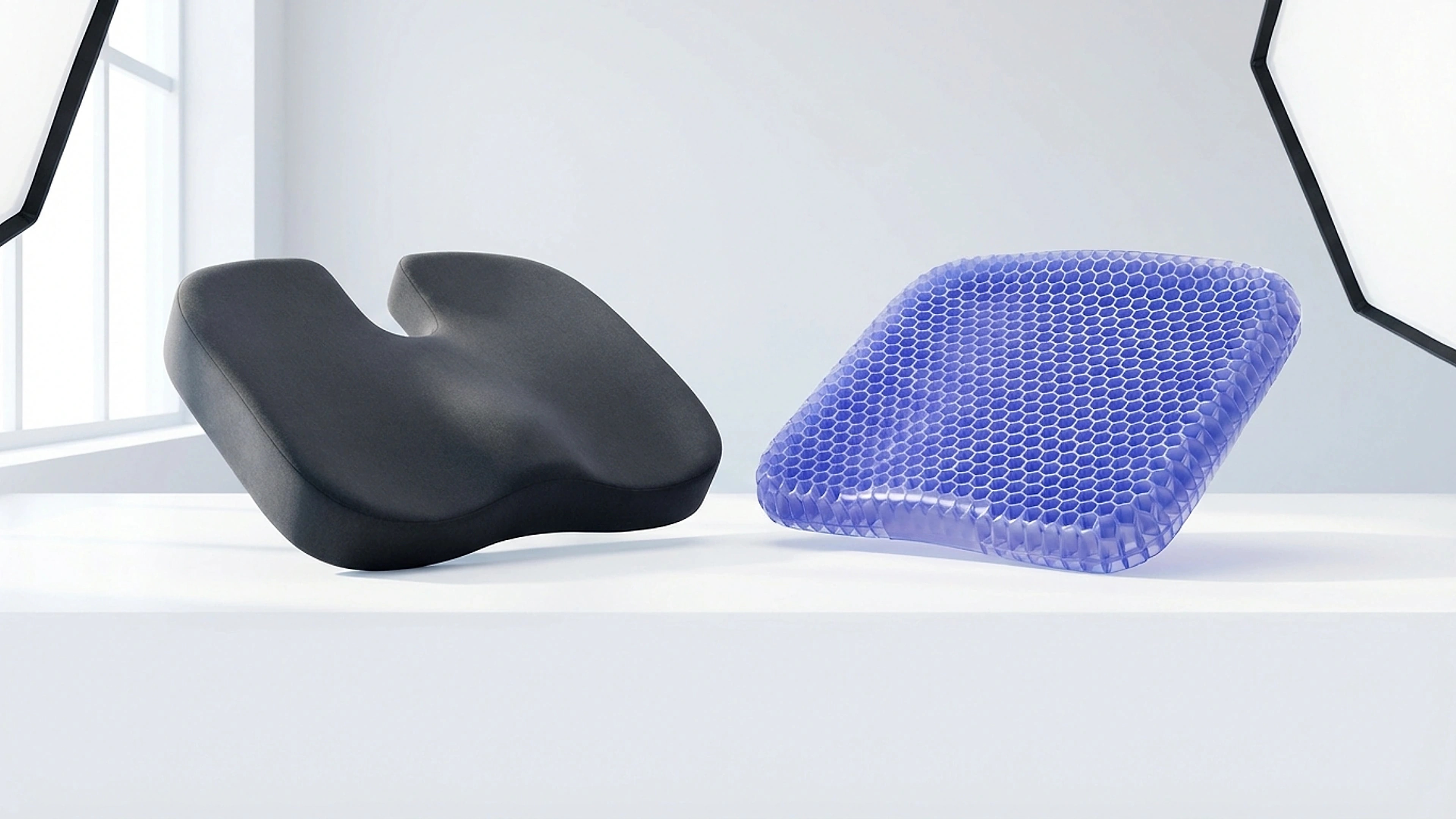

Memory foam versus gel is not one simple matchup. Foam composition and firmness vary, while “gel” can mean a solid pad, an open grid or a small amount blended into foam. Compare a specific cushion's shape, measurements, cover and chair fit before expecting one material to feel cooler or more supportive.
What the materials actually are
- Ordinary memory foam: viscoelastic polyurethane foam that changes shape under load and recovers afterward. Density and firmness are separate properties; neither can be inferred from a product photo.
- Solid gel pad: a continuous gel layer or insert. Its feel depends on thickness, backing and cover.
- Gel grid: a flexible, open-cell or column structure. The spaces may allow airflow, but the full cushion and its cover determine what a sitter actually feels.
- Gel-infused foam: foam with gel incorporated into it. It is still primarily a foam construction, not the same thing as a freestanding gel grid.
These categories describe construction only. Without a controlled, model-specific comparison, no material can be declared universally cooler, longer-lasting or better for a medical condition.
Compare the seat cushion, not just its label
Memory foam: useful questions to ask
Ask whether the maker documents the foam type, density, firmness, cover and dimensions. A slow-rebound description tells you how the foam responds, not how long it will last or whether it fits your chair. A contoured surface may change where the chair contacts you, but comfort remains individual.
For a documented foam-core example, SeatNest Memory Cushion has a seller-identified memory-foam core and a fixed sculpted shape. Its owner-supplied overall dimensions are 15.75 × 13.39 × 3.15 in (about 40 × 34 × 8 cm). Its exact foam density, outer-fabric composition and care method were not supplied, so none should be assumed.
Gel: distinguish the constructions
An open grid may feel more ventilated than a solid pad in a particular design, but cover fabric, room conditions and contact pattern can change the experience. A gel-infused foam is not automatically equivalent to either. Ask for the exact product's construction and care details rather than treating “gel” as a guarantee of cooling or pressure relief.
Which cushion fits your use?
- Measure the usable chair seat. The cushion should not hang over the edge or block controls. If dimensions are missing, ask before buying.
- Identify the pressure area. A rear opening may create space under the tailbone area; a broad contour changes surrounding contact. This is a shape choice, not a treatment claim.
- Check added seat height. Your feet still need support, and your arms should remain comfortable at the desk or steering wheel.
- Check cleaning instructions and returns. A material name alone does not tell you how to wash the cover or core.
For a coccyx-focused shape, view the Memory Foam Seat Cushion. Its deep open rear U-channel is visible and its owner-supplied overall dimensions are 14.96 × 15.75 × 3.15 in (about 38 × 40 × 8 cm). The captured supplier source did not confirm material composition, foam density or care instructions for that exact item; the name should not be treated as proof of those specifications.
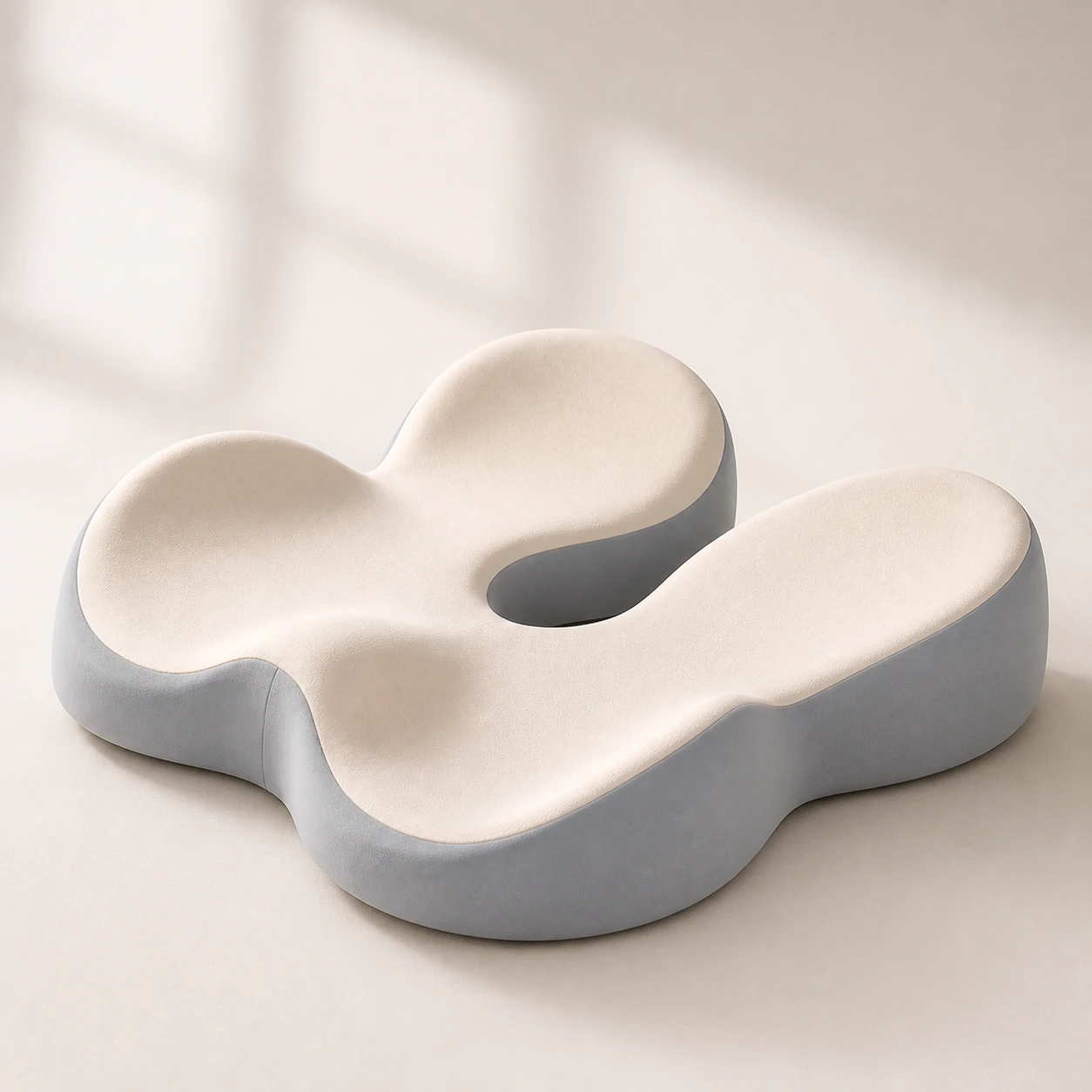 Product mentioned in this guideMemory Foam Seat CushionA sculpted seat cushion with a deep, open U-shaped rear channel designed to reduce direct contact beneath the coccyx and tailbone area. Raised rear…Free US shipping on every order60-Day Home Trial · we pay return shippingSee current price
The practical choice
Choose by the specific product's verified construction, your chair and the contact pattern you want - not a universal foam-versus-gel winner. See the office-chair seat cushion guide for fit and buying options, and the thick-versus-thin comparison for how added height changes a setup. If pain, numbness or weakness persists, speak with a qualified clinician; a cushion cannot diagnose or treat its cause.