
Best Lumbar Support Pillow for Office Workers: An Evidence-Based Guide for 2026
Lower back pain affects roughly 80% of adults at some point in their lives, and office workers are disproportionately at risk. According to the World Health Organization, musculoskeletal conditions are the leading contributor to disability worldwide, with low back pain being the single biggest cause of years lived with disability since 2000.
If you spend six or more hours a day seated at a desk, a lumbar support pillow for office chair use is one of the simplest, most cost-effective interventions you can make. But not all lumbar pillows are created equal. This guide breaks down the science behind lumbar support, what features actually matter, and how to choose a pillow that matches your body and work style.
Why Office Workers Need Lumbar Support
Your lumbar spine has a natural inward curve called lordosis. When you sit in a standard office chair, that curve tends to flatten or even reverse, placing excess pressure on the intervertebral discs and surrounding soft tissue. Research published in the American Journal of Epidemiology found that prolonged sitting without adequate lumbar support increases intradiscal pressure by up to 40% compared to standing.

Over weeks and months, this sustained pressure leads to disc dehydration, muscle fatigue, and compensatory postural habits that can cascade into neck, shoulder, and hip pain. The problem is compounded by the fact that most mid-range office chairs provide only token lumbar support, if any at all.
A well-designed lumbar support pillow fills the gap between your lower back and the chair backrest, preserving that natural lordotic curve. Cornell University's Department of Ergonomics has repeatedly emphasized that external lumbar support is one of the most effective passive interventions for seated workers, second only to standing or walking breaks.
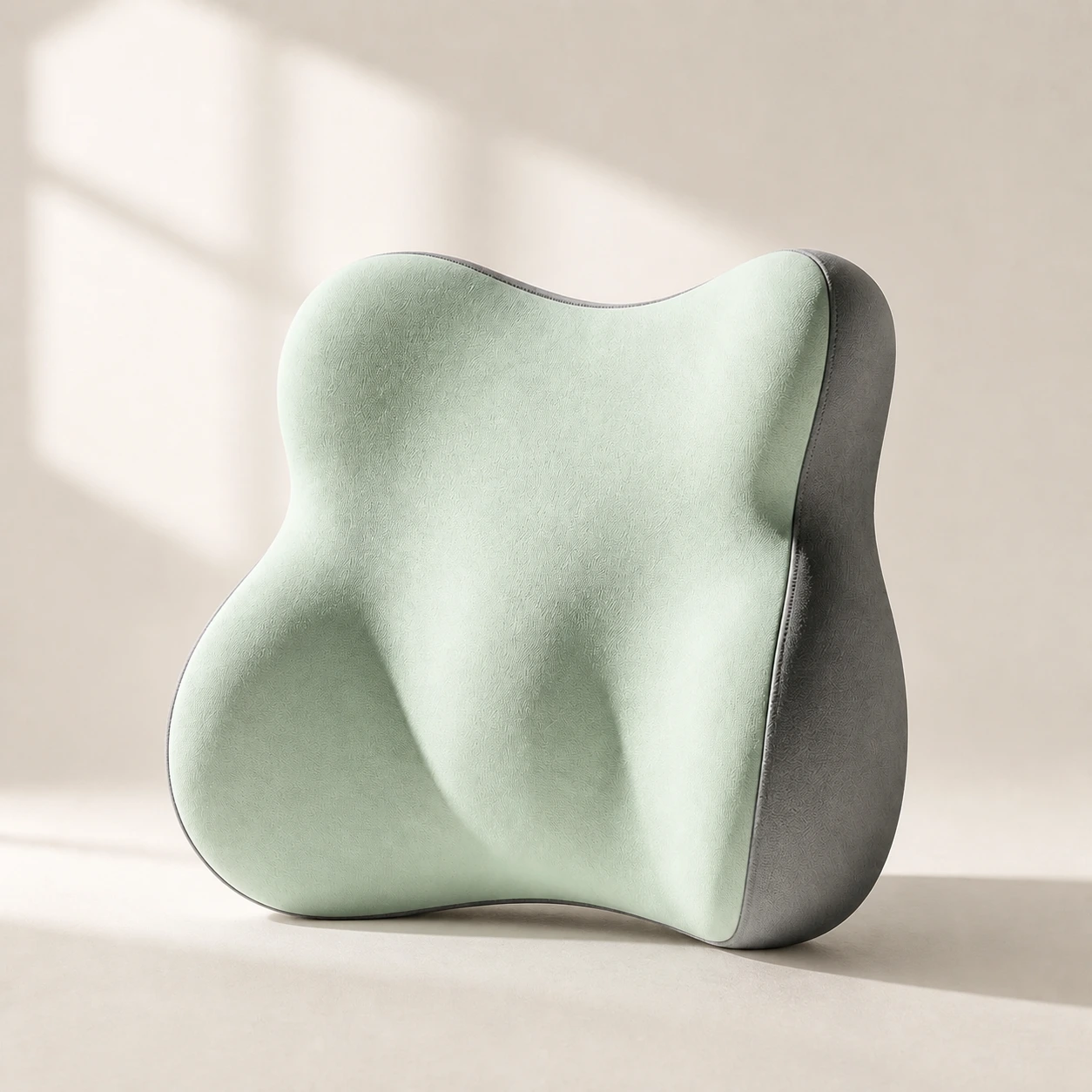 Product mentioned in this guideLumaWing Lumbar Cushion39 × 34 × 14 cm lumbar cushion available in four colours with a slow-rebound memory-foam core, fixed central ridge, recessed side channels, and broad outer…Free US shipping on every order60-Day Home Trial · we pay return shippingSee current price
The key takeaway: you do not need to invest in a $1,500 chair to get adequate lumbar support. A quality lumbar support pillow paired with a decent office chair can achieve 80-90% of the postural benefit at a fraction of the cost.
What to Look for in a Lumbar Pillow
With hundreds of options on the market, it helps to know which features are backed by evidence and which are pure marketing. Here is what ergonomics researchers and physical therapists consistently recommend.
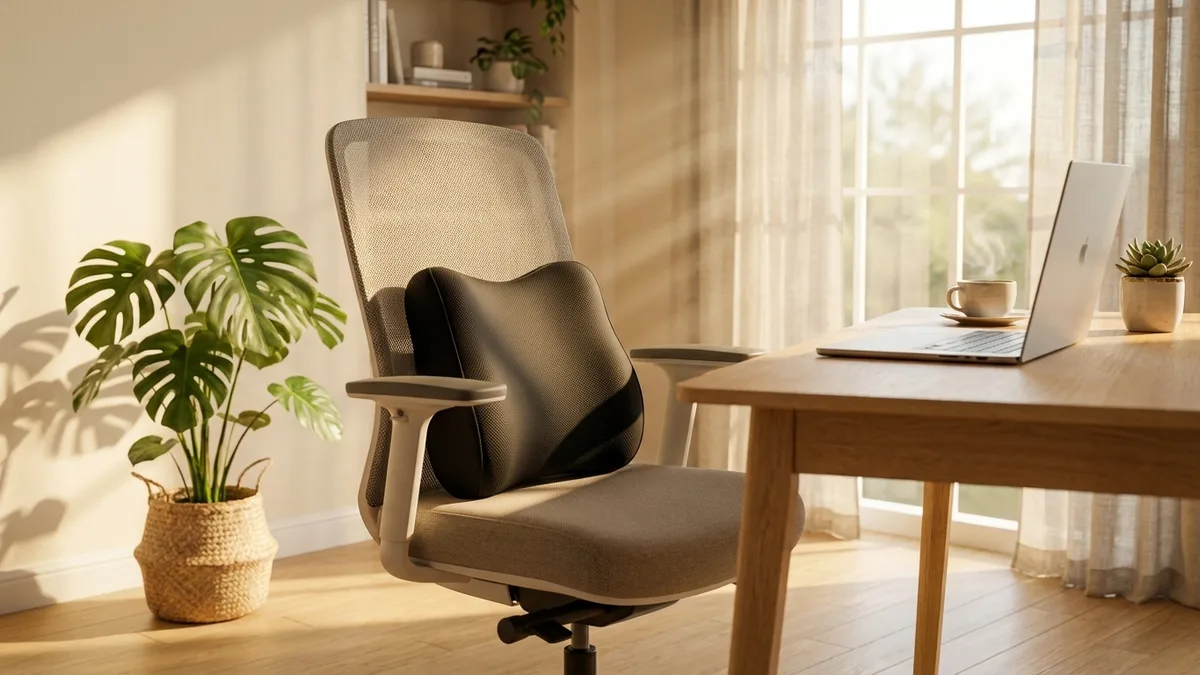
Contour Design
A flat rectangular cushion does very little for your spine. Look for a pillow with a convex front surface that matches the natural curve of the lumbar region. The ideal depth of contour sits between 3 and 6 centimeters, though personal preference and the depth of your lordosis play a role.
Some pillows offer a butterfly or ergonomic shape that wraps slightly around the sides of your lower back. This design provides lateral stability and prevents the pillow from shifting during the day.
Material Quality
The fill material determines how well the pillow conforms to your body and how long it maintains its shape. High-density memory foam (4 lb/ft3 or above) is the gold standard for most office workers. It responds to body heat, molds to your lumbar curve, and returns to its original shape when you stand up.
Lower-density foams feel softer initially but compress permanently within a few months. If you are spending money on lumbar support, the foam density is not the place to cut corners.
Breathable Cover
Heat buildup is the number one reason people abandon their lumbar pillow. A mesh or moisture-wicking fabric cover allows airflow between your back and the cushion, which is critical if your office runs warm or you tend to perspire. Removable, machine-washable covers are also important for hygiene over long-term daily use.
Secure Attachment
A pillow that slides down every time you stand up is a pillow you will stop using. Adjustable straps with buckles or hook-and-loop fasteners that wrap around the chair backrest are essential. Elastic bands alone tend to stretch out within weeks and lose their grip.
Dual-strap systems that allow both vertical and horizontal adjustment give you the most control over positioning, which matters because even a two-centimeter difference in height can change the effectiveness of the support.
Memory Foam vs Gel vs Hybrid: Which Fill Is Best?
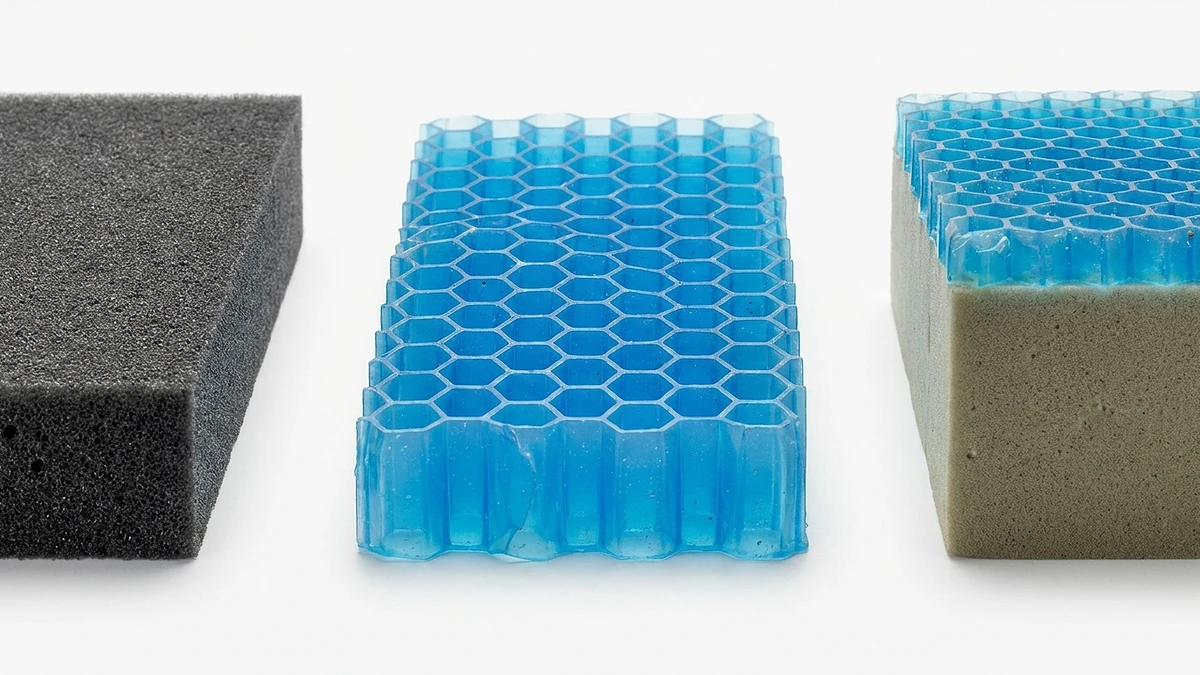
The three main fill types each serve different needs. Understanding the trade-offs will help you make a confident decision. For a deeper dive into cushion materials, see our memory foam vs gel comparison guide.
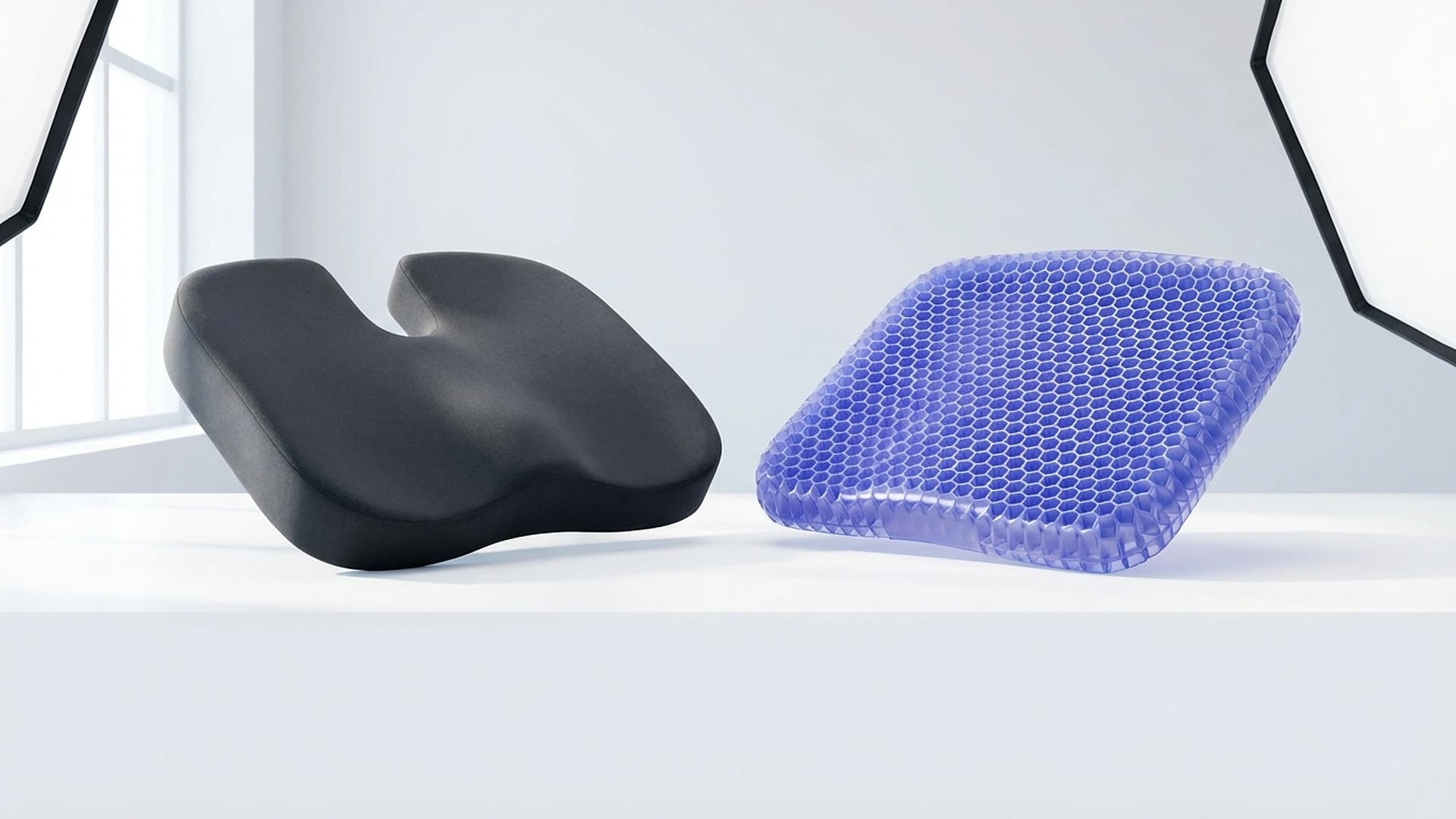
Memory foam remains the most popular fill for lumbar pillows, and for good reason. It conforms precisely to your spinal curve, distributes pressure evenly, and holds its shape for years when the density is adequate. The downside is heat retention. Traditional memory foam absorbs and traps body heat, which can become uncomfortable during long sessions.
Gel-infused foam addresses the heat problem by embedding cooling gel beads or layers within the memory foam matrix. This reduces surface temperature by 2-4 degrees Fahrenheit compared to plain foam. The feel is slightly firmer and more responsive, with less of the slow-sinking sensation that some people dislike about traditional memory foam.
Hybrid constructions layer different materials, typically a firm foam base for structural support topped with a gel or softer foam comfort layer. Hybrids tend to offer the best balance of conformity and temperature regulation, but they are typically thicker and may not suit slim-profile chairs.
- Choose pure memory foam if you work in an air-conditioned office and prioritize deep contouring
- Choose gel-infused foam if you run warm or your workspace lacks good climate control
- Choose hybrid if you want maximum comfort and do not mind a slightly bulkier pillow
Size and Firmness Guide
Lumbar pillows are not one-size-fits-all, and choosing the wrong size is a common reason people feel no benefit. Here is how to match a pillow to your body type.
Width
The pillow should be wide enough to support the full width of your lumbar region without pressing into the armrests of your chair. For most adults, this means a pillow width between 30 and 38 centimeters. If you have a narrow chair or a smaller frame, a 28-centimeter pillow may be more appropriate.
Height
The pillow's vertical height should cover your lumbar spine without pushing into your thoracic region above or your sacrum below. A height of 20 to 30 centimeters works for most people. Taller individuals (over 185 cm) may benefit from a pillow at the higher end of that range.
Firmness
Firmness is partly subjective, but there are general guidelines based on body weight:
- Under 65 kg: Medium-soft. You need less resistance to achieve adequate support, and a pillow that is too firm will push you forward in the seat.
- 65-90 kg: Medium-firm. This is the sweet spot where most standard lumbar pillows perform best.
- Over 90 kg: Firm. Higher body weight compresses foam more aggressively, so you need denser foam or a thicker profile to maintain support over an eight-hour day.
When in doubt, start with medium-firm. You can always adjust positioning to fine-tune the feel, but you cannot make a soft pillow firmer.
Our Top Picks for 2026
After evaluating dozens of lumbar pillows based on ergonomic design, material quality, user feedback, and long-term durability, here are the options we recommend most frequently to office workers.
Our own ERGOLA Lumbar Support Pillow uses 4.5 lb density memory foam with a gel-infused comfort layer. It features a dual-strap attachment system, a breathable mesh cover, and a contour depth calibrated to support the average office worker's lumbar curve. It is the pillow we designed specifically to solve the problems outlined in this guide.
When evaluating any lumbar pillow, apply the criteria from this guide: check the foam density, test the attachment system, verify the cover is removable and washable, and confirm the contour depth matches your spine. Price alone is not a reliable indicator of quality in this category.
How to Position Your Lumbar Pillow Correctly
Even the best lumbar pillow will underperform if it is in the wrong position. Proper placement is straightforward but surprisingly often overlooked. The goal is to support the natural inward curve of your lower back without forcing an exaggerated arch.

- Find your lumbar region. Place your hands on your hips with your thumbs pointing toward your spine. The area between your thumbs, roughly at belt level, is where the pillow's peak contour should sit. This typically corresponds to the L3-L4 vertebrae.
- Sit fully back in your chair. Your hips should press into the junction of the seat pan and backrest. If there is a gap between your back and the chair, the pillow needs to fill that gap, not float in front of it.
- Secure the straps. Tighten the attachment straps so the pillow stays in place when you lean forward and back. It should not ride up when you stand or slide down when you recline.
- Check your posture. With the pillow in place, your ears should align roughly over your shoulders, your shoulders over your hips, and your feet flat on the floor. If you feel like you are being pushed forward, the pillow may be too thick or positioned too low.
- Fine-tune over a few days. It takes two to three days for your muscles to adapt to the new support. Adjust the height in small increments during the first week rather than making dramatic changes.
Common Mistakes When Using a Lumbar Pillow
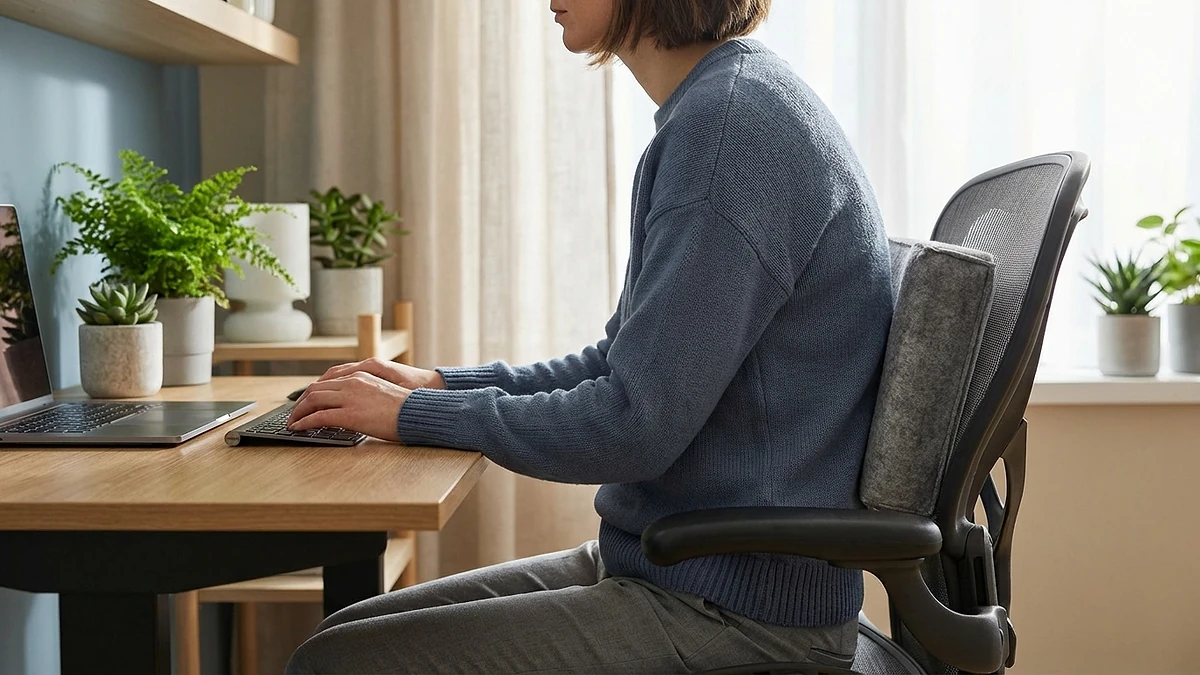
A lumbar pillow is a simple product, but there are several ways to undermine its effectiveness. Avoid these pitfalls to get the full benefit of your investment.
- Placing it too high. If the pillow presses into your mid-back or shoulder blades, it will push your upper body forward and actually worsen your posture. The peak of the contour must be at lumbar level, not thoracic.
- Using it with a reclined backrest. When your chair reclines beyond 100-110 degrees, the pillow's angle changes relative to your spine and may create a pressure point. Keep your backrest in the upright or slightly reclined range (90-110 degrees) when using a lumbar pillow.
- Not sitting fully back. If you perch on the front edge of your seat, the pillow is behind you doing nothing. Make a habit of scooting your hips to the back of the seat pan before engaging with your work.
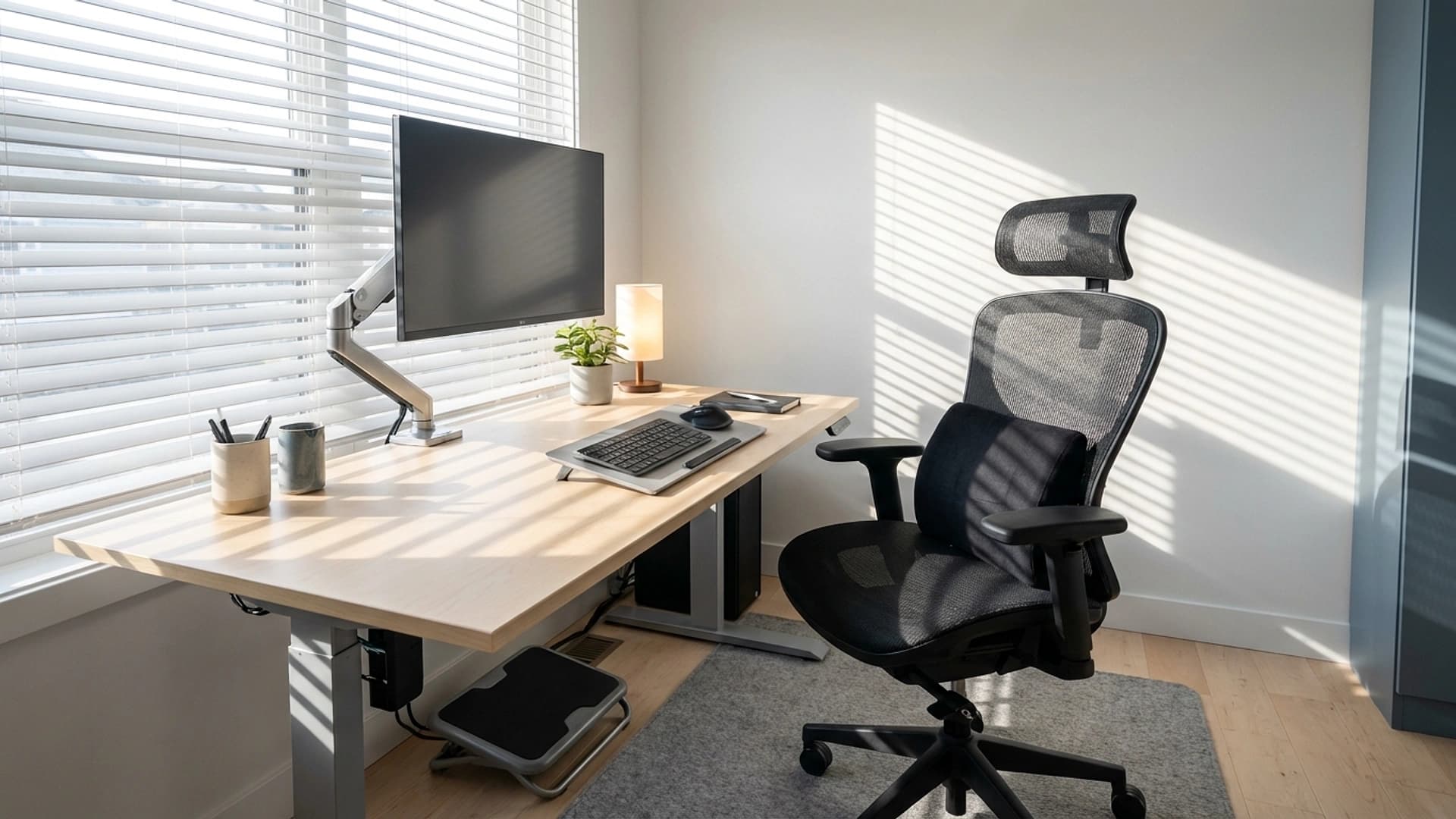
- Ignoring the rest of your setup. A lumbar pillow cannot compensate for a monitor that is too low, a keyboard that is too high, or a chair that is the wrong size. It is one component of a complete ergonomic setup.
- Expecting instant relief. If you have been sitting without support for years, your muscles need time to adapt. Mild soreness during the first few days is normal. Persistent pain after a week suggests the pillow is the wrong size, firmness, or position.
The Bottom Line
A lumbar support pillow for office chair use is one of the highest-return ergonomic investments you can make. It is affordable, portable, and effective at preserving your natural spinal alignment during long work sessions. The key is choosing a pillow with the right contour, density, and size for your body, and then positioning it correctly at belt level.
Pair your lumbar pillow with an ergonomic chair that fits your body, take regular movement breaks, and pay attention to your overall workstation setup. Your lower back will thank you, not just today, but for years to come.
Ready to find the right lumbar support? Browse our lumbar support pillow collection to see options designed specifically for all-day office use.