30-day money back guarantee | Spring sale — 40% off + free shipping

Kaip tai padaryti gidai

How to Create a Micro-Break Routine

Learn how to build a sustainable micro-break routine that reduces lower-back stiffness, complements lumbar support, and keeps you comfortable through long desk sessions. Step-by-step exercises, timing strategies, and tracking tips included.

How to Create a Micro-Break Routine

Pagrindiniai patarimai

Micro-breaks every 30-60 minutes reduce spinal compression and muscle fatigue.
A simple, repeatable cadence works better than complex routines you won't stick to.
Pairing breaks with lumbar support and posture reset cues maximizes all-day comfort.
Why micro-breaks matter for back health

Why micro-breaks matter for back health

When you sit for extended periods, your hip flexors shorten, glutes disengage, and the stabilizer muscles around your lumbar spine lose alignment. Prolonged static sitting increases spinal disc pressure significantly compared to standing, accelerating wear over time. Your intervertebral discs rely on a load-unload cycle to absorb nutrients and expel waste — without periodic movement, this hydraulic process stalls and disc dehydration accelerates.

Even a 60-second movement break every 30 to 45 minutes restores blood flow, rehydrates spinal discs, and resets posture awareness. Research consistently shows that breaking up prolonged sitting reduces musculoskeletal discomfort more effectively than ergonomic equipment alone. Pairing these breaks with proper lumbar support — which maintains your curve while seated — creates the combination of passive support and active movement that keeps your back comfortable all day.

  • Reduces spinal compression that builds during static sitting
  • Restores blood flow to lower-back muscles and spinal discs
  • Prevents hip flexor tightening and glute disengagement
  • Complements lumbar support for all-day comfort
Building your micro-break routine

Building your micro-break routine

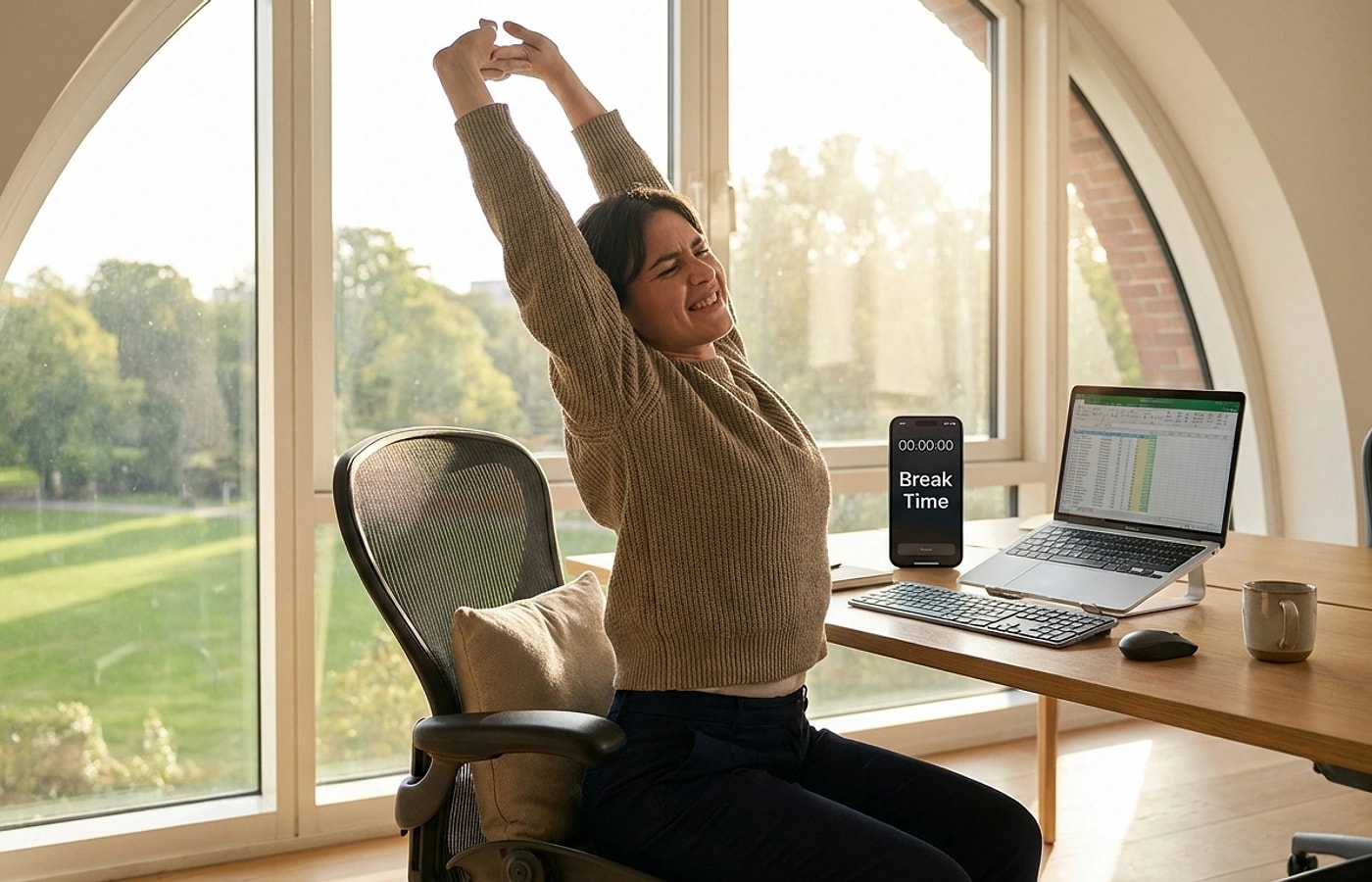
Start with a simple cadence: set a timer for every 45 minutes and stand for 60 to 90 seconds. Follow a three-step pattern — stand up to decompress your spine, perform one or two gentle movements like shoulder rolls or a hip flexor stretch, then sit back down and reset your lumbar support position before resuming work. As the habit solidifies over two to three weeks, you can extend breaks to two or three minutes and incorporate more varied movements.

Timing matters more than intensity — a 90-second break every 45 minutes beats a five-minute session once in the afternoon. Anchor breaks to natural work transitions like finishing an email or ending a meeting, since habit stacking increases consistency far more than timer alerts alone. The goal is to make breaks automatic so they no longer require willpower — once the routine is established, skipping a break should feel more uncomfortable than taking one.

  • Start with 60-90 second standing breaks every 45 minutes
  • Follow the stand-move-reset pattern for each break
  • Anchor breaks to natural task transitions for better consistency
  • Prioritize frequency over duration — short and often beats long and rare
Best stretches and movements for desk workers

Best stretches and movements for desk workers

The best desk-worker stretches need no equipment, fit in a small space, and take under two minutes. The standing cat-cow is especially effective: stand hip-width apart, hands on knees, and alternate between arching and rounding your back for eight to ten slow reps. This single movement restores mobility across the entire spinal column. For an added upper-body release, a chest doorway stretch — forearms against a door frame, lean gently forward for 15 seconds — opens the pectorals that tighten from hours of typing.

For seated breaks, try spinal twists — place your right hand on your left knee, rotate gently, and hold 15 to 20 seconds per side. For hip flexors that shorten during sitting, a standing lunge stretch (20 seconds per side, pelvis tucked slightly under) directly reduces the lower-back strain caused by tight hip flexors pulling your pelvis forward. Rotate through different stretches each break rather than repeating the same one — variety prevents adaptation and keeps multiple muscle groups engaged throughout the day.

  • Standing cat-cow: 8-10 reps, restores full spinal mobility
  • Seated spinal twist: 15-20 seconds each side, loosens thoracic spine
  • Standing hip flexor lunge: 20 seconds each side, counteracts sitting tightness
  • Shoulder rolls: 10 forward, 10 backward, releases upper-back tension
Setting up reminders and tracking progress

Setting up reminders and tracking progress

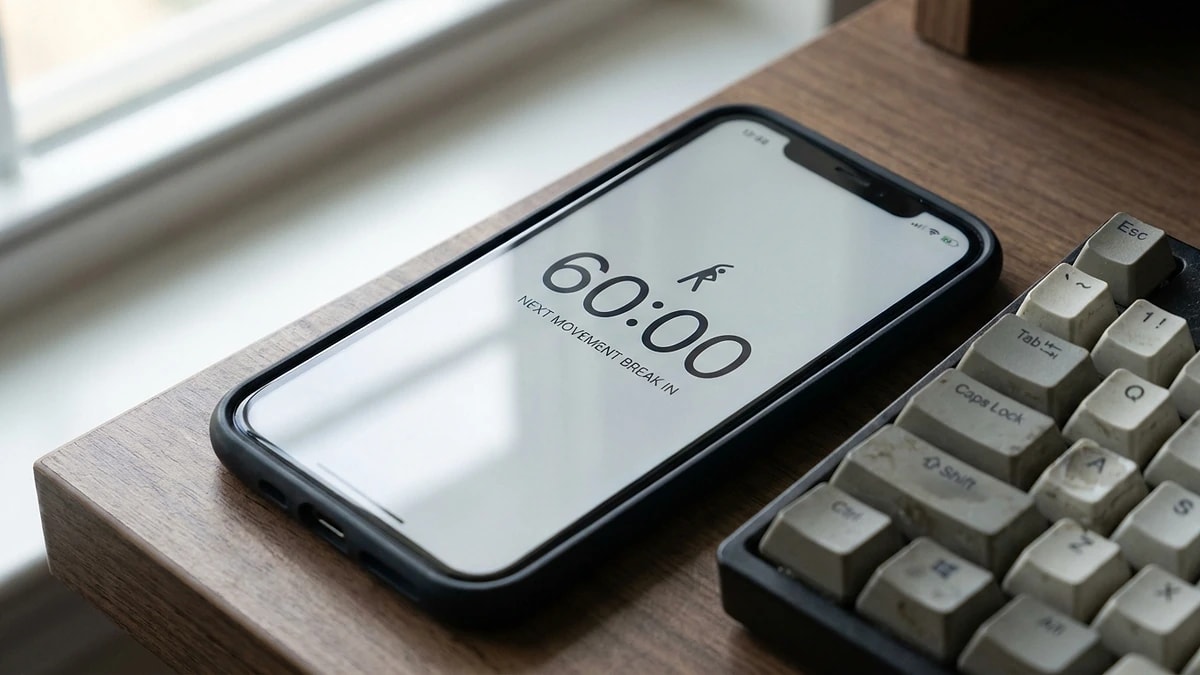
The hardest part is remembering to break when you are deep in focus. A recurring 45-minute phone alarm works, but dedicated apps like Stretchly or BreakTimer can dim your screen, suggest stretches, and track compliance over time. Choose whatever creates the least friction for your workflow.

Track two metrics weekly: your consistency rate (aim for 80 percent of scheduled breaks taken) and end-of-day discomfort on a 1-to-10 scale. If consistency drops below 70 percent, simplify — shorter breaks, fewer movements, or a different reminder method. A quick Sunday review — five minutes scanning the week's numbers — helps you spot patterns and adjust before bad habits take hold.

  • Use a recurring 45-minute timer or a dedicated break app like Stretchly
  • Track break consistency rate weekly — aim for 80 percent or higher
  • Rate end-of-day discomfort on a 1-10 scale to measure improvement
  • Review metrics weekly and simplify if consistency drops below 70 percent
Common mistakes to avoid

Common mistakes to avoid

Skipping breaks during busy periods feels productive, but the stiffness from a four-hour unbroken session takes far longer to recover from than the 90 seconds you saved. Treat micro-breaks as non-negotiable — they prevent the late-afternoon energy crash that most desk workers attribute to mental fatigue but is often caused by sustained physical tension and restricted circulation.

Equally important: avoid doing too much too fast or ignoring pain signals. Start with gentle movements and increase intensity over weeks — your muscles and joints need time to adapt, especially if you have been sedentary for months. If any stretch produces sharp pain, numbness, or tingling, stop immediately — persistent discomfort should be evaluated by a healthcare professional.

  • Skipping breaks when busy — the stiffness cost exceeds the time saved
  • Doing aggressive stretches before building a base of gentle movement
  • Ignoring sharp pain, numbness, or tingling during any stretch
  • Expecting results in days — give the routine at least two to three weeks

Dazniausiai uzduodami klausimai

How long should each micro-break be?

Even 60 to 90 seconds is effective when done consistently every 45 minutes. Frequency matters more than duration — five short breaks outperform one long session. As the habit becomes automatic, you can extend breaks to two or three minutes and add more varied stretches.

Can I skip breaks if my lumbar support feels comfortable?

No — support maintains your spinal curve, but cannot prevent the muscle fatigue and disc compression that build during static sitting. Support and movement are complementary, not interchangeable.

What if my schedule is packed with meetings?

Use the two minutes between meetings, or shift in your seat and do seated twists during calls. Standing during video calls where your camera can be off is another easy win. Even standing up briefly during a video meeting counts as a micro-break.

How soon will I notice a difference in my back comfort?

Most people notice reduced end-of-day stiffness within the first week. More significant improvements in chronic discomfort typically appear after two to three weeks at 80 percent consistency.

Do I still need micro-breaks if I use a standing desk?

Yes — static standing creates its own issues including lower-limb fatigue and reduced circulation. The ideal approach is a sit-stand-move cycle: 25 minutes seated with lumbar support, 15 minutes standing, then a 60-second movement break before repeating.

Susije gidai

Naršykite šiuos gidus, kad sužinotumėte daugiau ir rastumėte tinkamą sprendimą.