30-day money back guarantee | Spring sale — 40% off + free shipping

Gidai pagal situacija

Long-Sitting Recovery Routine

A practical recovery routine for people who sit long hours. Combine support setup and movement habits for sustainable comfort.

Long-Sitting Recovery Routine

Pagrindiniai patarimai

Recovery is a system, not a single product.
Measure outcomes with daily consistency metrics.
Escalate support configuration based on observed patterns.
Core weekly recovery protocol

Core weekly recovery protocol

Recovery from long sitting is not a single stretch or a one-time product purchase. It is a weekly system with three components: consistent support setup, scheduled movement intervals, and end-of-day decompression.

Define your protocol on Monday and follow it through the week. Track adherence simply — did you do the setup, the breaks, and the wind-down? Consistency over five days matters more than one intense stretch session.

  • Set up lumbar support at the start of every sitting session.
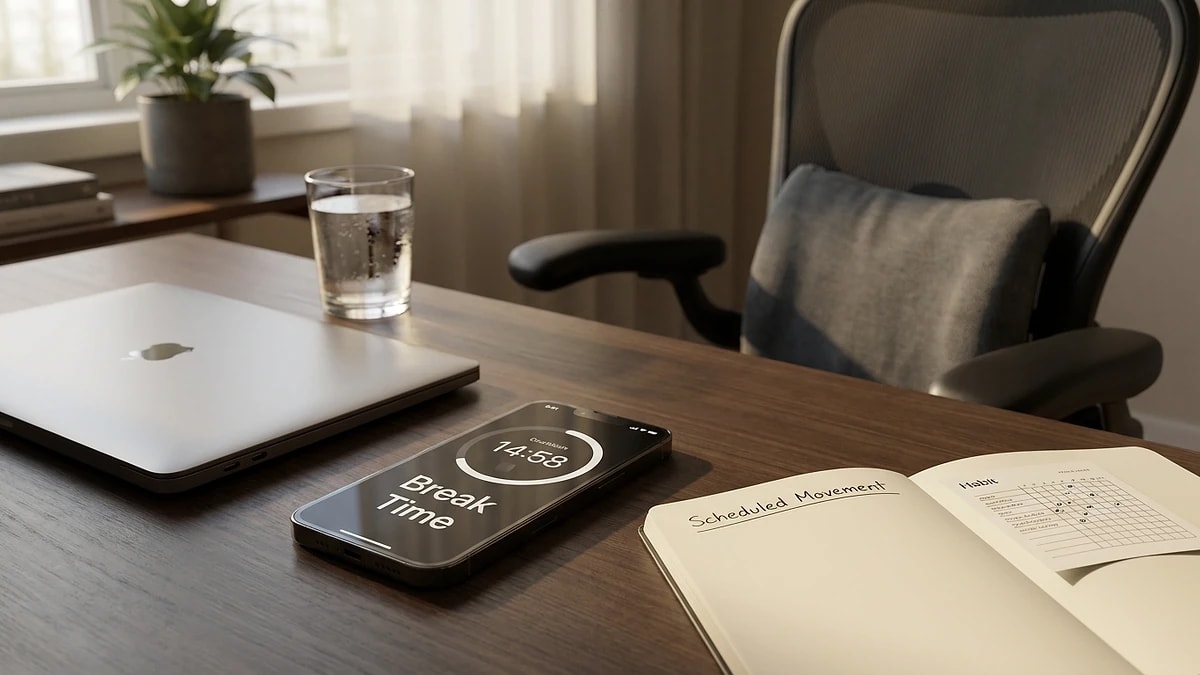
  • Schedule movement breaks every 45 to 60 minutes throughout the day.
  • End each day with a 3-minute hip flexor and lower-back stretch.
  • Review adherence weekly and adjust only one variable at a time.
Stretch and movement patterns

Stretch and movement patterns

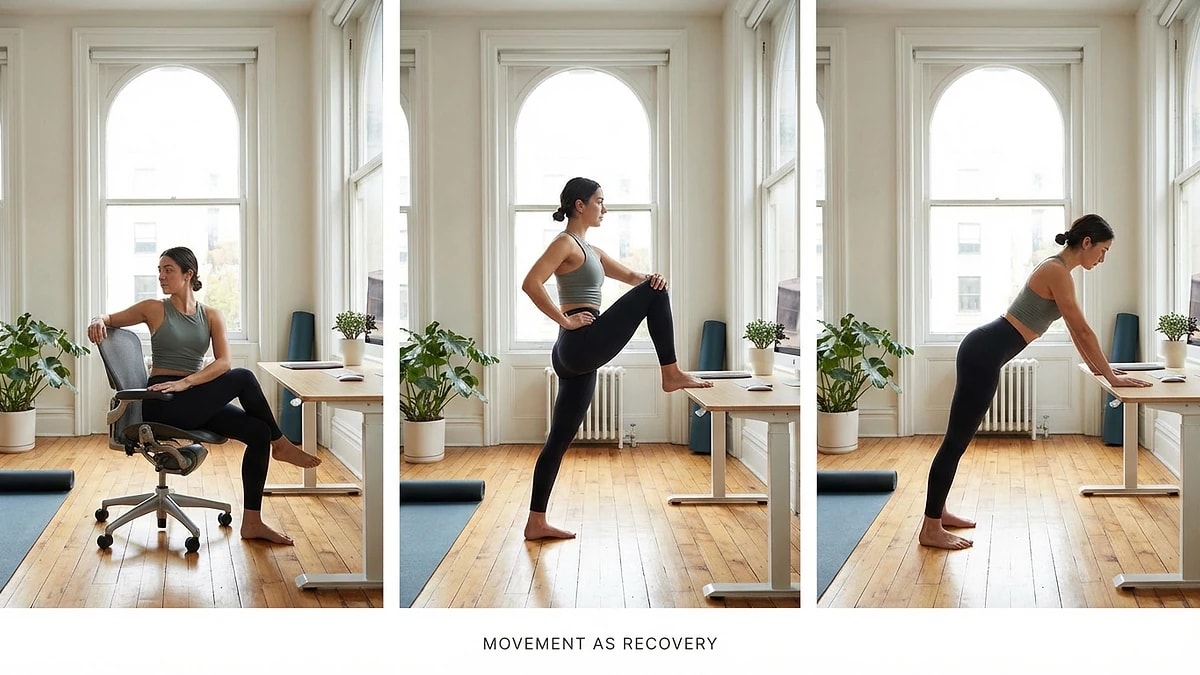
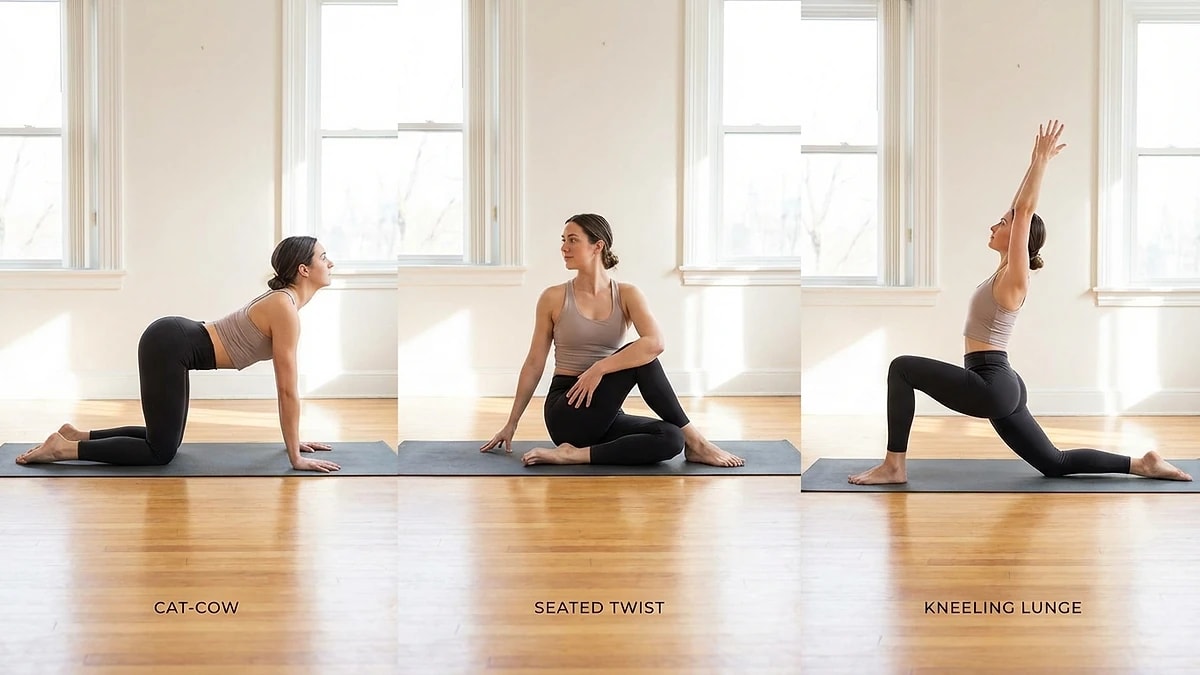
Focus on three movement patterns during your breaks: hip extension, spinal decompression, and shoulder opening. These counter the three main compressions created by prolonged sitting.

You do not need a yoga mat or a gym. Stand up, push your hips forward gently, reach overhead, and roll your shoulders back. Thirty seconds of these three movements is enough to reset between sitting blocks.

  • Hip extension: stand and gently push hips forward for 10 seconds.
  • Spinal decompression: reach both arms overhead and lengthen your torso.
  • Shoulder opening: clasp hands behind your back and pull shoulder blades together.
Ergonomic workspace detail

When to adjust the support stack

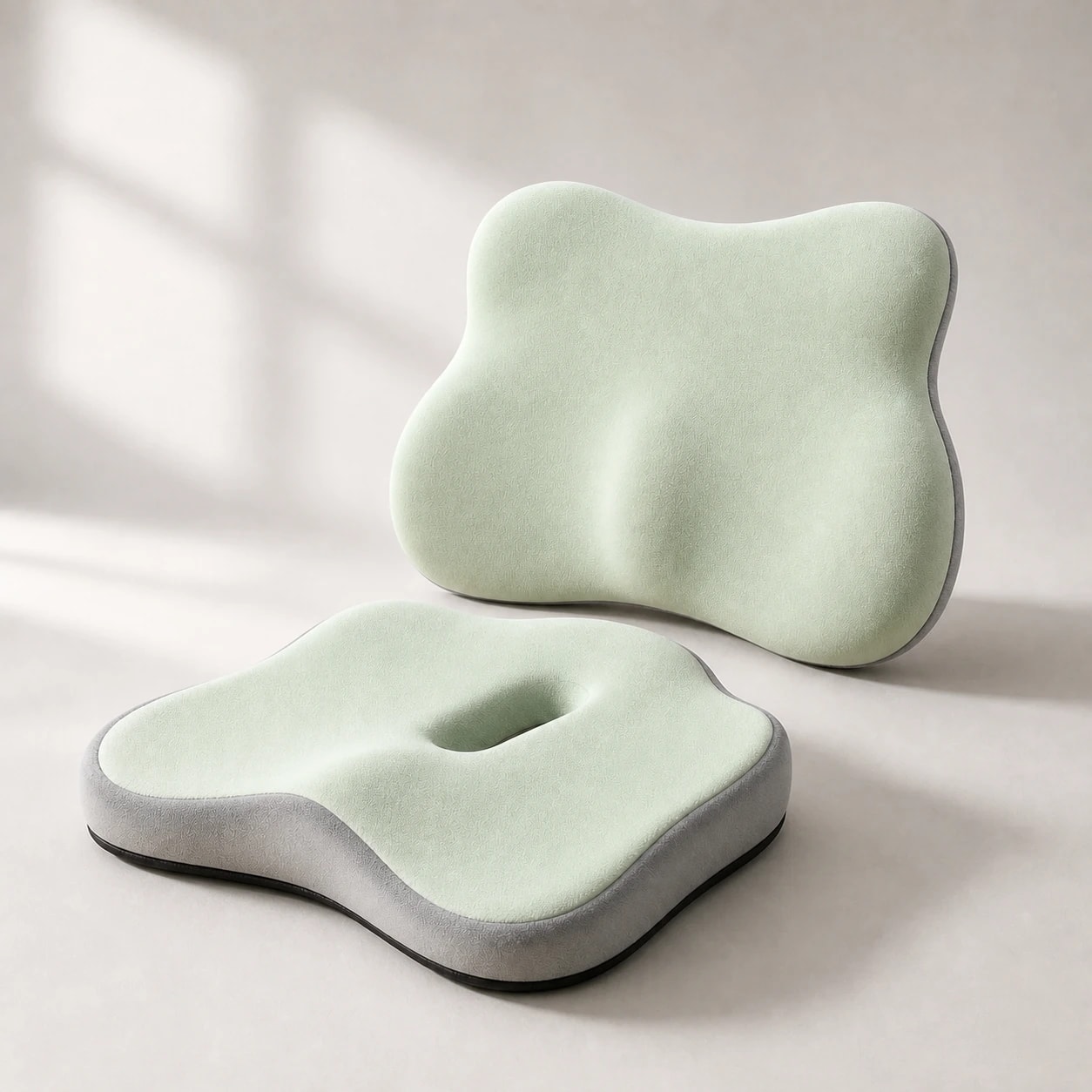
If discomfort persists after two weeks of consistent routine, it is time to adjust your support configuration. Change one thing: try a firmer or softer lumbar cushion, add a seat cushion, or reposition your current support.

Do not change everything at once. Adjusting lumbar height, cushion firmness, and seat support simultaneously makes it impossible to know what helped. Change one variable, run it for a week, and evaluate.

  • Wait at least two weeks of consistent use before changing support.
  • Adjust one variable at a time: firmness, height, or adding a seat cushion.
  • Log what you changed and how it felt after one full week.
  • If nothing helps after multiple adjustments, consult a healthcare professional.
Comfort-focused seating and posture setup

Tracking progress over time

Use a simple daily score from 1 to 5 for end-of-day comfort. Track it in a notes app or on paper. After two weeks, you will see a trend that tells you whether your protocol is working.

Look for the trend, not individual days. A bad Monday after a weekend on the couch does not mean your protocol failed. But a downward trend over two weeks means something needs to change.

  • Rate end-of-day comfort from 1 to 5 every workday.
  • Review the two-week trend, not individual daily scores.
  • Note any days you skipped the protocol — these often correlate with lower scores.
  • Share your log with a professional if you seek clinical advice.

Dazniausiai uzduodami klausimai

How soon should I expect change?

Many users notice trend improvements in one to two weeks of consistent routine. Isolated bad days are normal and do not indicate failure.

Do I need multiple products?

Not always. Add a second product only when a specific failure pattern persists after testing your primary support for two weeks.

What if symptoms are severe?

Seek licensed clinical evaluation for persistent or severe discomfort. Support products complement but do not replace professional care.

Can recovery routines replace exercise?

No. Recovery routines reduce sitting damage but are not a substitute for regular physical activity and strength training.

How long should the end-of-day stretch take?

Three to five minutes is enough. Focus on hip flexors, lower back, and shoulders — the areas most compressed by sitting.

Susije gidai

Naršykite šiuos gidus, kad sužinotumėte daugiau ir rastumėte tinkamą sprendimą.