
Skip to content

Free US shipping on every order

Reviews on Trustpilot

How-To Guides

How to Choose a Lumbar Support Pillow

Greta ŠimkutėGreta ŠimkutėErgonomics specialist

Decision framework to choose the right lumbar support pillow by use-case, seat type, firmness, and session length. Avoid common buying mistakes with our step-by-step selection guide.

Editorial photograph illustrating How to Choose a Lumbar Support Pillow

Shop the gear in this guide

The exact products this guide recommends — each covered by the 60-Day Home Trial.

Key takeaways

Start with your primary use case — office, car, travel, or gaming — then narrow by seat geometry.
Compare documented dimensions, material, attachment, and fit—not category-wide promises.
Run three chair-fit checks before purchase to avoid common mismatches.
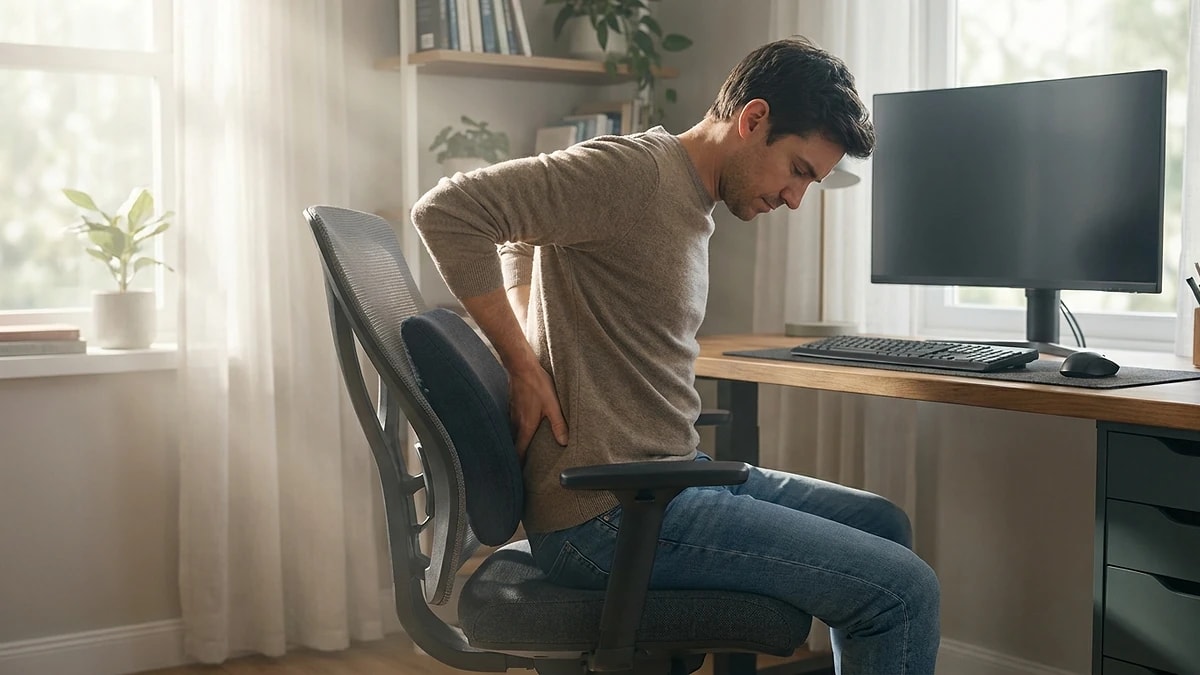
Editorial photograph illustrating Start with your primary use case

Start with your primary use case

Start by defining the seat where you will use the support. An upright office chair and a reclined car seat have different backrest shapes, seat depths, and safety constraints. A support that fits one may not fit the other.

For office use, compare the support's depth with your chair's usable seat depth and test its contact point. For car use, confirm attachment and belt, control, and airbag clearance while parked. For travel or gaming, check the actual backrest and recline range. No single model has a documented universal fit.

  • Office: compare depth, backrest shape, and usable seat room
  • Car: verify the documented attachment and all safety clearances
  • Travel: check dimensions and the exact seat you will use
  • Gaming: check contact through the chair's recline range
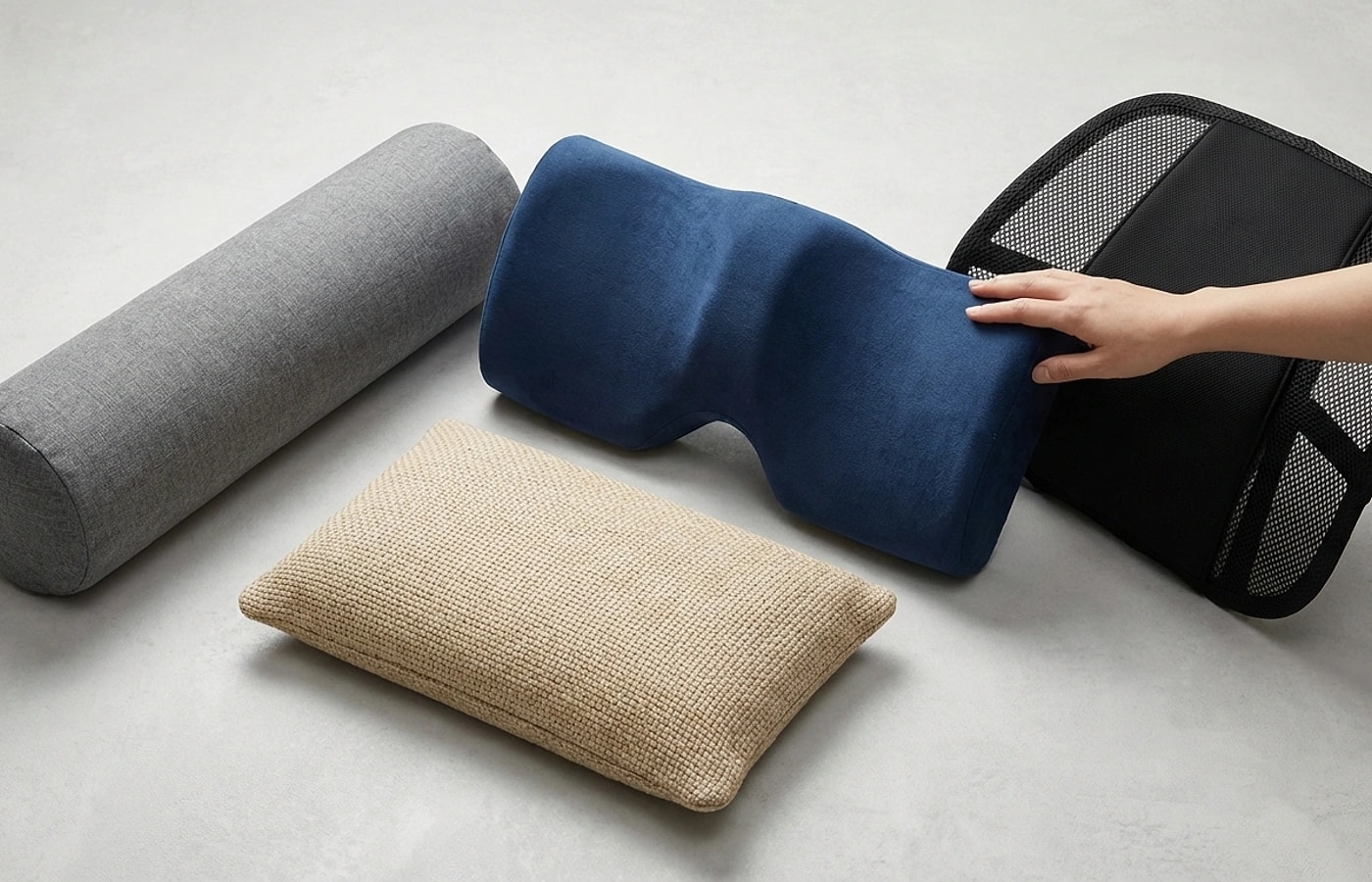
Editorial photograph illustrating Understanding firmness and foam types

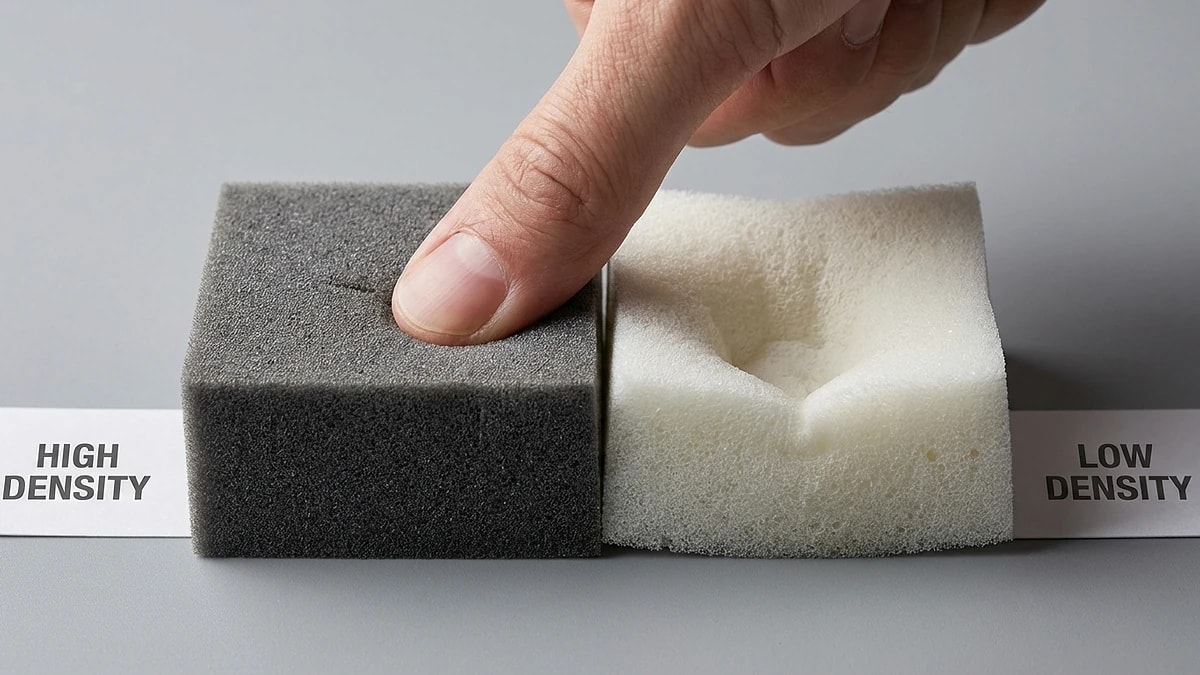
Understanding firmness and foam types

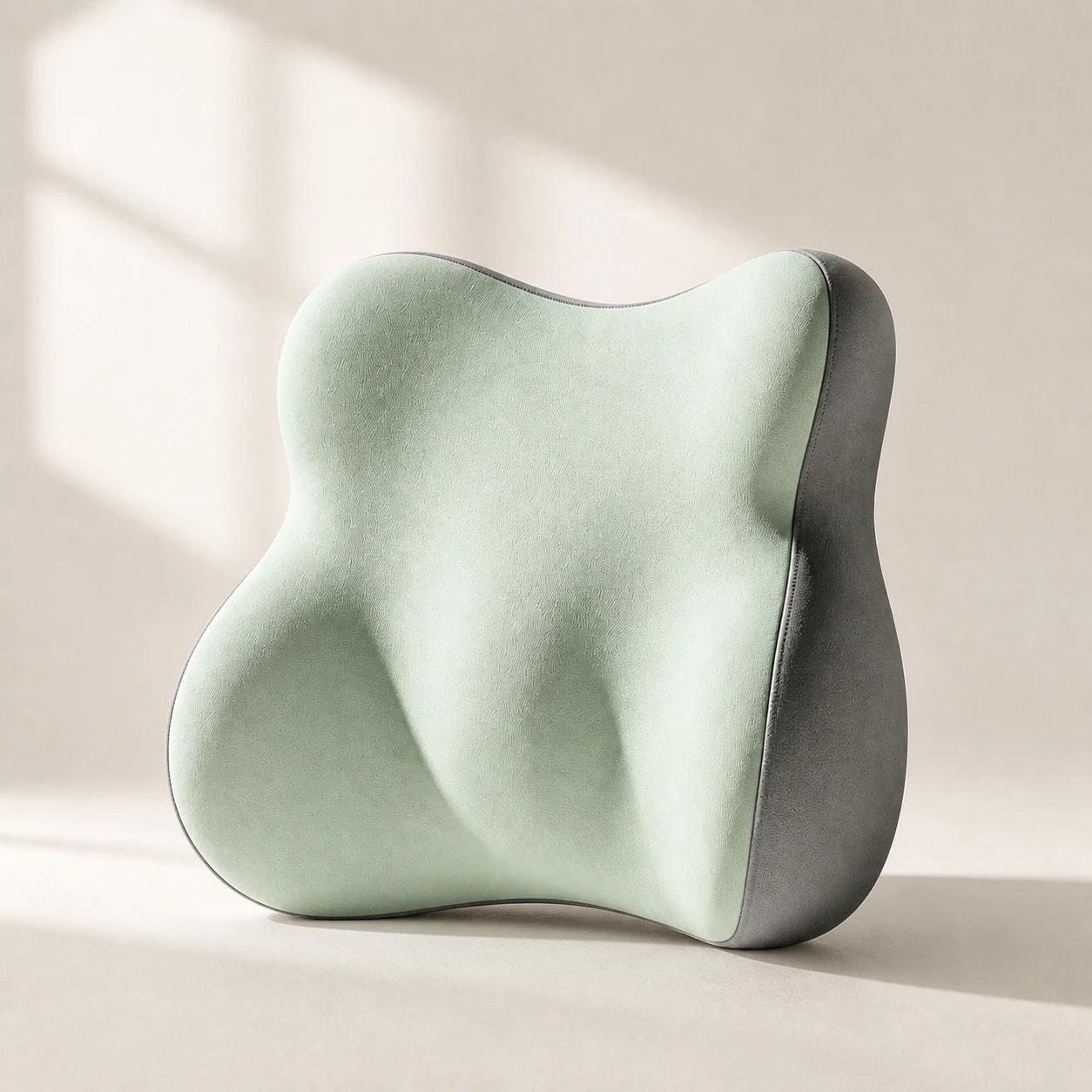
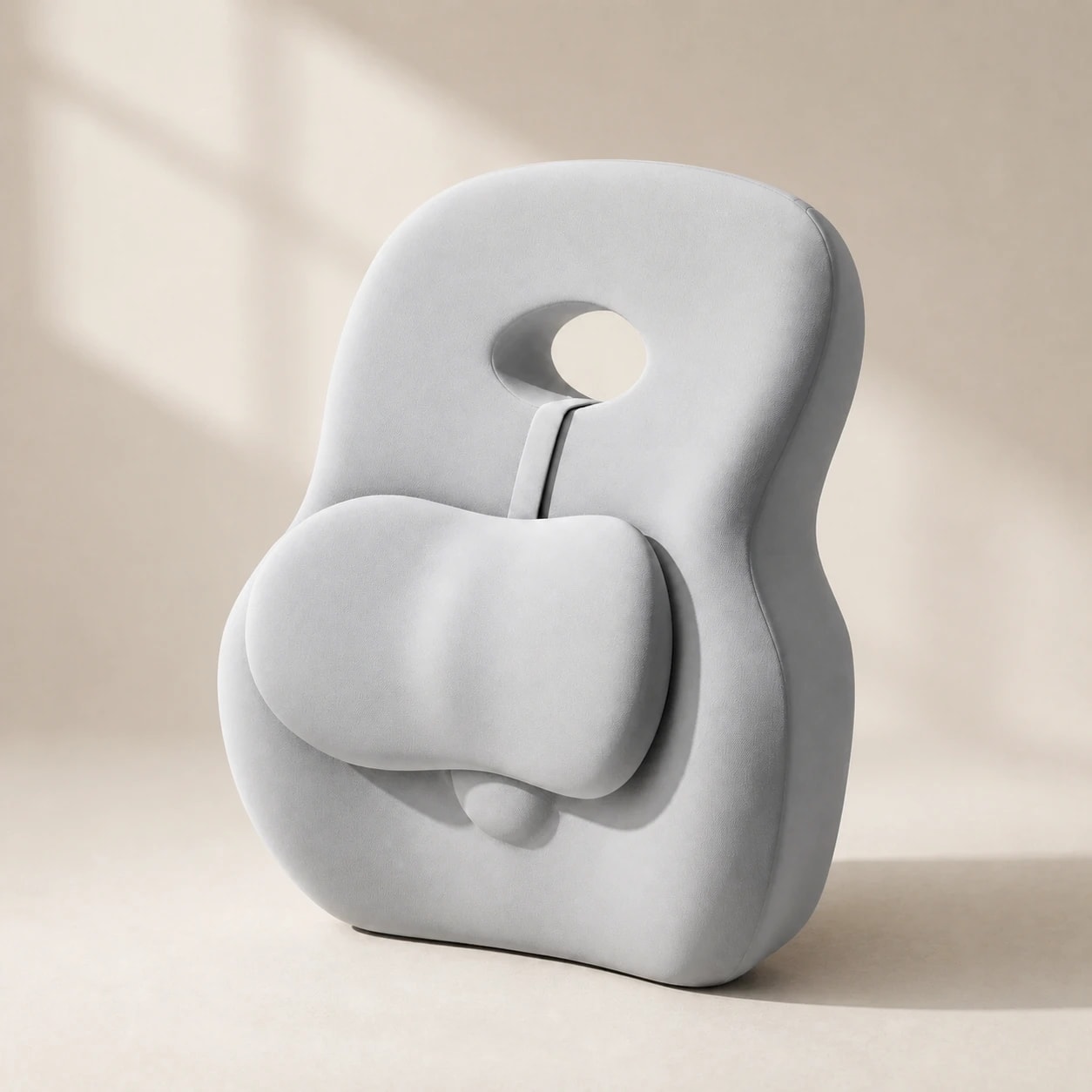
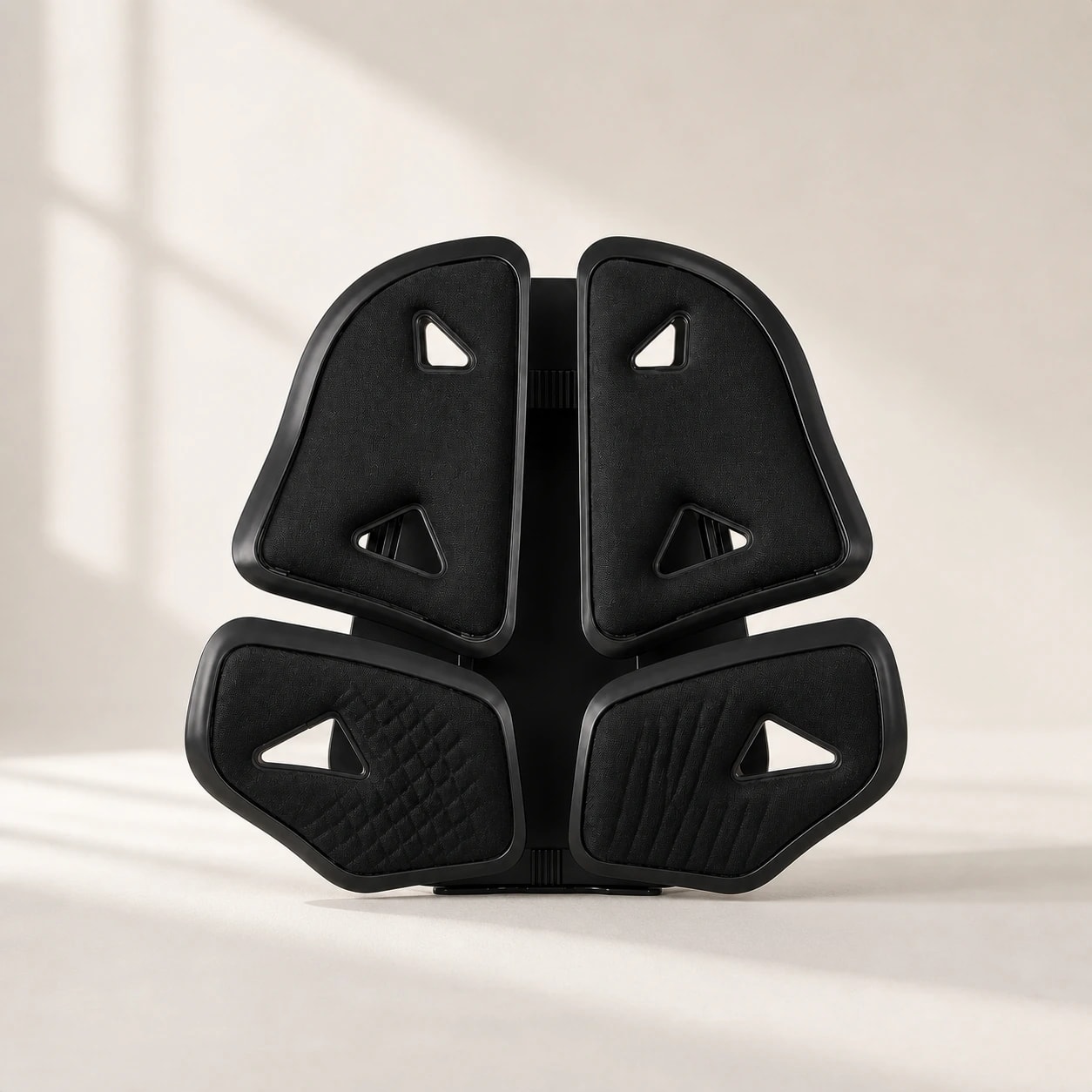
Material names do not establish a support's firmness or cooling performance. LumaWing has a documented slow-rebound memory-foam core and fixed 39 × 34 × 14 cm profile, but no published foam density or firmness grade. DriveFlex 4 uses spring-backed contact panels rather than a conventional foam pillow.

Check the actual product specification and your chair fit. Do not assume that every model contains gel, has adjustable inserts, or comes with a removable washable cover; those details differ or are unpublished.

  • Compare LumaWing's documented memory foam with other support formats
  • Foam density and a universal firmness grade are not published for LumaWing
  • Do not infer cooling or pressure outcomes from a material label
  • Check each model's cover and care details before ordering
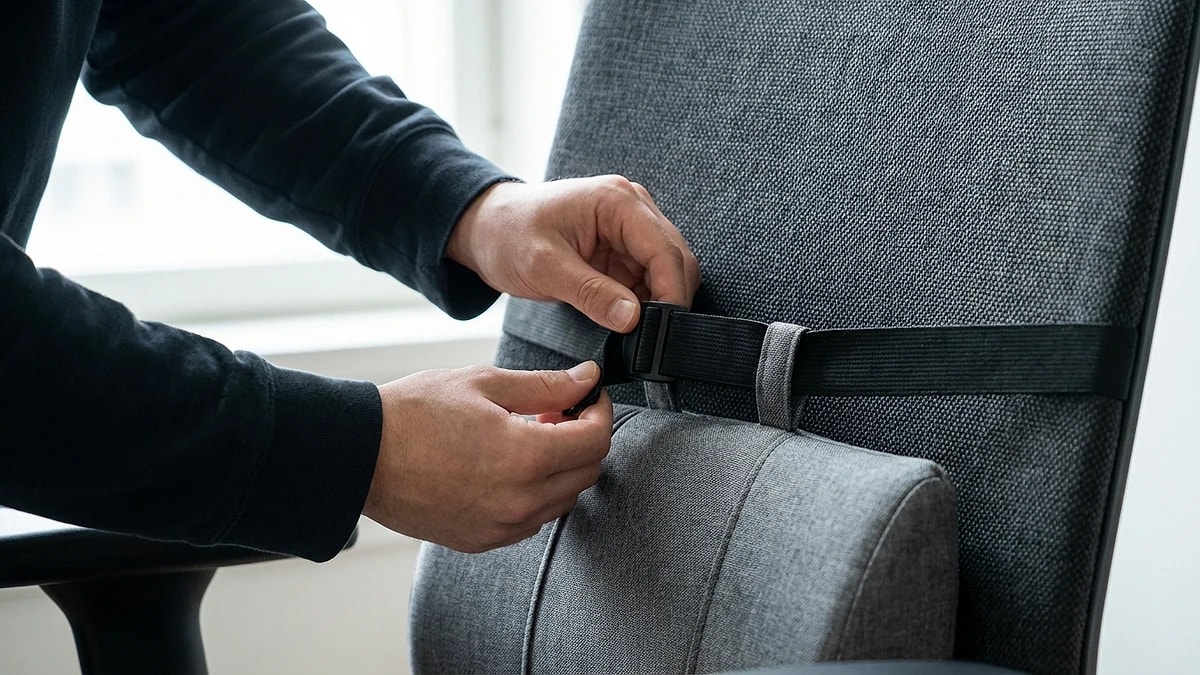
Editorial photograph illustrating Checking seat compatibility

Checking seat compatibility

Measure the usable backrest width and the seat depth left after adding the support. Check whether the model has an attachment at all: LumaWing has no documented securing strap. A product with straps still needs a safe path on that particular chair.

Open-mesh chairs, bucket-style gaming chairs, and car seats present different fit constraints. Avoid threading straps through mesh or around safety equipment unless the product and chair instructions allow it. Test the chair's built-in support before adding another contour.

  • Measure chair back width — pillow should not overhang edges
  • Compare published support height and depth with available backrest and seat room
  • Check the exact model's documented attachment, if any
  • Test built-in support before adding a second contour
Editorial photograph illustrating Three disqualifier checks before buying

Three disqualifier checks before buying

Before purchasing, apply three practical checks. First: could the listed depth push you forward or leave too little seat room? Second: is the documented attachment method compatible with your chair, or will a strapless cushion stay in place through normal sitting and standing?

Third: does the individual product page document the material and care method you need? Do not treat an unpublished washable-cover claim as a product feature. These checks help you rule out a mismatch without inventing a performance result.

  • Check 1: Will the support leave usable seat depth and natural shoulder contact?
  • Check 2: Is its documented attachment or freestanding placement stable here?
  • Check 3: Are the material and care details you need actually documented?
Editorial photograph illustrating Testing your choice at home

Testing your choice at home

The final fit check happens on your own chair. Place the support near your lower-back curve, secure it only as that model instructs, and check whether your shoulders remain against the backrest and your feet remain supported. Note if it shifts during normal use.

If comfort worsens, stop and recheck position, depth, and the chair's built-in adjustment. There is no verified five-day adaptation period or universal return window. Read the current product return policy before purchasing.

  • Compare with and without the support on the same chair
  • Note shifting, shoulder position, seat room, and comfort
  • Change one fit variable at a time if needed
  • Stop if the setup increases discomfort

Frequently asked questions

What is the single most important factor when choosing?

Stable fit at your lumbar curve in your primary seating context. A pillow that fits perfectly beats one with premium materials that does not stay in place.

Can one pillow work for both office and car?

Only if it fits both seats and preserves all vehicle controls and restraints. Check each setting separately; not every office support is suitable for a car.

How do I avoid buying the wrong firmness?

Do not infer firmness from a material name. Compare the product's documented profile and any published firmness information, then check it on your own chair.

Are expensive lumbar pillows worth the price?

Price alone does not verify foam density, cover care, fit, or durability. Compare the specifications and return policy of the exact model.

How long should a good lumbar pillow last?

No universal lifespan is verified across foam cushions and mechanical supports. Follow the specific product's care and warranty instructions and replace damaged or unstable supports.

Greta Šimkutė

Written by

Greta Šimkutė

Ergonomics & workspace-setup specialist · writing for Ergola since 2024

Greta Šimkutė is an ergonomics specialist who writes Ergola's posture and workspace guides. She focuses on the practical side of sitting-related back, neck, and hip strain - how desk height, lumbar support, and chair fit actually change all-day comfort - and tests products against the criteria that matter, not spec sheets. She has covered ergonomic furniture and desk setups since 2024.

Related guides

Explore these guides to learn more and find the right solution for your needs.