30-day money back guarantee | Spring sale — 40% off + free shipping

Sprendimai

Lumbar Support for Travel

Travel lumbar support for flights, trains, and long transit days. Learn compact setup, carry strategy, and posture retention.

Lumbar Support for Travel

Pagrindiniai patarimai

Portable profile and carry convenience matter most.
Setup speed is critical in multi-leg travel.
Pair support with micro-mobility breaks when possible.
Travel-specific requirements

Travel-specific requirements

Travel lumbar support faces a unique design constraint that office and car products do not: it must be compact enough to carry through airports, fit in overhead bins or under seats, and yet provide meaningful spinal contour when deployed. This portability-performance tradeoff means the best travel supports use materials that compress significantly for packing but recover their full shape within minutes of unpacking — typically high-resilience foam or inflatable bladder designs.

Fast-attach design is critical because travel seats change constantly — airplane seats, train seats, rental car seats, hotel desk chairs. A support that requires a complicated strap system discourages use in quick-transition environments. The most practical travel supports either have a built-in elastic band that slips over any seatback or use the passenger's own body weight to hold position against the seat, eliminating attachment hardware entirely.

  • Prioritize compressible materials that recover shape after packing
  • Fast-attach or strapless designs work best across varied seat types
  • Weight under 1 pound ideal for carry-on travel
  • Inflatable options offer the best pack-size to support-depth ratio
Airplane and train seat strategies

Airplane and train seat strategies

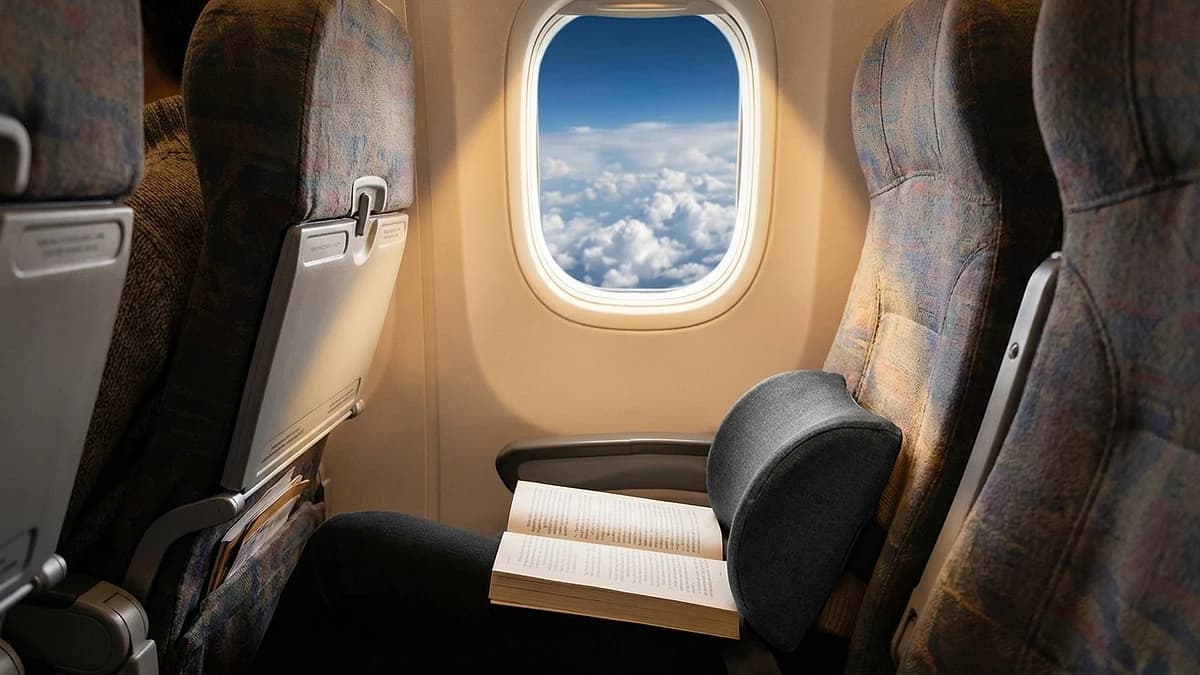
Airplane economy seats are among the worst seating environments for lumbar health — fixed recline angles, minimal cushioning, and no adjustment capability create conditions where even short flights cause lower-back stiffness. A compact lumbar support positioned at belt level transforms the flat seatback into a contoured surface that maintains your spinal curve during the flight. Position it before takeoff and leave it in place for the entire flight duration.

Train seats offer slightly more space but present their own challenge: many have a pronounced recline that pushes the lumbar spine into flexion. A thicker support profile (3 to 4 inches) works better on train seats than the slim 2-inch profiles suited for airplane use. If you travel by both plane and train, an inflatable support with adjustable firmness lets you optimize for each environment without carrying multiple products.

  • Airplane economy: slim profile (2 inches), position before takeoff
  • Train seats: thicker profile (3-4 inches) to counter seat recline
  • Inflatable supports offer adjustable firmness for both environments
  • Keep support in place for entire transit duration, not just when discomfort starts
Hotel and temporary workspace support

Hotel and temporary workspace support

Business travelers often spend hours working at hotel desks with chairs that offer minimal lumbar support. Your travel lumbar pillow serves double duty here — after supporting you during transit, it converts your hotel desk chair into a workable ergonomic setup. Position it the same way you would for your office chair, with the contour center at belt level and the chair height adjusted if possible.

Conference rooms present similar challenges with generic stacking chairs that provide zero lumbar contouring. Carrying your travel support to meetings may feel awkward initially, but the comfort benefit during multi-hour sessions is substantial. A slim, professional-looking support in a neutral color draws less attention than you might expect.

  • Use travel support at hotel desks to create workable ergonomic setup
  • Position at belt level, same as office chair setup
  • Bring to conference rooms for multi-hour meeting comfort
  • Neutral-colored, slim-profile supports blend into professional settings
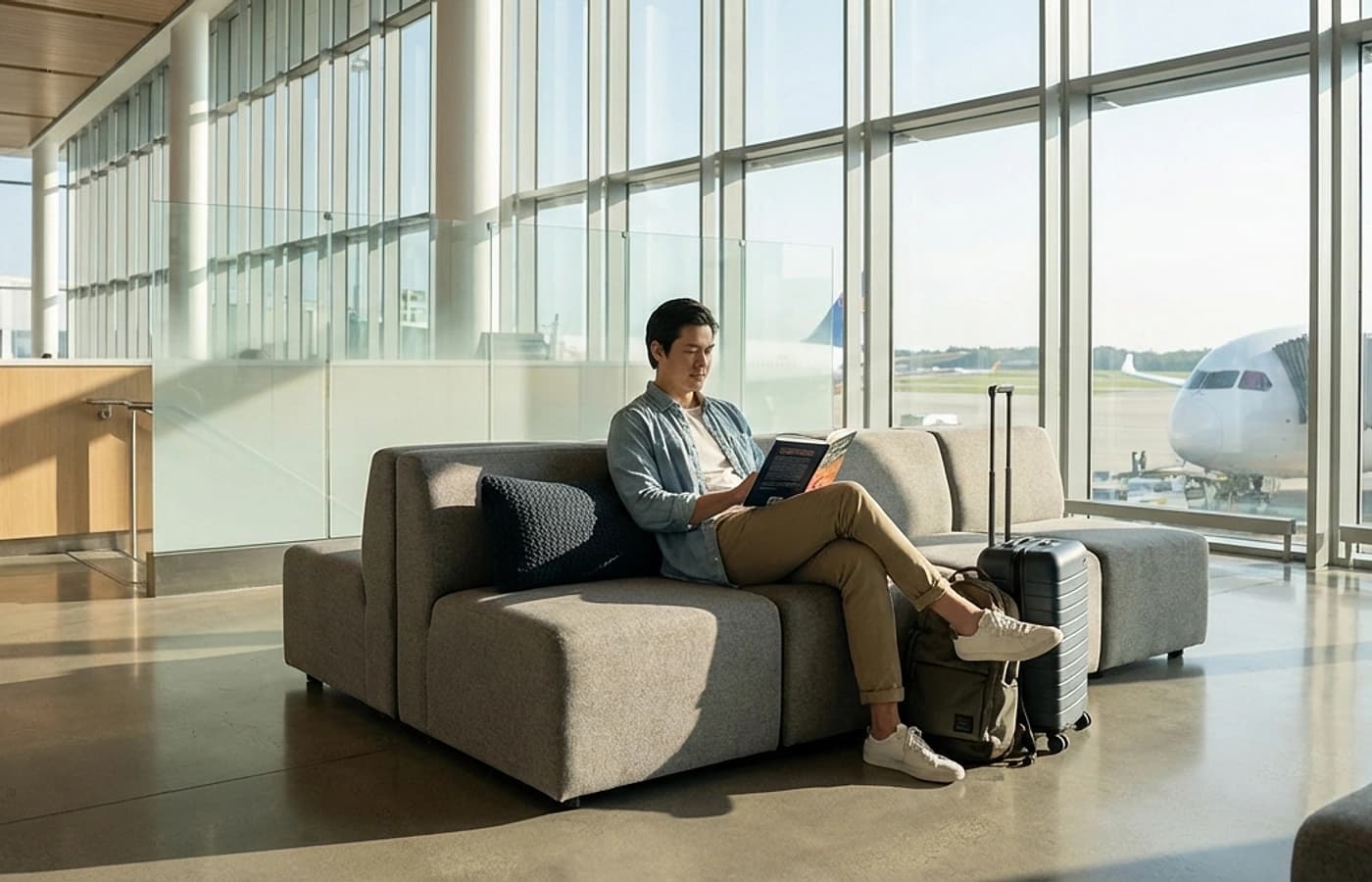
Airport and travel environment for long sitting sessions

Packing and maintenance for frequent travelers

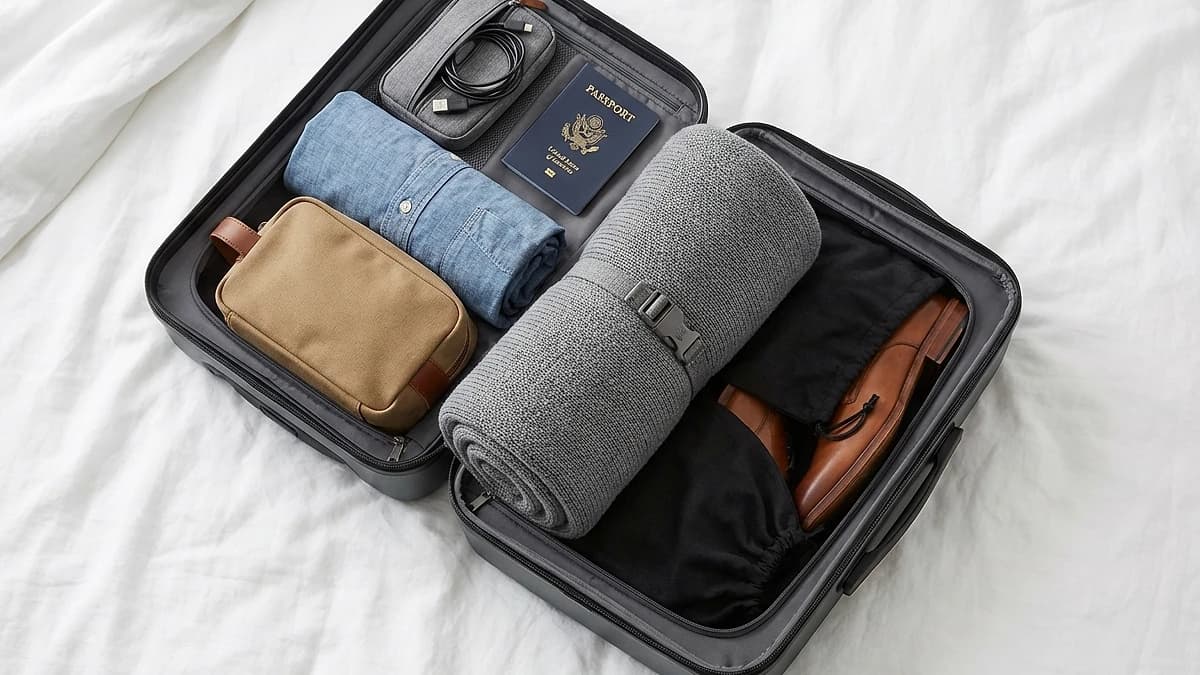
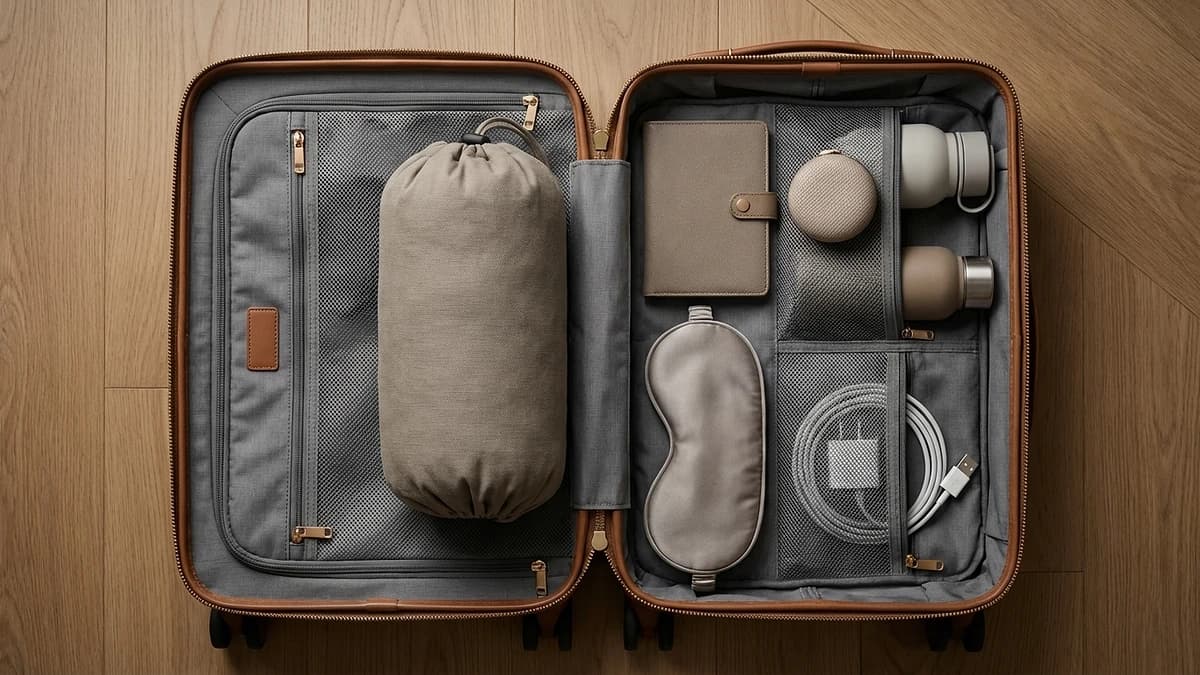
Frequent travelers need a packing strategy that ensures the lumbar support is always accessible — buried at the bottom of a checked bag means it will not get used. The ideal placement is in your personal item or carry-on bag's external pocket, where you can deploy it immediately upon sitting down. Compression sacks or vacuum bags can reduce foam supports to roughly half their deployed size for packing.

Travel environments expose lumbar supports to more dirt, spills, and wear than office use. A removable, machine-washable cover is essential for maintaining hygiene when the support contacts airplane seats, rental car interiors, and hotel furniture. Pack a spare cover in your luggage for trips longer than one week, and wash the active cover at the hotel if laundry facilities are available.

  • Pack in carry-on external pocket for immediate access
  • Compression sacks reduce foam supports to half their size
  • Removable, machine-washable cover essential for travel hygiene
  • Pack spare cover for trips longer than one week

Dazniausiai uzduodami klausimai

Can I use this on airplanes and trains?

Yes — compact profiles work on airplane economy seats, and thicker profiles suit train seats. Inflatable options adapt to both environments.

How portable should travel lumbar support be?

Under one pound and compressible to at least half its deployed size. It should fit in your carry-on or personal item without taking significant space.

Do I need travel-specific support if I already have office support?

Office models work in a pinch but are usually too bulky for regular travel. A dedicated travel support designed for portability is more practical for frequent trips.

Is an inflatable or foam travel support better?

Inflatable packs smaller and offers adjustable firmness, but foam provides more consistent contouring. Choose based on whether pack size or comfort consistency is your priority.

Can I bring lumbar support through airport security?

Yes — lumbar supports are allowed through TSA and international security checkpoints. They do not need to be removed from bags during screening.

Susije gidai

Naršykite šiuos gidus, kad sužinotumėte daugiau ir rastumėte tinkamą sprendimą.