30-day money back guarantee | Spring sale — 40% off + free shipping

Sprendimai

Lumbar Support for Driving

Driving-focused lumbar support strategy for daily commuters and professional drivers. Improve stability over long seated sessions.

Lumbar Support for Driving

Pagrindiniai patarimai

Driving support needs anti-shift stability.
Long shifts require material resilience and predictable fit.
Soft onboarding reduces abandonment in first week.
Shift-length based fit strategy

Shift-length based fit strategy

Driving duration fundamentally changes what type of lumbar support works best. For short commutes under 30 minutes, a slim-profile support that is easy to install and remove may be sufficient — the goal is maintaining proper posture during brief seated periods rather than providing deep cushioning. These drivers prioritize convenience and quick setup over maximum support depth.

Long-shift drivers — including daily commuters with 60+ minute drives and professional drivers logging multiple hours — need support that maintains its shape and position through sustained use. Higher-density foam with stronger strap systems prevents the gradual compression and shifting that makes lighter supports ineffective past the first hour. For these drivers, investing in a purpose-built driving support rather than repurposing an office pillow makes a measurable difference in end-of-drive comfort.

  • Under 30-minute commute: slim profile, prioritize easy install/removal
  • 30-60 minute commute: medium profile with secure strap system
  • 60+ minutes or professional driving: high-density foam with anti-vibration design
  • All durations: consistent daily use matters more than support intensity
Pre-drive setup checklist

Pre-drive setup checklist

A consistent 30-second pre-drive checklist eliminates the gradual position drift that makes lumbar support less effective over time. Before starting your vehicle, reach behind and confirm the pillow center aligns with your natural lumbar curve at belt level. Then check that the strap has not loosened — vibration from previous drives can gradually reduce strap tension without being obviously noticeable.

After confirming pillow position, verify your three safety reference points: steering wheel reach should feel natural without arm extension, rearview mirror should show the full rear window, and your right foot should reach the brake pedal fully without hip lifting. If any of these have changed since your last drive, the pillow may have shifted and needs repositioning.

  • Confirm pillow center at belt-line lumbar curve
  • Check strap tension — vibration loosens straps gradually
  • Verify steering reach, mirror alignment, and pedal control
  • Full checklist takes under 30 seconds once practiced
Managing driver fatigue on long routes

Managing driver fatigue on long routes

Lumbar support is one component of a broader fatigue management strategy for long-distance driving. Even with optimal lumbar positioning, sitting in any fixed position for more than 90 minutes triggers circulatory and muscular fatigue that no cushion can fully prevent. Planning rest stops every 60 to 90 minutes for brief standing and walking breaks — even just two to three minutes — significantly extends your effective driving comfort.

During rest stops, a simple hip flexor stretch and spinal rotation can reset the postural muscles that lumbar support keeps in neutral alignment. This active recovery allows the muscles to release tension that accumulates even in well-supported positions. Drivers who combine lumbar support with structured movement breaks report substantially less end-of-drive stiffness than those who rely on support alone.

  • Stop every 60-90 minutes for brief standing and walking
  • Hip flexor stretch and spinal rotation during rest stops
  • Active recovery extends effective driving comfort significantly
  • Support plus movement outperforms support alone for long drives
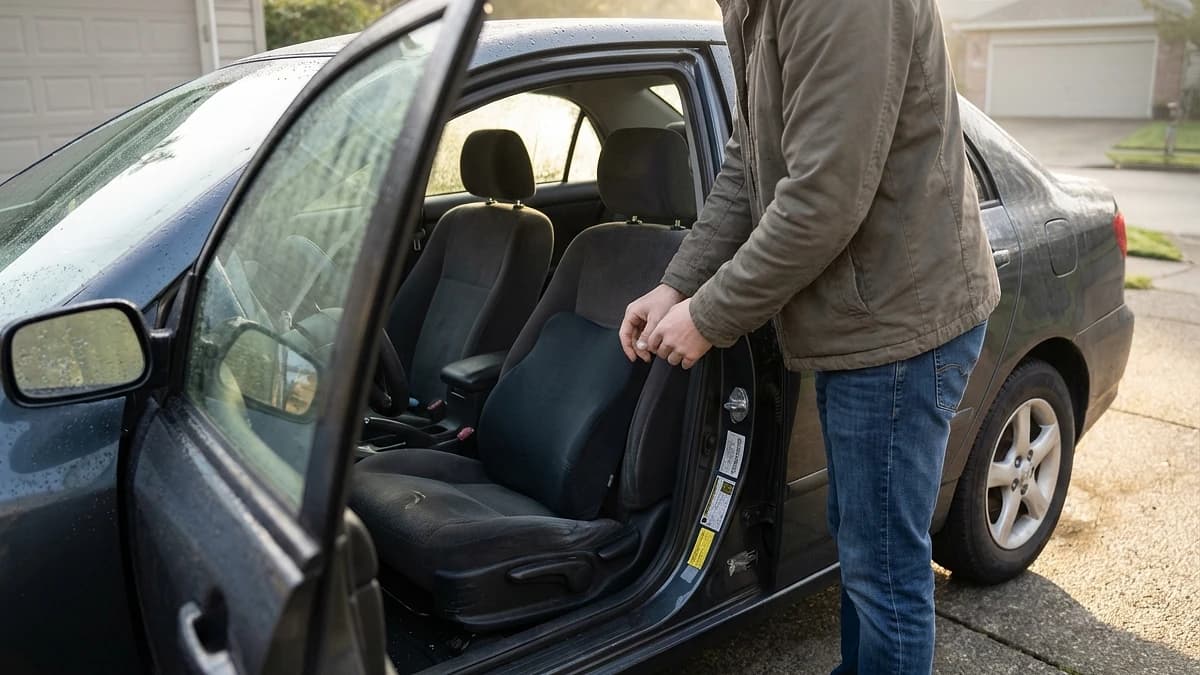
Modern car interior optimized for comfort

Professional driver considerations

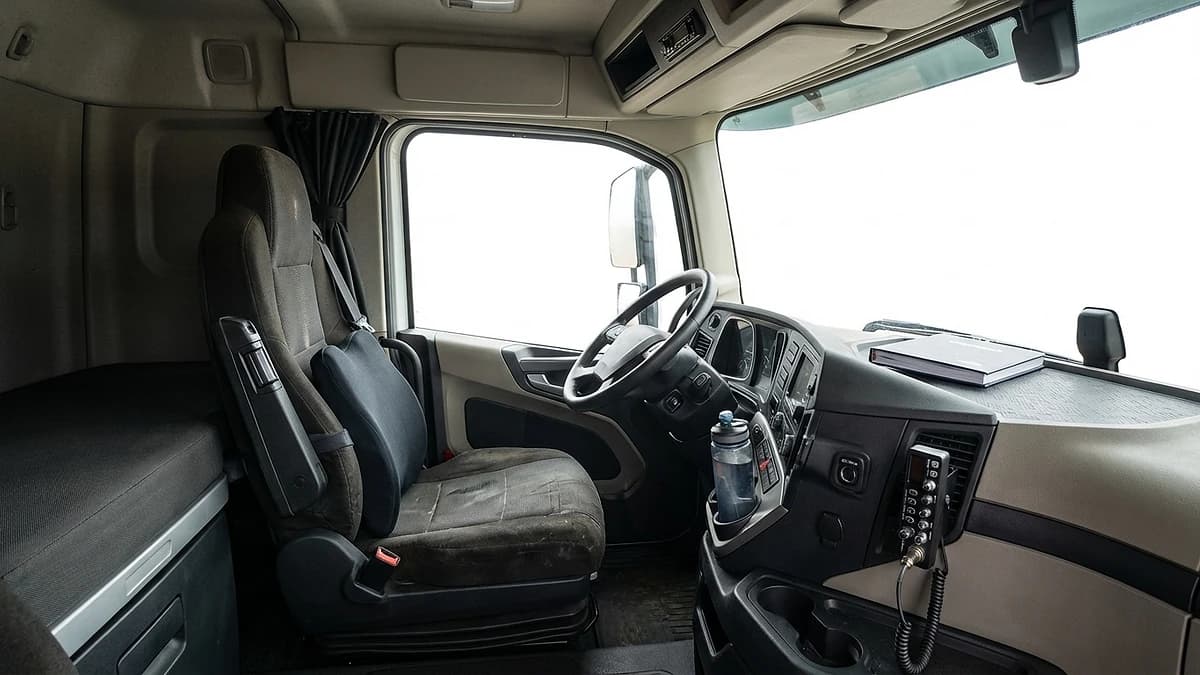
Professional drivers — truck operators, delivery drivers, rideshare workers — face unique challenges that recreational drivers do not encounter. Extended daily seat time (often 8 to 12 hours), frequent vehicle entry and exit, and the need to stay alert all influence what type of lumbar support works best. Durability becomes the primary selection criterion because professional drivers compress their support through thousands of additional hours compared to commuters.

For professional applications, look for supports with replaceable covers and high-density foam cores rated for commercial use. The cover will wear out before the foam in high-use scenarios, so being able to replace just the cover extends the product lifespan by months. Some professional drivers keep two identical supports and rotate them weekly, allowing each unit time to fully decompress between shifts.

  • Prioritize durability: high-density foam rated for commercial/daily use
  • Replaceable covers extend lifespan in high-use scenarios
  • Rotating two supports weekly allows full foam decompression
  • Consider professional-grade products designed for 8+ hour daily use

Dazniausiai uzduodami klausimai

Does lumbar support help for long driving shifts?

It significantly improves seated comfort consistency for drives over one hour. Combine with rest stops every 60-90 minutes for best results.

Should support feel strong immediately?

It should feel present but not forceful — overly aggressive pressure usually signals incorrect placement or a profile that is too thick for your seat.

Is this only for professional drivers?

No — commute-heavy office workers and anyone driving 30+ minutes daily benefits from driving-specific lumbar support setup.

How is driving lumbar support different from office support?

Driving supports need anti-vibration design, stronger strap systems, and heat-resistant materials. Office pillows often slip and compress faster in car environments.

Can lumbar support help prevent driver fatigue?

Proper lumbar positioning reduces muscular fatigue from poor posture, which contributes to overall alertness. It works best when combined with scheduled movement breaks.

Susije gidai

Naršykite šiuos gidus, kad sužinotumėte daugiau ir rastumėte tinkamą sprendimą.