30-day money back guarantee | Spring sale — 40% off + free shipping

Kaip tai padaryti gidai

How to Clean and Maintain a Lumbar Pillow

Complete maintenance guide for lumbar pillows: weekly cover care, foam cleaning methods, odor prevention, storage tips, and clear signs it is time for a replacement.

How to Clean and Maintain a Lumbar Pillow

Pagrindiniai patarimai

Weekly cover washing and monthly foam airing extend pillow life by 6+ months.
Never machine-wash or submerge memory foam — it traps water and breeds mold.
Replace when foam no longer rebounds to original shape within 30 seconds of standing.
Weekly cover care routine

Weekly cover care routine

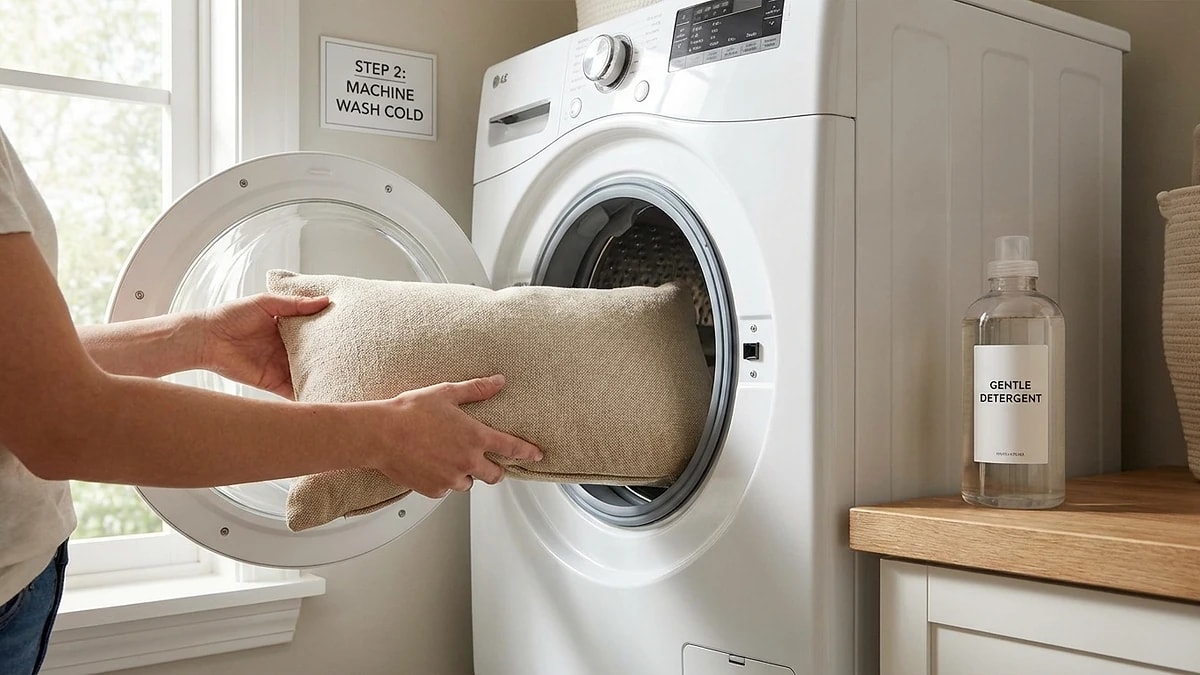
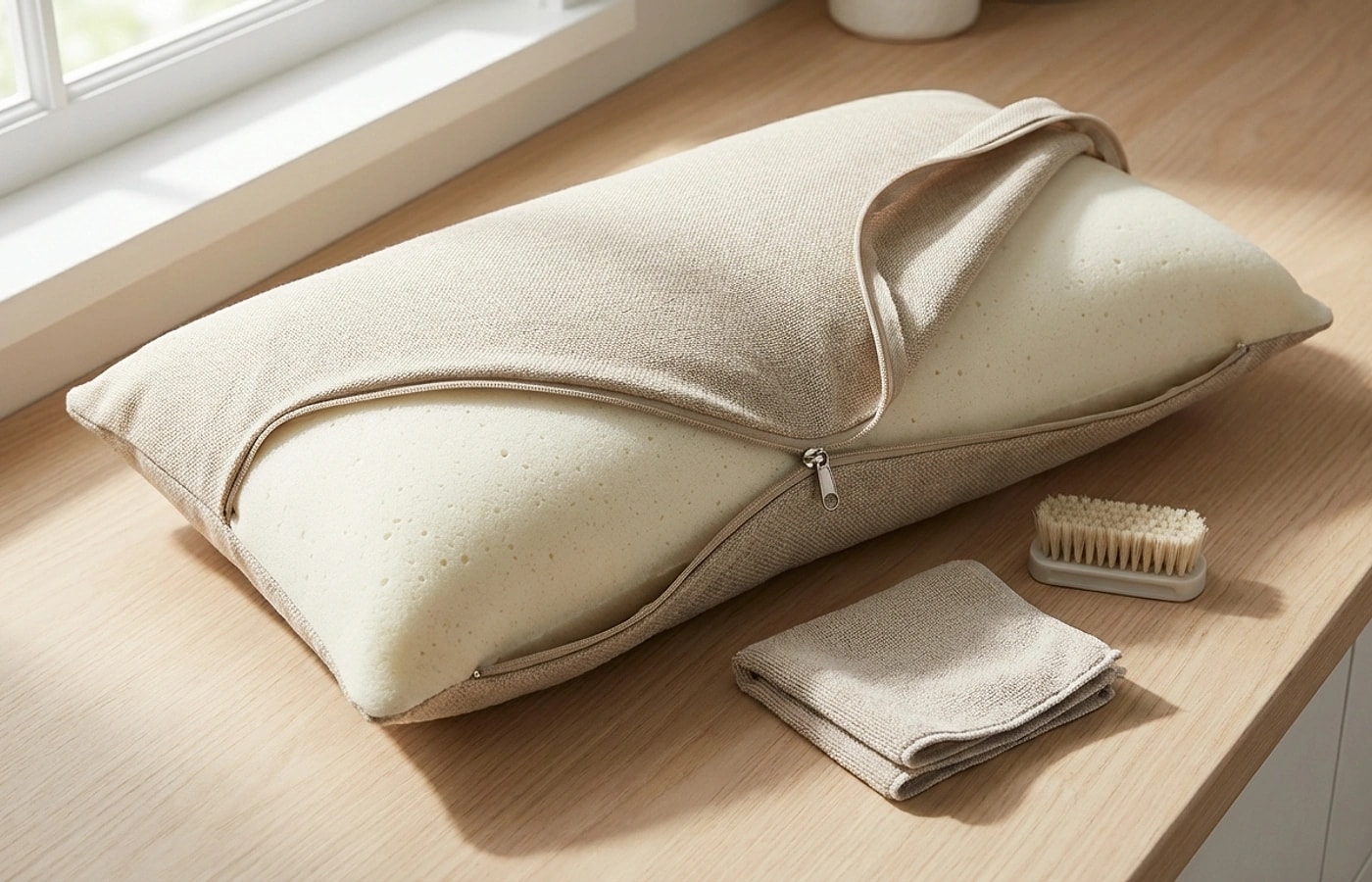
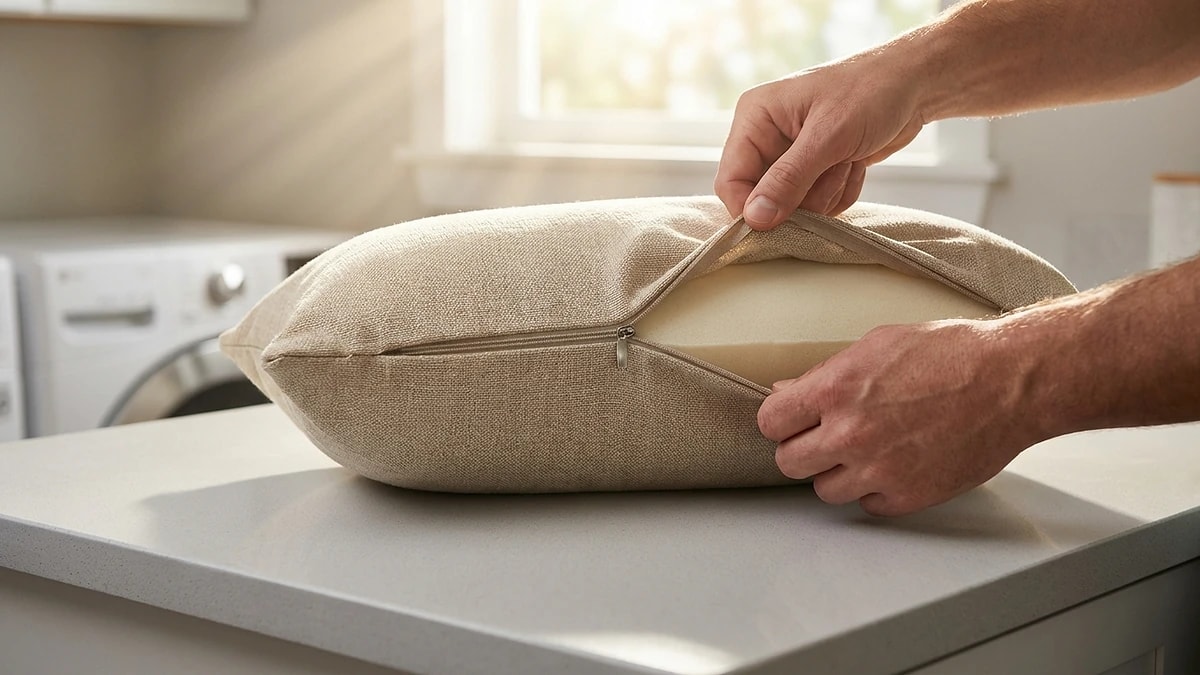
The removable cover is your first line of defense against sweat, oils, and dust that degrade foam over time. Most lumbar pillow covers are machine-washable — remove the cover weekly, wash on a gentle cycle with cold water, and air dry completely before putting it back on. Avoid high heat in the dryer, which can shrink fabric and damage elastic edges that keep the cover snug around the foam core.

If your pillow does not have a removable cover, use a pillowcase or thin fabric sleeve as a protective layer. This is especially important in warm climates or for users who sit without a shirt against the pillow. Spot-clean non-removable covers with a damp cloth and mild soap, then blot dry. Keeping the cover clean prevents oils from penetrating to the foam, where they cause permanent odor and accelerate material breakdown.

  • Machine wash covers weekly: gentle cycle, cold water, air dry
  • Avoid high dryer heat — it shrinks fabric and damages elastic
  • No removable cover? Use a thin pillowcase as a protective sleeve
  • Spot-clean non-removable covers with damp cloth and mild soap
Cleaning the foam core safely

Cleaning the foam core safely

Memory foam should never go in a washing machine or be submerged in water. The cellular structure absorbs water like a sponge and takes days to dry completely — during which time mold and bacteria thrive inside the foam where you cannot see or reach them. Instead, surface-clean the foam monthly by removing the cover, sprinkling a light layer of baking soda over the surface, letting it sit for 30 minutes, and vacuuming it off with an upholstery attachment.

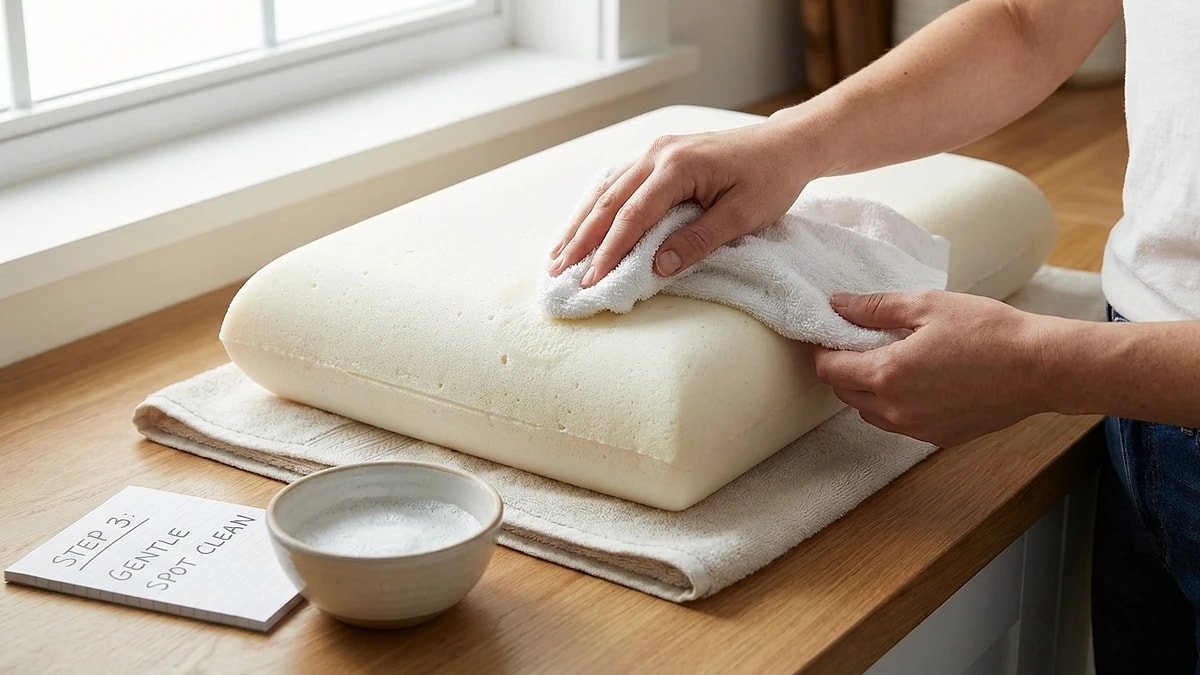
For visible stains or spills, use a damp cloth with a tiny amount of mild liquid soap — work the surface gently without saturating the foam. Blot with a dry towel and let the pillow air dry in a well-ventilated area for several hours before putting the cover back on. For persistent odors, place the uncovered pillow near an open window for a few hours. Direct sunlight for short periods (under an hour) helps kill bacteria, but prolonged UV exposure degrades memory foam structure.

  • Never machine-wash or submerge memory foam in water
  • Monthly baking soda treatment: sprinkle, wait 30 minutes, vacuum
  • Spot-clean stains with barely-damp cloth and mild soap
  • Brief sunlight exposure kills bacteria — but avoid prolonged UV
Storage and travel care

Storage and travel care

When storing a lumbar pillow for extended periods — during travel or when switching between seasonal setups — store it in a breathable cotton bag or pillowcase, never in a sealed plastic bag. Sealed plastic traps moisture and creates the humid environment that mold needs to grow. Store flat or in its natural shape; compressing memory foam into a tight space for weeks can cause permanent deformation, especially in warmer storage areas.

For travel, choose a lumbar pillow designed for portability with compression straps, and allow it to fully expand and air out for at least an hour after unpacking. If your pillow has been compressed in luggage for a long trip, the foam may feel stiffer than usual for the first session — this is normal and resolves as the cells re-expand. Avoid leaving lumbar pillows in hot cars for extended periods, as extreme heat softens memory foam permanently.

  • Store in breathable cotton bags — never sealed plastic
  • Keep flat or in natural shape to prevent permanent deformation
  • Allow compressed travel pillows an hour to re-expand before use
  • Avoid leaving pillows in hot cars — heat permanently softens foam
When to replace your lumbar pillow

When to replace your lumbar pillow

Memory foam has a functional lifespan, and knowing when to replace prevents the gradual loss of support that many users do not notice until discomfort returns. The primary test is rebound speed: stand up after sitting and watch the foam. A healthy pillow rebounds to its original shape within 15 to 30 seconds. If the pillow stays compressed for over a minute or never fully returns to shape, the foam cells have broken down and effective support is gone.

Other replacement signals include persistent odor that survives cleaning, visible crumbling or flaking at the edges, and the feeling that you need to tighten the strap more frequently to maintain position (because the pillow has thinned from compression). For daily users sitting 6+ hours, expect to replace every 18 to 24 months. Light users (2-3 hours daily) can often extend this to 30 months. Investing in a quality replacement is significantly cheaper than the physical therapy visits that chronic poor support can eventually require.

  • Rebound test: foam should return to shape within 15-30 seconds
  • Persistent odor, crumbling edges, or increasing strap tightening signal replacement
  • Daily heavy use: replace every 18-24 months
  • Light use (2-3 hours daily): can extend to 30 months

Dazniausiai uzduodami klausimai

Can I wash the memory foam core?

Never machine-wash or submerge it. Surface-clean with baking soda and vacuum monthly, or spot-clean stains with a barely-damp cloth and mild soap.

How often should I wash the cover?

Weekly for daily users. Machine wash on gentle cycle with cold water and air dry. In warm climates or heavy use, twice weekly is better.

How do I know my lumbar pillow needs replacing?

Stand up and watch the foam rebound. If it takes more than 30 seconds to return to shape or never fully rebounds, the foam is spent and support is compromised.

Can I use fabric softener on the cover?

Avoid it — fabric softener leaves a residue that reduces the cover's breathability and can transfer oils to the foam core over time.

Does memory foam quality affect how long it lasts?

Significantly. Higher-density foams (50+ kg/m3) maintain structure much longer than budget foams. Investing in quality foam up front extends useful life by 6 to 12 months.

Susije gidai

Naršykite šiuos gidus, kad sužinotumėte daugiau ir rastumėte tinkamą sprendimą.