
30-day money back guarantee | Spring sale — 40% off + free shipping

Kaip tai padaryti gidai

How to Choose a Lumbar Support Pillow

Decision framework to choose the right lumbar support pillow by use-case, seat type, firmness, and session length. Avoid common buying mistakes with our step-by-step selection guide.

How to Choose a Lumbar Support Pillow

Pagrindiniai patarimai

Start with your primary use case — office, car, travel, or gaming — then narrow by seat geometry.
Prioritize fit stability and foam resilience over surface features like cooling gel.
Run three simple disqualifier checks before purchase to avoid common mismatches.
Start with your primary use case

Start with your primary use case

The biggest mistake in choosing a lumbar pillow is shopping by features before defining your context. A pillow that works perfectly in an upright office chair may feel wrong in a reclined car seat because the contact angle, strap requirements, and depth profile are fundamentally different. Before comparing products, answer one question: where will you use this pillow most often?

Office users need moderate depth with stable strap attachment for upright posture. Car users need slightly firmer support with vibration-resistant anchoring. Travelers need compact profiles that pack flat without permanent compression. Gamers need support that holds position through recline changes. Once you know your primary context, you have already eliminated 60 percent of options that would not have worked.

  • Office: moderate depth, stable strap, upright back angle
  • Car: firmer profile, vibration-resistant anchoring
  • Travel: compact, packable without permanent compression
  • Gaming: holds position through recline angle changes
Understanding firmness and foam types

Understanding firmness and foam types

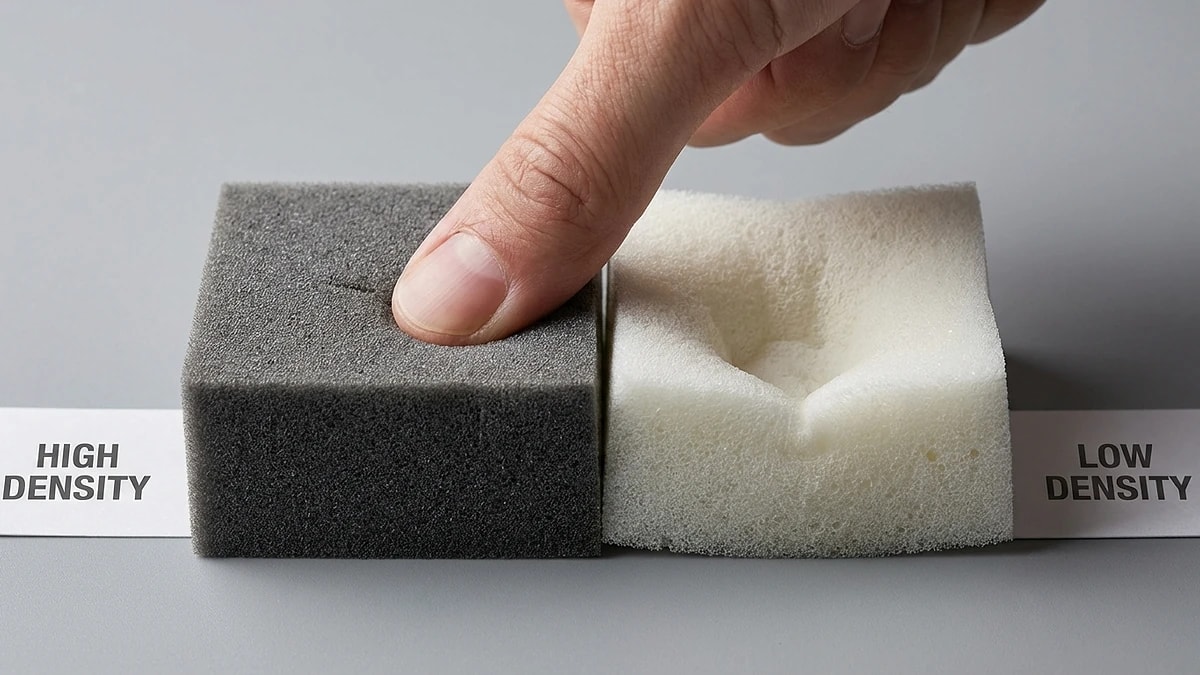
Memory foam is the most common core material, and it comes in a wide firmness range. Medium-firm is the safest starting point for most users — it provides enough resistance to maintain your lumbar curve without feeling rigid. Very soft foam often compresses too quickly during long sessions, losing effective support by hour three. Very firm foam can create pressure points if the pillow profile does not match your spine curvature precisely.

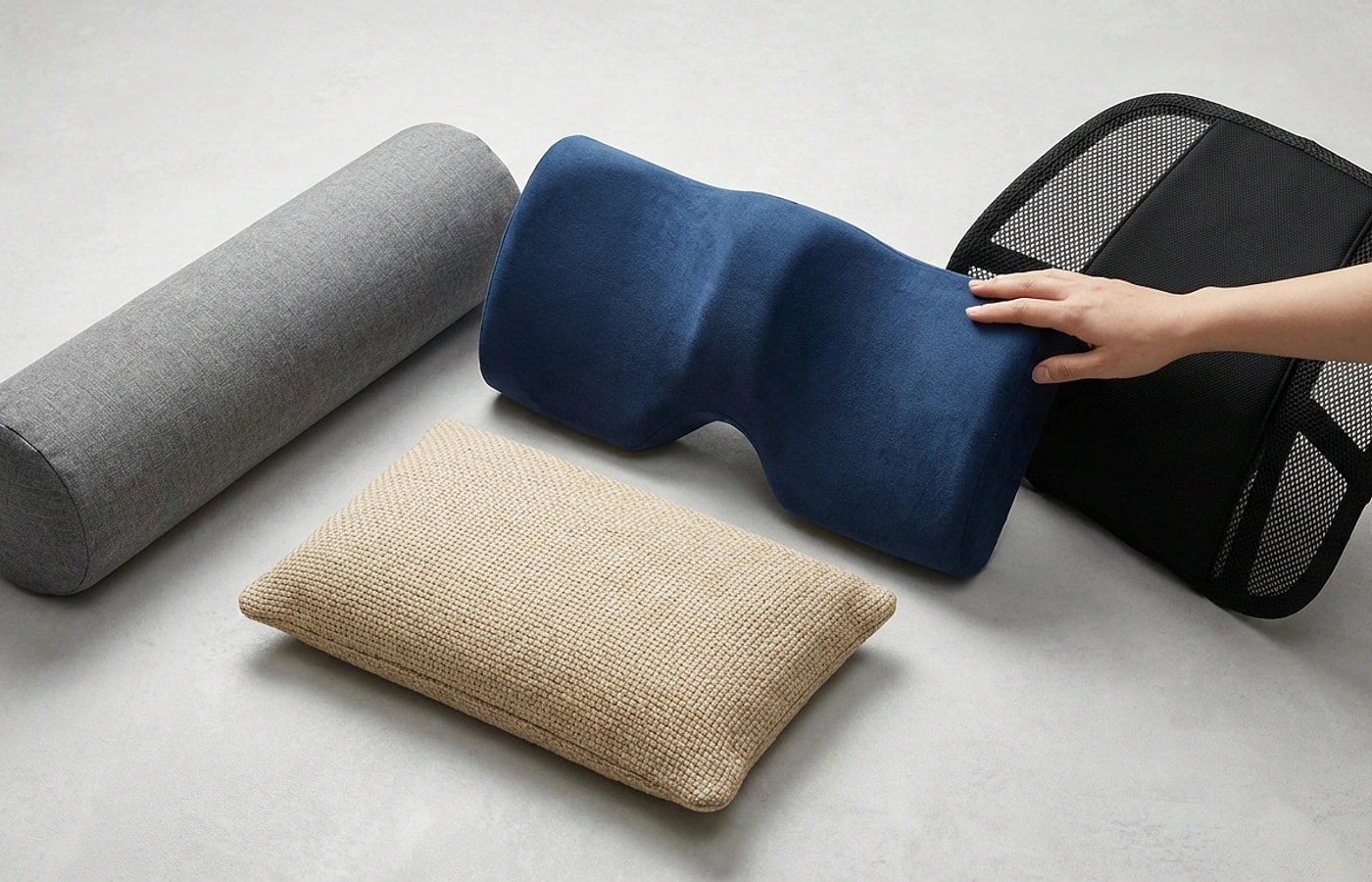
Beyond standard memory foam, you will see gel-infused foam, latex blends, and adjustable inserts. Gel-infused foam adds slight cooling but does not significantly change support characteristics. Latex blends tend to be more responsive and longer-lasting but cost more. Adjustable inserts — where you can add or remove padding layers — give the most flexibility but add setup complexity. For most first-time buyers, standard medium-firm memory foam with a removable cover is the best value.

  • Medium-firm memory foam is the safest default for most users
  • Soft foam loses support during long sessions — avoid for 4+ hour use
  • Gel infusion adds cooling, not better support
  • Adjustable inserts offer flexibility but add setup complexity
Checking seat compatibility

Checking seat compatibility

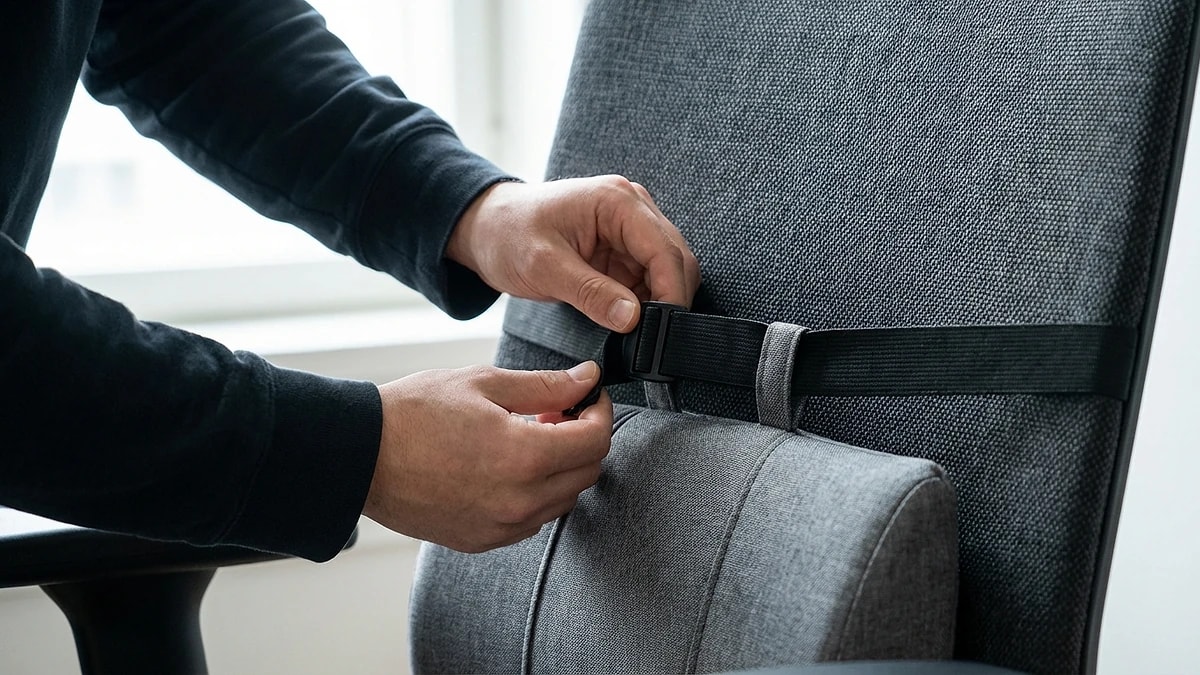
A lumbar pillow can only work if it physically fits your chair and stays in position. Measure three things before purchasing: your chair back width (the pillow should not extend past the edges), the distance from seat to the top of the chair back (the pillow needs at least 20cm of vertical clearance below the backrest top), and the strap path (confirm there is a way to route an elastic strap around the chair back without it sliding off).

Open-mesh chairs, bucket-style gaming chairs, and car seats each present different mounting challenges. Mesh chairs may need straps threaded through the mesh weave. Bucket seats with aggressive side bolsters can pinch narrower pillows. Some car seats have built-in lumbar mechanisms that compete with external support — in that case, disable the built-in system before adding a pillow. Always check compatibility before committing to a product.

  • Measure chair back width — pillow should not overhang edges
  • Confirm 20cm+ vertical clearance below backrest top
  • Verify a viable strap path around your chair back
  • Disable built-in car lumbar mechanisms before adding a pillow
Three disqualifier checks before buying

Three disqualifier checks before buying

Before purchasing any lumbar pillow, apply three quick disqualifier checks. First: does the pillow push your torso forward when placed against the chair? If yes, the depth profile is too aggressive for your seat — look for a flatter contour. Second: does the strap system work with your chair geometry, or will it require workarounds like clips or adhesive pads? Unstable attachment leads to daily frustration and abandonment within weeks.

Third: is the cover removable and washable? You will be using this daily, and covers accumulate oils and sweat that degrade foam if not cleaned regularly. A pillow with a sewn-in cover might look sleek initially but becomes a hygiene problem within months. These three checks — depth profile, strap stability, and cover care — eliminate the most common reasons people return lumbar pillows.

  • Check 1: Does the pillow push your torso forward? If yes, depth is too aggressive
  • Check 2: Does the strap work without workarounds? Unstable attachment kills adherence
  • Check 3: Is the cover removable and washable? Daily use demands regular cleaning
Testing your choice at home

Testing your choice at home

Even with perfect research, the final test happens in your actual chair during your actual work day. Use the first week as a structured trial: place the pillow at belt height, strap it in, and use it for full work sessions without switching back to your old setup. Track two things daily — whether you repositioned the pillow during the session and your end-of-day lower-back comfort on a 1-to-10 scale.

By day five, the pattern should be clear. If you are repositioning the pillow more than once per session, the strap system or depth profile is wrong. If your comfort scores are flat or declining, the firmness or height may be off. Most return windows give you 30 days — use at least seven of them before deciding. The first two or three days always feel different because your muscles are adapting to the new posture, so do not judge too early.

  • Use for full sessions — no switching back during the first week
  • Track reposition count and end-of-day comfort (1-10) daily
  • By day 5, you should see a clear comfort trend
  • Do not judge before day 3 — muscles need time to adapt

Dazniausiai uzduodami klausimai

What is the single most important factor when choosing?

Stable fit at your lumbar curve in your primary seating context. A pillow that fits perfectly beats one with premium materials that does not stay in place.

Can one pillow work for both office and car?

Sometimes, but car seats require different strap routing and slightly different positioning due to the reclined angle. Many users find it easier to have one for each context.

How do I avoid buying the wrong firmness?

Start with medium-firm — it works for most people. Very soft foam compresses too fast during long sessions, and very firm foam creates pressure points unless the profile matches your spine exactly.

Are expensive lumbar pillows worth the price?

Higher price usually buys better foam longevity, removable covers, and adjustable features. For daily use over 4+ hours, investing in quality saves money on replacements.

How long should a good lumbar pillow last?

Quality memory foam typically maintains its shape for 18 to 24 months of daily use. Replace when the foam no longer rebounds to its original contour after you stand up.

Susije gidai

Naršykite šiuos gidus, kad sužinotumėte daugiau ir rastumėte tinkamą sprendimą.