Hoppa till innehåll

Fri frakt över 500 kr

Användningsguider

Are Standing Desks Worth It? The Honest Evidence

Are standing desks worth it? An evidence-backed look at the real benefits, the real limits, who gains most, and how to start without overdoing it.

Are Standing Desks Worth It? The Honest Evidence

Viktiga slutsatser

The goal is alternating sitting and standing, not standing all day.
Standing desks may reduce sitting time and discomfort, but they are not a proven cure for any condition.
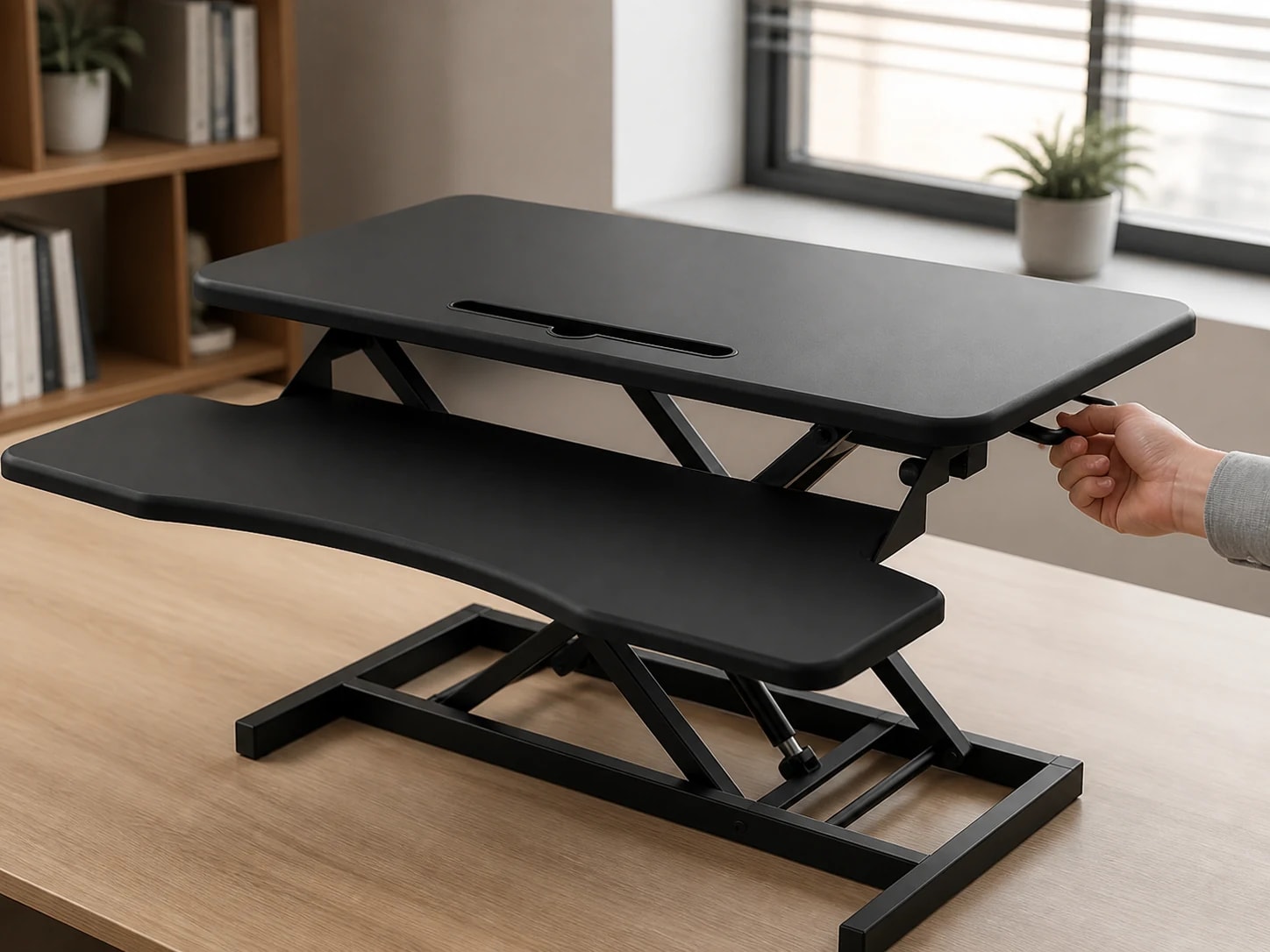
An adjustable desk matters more than a fixed-height one because switching positions is the actual benefit.
Are standing desks worth it? The short answer

Are standing desks worth it? The short answer

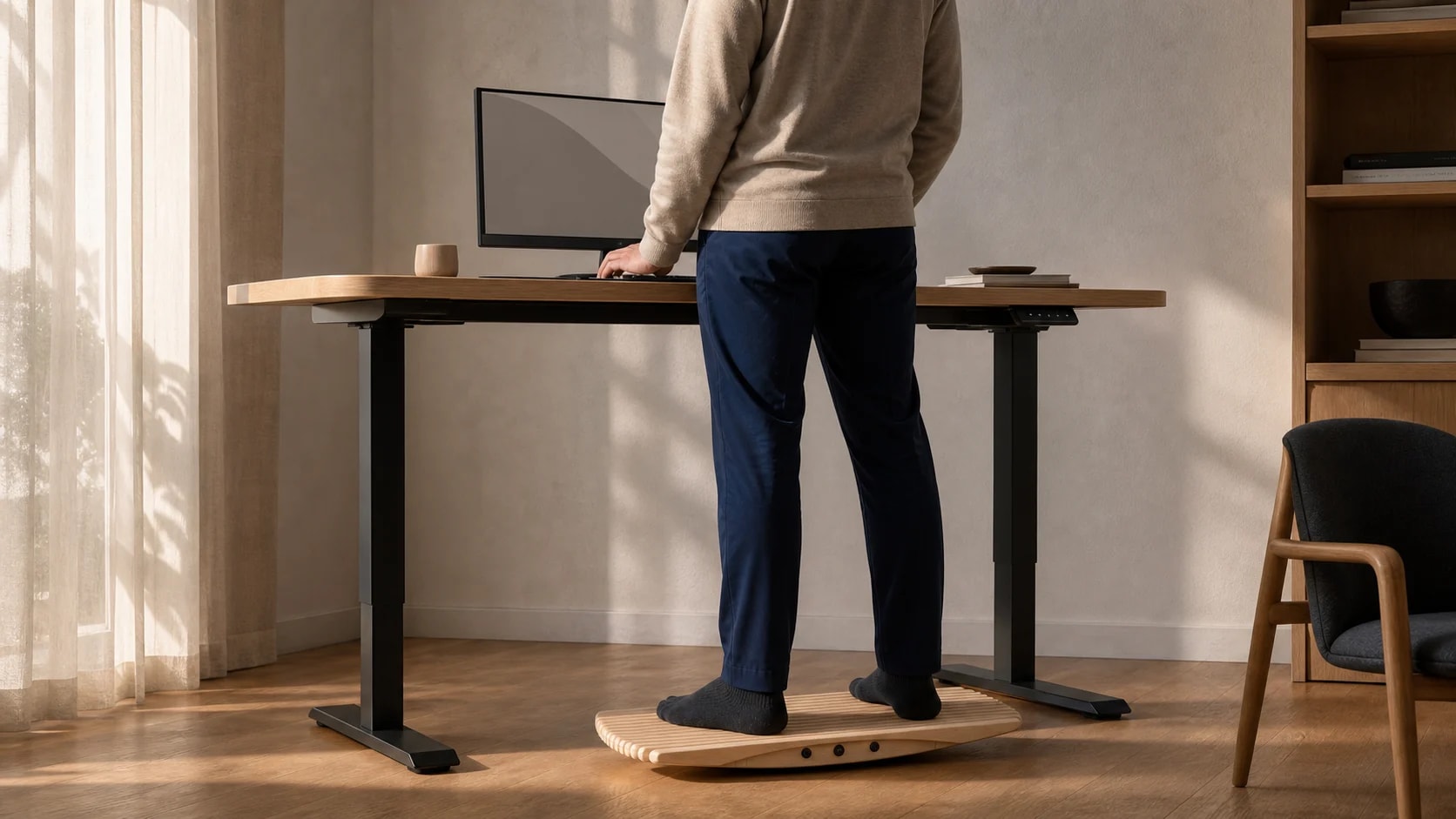
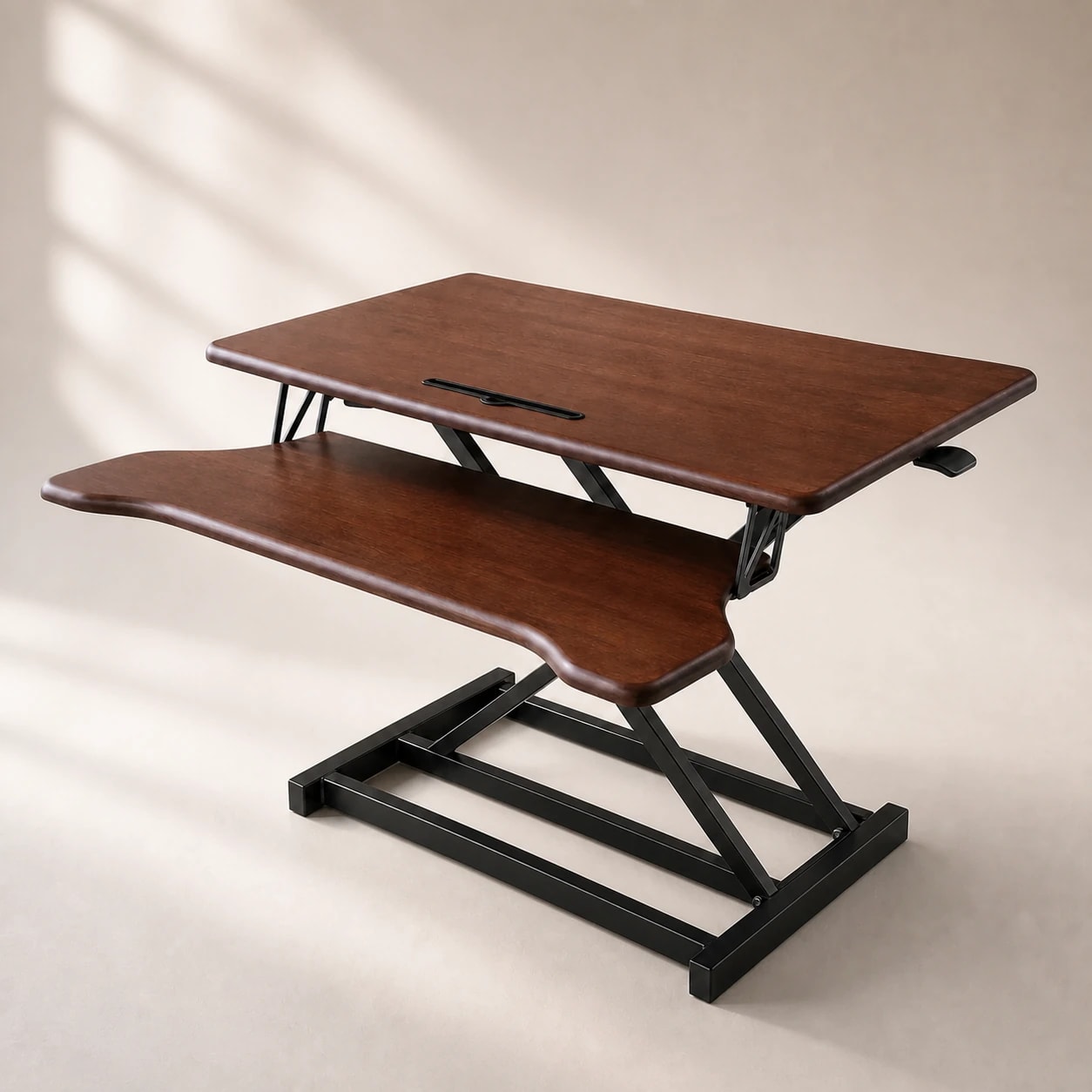
For most desk workers, a standing desk is worth it for one specific reason: it lets you alternate between sitting and standing instead of holding a single posture for eight hours. The benefit comes from the switching, not from standing itself. A desk that only goes up is not better than a chair you never leave.

The honest version of the pitch is narrower than the marketing version. A standing desk can break up long sedentary blocks and may ease the stiffness that builds during all-day sitting. It will not replace exercise, fix back pain on its own, or burn a meaningful number of extra calories. Treat it as a tool for adding movement to your day, and the value holds up.

  • Worth it if you will actually alternate positions during the day.
  • Not worth it if you expect it to stand in for exercise or medical treatment.
  • Adjustable height is the feature that delivers the real benefit.
What the evidence actually supports

What the evidence actually supports

Research on sit-stand desks points to modest, real effects rather than dramatic ones. Studies generally find that people who use adjustable desks reduce their total sitting time and often report less lower-back and neck discomfort over a workday. Those are worthwhile outcomes for someone who sits all day.

What the evidence does not support is the bigger claims. There is no strong proof that standing desks cause meaningful weight loss, prevent disease, or sharply boost productivity for everyone. Some people feel more alert when they stand; others find standing distracting. The reliable takeaway is that reducing uninterrupted sitting is good, and a sit-stand desk is one practical way to do it.

  • Likely benefit: less total sitting time across the workday.
  • Reported benefit: reduced back and neck discomfort for many users.
  • Not established: weight loss, disease prevention, or guaranteed focus gains.
  • If you have existing back, hip, or circulation issues, ask a doctor or physical therapist before changing your routine.
Who benefits most

Who benefits most

Standing desks pay off most for people who otherwise sit in long, unbroken blocks: office workers on back-to-back calls, remote workers who skip the commute and the natural movement it brings, and anyone who notices stiffness building through the afternoon. If your job already keeps you moving, the upside is smaller.

The desk also helps people who fidget or lose focus while seated, because standing gives a low-effort way to reset without leaving the workspace. It is less useful if your chair and lumbar setup are already dialed in and you take regular breaks anyway. In that case, the desk is a refinement, not a fix.

  • High benefit: all-day desk workers and remote workers with little built-in movement.
  • High benefit: people who feel stiff or restless after long seated stretches.
  • Lower benefit: roles that already involve frequent standing or walking.
How to start without overdoing it

How to start without overdoing it

The most common mistake is switching to standing all day on day one, which usually causes foot, leg, and lower-back fatigue and ends with the desk parked back down permanently. Build up gradually instead. A simple starting rhythm is to alternate sitting and standing roughly every 30 to 45 minutes, beginning with short standing intervals and extending them as your body adapts.

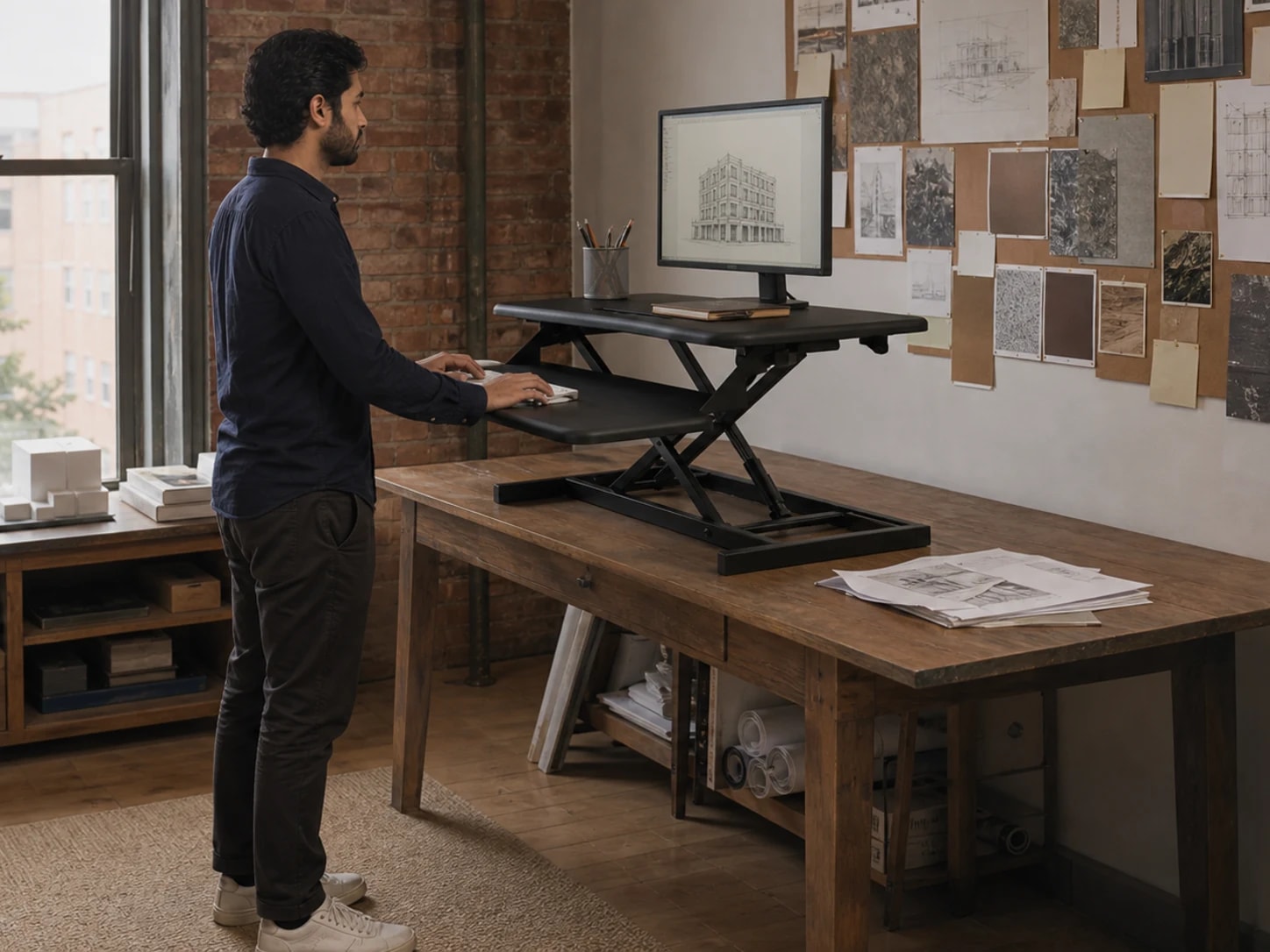
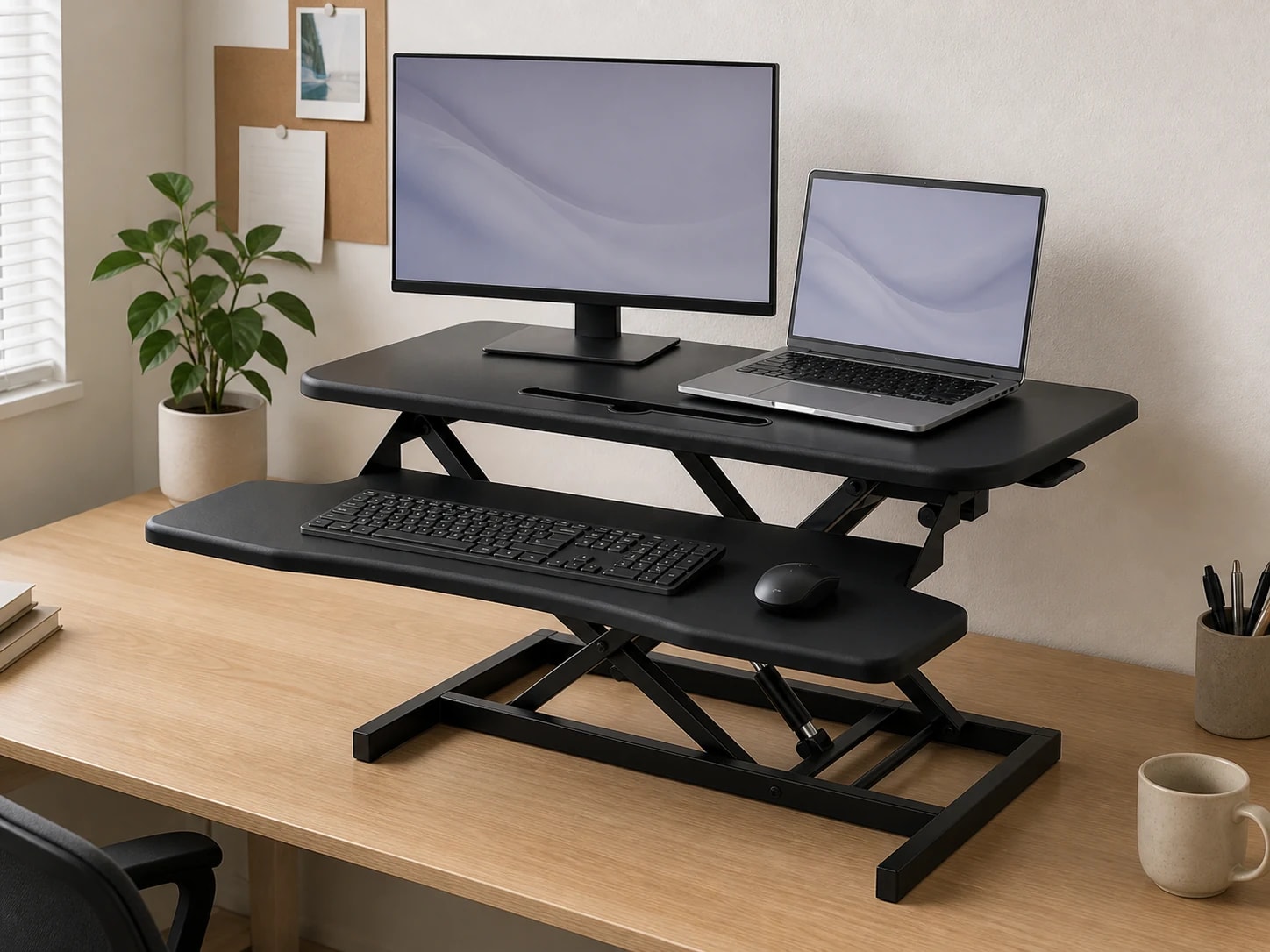
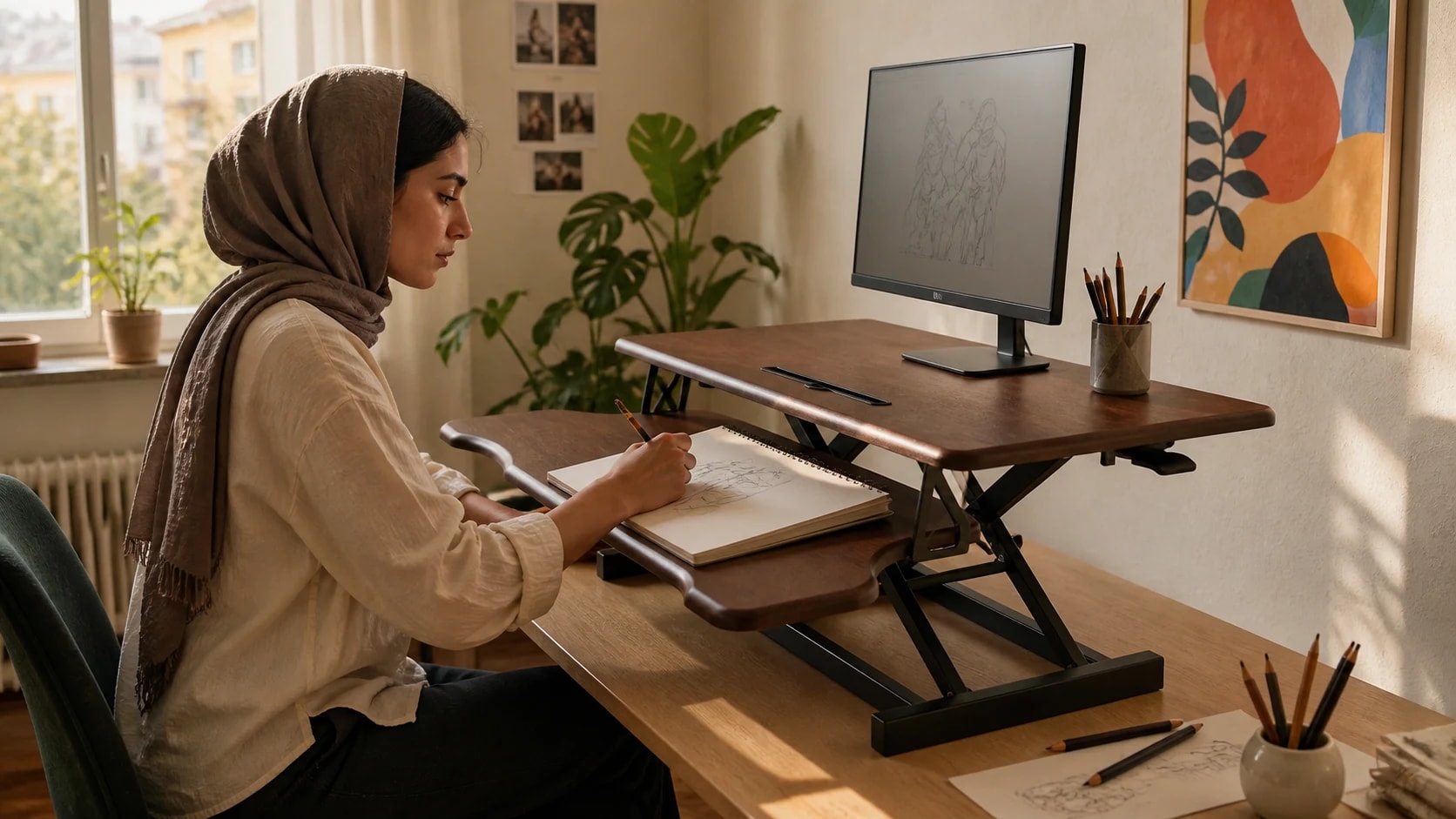
Set the desk height so your elbows rest near 90 degrees and your screen sits at eye level whether you sit or stand. Use an anti-fatigue mat, wear supportive shoes, and keep a chair with good lumbar support for your seated blocks, because half your day is still spent sitting. The combination of a comfortable seat and an easy way to stand is what makes the habit stick.

  • Alternate sitting and standing roughly every 30 to 45 minutes.
  • Start with short standing intervals and increase them gradually.
  • Match desk height to a 90-degree elbow angle and eye-level screen in both positions.
  • Keep a well-supported chair for the seated half of your day.

Vanliga frågor

Are standing desks actually worth the money?

For people who sit all day, an adjustable standing desk is usually worth it because it makes alternating between sitting and standing easy. The value comes from switching positions, not from standing constantly. If you already move often during work, the benefit is smaller.

Should I stand at my desk all day?

No. Standing all day tends to cause foot, leg, and lower-back fatigue. The aim is to alternate sitting and standing, typically every 30 to 45 minutes, so neither position is held too long.

Do standing desks help with back pain?

They may help reduce the stiffness and discomfort that build during long sitting, and many users report less back and neck strain. They are not a treatment for back pain. If you have ongoing pain, see a doctor or physical therapist.

Do standing desks burn a lot of extra calories?

Standing burns slightly more than sitting, but the difference is small and does not replace exercise. Treat a standing desk as a way to add movement, not as a weight-loss tool.

Is a fixed-height standing desk as good as an adjustable one?

Usually not, because the main benefit is being able to switch between sitting and standing. A fixed-height desk locks you into one posture, which is the problem a sit-stand setup is meant to solve.

How long does it take to adjust to a standing desk?

Most people adapt over one to two weeks if they ramp up gradually. Begin with short standing intervals, use an anti-fatigue mat and supportive shoes, and extend your standing time as it feels comfortable.

Relaterade guider

Utforska dessa guider för att lära dig mer och hitta rätt lösning för dina behov.